

Our 2024-2025 field trip bookings are now open! Check out our three unique and customizable options and program availability below.
Easily book a field trip online to reserve a spot today. Registration is available at the bottom of this page, or by clicking here.
Reminder: We will only accept reservations from school and organization officials. If you are a parent or an unofficial coordinator, please have an official representative reach out to book your appointment.
Title 1 Grant Funding
January 2026 Update: Field trip grants and bus stipends are currently full. Please fill out our Wait List at the bottom of the page or click here. If your school is LAUSD, we may have availability through the Day of Discovery program. Please contact us for more information.
If your school is Title 1, Heal the Bay also offers grant-funded scholarships, which cover the cost of your field trip and a transportation stipend of $400 if needed. Grant funding is limited, so funding will be given on a first-come, first-serve basis to trips of at least 40 students. If interested, be sure to select “Yes” when prompted as you book your trip, then we will send you a confirmation email as scholarships are allocated. You are responsible for booking your own transportation.
1. Aquarium Science Field Trips
When: Monday – Friday, 9:30-11:30 am & 12-2 pm*
*Schedule is subject to change
What to Expect on Your Field Trip:
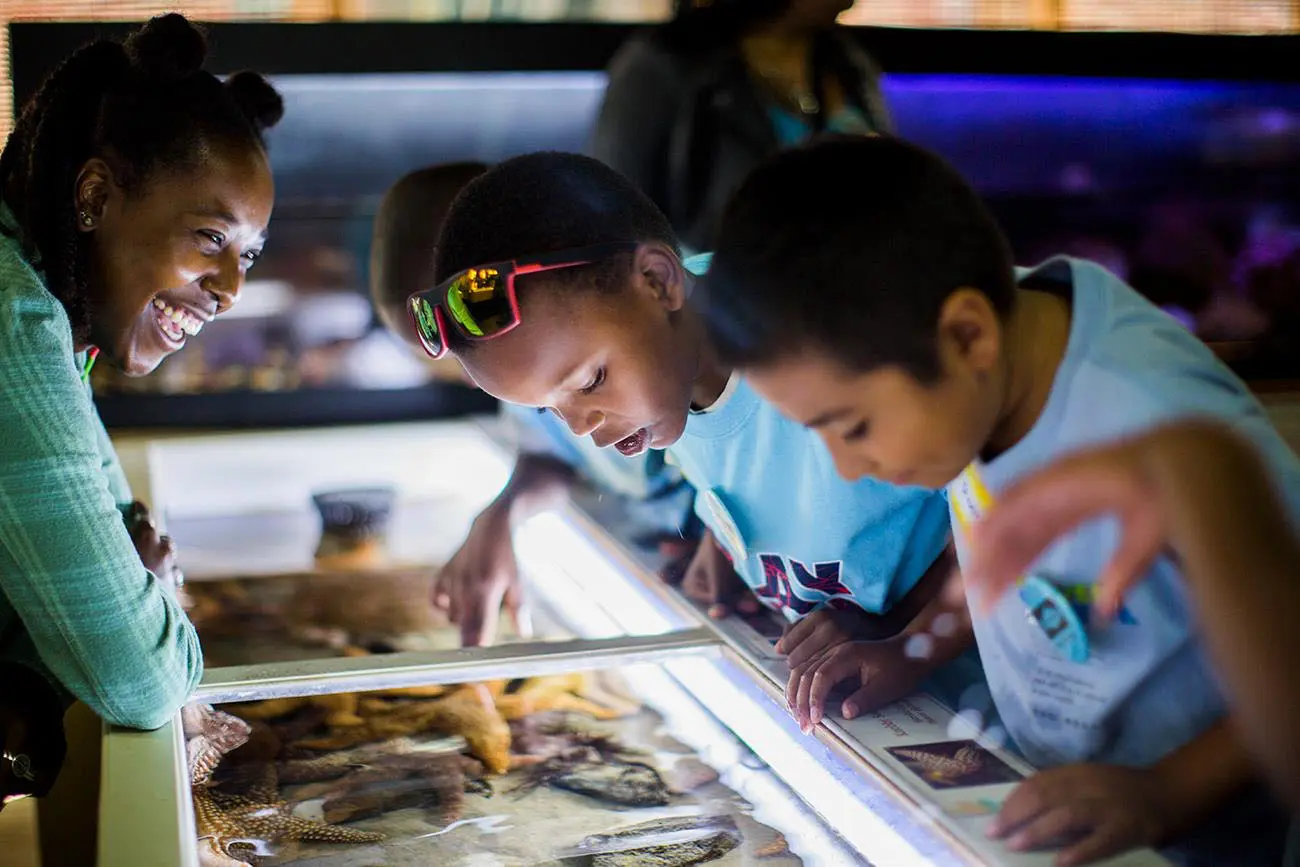
Tank Exploration: We guide students as they use their senses to interact with live local marine species at our three touch tanks and our shark tank as well! Students increase their ocean literacy while building empathy toward nature and practicing their scientific observation skills.
Engaging Lesson: Supports Next Generation Science Standards and uses Beetles Project from Lawrence Hall of Science teaching techniques, see curriculum options below for information on lesson topics
Exploration Activity: One of our most unique offerings is the hands on activity portion of our field trips. We have added additional indoor and outdoor options and are still offering the same great programming options you may already be familiar with! Your group may lose out on an exploration component if arriving late. Updated options are detailed below:
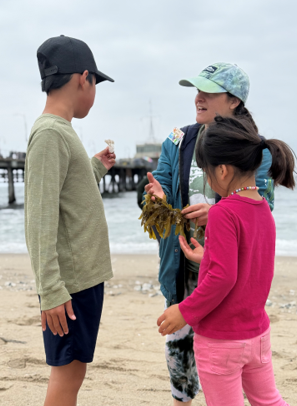
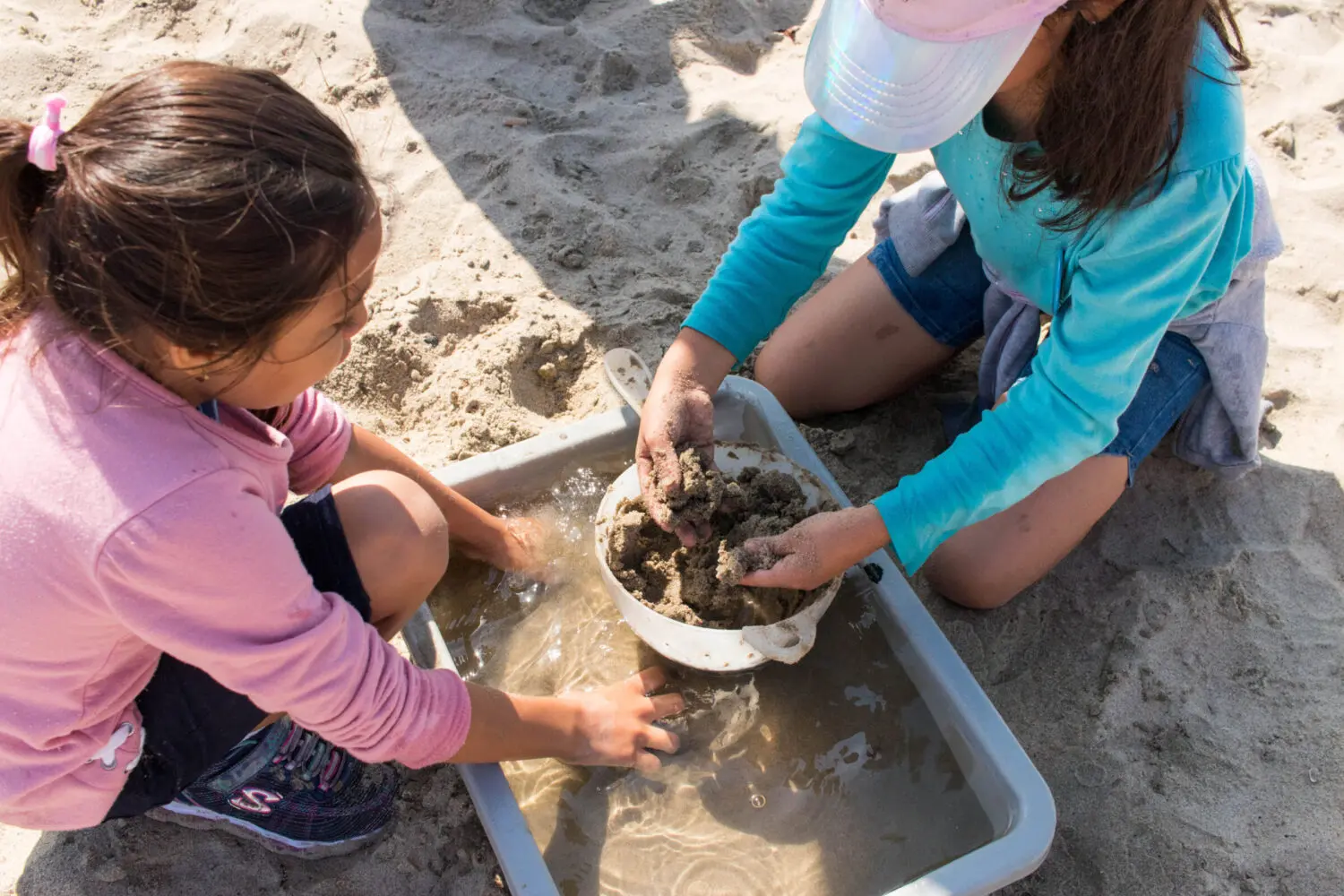
- Sandy Shore Habitat Search: Students are taken onto the Santa Monica beach, where they dig in the sand, identify marine life, and we discuss how humans are connected to the ocean. We can provide gloves if notified ahead of time.
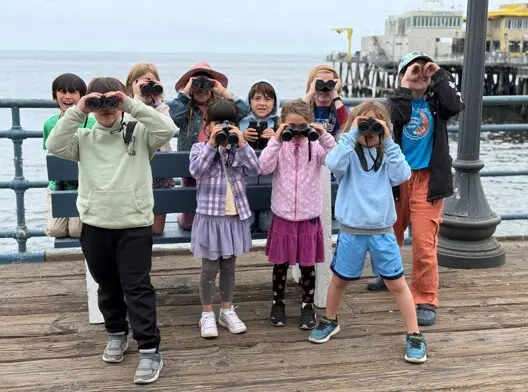
- NEW Pier Walk Observation: Students are taken for a walk on the pier with binoculars to see what avian and marine life we find. We focus on human impacts, discuss the history of the pier, and connections between humans and animals in our community. This activity goes outside and avoids the sand and water.
- NEW Microscope Safari: Students gather in the lab to discover tiny treasures in the ocean using a microscope. We take a closer look and discuss animal adaptations and life cycles. This activity stays indoors and avoids the sand and water.
- NEW Who Pollutes: Students gather in the lab to create a model of a watershed as a class and discuss how pollution accumulates. This activity stays indoors and avoids the sand and water.
- NEW Fatal Food Relay: A game played outdoors where students compete to find food and learn about the human impacts of pollution on the environment. This activity can avoid the sand and avoids the water.
- Beach Cleanup: Students are divided into teams, provided PPE and buckets, and participate in a guided beach cleanup. Students are empowered to create real change while doing a public service. (with signed waivers)
Reflection: All field trips will incorporate a Mindful Moment, giving students the opportunity to reflect on their emotional state while building empathy toward nature.
Curriculum Options
In addition to the above experiences, the teacher, faculty or organizer will choose one of the following educational themes for your group learning experience:
NEW Climate Resilient Landscapes: Climate change impacts like drought, flooding, and urban heat islands are already here. Discover the power that landscapes have to help our cities adapt to and mitigate these climate change impacts, while providing other nature and community-based benefits.
Supported NGSS Standards:
- DCI: ESS2.D: Weather and Climate; ESS3.A: Natural Resources; ESS3.C: Human Impacts on Earth Systems; ESS3.D: Global Climate Change
- CCC: Patterns; Structure and Function
- SEP: Obtaining, evaluating, and communicating information; Engaging in argument from evidence
Habitats: Together, we will explore four unique ecosystems that exist in our local oceans, while highlighting some creature’s survival adaptations. We also take a look into how humans are connected to the natural spaces around them.
Supported NGSS Standards:
- DCI: LS1.A: Structure and Function; LS2.A: Interdependent relationships in ecosystems; ESS3.A: Natural Resources
- CCC: Patterns; Structure and Function
- SEP: Obtaining, evaluating, and communicating information; Engaging in argument from evidence
Food Webs: What did you have for breakfast this morning? The answer is probably much different than that of your favorite ocean animal! Join us as we learn about the cycling of matter and energy throughout an ecosystem.
Supported NGSS Standards:
- DCI: PS3.B: Conservation of energy & energy transfer; LS2.B: Cycles of matter and energy transfer in ecosystems; LS4.C: Adaptation
- CCC: Patterns; Energy and Matter; Structure and Function
- SEP: Developing and using models; Engaging in argument from evidence
Human Impacts: Humans are as much a part of nature as nature is a part of them. In this lesson, students discover major impacts humans have had on natural spaces. We will also discuss potential solutions to environmental problems such as pollution, and the steps humans are taking to make these solutions a reality.
Supported NGSS Standards:
- DCI: ESS3.A: Natural resources; ESS3.C: Human Impacts on Earth System; ESS3.D: Global Climate Change
- CCC: Cause and Effect; Stability and Change
- SEP: Obtaining, evaluating, and communicating information; Engaging in argument from evidence; Analyzing and interpreting data
Careers in Science: Have you ever wondered how to turn your passion for science into a career opportunity? Join Heal the Bay educators and staff as we challenge the idea of a “scientist” while illuminating various career paths in STEM.
Supported NGSS Standards:
- DCI: ETS1.B Developing possible solutions; ESS3.B: Human impacts on Earth systems
- CCC: Scale, proportion, and quantity; Systems and System Models; Structure and Function
- SEP: Planning and carrying out investigations; Analyzing and interpreting data; Obtaining, evaluating, and communicating information
Coastal Cleanup Education: How is the trash on your street making it all the way to the ocean? Together, we discuss how watersheds connect your homes with several different ecosystems, including the ocean. Beach exploration component is a beach clean-up (with waivers signed).
Supported NGSS Standards:
- DCI: ESS2.C: The roles of water in Earth’s surface processes; ESS2.D: Weather and climate; ESS3.C: Human impacts on Earth systems
- CCC: Patterns; Cause and effect; Stability and change
- SEP: Analyzing and interpreting data; Obtaining, evaluating, and communicating information; Constructing explanations and designing solutions
2. Virtual Field Trips
In order to accommodate schools that can’t travel or those distance learning, Heal the Bay will continue to offer our Virtual Field Trip experience, which covers all the same topics as our In-Person programming and lasts for 1 hour.
When: Monday – Friday, 12pm & 1pm
3. Key to the Sea Field Trips
In partnership with Cabrillo Teaching Aquarium, USC Sea Grant, and Roundhouse Aquarium Teaching Center, Heal the Bay is proud to provide our Key to the Sea program. This interactive environmental education program for elementary school classes (K-5) covers a wide range of topics, including our local watersheds, pollution prevention, and marine conservation.
The 2-hour Key to The Sea Field Trip for elementary grades K-6, takes place almost entirely outside on the beach, providing the perfect setting for students to explore the sandy beach ecosystem with tools like sifters and binoculars. Students also get to meet the aquarium animals up close with touch tank exploration.
Participation in this program requires teachers to attend two FREE professional development workshops over two years, teaching them background knowledge and collaborating on how to use provided classroom activities and curriculum through the lens of environmental stewardship and preservation. Interested in watershed and environmental stewardship curriculum? Completing the Key to the Sea Program is as easy as 1-2-3! Visit our website to learn more.
When: Monday – Friday, 9:30 am – 11:30 am, 12pm – 2pm
How to Book:
-
- Select “Aquarium Field Trip”, “Virtual Field Trip”, or “Key to the Sea Field Trip”.
- Select the correct “add-on” for your total number of students for true field trip cost.
- Select a month, date, and time slot
- Only emboldened dates are available for booking
- Time slots are 9:30 AM-11:30 AM and 12 PM-2 PM. If you select a date and either slot is unavailable, then it has already been booked
- Completely fill out the intake form.
- Be sure to include personal and school contact information
- Include the number of students coming and if there are any special accommodations required for your class
- Please fill out the most accurate information when you book, however, if you have updates later in the school year, please use the “Edit Forms” button at the end of your confirmation email.
- If you’re a Title 1 school and would like to apply for grant funding, select “yes” when prompted.
- If you are a non-profit, please note, that you only qualify for grant funding if you serve the same community of students as Title 1 schools, particularly 40% or more of the student body comes from underserved communities. We usually base this off of low-socioeconomic status, but can include at-risk students, students with English as a second language, or students with differing abilities.
- If you select “yes”, you will receive an email from our Education Department to confirm details
- Payment can be made online using the “Pay Now” button at the bottom of the intake form
- You may select the “Pay Later” button as well, but all payments must be paid in full before you arrive on the day of your field trip
- Rescheduling or canceling your trip must be done at least three weeks before your field trip date to avoid any fees or loss of stipend.
- Select “Change/Cancel Appointment” button at the bottom of your confirmation email to reschedule or cancel your appointment
If your desired Field Trip Time isn’t available:
Because of the popularity of the program, our morning field trip time slots book up very quickly, but we do have a Wait List. Sign up today and we can let your organization know when a field trip time slot becomes available. Make sure that you’ve checked similar dates and consider afternoon slots for your preferred trip dates first, as we cannot guarantee that a morning spot will become available. We can modify an afternoon field trip if you cannot stay until 2 pm. Please complete the form in its entirety to be added to the Wait List.
If your school is LAUSD and Title 1, we also have Wednesday and Thursday dates blocked off with our partnership through the Day of Discovery program.
Transportation will be arranged and covered by the Office of Outdoor & Environmental Education. Programs must start and end on-time so please be prompt, or we may have to cut out certain segments of your trip.
Questions? Please contact Robert Ramos with any questions or concerns at rramos@healthebay.org. With advance notice, many of our programs can be customized for your class.