Top

Heal the Bay Blog

Category: Heal the Bay Aquarium

January 19, 2016 — Aquarium Outreach Manager Randi Parent can’t hide her soft spot for her newest officemate: Our baby giant black sea bass!

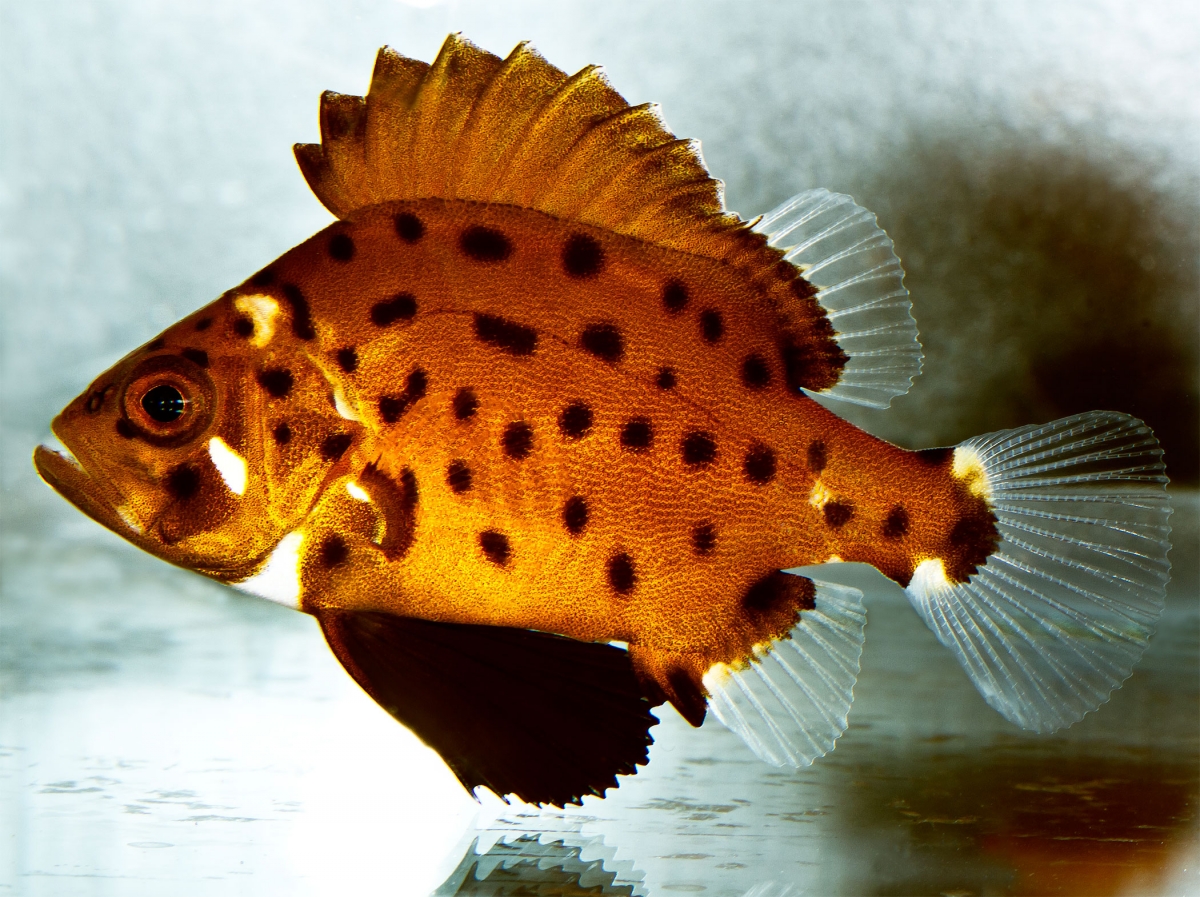
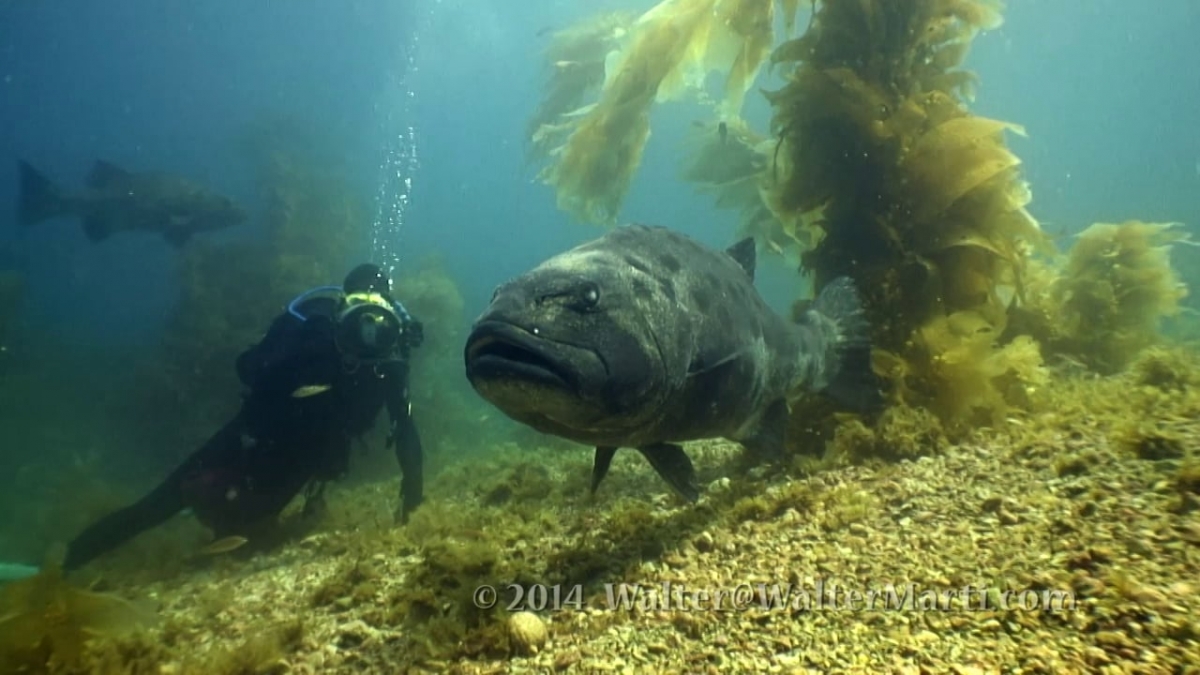
“Baby giant” seems like a contradiction in terms, but when it comes to the latest fish on exhibit at our Santa Monica Pier Aquarium, it is accurate. Under a year old and just shy of two inches long, our giant black sea bass, Stereolepis gigas, has a long way to go to live up to its name. But when it reaches maturity at between 13-15 years of age, this critically endangered species can reach seven feet in length and weigh upward of 500 pounds. It’s hard to equate this tiny, brownish-orange fish with oversized fins and dark spots with the much darker gentle giants (one diver’s blog refers to them as “aquatic Volkswagens”) that hang out in groups around kelp beds just off the coast, but they really are the same species.

Giant black sea bass are also described as so chill a diver can hand feed them – a trait that meant they were nearly fished to extinction by the late 1970’s. In 1982 the sport fishing of these big lugs was banned and a few years later gill netting of the species was also outlawed. Now, marine biologists are working to determine the success of these protections, and our Aquarium’s baby giant black sea bass is part of this unfolding story of wildlife conservation.

When researchers from Cal State Northridge and the Monterey Bay Aquarium approached senior aquarist José Bacallao about holding on to one of a handful of babies collected recently along the Southern California coast, he jumped at the chance. It turned out the researchers were “tipped off” by biologist and photographer Michael Couffer, who made an unannounced, stealth visit to the Aquarium the previous week to determine whether we were baby giant sea bass-worthy.  And naturally, we were!

Couffer will return each month to chronicle the fish’s growth, also recording any changes in its color scheme–paying particular attention to its dark spots. Are they unique markers? Can these spots be used to identify a particular giant sea bass throughout its life? The goal is to record a full life history of these giant fish and show the importance of conservation in preserving the species. Couffer can discuss at length the spawning habits of the adults, coloration changes and behavior of the juveniles along the sandy bottom in the most scientific terms. But even a seasoned biologist had to resort to an unscientific, one-word description of our newest fish: cute.

You can visit this adorable fish at the Aquarium Tuesday-Friday from 2-5pm, and weekends from 12:30-5. Count its spots and watch for updates!

From this… To this!
Baby giant black sea bass by Michael Couffer Giant black sea bass


December 17, 2015 —  Sleigh bells ring…holiday tunes play…everyone wants to sell you peppermint bark…is it really snowing on that corner of Santa Monica Boulevard?

Our Santa Monica Pier Aquarium has the perfect antidote for the holidaze: A break with the marine life at the Aquarium. (Gazing at fish is a soothing experience, trust us!) We’ve got special holiday hours the last two weeks of 2015. You can drop by Dec. 22-24, between 2 and 5 p.m. We’ll all take a holiday on Dec. 25, but from Dec. 26-31, you and out-of-town guests can visit us from 12:30-5 p.m. We’ll wish all a Happy New Year on the 31st, remain closed New Year’s Day, and reopen with our regular winter schedule beginning at 12:30 p.m. Jan. 2.

  • Special Holiday Hours! 
    Closed Dec. 25
    Open Dec. 26 through Dec. 31 from 12:30 – 5:00 pm
    Closed Jan 1, 2016

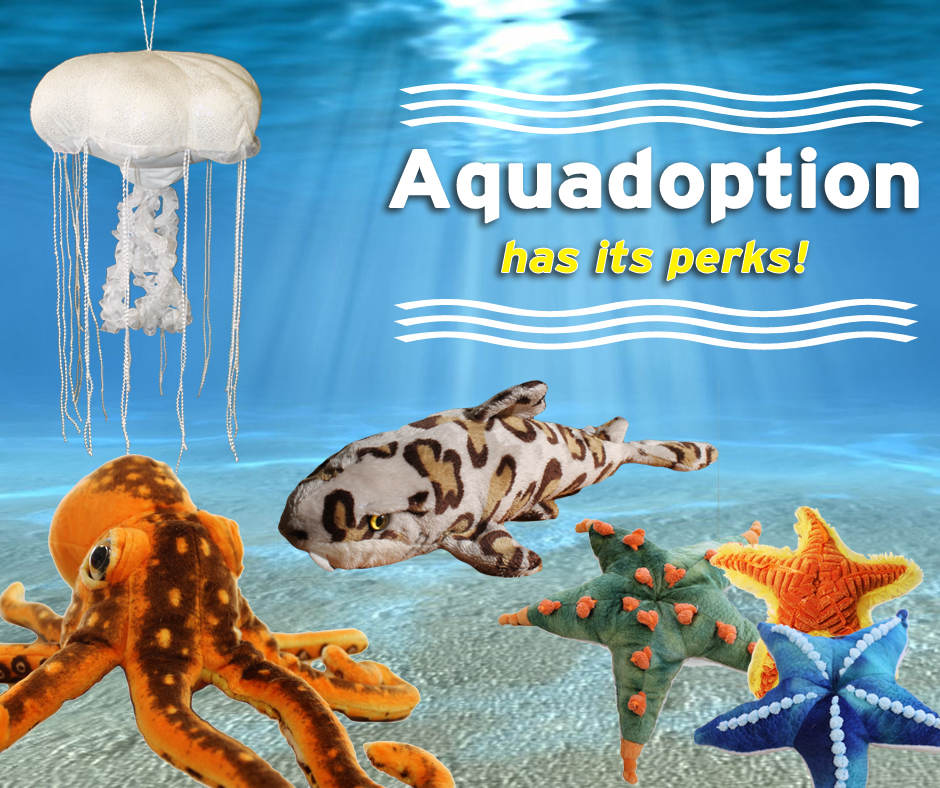
A visit to the Aquarium can also solve the problem of what to get for the hard-to-buy for folks on your list. Consider making a donation to Heal the Bay in a special someone’s name or give the unique gift of Aquadoption, the program that underwrites the daily care of our marine life along with a yearlong membership to Heal the Bay, which includes free family admission to the Aquarium to visit your adopted animal for the full year.

For a limited time during the holiday season, the Aquarium is offering its round stingrays for adoption. And for a special holiday price, a plush stuffed animal stingray (incredibly cuddly, no sharp stinger on this cutie) is included in the adoption package. Four other animals exhibited at the Aquarium are available for “aquadoption” year-round; the stingray will only be featured for the month of December.

Arrange an Aquadoption by registering online, during a visit to the Aquarium at 1600 Ocean Front Walk, beach level, beneath the Carousel building, or by calling 310-393-6149, ext. 114 for more information.

From all the folks and the fishes at the Aquarium, Happy Holidays!

Aquadoption at the Santa Monica Pier Aquarium


Nov. 19, 2015 — This blog was written by Taylor Spesak, Public Programs Intern, and Catherine Hoffman, Programs Coordinator, at our Santa Monica Pier Aquarium.

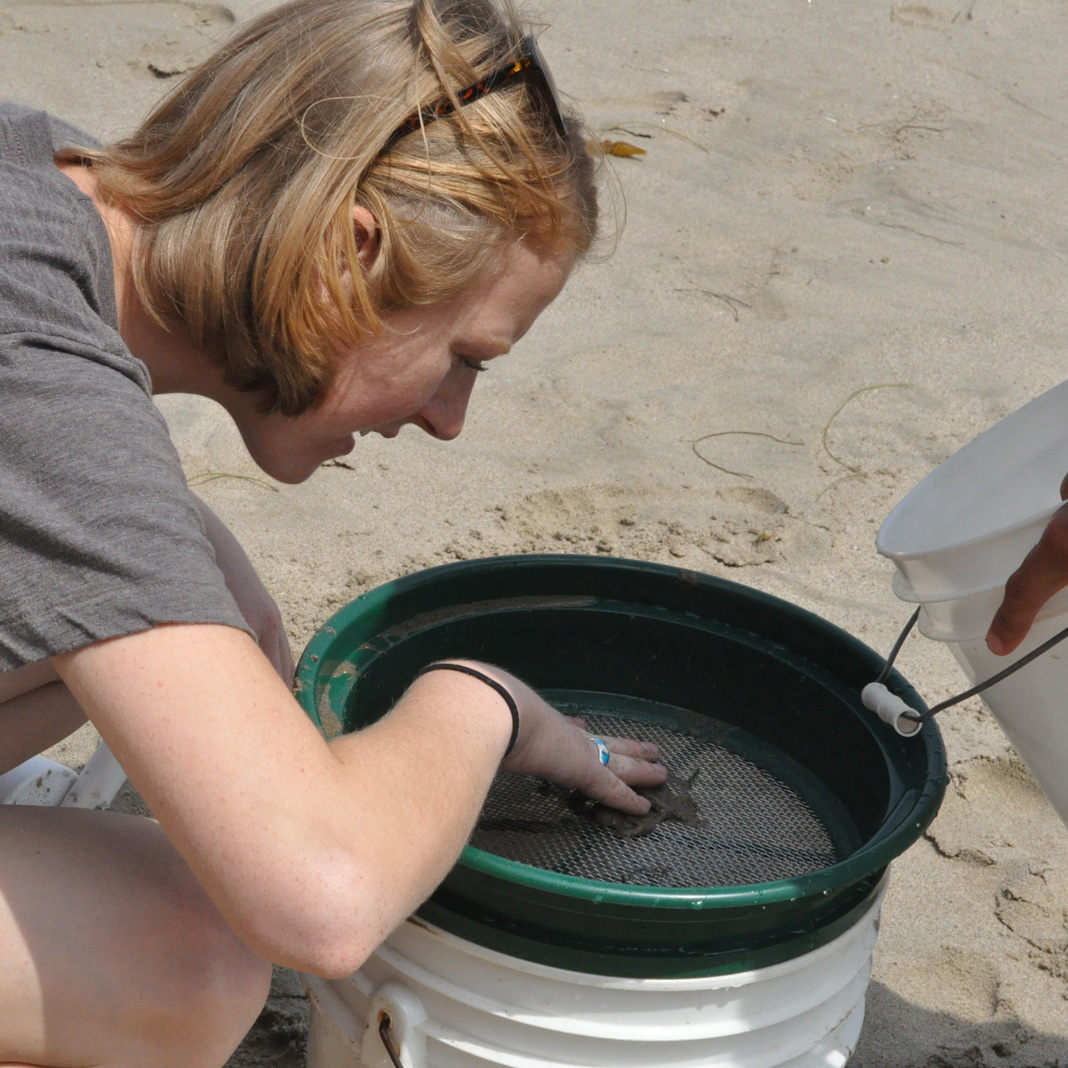
Beneath your toes at the beach are thousands of sand crabs just trying to make it through the day. Most beachgoers walk right over them without a care, but Santa Monica Pier Aquarium citizen scientists are eager to find them!

Heal the Bay recently partnered with the statewide LiMPETS program to bring sand crab monitoring to the Santa Monica shoreline just outside the Aquarium’s doors. This program activates people along the entire California coast to do real science through hands-on data collection.

But…why do we care about sand crabs? For starters, they can tell scientists a lot about the sandy beach ecosystem. For example, if there is a low number of crabs during a collection, water quality may be poor or a high number of predators may be snacking on the sand crabs. The list could go on and on. By simply counting these overlooked creatures, scientists can make conclusions about the entire ecosystem’s overall health.

Citizen scientists from the Aquarium are focusing on sand crabs specifically in the area around the Santa Monica Pier. We’re examining several factors that may be affecting the number of crabs present, like how long it’s been since a heavy rain and whether the sample spot is under the Pier. We’ve already noticed that there seem to be more crabs during dry spells and more crabs directly under the Pier.

The findings are intriguing, and we look forward to analyzing more data. That’s where you come in!

Experienced or not, anyone can be a citizen scientist, and we’d love to do science with you. As long as the tides are low, the surf isn’t too aggressive, and there is no rain we will be out collecting data every Wednesday at 3:00pm. No training required! Meet us at the Aquarium and we’ll then head down to the beach to collect our sand crabs. This program can also be used as a service or linked learning opportunity for middle and high school students. An AP Environmental Studies class from Los Angeles Academy of Arts and Enterprise has already helped us collect great data.

So come get crabby with us on Wednesday, November 25, at 3pm and kick off your citizen science career under the Pier!

For more information, please email Catherine Hoffman at choffman@healthebay.org.

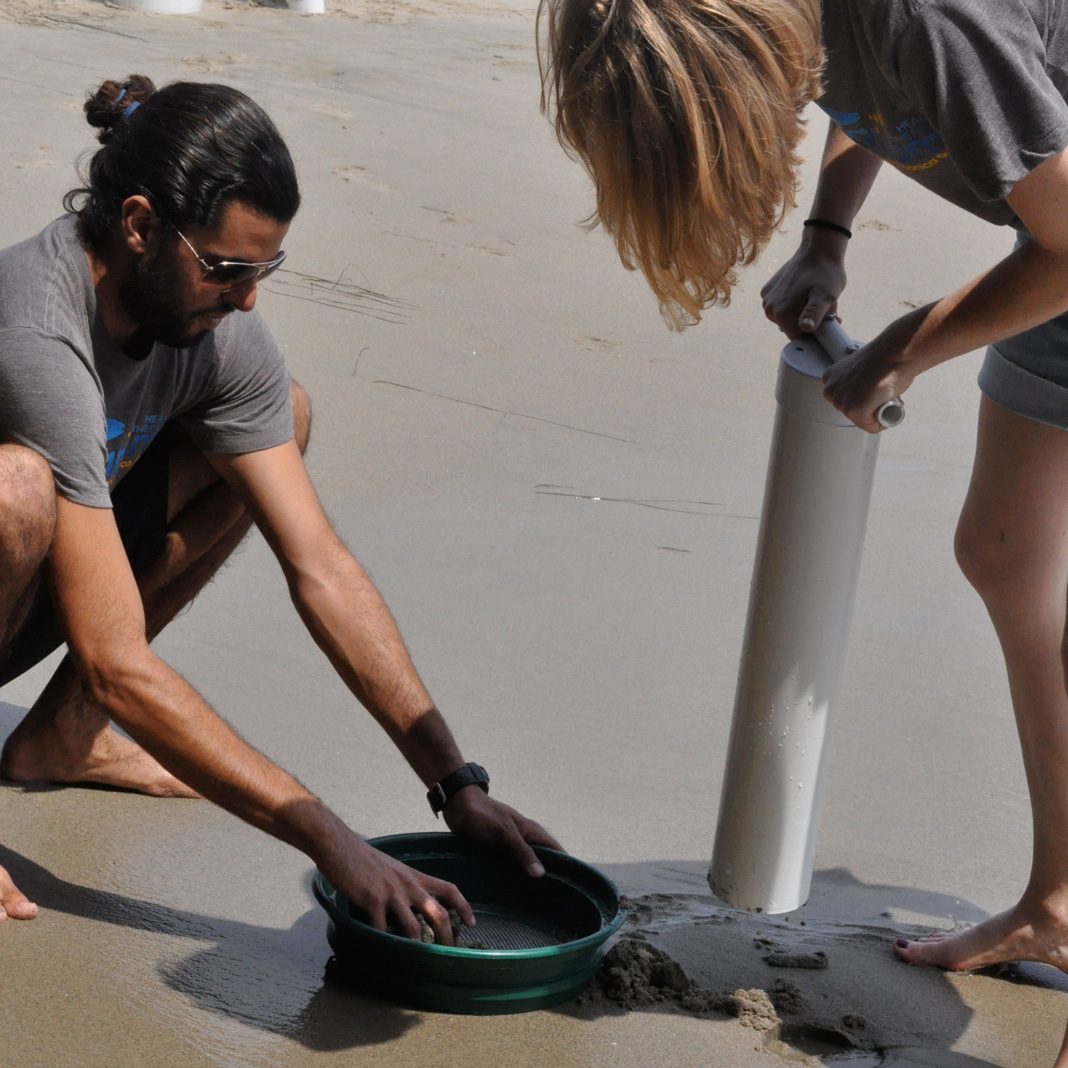
Blogger Catherine hunting for Sand Crabs                                                                            Catherine and Laz hunting for sand crabs


With a predicted El Niño “too big to fail” heading for Southern California, we proclaimed Oct. 11-17 El Niño Week to help us all understand what causes this meteorological phenomenon, offer tips to prepare, and explore the ways that expected heavy rains can be turned to our advantage. We have a number of folks and establishments to thank for their help and support in making El Niño Week a success.

Thanks to WaterLA’s Melanie Winter who led a conversation at our Santa Monica Pier Aquarium about water and land use in L.A and to RainReserve for demonstrating the myriad devices available for capturing rainwater.

We’re also grateful to Bill Patzert, a scientist at the California Institute of Technology’s NASA Jet Propulsion Laboratory (JPL) in Pasadena, for giving an informative and entertaining talk to a packed room at the Aquarium.  Patzert managed to have the crowd in stitches as he explained the science behind an El Niño.

And finally, a huge thank you to the five local establishments that got into the spirit of the week by creating El Niño inspired cocktails and pledging a portion of the proceeds to Heal the Bay from each clever concoction sold throughout El Niño Week. Thanks to these restaurants: The Lobster, Cassia, Hotel Casa del Mar’s Terrazza Lounge, Locanda del Lago, and Rusty’s Surf Ranch.

We love Halloween and Dia de Los Muertos at Heal the Bay, and at our Aquarium we celebrate with a weekend-long Fishy Fest. The annual event is made all the more festive thanks to the City of Santa Monica’s Resource Recovery and Recycling division’s contribution of gently used and brand new costumes. A parade of ghosts and goblins along the Pier is a favorite feature of the weekend, and the trick or treating made all the sweeter by our participating neighbors: Rusty’s Surf Ranch, The Albright, Blazing Saddles, Bubba Gump Shrimp Co. and Pacific Park.


Bill Patzert may be a JPL super-scientist and El Niño geek, but he really is a fun guy, says Heal the Bay vp Sarah Sikich. Come hear him speak next week at our Aquarium.

I’m very excited to announce that Dr. Bill Patzert, a leading climatologist at NASA’s Jet Propulsion Laboratory, will be joining us for El Niño week at the Santa Monica Pier Aquarium on Oct. 13 for a feature presentation, “Whiplash: From Super Drought to El Niño.”  Dr. Patzert’s forecasting prowess has earned him the nickname “Prophet of California Climate.” His work involves improving our understanding of Earth’s climate and important environmental problems ranging from El Niño, La Niña and longer-term climate forecasts. I’ve enjoyed talking with and learning from Dr. Patzert at meetings and science forums over the past several years. With a quick wit and fresh sciencey style, he makes forecasting and environmental science fun. He also loves to surf! He joined me for a little appetizer Q&A to get you ready for the special event:

What piqued your interested in science, and compelled you to pursue it as a career?

My dad was a sea captain and taught me celestial navigation, shooting the stars and the sun with a sextant. At night he would point out the North Star and the many constellations and tell me about the mythology of each. This was heady stuff and fascinating for a budding geek. Many men and women have inspired me. My parents were supportive and stimulating. They loved ideas, education and the natural world. Many of my mentors and professors were superb. And, reading Rachel Carson’s “The Sea Around Us” opened new worlds to me. I also had the good fortune to spend a week with the late Arthur C. Clark at his home in Sri Lanka. Wow, what a great guy! He encouraged me to be fearless and let my imagination soar.

You received your Ph.D. in Hawaii?! You must have taken some study breaks to enjoy the beach. Do you have a favorite beach or snorkel spot on the islands?

Honestly, I chose Hawaii for graduate school so I could surf (which I did and still do), check out the ladies at Waikiki and blast my eardrums with the great music of the 60’s – The Beach Boys, Bob Dylan, Jimi Hendrix, etc. I surfed and dove every Hawaiian Island and much of the South Pacific. It was sweet!

El Niño vs. The Blob: who wins?

El Niño trumps The Blob. Come to my talk to find out why.

With the recent discovery of water on Mars, have you considered taking your oceanography skills to space?

There is no space more important than Earth space. I’ve got my hands full here at home. I follow and admire the research of my Martian buddies here at JPL, but fending off man-made climate change keeps me Earth bound.

What are your hobbies when you need a break from climatology?

I’m a reader, a mystery junkie. Mysteries are addictive! Good historical novels are a treat, too. I collect art of all types… my tastes are eclectic. I have Mexican folk art, Japanese prints, Persian rugs and, my prize collection – Hawaiian surf shirts. For exercise, I do some biking, romantic walks on the beach, some swimming and surfing, and have good intentions of being fitter. And, I raise cacti and succulents.  I love HBO.

You can read more about Patzert’s take on the coming El Niño, which he describes as “too big to fail,” in this week’s interview with the Los Angeles Times.


Savvy Seafood 

Each time we go to a supermarket or restaurant we are confronted with a choice about what food items to buy.  Health concerns and a growing desire to eat local and sustainable foods have made this decision harder than ever.  Each month, Nick Fash, education specialist and Key to the Sea manager at our Santa Monica Pier Aquarium, will help you make informed choices at the seafood counter as well as at your favorite local restaurant. And try one of his delectable recipes included at the end of this blog.

________________________________________________________________________

Salmon? What exactly does this mean when you read it on a menu?  The truth is that it could be farmed, or wild, or any one of six different fishes from two different groups from opposite ends of the earth.  Not so simple anymore, is it?

There are two basic types of salmon: Atlantic and Pacific.  The Atlantic salmon is in the genus Salmo and originally came from the Atlantic Ocean (I say originally as they are now farmed all over the world) and Pacific salmon is in the genus Oncorhynchus, which come from the Pacific Ocean.

Salmon are born in fresh water, travel to the ocean in their adult life and return to the fresh water to lay eggs. They are a keystone species, meaning they play an important role in the nutrient-starved ecosystems where they spawn.  When the Pacific salmon die, the nutrients in their body that they obtained from their lives out in the ocean are released into the Arctic, beginning the explosion of life that occurs during the spring and summer months.  Without these nutrients the Arctic ecosystem would be unable to function properly.

Salmon are extremely sensitive to environmental changes in the ocean as well as on land.  Their populations are suffering from logging, mining, pollution and changing ocean conditions. And salmon farming is the most recent threat having a major impact. Not only are these salmon farms destroying the ecosystem with all of the waste they produce, they are spreading diseases and parasites to the wild salmon as they migrate out to the ocean.  So we are not only destroying one of nature’s finest food sources, replacing them with highly inferior farmed salmon, we are also at the risk of dismantling an entire ecosystem.

While here in Southern California we do not have open pen aquaculture – salmon farms set up off shore along the coast – we do have other problems that impact salmon populations, like pollution, coastal development and habitat destruction, which can impact our own fisheries.  Heal the Bay has spent the last 30 years cleaning up our waters, protecting our oceans by helping to establish Marine Protection Areas, and working to make our fisheries healthier. 

Looking to learn more about the plight of wild Pacific salmon?  Come to the screening of The Breach on May 20th at Cross Campus in Santa Monica, eat tasty treats, and hear chefs, biologists and the filmmaker discuss what we can all do to help.

Heal the Bay members will get 20 percent off the ticket price by using the code BREACH20. Tickets are available here:

https://www.eventbrite.com/e/the-breach-screening-reception-santa-monica-tickets-16436392693 _______________________________________________________________________

Wild Alaskan Salmon  

(serves 4)

                          o  3lb Wild Alaskan Salmon fillet, with skin on


                    Sauce

                                      o  1 cup plain Greek yogurt

                          o  2 tablespoons extra virgin olive oil

                          o  1 teaspoon finely grated lime zest

                          o  1 tablespoon fresh lime juice

                          o  ½ teaspoon finely grated orange zest

                         o  1 teaspoon fresh orange juice

                          o  ¾ teaspoon salt

                        o  ¼ teaspoon honey


Preheat broiler.  Line rack of broiler with foil and lightly brush with oil.

Pat filet dry and check for bones by running finger along the filet.  If you find any bones you can pull them out with a pair of clean pliers.  Season with salt and pepper.  Broil 4-5 inches from heat for 7 minutes, cover with foil and continue to cook in the broiler for another 7-10 minutes.


While the salmon is broiling whisk together all sauce ingredients.  Season with pepper to taste


Enjoy – Nick


Summer’s in full swing and the kids are voicing that all too familiar mantra: “what can I do? I’m bored!” Parents, don’t panic; we’ve got this one. Sign your kids up to enjoy some summer fun at our Santa Monica Pier Aquarium’s Science Adventures Camp.

Weeklong sessions provide kindergarten through fifth graders with fun-filled days with the fishes – and eels, sea horses and jellies – plus too many other species local to the Santa Monica Bay to name. Campers enjoy exclusive time in the Aquarium, plenty of interaction with live animals, and a week’s worth of games, crafts and laboratory practices. A different marine-themed topic is explored each day.

Whether they’re in it for the science, the animals or the beach culture, this camp is a fun, educational experience for all. It’s just enough science for a summer day! Sign up early to guarantee a spot in this popular program.


Marketing/Communications Intern Darrin Moret got a behind-the-scenes peek at the Santa Monica Pier Aquarium’s newest exhibit. An LMU class of ’13 alumnus, Darrin is a writer and enjoys the beach, surfing and travel. 

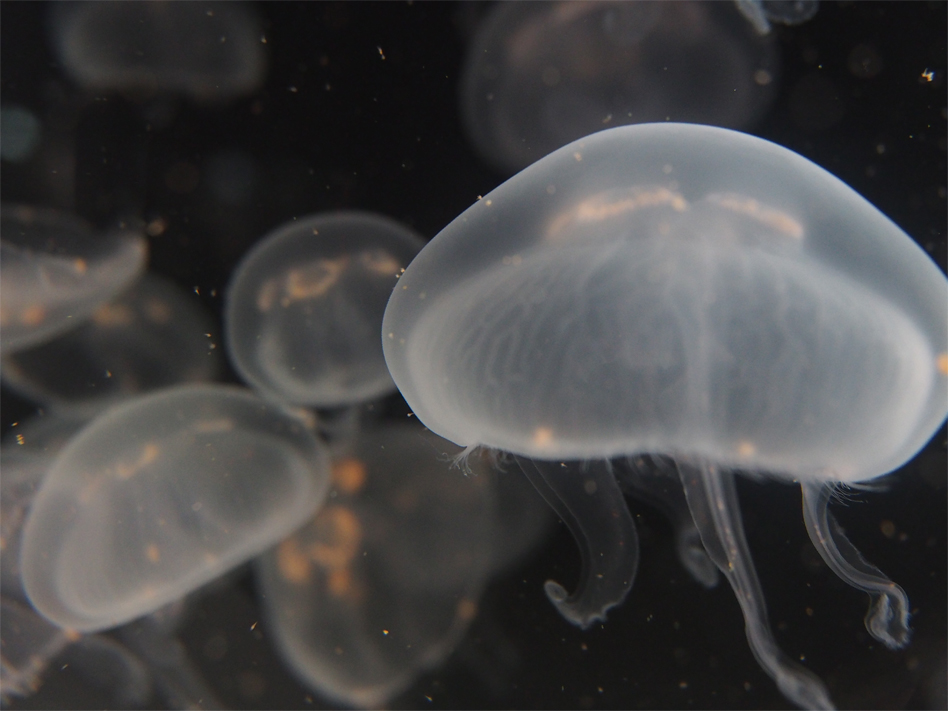
Close-up of moon jelly at Santa Monica Pier Aquarium

There’s more to see than what meets the eye at the Santa Monica Pier Aquarium these days. It’s the little guys that are the stars of the show at “Catch of the Day”—a refreshing new exhibit utilizing cutting-edge digital imaging technology to shine the spotlight on some of the Bay’s smallest critters. Tanks filled with sea stars, snails, hermit crabs and California killifish now await visitors along with the Aquarium’s more established eel, ray and shark residents.   

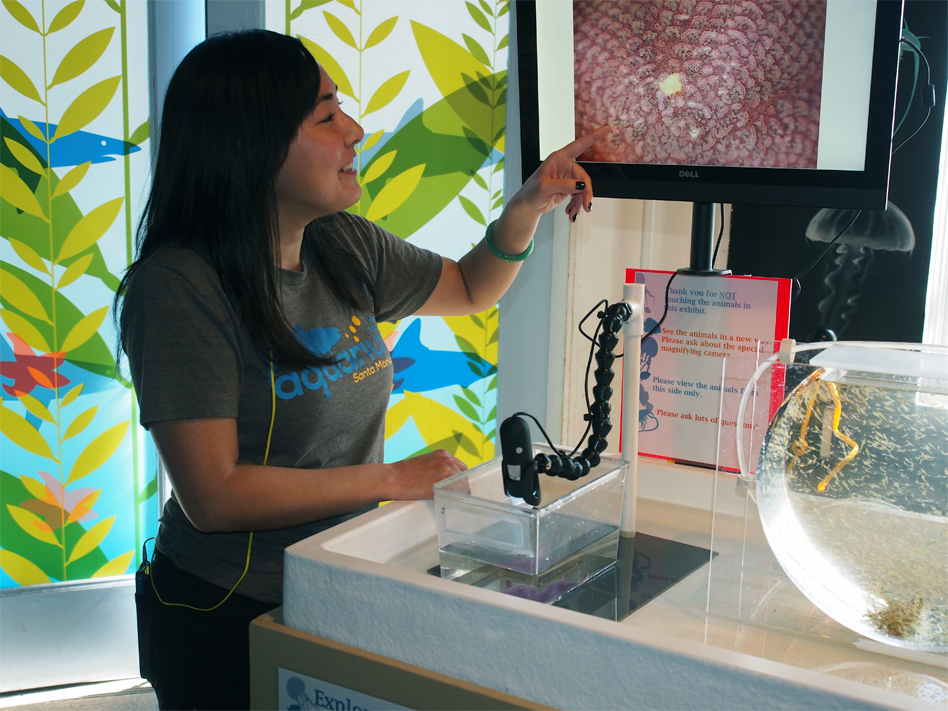
This dynamic exhibit highlights species of local marine life often overlooked in traditional aquarium displays, using a high-definition digital microscope camera and monitor to allow patrons to view these creatures at a level of detail not possible with the naked eye. “You really get a close look at little things most people miss,” says José Bacallao, the exhibit’s designer and the Aquarium’s Senior Aquarist and Operations Manager.

Aquarist Akino Higa shows off the new exhibit at Santa Monica Pier Aquarium

While small, many of the species featured in the exhibit form an integral part of the food web in the local marine ecosystem. Some of the fish that may be found in the tanks, including juvenile black surfperch, are important gamefish that support a thriving recreational fishery and are commonly caught by anglers off the Santa Monica Pier.  

Nestled under the Pier’s wooden deck and beneath the historic carousel, the Santa Monica Pier Aquarium could easily be missed by anyone visiting the more conspicuous attractions topside. However, for those who make it inside, this aquarium provides a unique opportunity to learn more about the marine ecosystem that thrives just offshore. Patrons young and old take delight in getting an up-close look at horn sharks in an open-top tank, initiating staring contests with moray eels and touching (gently, of course) a variety of invertebrate species in the touch tank. In an effort to keep their exhibits fresh and exciting for visitors, José and his team periodically update the tanks with newly collected specimens for viewing.      

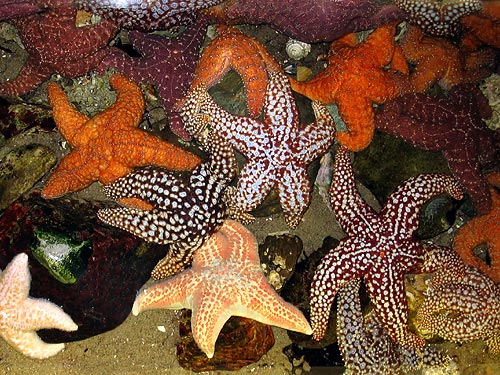
Touch tank sea stars at Santa Monica Pier AquariumWhile it may be the fish that draw most of the attention, it is the Santa Monica Pier Aquarium’s dedicated team of aquarists and volunteers that really make this place special. In addition to maintaining exhibits and informing visitors about marine life, they share a passion for helping protect the ocean by stressing the importance of environmental stewardship. José says his love for working with animals and his staff at the Aquarium is the most exciting thing about his job, his enthusiasm for which is apparent to anyone in his presence.  
 

For a closer look at the “Catch of the Day” and other exhibits, drop by the Santa Monica Pier Aquarium Tuesdays through Fridays from 2:00 to 5:00 p.m., and weekends from 12:30 to 5:00 p.m. Admission is free for kids 12 and under and $5 for visitors 13 and older. In 2015, the first Wednesday of every month is free, thanks to the generous sponsorship of Wells Fargo.


Have a houseful of holiday guests? In need of an outing that won’t add too much stress to the already over-stretched wallet? Heal the Bay’s Santa Monica Pier Aquarium knows you’ll be looking for a fun destination to entertain all ages. Our marine science center will be open special holiday hours beginning Friday, Dec. 26th through Dec. 31st. Visit any of those days from 12:30 to 5:00 p.m.

Tuesdays are feeding days, and visitors are invited to help feed the sea stars at 2:30 p.m. A presentation and feeding at the open top shark and ray exhibit can be a refreshing experience, as the sharks often spray water right out of their tanks while anticipating their meal.

Any day of the week, guests can play hide and seek with an octopus, get a hug from a sea urchin, test their water conservation knowledge at the Watch Your Water exhibit, or put on a puppet show in the Aquarium’s puppet theater. 

The Aquarium will be closed New Year’s Day, and return to regular public hours on Friday, January 2nd, which begin at 2 p.m.

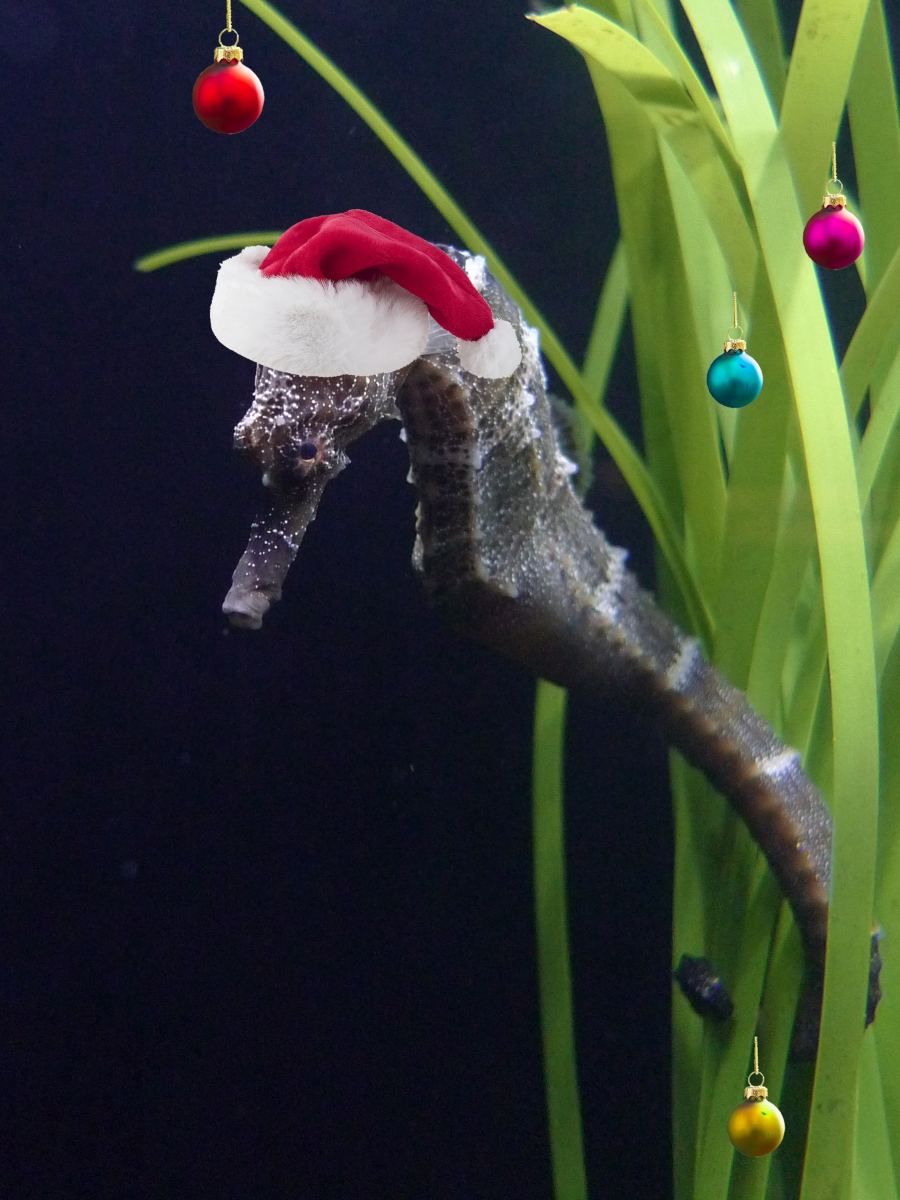
Festive Seahorse in a Santa Hat


The holidays.

All those decorations, the wrapping paper, the packages, the extra groceries…wouldn’t it be great to have a couple of extra arms to help out with it all? Heal the Bay’s Santa Monica Pier Aquarium has a unique gift idea that will provide you with some extra arms—eight arms, to be exact.

Every December, our Aquarium offers one of its most popular marine creatures up for Aquadoption at a special holiday price. This year’s animal is…xylophone roll please…the octopus! Throughout the month of December, the octopus is available for $50–a bargain price that includes a year’s membership to Heal the Bay along with free admission to the Aquarium for a family of four. 

Octopuses are believed to be one of the smartest invertebrates on Earth, demonstrating the ability to learn new skills by watching one another. With their talent of changing color and texture, the octopus is a fascinating animal to observe.

The Aquadoption program provides all the benefits of adopting an animal while leaving the daily care to the Aquarium staff. If you choose to become an octopus mom or dad this holiday, you’ll receive a personalized packet with an adoption certificate, photo, fact sheet and two guest passes to the Aquarium. 

So save your arms and give everyone on your list a gift that will keep on giving all year long. You’ll make a lonely cephalopod’s day!

Your Aquadoption will underwrite the daily care and feeding of an Aquarium animal of your choice, and will also help support Heal the Bay’s ongoing mission to keep our oceans safe, healthy and clean. Thank you!

3 Ways to Aquadopt:

  1. Online
  2. By phone: Call 310-393-6149, x102
  3. In person: Visit us under the Pier Tue-Fri, 2-5pm or Sat-Sun, 12:30-5pm.

Santa Monica Pier Aquarium holiday aquadoption special