Top

Heal the Bay Blog

Category: News

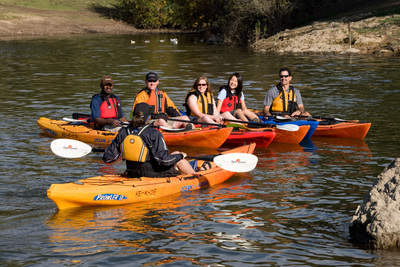
As the largest consumer cooperative in the country, REI walks the talk–or hikes the hike, as it were. Champions of environmental stewardship and outdoor education, they donate millions of dollars and volunteer hours each year to support the vital work of nonprofits like Heal the Bay. Check out their unique GeoStories site for a multimedia peek into the environmental causes they support around the country.

Our Stream Team program has been the lucky beneficiary of REI’s generosity for years. Without REI’s support, we wouldn’t be able to accomplish our critical Malibu Creek water quality monitoring and habitat restoration efforts.

Heal the Bay believes in curious, conscious, continual exploration and preservation of our aquatic environment, and REI embodies those values.

Thanks, REI, for helping us heal the Bay!


Corporate Healer cleanups in recent weeks chalked up some impressive numbers: collectively, employees of these civic-minded corporations amassed more than 300 pounds of trash and more than 3,000 cigarette butts!  Thanks so much to the following ten Corporate Healers: AOL, Shopzilla, Avery Dennison, Symantec, Lionsgate Entertainment, Horizon Media, Salesforce, Ares Management, Disney VoluntEARS and Performics.


Thanks also to the Santa Monica Rotary Foundation for supporting our Santa Monica Pier Aquarium and we’re grateful that Safeway Foundation is once again committed to helping with Coastal Cleanup Day.  And last but not least, we thank the David and Lucile Packard Foundation for their generous support of our Sustainable Fisheries work.


REI Kayak trip with Heal the Bay


Kirsten James, our Science and Policy Director for Water Quality, heralds the arrival of the second and final phase of the City of Los Angeles’ ban on plastic bags.

July 1 marks an important milestone for Heal the Bay and our entire region – the end of the single-use plastic bag in the city of Los Angeles!  With phase 2 of the ban soon to be implemented, we are now the biggest city in the nation to successfully tackle the economic and environmental scourge of the plastic bag.

Under a ban championed by Heal the Bay and enacted by the City Council, large retailers stopped distributing single-use plastic bags six months ago and started charging 10 cents for recycled paper bags. Now the same requirements kick in for certain small retailers like convenience stores and pharmacies. With an estimated 2 billion single-use plastic bags taken out of circulation each year in the city due to this policy, we can expect to see a lot less blight and waste in our communities and shorelines.

It has been a long road to get us to this spot. Heal the Bay and our partners urged the city, other communities and the state for many years to move forward with bag policies and other measures to reduce plastic pollution. The efforts are now paying off: Some 108 jurisdictions in California have joined the fight and implemented similar policies. SB 270, a bill authored by state Sen. Alex Padilla that takes these requirements statewide, is now poised to be signed into law later this year. 

It is reassuring to witness the ease of implementation as cities become more sustainable. The city of Los Angeles and other communities have reported few violations or complaints in the start-up period. The vast majority of consumers realize that it doesn’t take much effort to think beyond wasteful single-use products and remember a reusable bag alternative.

For those who haven’t fully transitioned into reusable mode, remember to start bringing your reusable bags to small stores such as corner drug stores, mom-and-pop groceries and convenience marts like 7-Eleven beginning July 1.

People often ask our policy team, “What’s next for you guys after the bag ban?” Unfortunately, there’s still plenty more to be done to address plastic pollution and single-use products clogging our waste-stream and oceans. Single-use bag policies can act as a gateway to get people thinking more sustainably in other areas of their life, whether it’s skipping plastic water bottles or refusing drinking straws at restaurants. Next up for Heal the Bay is focusing on a strong statewide trash policy. We’ll keep you posted.

In the meantime, start spreading the news about the ban…and maybe put a plastic bag in your scrapbook to show your grandkids.


FAQ via lacitybag.com

When does the ban on plastic carryout bags take effect?

To reduce waste and pollution, on January 1, 2014, the City of Los Angeles will ban plastic carryout bags and require a $0.10 fee on each paper carryout bag requested by the customer at certain large retailers. On July 1, 2014, the City of Los Angeles will ban plastic carryout bags and require a $0.10 fee on each paper carryout bag requested by the customer at certain small retailers.

Are all shapes and sizes of plastic bags banned?

Plastic carryout bags at large and small retail stores affected by the ordinance are banned. Not all plastic bags are banned. Bags allowed are:

  • Produce bags used for bagging vegetables, fruits and meats, and pharmacy bags;
  • Restaurant bags;
  • Hardware stores bags (e.g. Home Depot, Lowes and others); and
  • Select retail stores bags (e.g. Macy’s, JC Penny, Ross, TJ Maxx, and others).

Consumers may consider using used bread or chip bags, sandwich bags, liners for cereal boxes, and other types of bags as an alternative for wet waste and pet droppings.

What types of stores are included in the ban?

Large stores with gross annual sales of over $2 million selling dry groceries, canned goods, or nonfood items and perishable items or stores of at least 10,000 square feet of retail space generating sales or use tax and has a licensed pharmacy are included in the ban (e.g. Ralphs, Target, Walmart, Vons, Food 4 Less, 99cent Only Stores, Walgreens, CVS, Rite Aid, and others).

Small stores such as drug stores, pharmacies, supermarkets, grocery stores, convenience food stores, food-marts, and other entities engaged in the retail sales of a limited line of goods that sell milk, bread, soda, and snack foods, in addition to stores with a Type 20 or 21 license issued by the Department of Alcoholic Beverage Control are included in the ban (e.g. 7-Eleven, AM PM Mini Markets, and others).

The City of Los Angeles’ program is similar to the ordinances adopted by a number of local jurisdictions including the cities of Long Beach, Pasadena, and Manhattan Beach as well as the unincorporated areas of Los Angeles County.

Where can I get reusable bags?

ON JULY 1 ONLY: Visit these locations in LA for a free bag, while supplies last!

Reusable bags are widely available for purchase at select retail stores and markets. Reusable bags are also being distributed by LA Sanitation through select City-sponsored events and locations on a first come, first served basis and provided at no cost while supplies last.

For Retailers

How would my store comply with the Single-Use Carryout Bag Ordinance?

  • Cease providing customers single-use plastic carryout bags (produce bags or product bags are exempt).
  • Make available to customers reusable carryout bags or recyclable paper carryout bags.
  • Charge customers requesting recyclable paper carryout bags 10 cents per bag (No store shall rebate or otherwise reimburse customers for any or all of the 10-cent charge required).
  • Provide at the point of sale, free of charge, either reusable bags or recyclable paper carryout bags or both, at your option, to any customer participating either in the Electronic Benefits Transfer (EBT), Special Supplemental Food Program for Women, Infants, and Children (WIC) or in the CalFresh/Supplemental Nutrition Assistance Program (SNAP) for purchased items covered under those programs. Items not covered under these programs e.g. beer, wine, liquor, etc. will not require stores to provide free of charge, either reusable bags or recyclable paper carryout bags to carry these items.
  • Indicate the number of recyclable paper carryout bags provided and the total amount charged for the bags on customer receipts.
  • Complete and submit Quarterly Report Form online at http://san.lacity.org/ no later than 30 days after the end of each quarter.

What information will be included in the Store Quarterly Report?

  • Total number of recyclable paper bags provided (including those provided free of charge to EBT, WIC, and/or SNAP customers).
  • Total amount collected from the paper bag charge (NOTE: Actual amount collected from the paper bag charge are to be retained by the store).
  • Efforts to promote reusable carryout bags, if any.

Are biodegradable plastic bags allowed?

No. Plastic carryout bag means any bag made predominantly of plastic derived from either petroleum or a biologically-based source, such as corn or other plant sources. It includes compostable and biodegradable bags.

Can biodegradable plastic bags at least 2.25 mils thick be considered “reusable”?

Yes, as long as the requirements of a Reusable Bag as defined in the Ordinance are met.

Will there be a charge for small sized paper bags distributed at checkout, typically provided by small stores to their customers?

Yes. Any store that provides a recyclable paper carryout bag at checkout to a customer must charge the customer 10¢ for each bag provided to carry out their purchase.

Which bags should I charge 10¢ for?

You must charge 10¢ for each paper bag provided to a customer for the purpose of carrying purchased goods away from your store. Carryout bags provided to WIC/SNAP purchases are exempt from this charge.

Are prescription bags subject to the 10-cent charge?

According to the California Pharmacy Board, pharmacies are required to keep medical information confidential. Since many pharmacies use opaque bags for this purpose, only carryout bags used for prescription drugs would be exempt from the Bag Ordinance. Carryout bags customers obtain for other purchased items would still be affected.

Is there a law that requires me to put alcoholic beverages into carryout bags?

The California Department of Alcoholic Beverage Control has no law that mandates a retailer provide a bag for purchased alcoholic beverages. If a paper bag is provided, you must apply the 10¢ charge.

What is the 10-cent charge used for?

All monies collected by a store under this Ordinance will be retained by the store and may be used for:

  • Costs associated with compliance
  • Actual costs of providing recyclable paper carryout bags
  • Costs associated with a store’s educational materials or education campaign encouraging the use of reusable bags including “Remember Your Bag” signage in parking lots.

Does the 10-cent charge per paper bag apply to everyone? Who is exempt?

All affected stores authorized to accept EBT, WIC, or SNAP purchase payments must provide at the point of sale, free of charge, either reusable bags or recyclable paper carryout bags or both, at the store’s option, to any customer participating either in the EBT, WIC, or SNAP for purchased items covered under those programs. Items not covered under these programs e.g. beer, wine, liquor, etc. will not require stores to provide free of charge, either reusable bags or recyclable paper carryout bags to carry these items.

Is the 10-cent charge per paper bag taxable?

No, according to the State Board of Equalization 10-cent charge on recyclable paper carryout bags would not be subject to State sales tax.

Are reusable bags less than 15 L in volume capacity allowed to be given away for small stores that typically sell items smaller in size and quantity to individual customers?

No. Customers are to be reminded to bring back their reusable bags when shopping. If only a small number of items are being purchased or the items being purchased have handles, customers can easily carry away without a bag.

Who is responsible for enforcement of the ordinance?

Bureau of Sanitation of Department of Public Works, City of Los Angeles will be responsible for enforcement of the Ordinance.

What are the penalties and fines for Ordinance violations?

  • Written warning notice
  • Fine not exceeding one hundred dollars ($100.00) for the first violation after a written warning notice given
  • Fine not exceeding two hundred dollars ($200.00) for the second violation after a written warning
  • Fine not exceeding five hundred dollars ($500.00) for the third and any subsequent violations after a written warning

What happens to the money collected from violation fines?

Fines collected pursuant to this Chapter shall be deposited in the Citywide Recycling Trust Fund of the Bureau of Sanitation, Department of Public Works to assist with costs of implementing and enforcing the Ordinance.

Can written warnings and fines be disputed or appealed?

A store operator who receives a written warning notice or fine may request an administrative review of any fine issued by filing a written notice of appeal with the Director of Bureau of Sanitation no later than 30 days after receipt of a written warning notice or fine.

The notice of appeal must include all facts supporting the appeal and any statements and evidence, including copies of all written documentation and a list of any witnesses that the appellant wishes to be considered.

A hearing officer will conduct a hearing concerning the appeal within 45 days from the date that the notice of appeal is filed, or on a later date if agreed upon by the appellant and the Bureau of Sanitation, and will give the appellant 10 days prior written notice of the date of the hearing.

The hearing officer may sustain, rescind, or modify the written warning notice or fine, as applicable, by written decision. The hearing officer will have the power to waive any portion of the fine in a manner consistent with the decision. The decision of the hearing officer is final and effective on the date of service of the written decision, is not subject to further administrative review, and constitutes the final administrative decision.

Have any cities in California banned single-use plastic bags?

As of October 1, 2013, over 55 cities and counties have banned single-use plastic carryout bags in California including Glendale, Long Beach, Malibu, Pasadena, San Francisco, San Jose, Santa Monica, West Hollywood, and unincorporated areas of Los Angeles County.

Can customers use their own carryout bag?

Yes. Anything they can safely carry their groceries with, including: reusable bags, baskets, buckets, and boxes.

What if customers don’t want to buy/bring a reusable bag or purchase a paper bag?

If they can comfortably carry their paid purchases out by hand, that is one option; or their goods can be packaged back into the shopping cart or basket for transporting to their vehicle, where they can be unloaded.

Are reusable bags recyclable? Where can customers bring them to be recycled?

Depending on the material, it may be recyclable. Visit Earth911.com for more information on recycling locations.

Who do I contact for questions about the Single-Use Carryout Bag Ordinance?

For questions, please contact the City of Los Angeles, Solid Resources Citywide Recycling Division by email at SRCRD@lacity.org or call (213) 485-2260.

Is there a law that requires that alcoholic beverages be placed in carryout bags?
There is no California law that mandates a retailer provide a bag for purchased alcoholic beverages. If a paper bag is provided, a 10¢ charge must be applied.
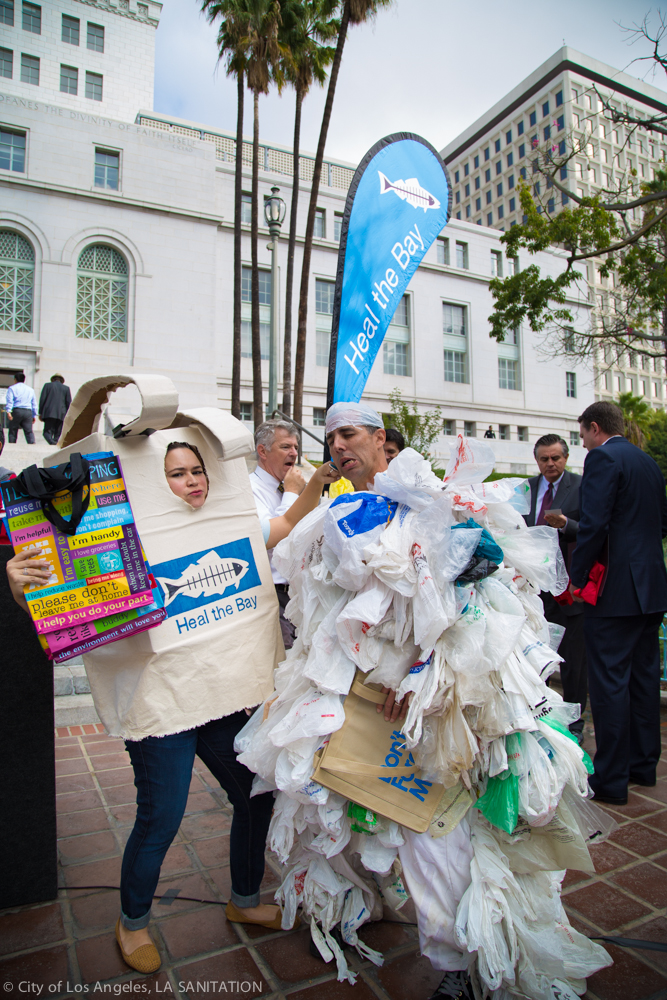
Heal the Bay Bag Monster LA Bag Ban


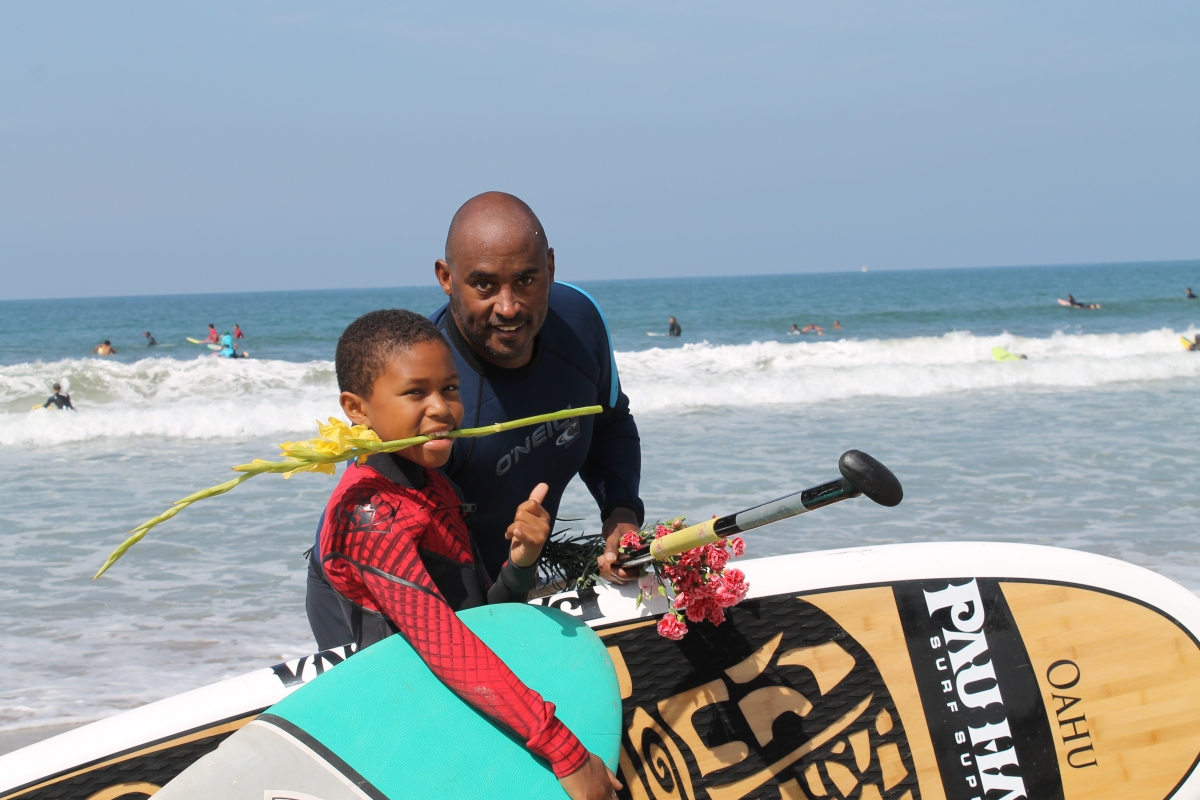
Heal the Bay couldn’t have produced last Saturday’s amazing Nick Gabaldon Day without the support, generosity and guidance of a number of co-presenters and community partners. First and foremost, we thank the Black Surfers Collective for providing their inspiring vision and on-the-ground organizing skills in co-producing the event. And if it wasn’t for the Surf Bus Foundation, we wouldn’t have witnessed the birth of the next generation of groms!

We’re also grateful to LA County Supervisors Mark Ridley-Thomas and Zev Yaroslavsky for making the event possible; the Santa Monica Conservancy and the Santa Monica Co-Opportunity for their contributions; and LA County Lifeguards for ensuring the safety of all surfers.

We stayed warm, nourished and expertly outfitted with donations from Clif Bar, the Association of Surfing Professionals and Body Glove.

Thanks to all, and be sure to check out the event’s Facebook photo album here!

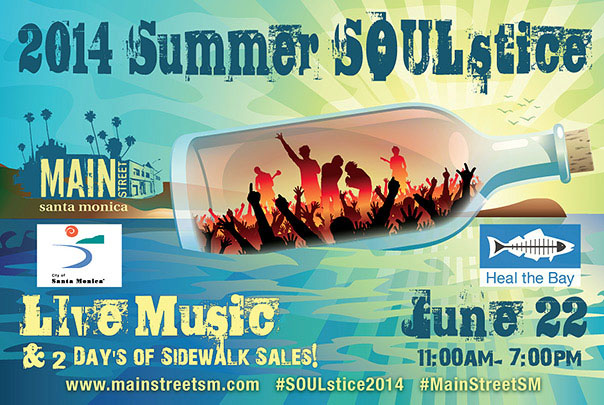
Extra special thanks to Main Street Santa Monica and the Main Street Business Improvement Association for donating a portion of proceeds from Summer SOULstice 2014 to Heal the Bay. Be sure to cruise Main Street this Saturday, 11 a.m. – 7 p.m., for sidewalk sales, live music and more!

NICK GABALDON DAYSummer SOULstice 2014


Good news for oceangoers in the Pacific Northwest: Heal the Bay has revved up reporting of weekly water quality grades for nearly 200 beaches in Washington and Oregon. Starting this June, we will be issuing A to F grades throughout the busy summer beachgoing season.

Like California, Washington and Oregon generally enjoy very good water quality. But troubling pockets of bacterial pollution still dot the shoreline. Contact with polluted water can cause upper respiratory infections, stomach flus, skin rashes and ear infections.

To avoid these kinds of illnesses, beachgoers can check updated weekly grades each Friday at beachreportcard.org. Heal the Bay provides this searchable online database as a free public service. Ocean-going families can find out which beaches are safe and unsafe, check recent water quality history and look up details on beach closures.

In our first weekly report (June 6), all Washington monitoring locations are earning A grades during dry weather. However, there are 10 monitoring locations at three beaches in the state closed due to pollution-related issues: a sewage spill, dairy waste discharge to a creek and one unknown cause of elevated bacteria in marine waters.

In Oregon, 22 monitoring locations are earning A grades during dry weather sampling in the latest weekly report.

In a related move to protect public health, Heal the Bay has just released its annual beach water quality report, which analyzed all the data gathered from monitoring locations throughout the Pacific Northwest in 2013.

The annual report analyzed weekly water quality data collected at 183 beach monitoring locations in Washington and Oregon last summer, issuing an A-to-F grade to each location based on levels of bacterial pollution. The lower the grade, the greater the risk of contracting an illness from water contact.

The report found that Washington exhibited good water during dry weather last summer, with 89% of monitored locations earning A or B grades (a 6% dip from the three-year average). However, a handful of beaches in the state received failing grades: Freeland County Park (D and F grades), Manchester Beach at Pomeroy Park (D and F grades), Allyn Waterfront Park (F grades), and Little Squalicum Park (F grades).

Meanwhile in Oregon, all 11 beach monitoring sites (those monitored frequently enough to earn annual grades in the summary report) received either A or B grades during summer dry weather, indicating that water quality was excellent during the reporting period.

High bacteria counts can be due to a number of sources, but frequently are connected to runoff.  Heal the Bay recommends staying out of the water for 72 hours following any significant rainstorm, and staying at least 100 yards from any outfall pipe, stream or creek entering marine recreational waters

 “It’s great to see nearly all monitored beaches in Oregon and Washington getting excellent water quality grades,” said Kirsten James, Heal the Bay’s director of science and policy for water quality. “But there are problem spots, so it’s critical to check out the Beach Report Card before you and your family visit the shore because a day at the beach should never make you sick.”


Paddles up! Big thanks to the Santa Monica Pier Paddleboard Race and Ocean Festival for bequeathing Heal the Bay and our Santa Monica Pier Aquarium with a portion of the net proceeds from the event! And don’t worry — it’s not too late to register for the race this Saturday!

And deeply soulful thanks are due to the Main Street Santa Monica Summer SOULstice festival, coming up on June 22. Live music, sidewalk sales, food and incredible shopping discounts all month long are at the heart of this citywide shindig. Best of all, a portion of event revenues will support our work at Heal the Bay! One love.

Last but not least: Where would we be without Rubio’s. Hungry and bagless, that’s where. From catering our events to donating thousands of reusable bags in honor of this Sunday’s World Oceans Day, our favorite fish taqueria is truly deserving of our kudos.


Zola Berger-Schmitz, a local high school student and Heal the Bay volunteer extraordinaire, shares her thoughts about inspiring youth on World Oceans Day on June 8.

It was a late summer afternoon on the beach in Santa Monica.  Though I was only 12 years old, I had a sudden epiphany.  What if there were no more fish left in the ocean? 

Little did I know then that I would spend the next five years of my life advocating for a healthier ocean.  What motivates my advocacy is trying to answer a worrying question.  When I imagine what the California coast will look like in 50 or 100 years, I wonder:  Will my grandchildren see a pristine sea with blue dolphins jumping, or a mass of contamination and plastic pollution?

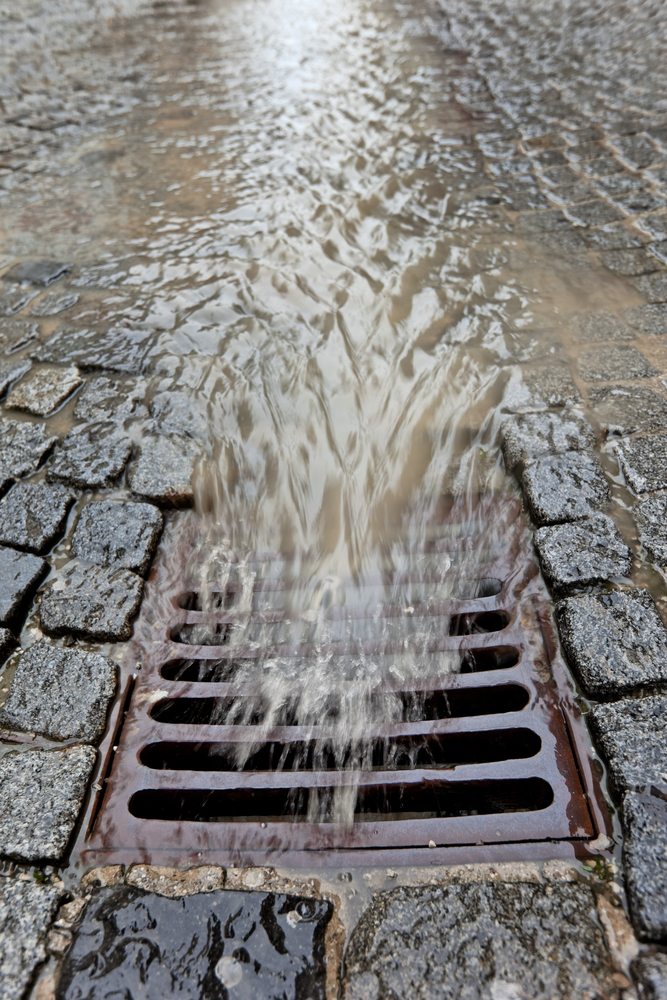
Growing up, I’d learned about pollution and issues such as overfishing and habitat destruction.  But I wasn’t aware of how prevalent these problems were in marine habitats near my own home in Los Angeles.  The trash that enters our city-wide stormdrain, for example, contributes to the mass of debris floating around the Great Pacific Garbage Patch.

When I first visited Heal the Bay, I thought I would volunteer to help with a few beach cleanups. It was the summer of 2009, and by coincidence also an important moment in California history. Heal the Bay and several other organizations in the California area were working to create Marine Protected Areas (MPAs) in order to preserve sea life and habitats in our ocean.

After attending a Heal the Bay presentation on MPAs, I was eager to get involved in the legislative process.  Some of my favorite national parks such as Yosemite exist on land, so I wondered why such areas didn’t exist underwater.  Inspired in part by Theodore Roosevelt’s crusade to create national parks throughout the United States, I set out to help create MPAs along the California coast.

Just before I started seventh grade, I began speaking out at public hearings across the state.  At school, I circulated petitions for students to support the adoption of MPAs in Southern California. In early 2010, inspired by Heal the Bay’s short video “The Majestic Plastic Bag,” I began my first foray into the world of film directing. Armed with a small nonprofessional video camera and a self-appointed crew of middle-school students, I made the short film titled “What If” about the importance of adopting MPAs along the California coast.

The “What If” film featured my entire middle school, and spoke from different kids’ perspectives about the importance of keeping the marine life on California’s coast abundant for the enjoyment of future generations.  “What If” was shown to the California Fish and Game Commission at a hearing in Monterey.  I was thrilled when I learned shortly afterwards that MPAs had been officially adopted in California. The MPAs would protect key feeding and breeding grounds, helping fish populations recover and thrive once again.  It was a historic victory for California and my peers and I felt an empowering, deep sense of satisfaction at having participated in a successful campaign to promote environmental change.

So often, young people are overwhelmed by global issues and not given the guidance to learn how to solve large-scale problems. Many kids wonder how taking even the smallest action can have an impact on creating statewide legislation or removing billions of pieces of trash from the ocean.  But, there are so many things kids and adults alike can do!  And helping with beach cleanups or showing your support at a local public hearing is just the beginning.

In the past few years, my personal efforts have focused on the plastic bag ban campaign in the city and county of Los Angeles, as well as doing educational outreach to Los Angeles Girl Scout troops, public and private school students, and at venues such as the LA Green Festival and Heal the Bay environmental youth summits.  Whenever possible, I have attended public hearings and continued to collect petitions advocating for a plastic bag ban and a cleaner environment. Los Angeles, which recently became the largest city in the nation to ban plastic bags, is making progress towards promoting a greener future. I hope that by the time I finish high school, there will be a California statewide ban as well.

High school students represent the next generation of leaders, politicians and change-makers.  It’s imperative that students gain the confidence to voice environmental opinions, as we are the ones who will face the harsh realities of the future.  We are the ones who will suffer most from the potential, irreversible deterioration of the ocean, which covers 75% of our Earth and feeds so much of the world’s population.

I hope my work inspires other young people and adults alike to consider becoming advocates for a greener and “bluer” future. I hope you’ll join me in celebrating World Oceans Day by pitching in to protect your stretch of the coast!

Heal the Bay welcomes volunteers of all ages, backgrounds and experience. Come to one of our orientations to learn more.


Heal the Bay president Ruskin Hartley says we averted a real mess with Atwater oil spill. But what’s next?

In the early hours of Thursday morning, a pipeline carrying oil from Texas to Los Angeles ruptured in the Atwater Village neighborhood of Los Angeles. Over the course of about 45 minutes 10,000 gallons of oil spilled into the streets creating a noxious lake a half-mile long and knee-deep in places. (You can see the impacts on this video.)

It appears that the nearby Los Angeles River was saved by the alert response and quick thinking of the Los Angeles Fire Department. We owe the team a huge debt of thanks. Not only did they get on the scene fast, but they thought creatively about how to stop the oil from flowing into the stormdrain system and hence to the river. 

And one stroke of luck also helped. One business in the industrial section just happened to be a cement plant with ample stocks of sand. The fire department deployed the sand to build berms that contained the spill.

Initial reports indicate that the quick response averted potential environmental impacts. But even so, a few neighbors were taken to local hospitals and potential environmental damage is still being assessed.

We applaud all of the first responders. But we also have to ask, is this a risk we’re prepared to take in our communities and our Bay?

As I write this, the residents of the small South Bay city Hermosa Beach are preparing for a referendum on whether to allow Big Oil to sink 34 oil wells in the heart of their city to tap into oil under the Bay. The oil company tells them to not worry, it’s safe and any spills will be quickly contained. You tell me, is this a risk you’d take?

If you’d like to come out to show your support for keeping oil drilling out of Hermosa, join us for Hands Across the Sand beach cleanup and community rally tomorrow morning (Saturday, May 17).


We now have a better understanding of why sea lion pups began stranding themselves on Santa Monica Bay beaches last year, writes staff scientist Dana Murray.

An emaciated sea lion pup looks lost on a Santa Monica beach. Lying motionless near the shore, he doesn’t look like he’s doing very well. The pup’s bony spine and ribs are visible through his tan skin. Concerned passers-by  wonder why he isn’t with his mother. Feeling helpless, they ask what can be done to help this poor animal.

This disturbing scene was a far-too-common sight last spring on our shorelines. Hundreds of sea lion pups, babies younger than a year old, found themselves isolated and starving on our beaches. The National Oceanic and Atmospheric Administration would declare the strandings an “unusual mortality event,” or “UME,” in Southern California.

After months of mystery, we now have a better idea of what caused this unfortunate event.

This past week NOAA released the results of their research, which indicates that the large number of stranded, malnourished pups can be attributed in part to a decrease in the availability of prey for nursing mother sea lions, specifically sardines.  Lack of high quality, close-by food sources was the culprit – not disease, or radiation from Fukushima (as some might have speculated).

Indeed, evidence shows that sardine spawning grounds shifted further offshore locally in 2012 and 2013, making it harder for mama sea lions to catch their food. Many female California sea lions couldn’t provide adequate milk to nourish their pups, resulting in premature weaning. However, NOAA is still investigating other causes as well.

Stay tuned for more information as it develops. And a reminder: if you do encounter seals or sea lions on our shores this summer, remember to keep people and pets at least 100 feet away from the animal. Do not pour water or sand on the sea lion. You can call local marine mammal rescuers at 310-458-WILD.

During the previous stranding, Heal the Bay fielded dozens of calls from the public and networked with our many partners to help out.

Facilities such as the Marine Mammal Care Center in San Pedro soon became full of these baby sea lions. A few months later, other animals such as elephant seals had no space to go for rehabilitation when they started showing up sick and injured. As a result, Heal the Bay worked with major donors and foundations to help fund the construction of a new facility for injured and sick elephant seals at the California Wildlife Center in Malibu.

These fine organizations still need help, so support them if you can.


Kirsten James, Heal the Bay’s science and policy director for water quality, writes that there are a number of reasons to celebrate a recent win in the fight against toxic local waterbodies.

At the Los Angeles Regional Water Quality Control Board hearing last week (May 8), something big happened.  An important decision didn’t draw large crowds (only a few high paid attorneys) or make headline news, but it marked an uplifting win for local water quality standards, something that Heal the Bay has been waiting for since 2003.  Let’s start at the beginning.

The Los Angeles Basin Plan – the document that helps guide our region’s water quality protection – requires that surface waters be maintained free of substances in concentrations that are toxic.  So the permits that regulate discharges from wastewater treatment facilities contained numeric toxicity limits for many years to make sure the discharge didn’t make aquatic life die or have non-lethal impacts (for you “Simpsons” fans, think of Blinky).  With the plethora of chemicals being discharged into our wastewater systems, toxicity tests act as a safety net in the permitting system.

However the real-world effectiveness of these toxicity standards fell into question when the Los Angeles County Sanitation District petitioned its permit to the State Water Board in 2003, and the State Board punted on a decision to actually put any teeth into enforcement.  From that point on, permits in our region and others in the state were modified to remove toxicity limits. The watered-down regulations employed a weak “trigger” for regulatory oversight, which basically led to no consequences — even if a discharge could kill aquatic life.

Mugu Lagoon and Calleguas Creek

Aerial view of Mugu Lagoon and Calleguas Creek in Ventura County

Meanwhile in 2005, the Regional Board developed a numeric pollution limit (TMDLs) for discharges to Calleguas Creek in Ventura County. Chlorpyrifos, diazinon and other pesticides and toxicants were causing toxicity in the water body.  However, the Regional Board held off on putting the limits in permits because of the State Board indecision.

Frustrated with the State Board’s indecision, the resulting weak permits and the lack of implementation of the TMDL, Heal the Bay released a report in 2009 titled License to Kill that explored the repercussions of failing to include numeric limits in the permits.  Analyzing the data from 2000-08, we found hundreds of instances of toxicity and very little repercussions for polluting our waters. Essentially that meant little to no follow-up from dischargers and no enforcement by the Regional Water Board.

The report prompted the release of a draft statewide toxicity policy (with a proposed numeric limit) back in 2010.  Heal the Bay has attended many hearings and workshops and submitted extensive comments on the 2010 draft and a number of other drafts over the last few years.  Despite our urging and the prompting of environmental groups, fishing groups and others, the State Board has sat on the policy. They have allowed toxic discharges to continue to inland waters with practically no repercussions for the last 11 years.

So last week, our Regional Water Board got tired of waiting and could not justify continuing with the weak toxicity “trigger” regulatory approach.   They unanimously adopted three wastewater treatment facility permits (Camarillo Water Reclamation Plant, Thousand Oaks Hill Canyon Wastewater Treatment Plan and Simi Valley Water Reclamation Facility) with a numeric toxicity limit.

The Regional Board took a prudent step forward to protect water quality and its members should be commended.  I recognize that there are many competing priorities for the State Water Board – most recently drought response.  However, this does not excuse potentially allowing toxic discharge to our state’s waterbodies for so many years.  The State Board should adopt statewide numeric toxicity limits, as was done in the three local permits, and not expose our waterbodies to toxic discharge any longer.   Hopefully the Regional Board action can serve as the catalyst needed to move the State Board forward on the long overdue state toxicity policy.  Aquatic life has suffered long enough.


We celebrated Earth Day last Saturday with about 1,800 friends who cleaned the beach on the North side of the Santa Monica Pier, picking up more than 600 pounds of trash. Some also built sand castles and visited our Santa Monica Pier Aquarium – and a few capped the day with a cold Heal the Bay IPA.

Thanks to Stephen Supernor and his AmeriCorps group of Team Blue 4-Pacific region volunteers who provided help toting supplies and giving safety talks for the beach cleanup.  

Time Warner Cable’s Connect a Million Minds sponsored the family sand castle building contest, allowing us to provide everyone with those essential tools: a bucket and shovel. 

Kudos to our Corporate partners who took sandcastle-building to another level. The following nine firms participated: ARC Engineering, Bernards, Gensler, HOK, Pivot, REI, RTKL, Steinberg Architects and Tangram.

In the Aquarium, underwater photographer Richard Salas took us all along on his dives from Mexico to the Equator, sharing awe-inspiring photographs and accompanying stories.

Looking ahead, we’re thankful to Union Bank for renewing support for Coastal Cleanup Day.