
Top

Heal the Bay Blog

Author: Heal the Bay

Swimming in the Bay

Unfortunate as it may be, humans can become ill from contact with polluted water found in Santa Monica Bay.

This fact was proven conclusively in 1995 through a groundbreaking epidemiological study designed to determine how exposure to ocean water bacteria relates to human illness. The study, which Heal the Bay assisted with, found that you are twice as likely to get sick swimming in front of a flowing storm drain compared to swimming in clean ocean water 400 yards away. The bottom line is that contact with ocean water with high bacteria levels increases one’s risk of getting sick.

The two most common illnesses contracted from contact with polluted ocean water are stomach flu & upper respiratory infections. Additional problems can include skin rashes and ear, nose and throat infections.

Wait at least 72 hours after a rain storm

When it rains, pollutants that have been accumulating on the streets and in the catch basins get whisked through the storm drain system to the ocean, dramatically increasing bacteria levels in the Bay. Heal the Bay recommends avoiding all ocean water contact during a storm and waiting at least 72 hours (3 days) after it has stopped raining before going into the ocean as well as avoiding storm drain impacted and enclosed beaches for 5 to 10 days after a storm. This provides time for bacteria levels to return to safe levels. And remember, over 95% of the time beaches along the Santa Monica Bay are safe in dry weather.

Avoid flowing storm drains

Swim at least 100 yards away from where the storm drain flow enters the surf. You are twice as likely to get sick if you swim in front of a flowing storm drain due to increased bacteria concentrations from urban runoff.

Do not play in storm drain puddles

Shallow puddles of water on the sand between a storm drain and the surf may appear safe, warm and inviting for children, but this water is urban runoff, filled with bacteria that can cause illness. Although there may not always be warning signs surrounding puddles of urban runoff, this water is never safe for swimming.

Avoid enclosed beaches

Many beaches named “Mother’s Beach” (e.g. in Marina del Rey, Los Angeles County) or “Baby Beach” (in Dana Point, Orange County) are enclosed with poor tidal circulation. Bacteria levels are usually much higher and tend to survive longer in duration at enclosed beaches than those exposed to the open ocean due to the lack of water circulation. Although enclosed beaches appear safe and inviting to children, parents should research water quality conditions carefully before allowing their children to swim at these beaches.

Eating Fish From the Bay

Is it safe to eat fish from Santa Monica Bay and Southern California coastal waters? It can be if you follow our precautions.

Many people catch and eat fish from the waters off the coasts of L.A. and Orange counties. Because fish from these areas may contain DDT, PCBs and methylmercury, people who consume such fish may be ingesting these chemical contaminants and putting their health at risk.  Heal the Bay’s Angler Outreach workers spend their days on local piers, talking to subsistence fishermen about how to avoid contaminated fish and lessen their exposure to these chemicals.

To safeguard your health when consuming fish caught in Santa Monica Bay and surrounding coastal waters, use the information below to reduce your risk of exposure to toxic chemicals. For additional information, visit the Fish Contamination Education Collaborative.

Avoid white croaker

White croaker (also called kingfish or tomcod) generally contains higher levels DDT and PCB than other fish from the Santa Monica Bay area. This is primarily because the white croaker is a non-migratory fish that feeds off the ocean floor where these chemicals have settled. In fact, a 1997 Heal the Bay study on the white croaker found that an astounding 84% of the samples tested exceeded EPA’s “acceptable cancer risk level” for DDT.

Avoid fishing in contaminated areas

Several areas exist along the coast of Los Angeles and Orange counties where fish are likely to contain higher levels of DDTs and PCBs than those fish caught outside of these areas. These contaminated areas include Cabrillo Pier, White Point, Pier J, Belmont Pier and Point Vicente. The highest levels of DDTs and PCBs in ocean sediment are found about one to three miles offshore of the Palos Verdes Peninsula.

Follow the consumption recommendations 

Heed the Fish Consumption Recommendations, which shows how much of each fish caught from the different zones in the Bay one can safely eat (brochures and pocket guides). Since chemicals can pose greater health risks to babies and young children, it is particularly important for women of childbearing age, pregnant women, and nursing mothers to follow the fish consumption recommendations.


This Thank You Thursday is one big Valentine to our partners and the people of Hermosa Beach who joined us for our Pop-up Pep Rally on Feb. 7

Heal the Bay is going all out to defeat Big Oil in Hermosa Beach leading up to the city’s March 3rd vote on whether to keep the current moratorium on oil drilling in place. Together with partners Surfrider Foundation and Keep Hermosa Hermosa, we hosted a giant outdoor party that brought out the community for a celebratory day of community action, awareness, musical performances, food and good fun.

We couldn’t have done it without the generosity of Becker Surf Shop and its amazing (and musical!) management team of Bob Rich and Kira Lingman. Becker gave up its parking lot for the day and offered staggering discounts on merch while partygoers munched on cheesy deliciousness from The Grilled Cheese Truck and people of all ages made a show of hands (oily black hand prints, that is) for a Vote No On O banner–all to the rockin’ beat of Lingman and her band The Hollow Legs.

And the music never stopped, with guest appearances by The Spillage People (fabulously choreographed by our friends at The Pretenders Studio) and Allan Mason–Hermosa’s own Pete Seeger–who led the crowd in his anthem “Send em’ back to Bakersfield.”

It was an incredible day, and we’re so grateful for all our friends who helped make it happen!

Check out our Facebook album for pictures from the party!


Thanks so much to Kevin Weatherly, the senior vice president of programming at CBS Radio, and to all our friends at KROQ for their annual support through the station’s Weenie Roast benefit concert. We recently dropped by the station to pick up a very generous donation. We’re extremely proud of our 20-year partnership with KROQ!

Specials thanks also go out to the Ralph M. Parsons Foundation for its continued support of the Youth Environmental Education Program at our Santa Monica Pier Aquarium. The foundation’s support has made it possible for us to educate thousands of underserved youth throughout Los Angeles County.

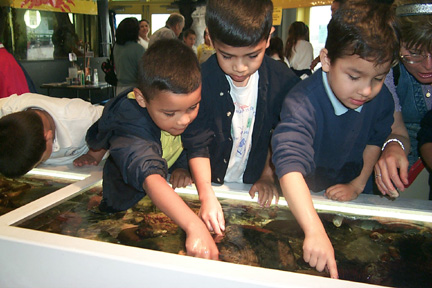
Boys at the Touch Tanks


And they SCOOOOOooo-o-o-o-o-re!! The amazing staff at the Staples Center that is. Our passionate and devoted volunteers who make up the Heal the Bay Board of Directors were treated to a very special quarterly board meeting hosted at the Staples Center on Jan. 14.

With the important business of the day wrapped up, staff and board members enjoyed a Los Angeles Kings hockey game from their own plush suite in Hyde Lounge, complete with tasty beverages and snacks, and the best seats in the house.

Though our beloved Kings lost to the New Jersey Devils 5-3, everyone came away feeling like a winner, thanks to the gracious hospitality and generosity of Brian Hart, general manager at Hyde Staples, Laurel Washburn, sales and marketing Coordinator at Hyde, Ashley Sinclair, special events coordinator at Staples and Sanjay Bawan of RYG Events — definitely the “A” Team of event coordination!  Heal the Bay is deeply grateful for the support.

Speaking of support, last month’s Heal the Bay Youth Summit in Hermosa Beach received delicious help from Jeff Belandi, owner of Watermans Safe House for Surfers in Hermosa Beach. Belandi’s surf-centric restaurant provided lunch for our high school students, volunteers and staff. 

And finally thanks to Boeing for hosting a Corporate Healer Beach Cleanup earlier this week.  Fifty-nine employees cleaned the beach in Santa Monica, collecting 47 pounds of trash.


3 Life-saving Rules:

  1. After a rainfall of any severity, wait at least 3 days before entering the ocean.
  2. Always swim at least 100 yards away (the length of a football field) from a stormdrain outlet.
  3. Check the Beach Report Card for the most recent beach water quality grades before you head to the beach.

For more safety tips, visit our Beach Report Card FAQ page.

Barry Ault was 71, but you’d never have guessed it watching him surf. His style was daring and athletic, winning him the admiration of a generation of California surfers—as well as the U.S. Surfing Championship in the Master’s Category in 1970. But on Christmas Day, he fell victim to the waters at Sunset Cliffs, his break in San Diego. It wasn’t a rogue wave or freak accident, but something much smaller, more insidious: a staph infection.

All signs point to polluted ocean water as Ault’s killer. The heavy rains that pummeled Southern California the week before Christmas sent billions of gallons of untreated urban runoff through the stormdrain system and into the ocean. His deadly strain of staph likely originated in this toxic brew. Ault, like countless other hardcore surfers, couldn’t resist the perfect post-storm waves and ignored the three-day rule, which urges beachgoers to wait 72 hours to enter the water after a rain in order to let harmful pathogens disperse. Sadly, his decision—an all-too-common one—had lethal consequences.  

Ault’s death struck a deep emotional chord with Heal the Bay and the surfing community, and we weren’t even sure if we should publish this blog out of concern about appearing opportunistic. But in the end, we decided to honor Ault’s legacy by reminding other Californians that water quality isn’t an abstract scientific concept­—it can mean life or death.

Heal the Bay has been Southern California’s coastal water quality watchdog for 30 years. Our Beach Report Card is already an indispensable safety tool for surfers and swimmers, but it’s about to get even better: We’re working to upgrade California’s current coastal public notification system to include beach water quality forecasting technology…so we never, ever have to write another blog like this one.

San Diego Surfer Barry Ault Succumbs to Staph Infection

Barry Ault, pictured doing what he loved the most: surfing and boating. Photo courtesy of The Inertia.


Have a houseful of holiday guests? In need of an outing that won’t add too much stress to the already over-stretched wallet? Heal the Bay’s Santa Monica Pier Aquarium knows you’ll be looking for a fun destination to entertain all ages. Our marine science center will be open special holiday hours beginning Friday, Dec. 26th through Dec. 31st. Visit any of those days from 12:30 to 5:00 p.m.

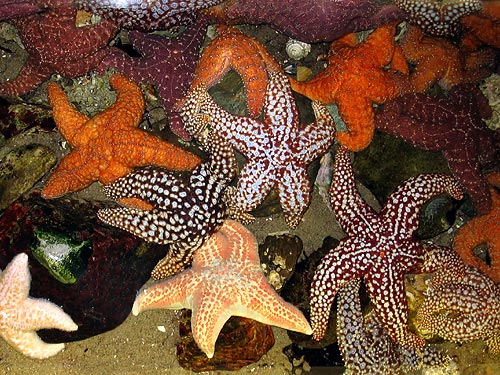
Tuesdays are feeding days, and visitors are invited to help feed the sea stars at 2:30 p.m. A presentation and feeding at the open top shark and ray exhibit can be a refreshing experience, as the sharks often spray water right out of their tanks while anticipating their meal.

Any day of the week, guests can play hide and seek with an octopus, get a hug from a sea urchin, test their water conservation knowledge at the Watch Your Water exhibit, or put on a puppet show in the Aquarium’s puppet theater. 

The Aquarium will be closed New Year’s Day, and return to regular public hours on Friday, January 2nd, which begin at 2 p.m.

Festive Seahorse in a Santa Hat


Peter Shellenbarger, a Heal the Bay science and policy analyst, tries his hand at Hollywood with a hotly anticipated “soup opera.” As the Septics Seep is his artistic interpretation of the Malibu Civic Center Septic Saga, where Mrs. Water Quality and Mr. Civic Center navigate the sordid, stinky world of Malibu water politics.


As The Septics Seep

Any relationship has its ups and downs—especially one between a coastal city and its water quality.


The backstory

In 2006, Malibu Creek, Malibu Lagoon, Malibu Beach, Malibu Surfrider Beach and Carbon Beach (in the Malibu Civic Center area) were placed on the Clean Water Act’s list of impaired and threatened water bodies. Septic system discharges were identified as contributors to this impairment in 2009 and a Septic Prohibition was issued. In 2011, the City of Malibu agreed to build a centralized wastewater recycling facility to phase out septic systems in the Civic Center area. However, just this month, the Los Angeles Regional Water Quality Control Board approved an extension for the phase-out, giving commercial and residential properties 20 extra months and three years, respectively, to remove their septic systems. These extensions undermine the Septic Prohibition and will allow the City of Malibu to continue discharging septic system effluent into already critically polluted waterbodies. This month’s decision is another setback for water quality in Malibu and showcases the Regional Board’s historical inability to hold the City of Malibu accountable for their septic system discharges, which impact human health and aquatic life in and around Malibu Creek and Lagoon.


Cast (in order of appearance)

Sheriff U.S. E.P.A.: Tall, stern water quality enforcer
Mrs. Water Quality: Peppy environmental scientist
Mr. Civic Center: Distinguished landowner of Civic Center Area in Malibu
Officer L.A.W. (L.A. Regional Water Control Board): Overworked, tired water quality engineer


Season synopses

S1 Sheriff E.P.A. comes to town and nails Malibu Creek, Malibu Lagoon, Malibu Beach, Malibu Surfrider Beach and Carbon Beach for public intoxication. Loaded with bacteria and nutrients, she places these waters on the critically polluted list for further investigation and future cleanup. Mrs. Water Quality begins to investigate the cause of pollution…and catches the eye of Mr. Civic Center in the process.

S2 Mrs. Water Quality identifies septic systems as a source of bacteria and nutrient pollution at Mr. Civic Center’s residence. Officer L.A.W. assesses the situation, conducts further studies, consults with other officers and creates a Septic Prohibition at Mr. Civic Center’s residence. This will require him to phase out septic system discharges at his commercial and residential properties by November 5, 2015, and November 5, 2019, respectively.

S3 To implement the Septic Prohibition, Mr. Civic Center and Officer L.A.W. agree to build a centralized wastewater recycling facility to replace septic systems polluting Malibu’s coastal waters. Mrs. Water Quality is sufficiently impressed by Mr. Civic Center’s commitment to the environment and finally agrees to date him.

S4 Mrs. Water Quality and Mr. Civic Center are seen publicly all over the Westside, and soon move in together and begin planning their romantic wastewater recycling facility hideaway. But Mr. Civic Center reveals himself to be all talk, delaying construction of the project by 9 to 12 months. He assures Mrs. Water Quality it will be completed before November 5, 2015. Mrs. Water Quality has heard that one before.

S5 Mr. Civic Center and Officer L.A.W. arrange to extend the commercial septic phase-out deadline by 20 months—and the residential phase out deadline by 3 years. Officer L.A.W. approves the extension despite a lack of public support and passionate opposition from Mrs. Water Quality—who feels betrayed by both Mr. Civic Center and Officer L.A.W. Mrs. Water Quality moves out of Mr. Civic Center’s residence.

What will happen to this tragic duo in S6? Will they patch up their differences or has their love truly tanked? One thing is certain: In addition to being a heartbreaker, Mr. Civic Center will continue to harm human health and aquatic life with his septic obsession.

TO BE CONTINUED NEXT SEASON…

As the Septics Seep: A Malibu Soup Opera


A big thank you to Subaru Pacific for sharing the love with us this holiday season. The car company runs a national campaign – Share the Love – each year; for every car Subaru sells between the last week of November and January 2nd, they will donate $250 to one of six charities.  Heal the Bay is thrilled to be one of only two local charities chosen. Twenty-six of Subaru’s customers have already selected Heal the Bay as their charity of choice – the goal of raising $10,000 looks to be within reach!

We are thankful for the rain – and incredibly grateful that the employees of Team One were signed up to do a corporate cleanup at Venice Beach shortly after the first round of rain.  Thanks Team, for removing 114 pounds of trash and 2,214 cigarette butts from the beach.

And finally thanks to Madewell, which shared a portion of sales from a recent evening of holiday gift tag decorating at The Grove. We honestly appreciate HonestlyWTF for choosing us as the beneficiary of that crafty fundraiser. 


The recent screening of the awesome new surf documentary, “A Wedge to Remember,” gave Heal the Bay and partners Surfrider and Keep Hermosa Hermosa a platform to discuss our fight against oil drilling in Hermosa Beach. Proceeds from the evening’s raffle will be put to good use to prevent a proposed slant-drilling project in Hermosa Beach. Thanks to Dive N Surf and Body Glove for donating the gear for the raffle.

 Thank you to Pardee Properties – a real estate agency that truly walks the talk. Ten percent of their net proceeds from each sale are donated to their client’s charity of choice. We have been grateful recipients of this generosity to the tune of nearly $5,000 in 2014. And a big thanks to this Venice-based agency’s Heal the Bay-loving client base!

Heal the Bay’s lobby is looking very festive these days, thanks to a donation by Living Christmas. The company’s “elves” arrived last week with a seven-plus-foot  potted tree.

And finally, we’ve said it before and we’ll say it again: we’re so proud of Brenton Spies, formerly a staff member at Heal the Bay’s Santa Monica Pier Aquarium and currently a research biologist and PhD student at UCLA.  And now we thank him mightily for his $1,000 donation to the Aquarium. The funds will go towards developing wetland based curriculum and interactive activities to be used for education and public programs at the Aquarium. The donation is a component of his successful Kickstarter campaign, which will also fund a photographic documentation of threatened and endangered ecosystems along the California coast. We also look forward to using Spies’ photographs to enhance the Aquarium’s watershed exhibit in the Dorothy Green Room.


The holidays.

All those decorations, the wrapping paper, the packages, the extra groceries…wouldn’t it be great to have a couple of extra arms to help out with it all? Heal the Bay’s Santa Monica Pier Aquarium has a unique gift idea that will provide you with some extra arms—eight arms, to be exact.

Every December, our Aquarium offers one of its most popular marine creatures up for Aquadoption at a special holiday price. This year’s animal is…xylophone roll please…the octopus! Throughout the month of December, the octopus is available for $50–a bargain price that includes a year’s membership to Heal the Bay along with free admission to the Aquarium for a family of four. 

Octopuses are believed to be one of the smartest invertebrates on Earth, demonstrating the ability to learn new skills by watching one another. With their talent of changing color and texture, the octopus is a fascinating animal to observe.

The Aquadoption program provides all the benefits of adopting an animal while leaving the daily care to the Aquarium staff. If you choose to become an octopus mom or dad this holiday, you’ll receive a personalized packet with an adoption certificate, photo, fact sheet and two guest passes to the Aquarium. 

So save your arms and give everyone on your list a gift that will keep on giving all year long. You’ll make a lonely cephalopod’s day!

Your Aquadoption will underwrite the daily care and feeding of an Aquarium animal of your choice, and will also help support Heal the Bay’s ongoing mission to keep our oceans safe, healthy and clean. Thank you!

3 Ways to Aquadopt:

  1. Online
  2. By phone: Call 310-393-6149, x102
  3. In person: Visit us under the Pier Tue-Fri, 2-5pm or Sat-Sun, 12:30-5pm.

Santa Monica Pier Aquarium holiday aquadoption special