
Top

Heal the Bay Blog

Category: Locations

Today the Los Angeles City Council’s Energy and Environment Committee took a bold step towards a double-ban on single-use plastic and paper bags.  The Committee’s unanimous recommendation, led by Councilmember Paul Kortez, would require a phased, three-step approach: for the first six months a ban would be enacted for plastic bags only, then for the following six months a 10 cent charge would be placed on paper bags and finally, after 12 months, there would be an outright ban on both single-use plastic and paper bags.

Testimony from the city’s Board of Public Works helped to debunk claims from bag manufacturers that the ban would create job losses. If enacted, L.A.’s ban would be one of the most-far reaching measures in the nation.

This decision should embolden other cities, counties and states nationwide to take action. The Committee’s move highlights that the time has come to eliminate plastic pollution at its source in order to protect our environment and economy. The progress made today is very gratifying for Heal the Bay, as we have been leading the charge in Southern California to rid our neighborhoods, rivers, beaches and ocean of plastic trash for over two decades.

The full City Council is expected to vote on this measure in the next two weeks. After the policy direction passes the full Council, the city will need to conduct an environmental review.


The Rancho Palos Verdes City Council voted April 3 to curtail a one-year pilot dog beach program. Since the pilot program was approved in February, many dog owners have descended on the newly established off-leash area near the Trump National Golf Club.

In letters and testimony submitted to the council, several local area residents and businesses complained to the city about the impacts of increased traffic and having dogs running on nearby trails. Heal the Bay sent a letter to the council urging its members to reconsider the pilot program because of concerns about potential water quality issues related to dog droppings left behind by less thoughtful owners.

Many staffers at Heal the Bay are dog owners or dog lovers, so we understand the desire for people to spend time with their pets outdoors. However, Heal the Bay and the NRDC have counseled local elected officials not to place off-leash dog parks near the shoreline or in areas where canines will impact local bird populations. We continue to work with local cities to develop solutions that will allow dog owners to enjoy the outdoors with their animals but not negatively impact public health.


Heal the Bay has been leading the fight to end the fiscal and environmental waste created by single-use shopping bags for five years. So we were heartened today to see the Los Angeles Times’ editorial board urging the Los Angeles City Council to adopt its long-gestating ban. An excerpt is printed below:

L.A.’s delay in banning single-use, carry-out plastic bags has put it behind dozens of other municipalities in the state. With a recycling rate of only 5%, the bags are an environmental menace that we can easily do without.

When the city of Los Angeles held off three years ago on banning single-use, carry-out plastic bags, it missed a chance to be at the forefront of environmentally responsible lawmaking in California. By the time it inexplicably delayed a vote again in December, close to 20 cities as well as Los Angeles County had prohibited stores from providing the bags. And since then, the bags have been banned in more than two dozen additional municipalities in the state.

More important, in the last three years tens of millions of plastic carry-out bags — possibly hundreds of millions — have been distributed in Los Angeles. Statewide, only about 5% of them are generally recycled. They snag on trees and bushes in the wilderness and are washed down waterways to the ocean. They are the second most common trash item found on beaches, and contribute to the giant floating garbage patch in the Pacific.

The City Council’s Energy and Environment Committee should waste no more time. It should approve a ban for the full council to consider.

Read more.


Today’s blogger is Kirsten James, Heal the Bay’s water quality director.

All too often when I mention the topic of TMDLs (Total Maximum Daily Loads), people’s eyes start to glaze over. What’s a TMDL you ask? It’s a calculation of the maximum amount of pollution that a waterbody (river, lake or the ocean) can handle before it can no longer meet its beneficial uses (i.e. habitat and recreation). Yawn, yawn – I know.

I swear though, TMDLs are actually very interesting. By developing and implementing TMDLs, water quality improves. In fact, TMDLs are arguably the most useful tool in the Clean Water Act toolbox environmental groups like ours have to actually clean up Southern California’s coastal waters and watersheds.

The Los Angeles Region has led the way nationwide in developing TMDLs. Thirteen years ago Heal the Bay, NRDC and Santa Monica Baykeeper entered into a settlement agreement with USEPA to develop a specified number of TMDLs over the 13 year period. Before that time, we hadn’t seen any quantitative or enforceable limits developed. This month marks the end of this consent decree. As a result of this effort, 47 TMDLs have been established for 175 water bodies that address numerous pollutant impairments including elevated bacteria, metals, pesticides, PCBs and trash. But most importantly, as a result of these TMDLs, our creeks and beaches are cleaner.

We still have a long way to go – many of the TMDLs will be implemented for years to come and Heal the Bay will continue to push the Regional Water Quality Control Board to ensure that the necessary TMDLs are enforced. But it is gratifying to look back over the past 13 years and see that our hard work and the efforts of many other stakeholders has paid off.

Learn more about TMDLs.


The Hermosa Beach City Council has voted in favor of banning single-use polystyrene (better known as Styrofoam) food containers. 

Originally proposed by the city’s Green Task Force back in 2010, the ban is set to go into effect in 180 days if the vote stands. In such a case, violators would be faced with a written warning. Any following violations would elicit fines ranging from $100 to $500.

With polystyrene cited as the trash most often found on Hermosa Beach next to cigarette butts, Mayor Howard Fishman is eager to see it banned.

Read more.


Today’s blogger is Susie Santilena, an environmental engineer in water quality at Heal the Bay.

When I stepped into the Dockweiler youth center meeting room, it was one of those sunny winter Southern California days that make the rest of the country jealous this time of the year. The room had a great view of the beach and sparkling blue ocean outside — the perfect setting for the meeting I was attending, which was all about the direction of Santa Monica Bay Restoration Commission (the organization charged with restoring the very Bay at which I was gawking). The Santa Monica Bay Restoration Commission (SMBRC) is a state organization with the mission to restore and enhance the Santa Monica Bay through actions and partnerships that improve water quality, conserve and rehabilitate natural resources, and to protect the Bay’s benefits and values. Heal the Bay sits on a number of its subcommittees, including the Watershed Advisory Council (WAC).

Each year, the SMBRC holds a meeting of their Watershed Advisory Committee to brainstorm on next steps for implementing their Bay Restoration Plan. This plan is important because it is the de facto road map to guide the SMBRC in restoring the Bay. A wide variety of stakeholders sit on the WAC, and come to this annual meeting with hopes of getting their priority issues incorporated into the Plan.

Not all of the SMBRC’s stakeholders see eye-to-eye on all of the issues discussed. Heal the Bay’s goal in participating in this council is to encourage the SMBRC to focus its efforts on projects that will gather data and lead to the strongest protection of water quality and coastal resources in the Santa Monica Bay as possible. For instance, we speak in support of the SMBRC’s efforts to restore wetland habitats and efforts to facilitate bay-wide habitat monitoring.

After a lively public comment session and an update on the progress the SMBRC was making on its current restoration plan, we broke into groups to brainstorm on the SMBRC’s plan for the next year. We counted off from one to three, each number putting individuals into a random group with the others who counted off the same number. I ended up in a group with an official from Malibu, an officer of the County lifeguards, an ocean monitoring specialist from a large, public-owned sanitation organization, a member of a local community group and a monitoring researcher at a municipal water district that discharges to Malibu Creek (which has previously been pegged as the largest single contributor to nutrient impairments in the Creek). It was quite an eclectic group, and I was anxious to see how the brainstorming session would go.

While the stakeholders in our group had MAJOR differences of opinion when it came some things, such as the contribution (read scapegoating) of natural sources to pollution, everyone was respectful of each other’s perspective, and I was pleasantly surprised to find that there were some issues on which we were able to find common ground. The need for increased water conservation and reuse was a big one, as well as the need for reliable funding sources for monitoring efforts in the Malibu Creek Watershed. Despite our different perspectives, we all agreed that these should be priorities for the SMBRC in the coming year.

Maybe the beautiful weather and ocean scene outside left me overly optimistic, but I’m hopeful that the ideas we developed at the WAC’s brainstorming session will help take us one step closer to restoring the Bay.


Thursday was a busy day for Heal the Bay. We cleaned up – literally and figuratively – with two of our biggest supporters: The Los Angeles Lakers and Whole Foods. We divided our forces, with teams of staff and volunteers simultaneously scattering around town to do some great community outreach and raise funds to help keep our oceans clean and safe.

Fresh off a stirring win the night before against the Dallas Mavericks, All-Star center Andrew Bynum and rookie guard Andrew Goudelock led an afternoon beach cleanup at Dockweiler Beach, accompanied by five Laker Girls. Despite the drizzly marine layer, spirits were high as nearly 50 volunteers from the Lakers organization and Delta Airlines collected 188 pounds of trash. With their easy smiles and attitude, the two Andrews couldn’t have been more gracious, posing for photos and holding crying babies. Bynum let us know that Dockweiler is his local beach, while proudly showing off photos of his dogs Max and Diamond. Goudelock noted that the cleanup marked the first time he had been to the sand since arriving to L.A. from his hometown of Atlanta. Because of the NBA players’ height, our intrepid staff had to pull a “MacGyver” and use some tape and nails to jerry-rig an extension to our trash-grabbers for them.

The two Andrews got into the competitive spirit by leading their respective teams in a trash gathering contest. Bynum, with a chuckle, played the veteran card and grabbed the debris that Goudelock had collected, taking his whole bucket and claiming it as his own. In the end, Goudelock’s team still prevailed.

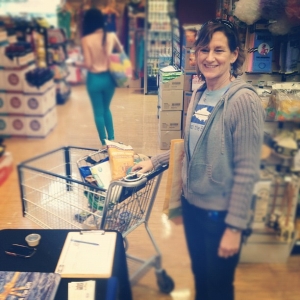
Whole Foods Market Community Day ShopperMeanwhile, the rest of Heal the Bay’s staff descended on Whole Foods’ three Santa Monica locations, manning tables throughout the day to engage shoppers about protecting our local beaches and watersheds. As part of their vibrant community engagement programs, the stores generously donated 5% of all net proceeds from the day to Heal the Bay’s Santa Monica Pier Aquarium. Receiving financial support is fantastic, but developing human capital is important too. Eveline Bravo, our cleanup manager, recruited a new member to our volunteer-training program at the 5th and Wilshire location. Raymond, who also organizes volunteer activities at a Santa Monica yoga studio, is now part of our crew.

We’d love to get your company involved in our mission. It’s great for organizational morale and you can take satisfaction in knowing you are having a direct impact on improving the health of our oceans and beaches. Learn more.


2012 is the 40th anniversary of the Clean Water Act, the nation’s law for protecting our most irreplaceable resource.

This year EPA and others will highlight the tremendous progress in reducing pollution since 1972, the many milestones along the way, the ways that the job is far from over and the tough challenges we face today and in the future. To mark 40 Years of the Clean Water Act, the EPA has set up a central location for information, activities, news and networking at www.epa.gov/cleanwater40.

You can also find the Office of Water on Facebook.


Who wouldn’t want a job that involves strolling along some of the most beautiful beaches in L.A.? It’s not a paid gig, but you get to help protect what you love – the ocean! Heal the Bay is now training volunteers to help monitor our new marine protected areas (MPAs) in Point Dume and Palos Verdes. Volunteers collect observational data on coastal uses in MPAs; data which is then used by the California Department of Fish & Game to help with management and compliance.

“Our volunteer citizen scientists come from varied backgrounds – from social workers to students – but all our volunteers have one thing in common: a passion for the sea,” says Dana Roeber Murray, Heal the Bay’s coastal scientist. Dana started the MPA Watch program in early 2011 to train local citizens on MPA monitoring and has trained over 60 volunteers to date.

“It took years of collaboration with scientists, fishermen, government, and other non-profits to see these protected areas enacted,” Dana says. “We worked hard up and down the state to make it happen. So it’s been very gratifying to see the public embracing MPAs and volunteering their time to help monitor their effectiveness.”

MPA Watch volunteers commit to attending one classroom and one field training to become citizen scientists, then go on to survey the coast at least four times a month. Heal the Bay also offers MPA Watch summer internship opportunities for people eager to get more deeply involved with Heal the Bay’s Science and Policy department.  For more information, check out our MPA Watch FAQs or contact Dana. 

Trainings are only offered a few times a year, so reserve your spot and sign up now.


View all Earth Month events and updates

Heal the Bay celebrates each Earth Day in a big way — by turning it into a whole month. For the entire month of April, we ensure that “Earth Day is every day.” Our month is chock-full of great events for all ages — cleanups, tablings and more. We welcome volunteers to join us in April to get their hands dirty, meet a few new friends in the community and learn all about the Santa Monica Bay at our Aquarium.

To check out our upcoming opportunities, download our Earth Month flyer:

Volunteer Orientation – April 9

When: Monday April 9, 7 – 9 p.m.

Where: Heal the Bay Main Office, Large Conference Room, 1444 9th St, Santa Monica, CA 90401

Get started by attending one of our monthly Volunteer Orientations. Learn more about Heal the Bay, our mission, and the many ways that you can get involved. Orientation is an important first step (and required for some volunteer programs).

Malibu Creek State Park Restoration – April 14

When: April 14, 8:45 a.m. to Noon

Where: Malibu Creek State Park, 1925 Las Virgenes Road, Calabasas

Join Heal the Bay and the Mountains Restoration Trust to restore areas of Malibu Creek State Park.

Nothin’ But Sand – April 21

When: April 21, 10 a.m. to Noon

Where: Santa Monica Beach, 2600 Barnard Way (at the end of Ocean Park, Tower 27)

Volunteer for a beach cleanup!

Nothin’ But Sand beach cleanups sponsored by: 99¢ Only Stores Logo

Santa Monica Pier Aquarium Earth Month Celebration – April 21 & 22

When: April 21-22, 11 a.m. – 6 p.m. both days

Where: Santa Monica Pier Aquarium, 1600 Ocean Front Walk, Santa Monica, CA 90401
($5 admission/$3 minimum suggested donation, children 12 & under free)

Enjoy special Earth Day activities and family fun and free admission to everyone who cleans the beach that weekend.

Earth Day Cleanup – April 22

When: April 22, 9 – 10:45 a.m.

Where: Surfrider Beach and Malibu Lagoon, 23050 Pacific Coast Highway, parking lot #23500.

Join Heal the Bay and the City of Malibu for a joint beach and kayak cleanup

WIP FLASH – April 27

When: Friday April 27, 6 – 10 p.m.

Where: Broadway Art Space 929 Broadway Santa Monica, CA 90402

WIP FLASH is a MOPLA (Month of Photography L.A) event featuring Women In Photography.

The WIP FLASH exhibition “First Nature” is in Santa Monica for one night only. The exhibition will start at 6 p.m. for Heal the Bay members with a private, VIP reception. The exhibition will open to the public at 7 p.m.

Enjoy complimentary drinks and cocktails. Valet service available.

WIP FLASH will donate 20% of photography sales proceeds to benefit Heal the Bay.