Top

Heal the Bay Blog

Category: Santa Monica

Santa Monica, California located in Los Angeles County is a popular eco-friendly coastal destination for families, couples, tourists and Southern California beachgoers.

An adult female sea lion was found dead on Venice Beach on August 3. She had been shot three times.

The National Oceanic and Atmospheric Administration’s Office of Law Enforcement is investigating the shooting, as killing a marine mammal is a violation of the Marine Mammal Protection Act, which can result in a $100,000 fine and a year in prison.

It can be difficult to track down the perpetrators because the crime typically occurs far out at sea where there are few witnesses. Animals attacked may travel miles from the scene of the crime before washing up on shore.

Marine Animal Rescue is offering a $5,000 reward for information leading to the arrest and conviction of whomever killed this sea lion. According to Marine Animal Rescue, some fishermen have been known to kill seals, sea lions and pelicans because they view them as a threat to their livelihoods. Some shoot the animals while others use “California seal control devices,” otherwise known as seal bombs.

Those with information about the shooting or any other violation of the Marine Mammal Protection Act can contact the NOAA Office of Law Enforcement hotline 24 hours a day, seven days a week at (800) 853-1964.

In addition, sea lions are threatened by domoic acid, a powerful neurotoxin produced by a specific group of microscopic algae that sometimes blooms in coastal waters. Marine mammals such as sea lions eating fish laden with toxin can ingest sufficient domoic acid in the stomachs of their prey to experience symptoms of domoic acid poisoning. These symptoms can include a variety of neurological disorders including disorientation and seizures, and in severe cases, death.

The Marine Mammal Center in Northern California provides a seven-step guide to what to do if you find a stranded marine mammal.


In celebration of Ocean Awareness Month, artist Marina DeBris’ “Beach Couture — A Trash ‘n’ Fashion Show” showcases the artwork she crafts from detritus she picks up as she walks the Westside. “In the beginning I would just pick up stacks of Styrofoam cups and bring them to the local 7-Eleven, but I soon realized that this wasn’t really attacking the root problem. I needed a creative way to draw attention to it. 

“The whole idea of making beach detritus into art started just three years ago from the realization that the waste we create always comes back to haunt us,” said DeBris, who regularly lends her talents to Heal the Bay and other environmental groups.

“With this work, I’m hoping to dramatize in a playful way some of the problems our waste creates,” DeBris noted. “I use humor to startle viewers into taking a closer look at things we usually ignore. The goal is to encourage people to rethink their use of disposables and ultimately reduce waste.”

Marina DeBris’ art will be on view in celebration of Ocean Awareness Month from Aug. 2 – Sept. 5 at ZeroMinusPlus/Fred Segal Santa Monica, 500 Broadway, Santa Monica.

Hours: Mon-Sat 10 a.m.- 7 p.m. & Sun Noon-6 p.m.

 Find out more about Marina DeBris at http://www.washedup.us/


A small town in Provence declared smoking off limits on a stretch of its beachfront, proclaiming itself the first non-smoking beach not only in France, but Europe.

According to the Associated Press, the smoking ban came into effect earlier this summer in La Ciotat, and compliance among the public at the packed beach has been strong. “We don’t stop smokers from going elsewhere, but this one we want to reserve for nonsmokers, for mothers and children so they can make sand castles and not cigarette butt castles,” Deputy Mayor for the Environment Noel Collura told the AP.

Cigarette butts remain the No. 1 item picked up by volunteers at Heal the Bay beach cleanups, despite the fact that Los Angeles, Santa Monica, Long Beach and Malibu have banned smoking on the beach. A typical cigarette butt can take anywhere from 18 months to 10 years to decompose, depending on conditions. Cigarette butts contain the chemicals filtered from cigarettes that leach into waterways and water supplies.

Read the story at http://www.msnbc.msn.com/id/44002823/ns/travel-destination_travel/

Photo courtesy Jacques Brinon  /  AP


Buy one of California’s newly-designed Whale Tail® specialty license plates and support Heal the Bay’s cleanup and education programs. Plus, be among the first 1,000 ocean lovers to get the new Ecoplate and pay $25 instead of $50, or get $25 off a personalized plate. Each of the first 1,000 to purchase one of these license plates will also receive two tickets to visit one of several California destination attractions.

But the best reward is: Each purchase of these new plates benefits Heal the Bay and supports our award-winning beach cleanup and education programs. We use these funds to support the 600+ cleanups we conduct each year along the L.A. County Coastline and to educate our volunteers on how to protect the ocean environment from pollution.

Learn more and purchase a new Whale Tail® plate.


With the world focused on the silly brinksmanship in Congress over the national debt ceiling, there hasn’t been enough focus on the ramifications of the recent California legislative redistricting process.  The final maps, created by an independent body called the California Citizens Redistricting Committee, just came out last week and the new districts are substantially different.  For the L.A. County coast, the changes are pretty dramatic.

Overall, our local coast didn’t do that well during redistricting.  Separating the ports in different congressional and senate districts is not good for San Pedro Bay and misses the opportunity to integrate environmental protection and cleanup efforts among the ports, and L.A. and Long Beach. The new state senate districts separate some of the strongest supporters of Santa Monica Mountains conservation from the actual resource.  That makes it tougher for Westside residents to help out on those issues.

Read more & comment»


The August 4 issue of Rolling Stone reveals the U.S. plastics industry’s formidable efforts to protect the use of plastic shopping bags and highlights Heal the Bay’s strong commitment to banning their use in cities and municipalities. “We’re going to keep pushing this issue,” Sarah Sikich, Heal the Bay’s director of coastal resources, told Rolling Stone. “It’s a battle we can win. In the end, public awareness and the grassroots movement will overcome the deep pockets of [plastic] industry groups….”

Read the article at Rolling Stone»


In 2008, Mayor Antonio Villaraigosa released a visionary plan for moving Los Angeles away from its reliance on imported water. The mayor’s plan was reasonable and achievable; we just have to follow it.

Read more from Mark Gold at the Los Angeles Times.

Photo: Eflon via Flickr


Editor’s note: Roberta Brown is a Santa Monica-based writer, fight choreographer and mother (three vocations that she says go surprisingly well together). She is the West Coast Editor for Nickelodeon’s ParentsConnect.

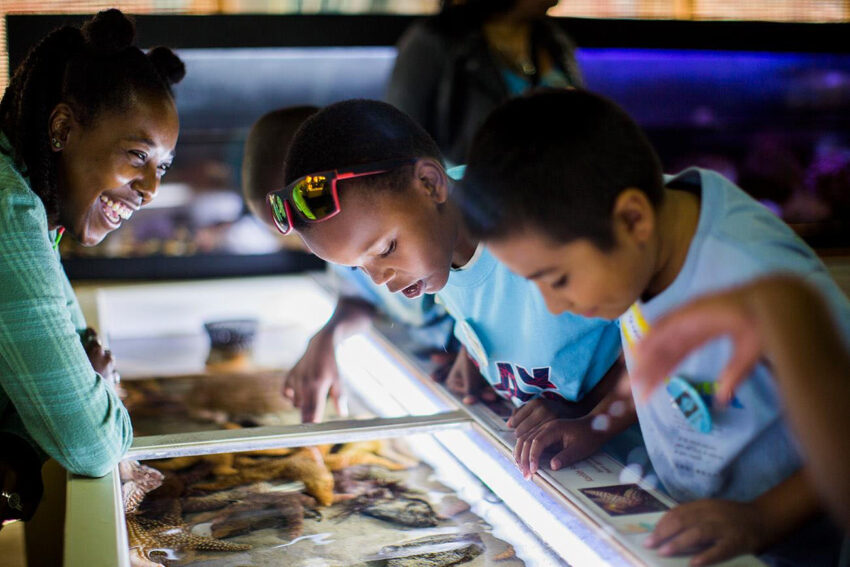
I think I may have actually done a happy dance when I found out that the Santa Monica Pier Aquarium is launching its own summer camp this year. What I know for sure is that I booked my son a spot right way.

I suppose I should confess to a slight bias: we LOVE the aquarium. We love its perfect size (big enough to fascinate kids, small enough for parents to relax); its fabulous staff (with knowledge and enthusiasm in huge, equal parts); its escape-artist octopus (who probably didn’t mean to flood the place a few years back); its frisky sharks (who never fail to spray out-of-town relatives); and its brand-new, mesmerizing sea horses. When my son was in preschool we always entered the fray to get into those Reggio-esque Micro Biologist classes – arguably the single best drop-off class for 3 to 5-year-olds in town. My preschooler came home able to articulate the differences between sea mammals and big fish, the many uses of seaweed and how to tell a sea lion from a seal. (Can you??)

As he approached the age of no return for those classes, we were sad to discover that – at least at the time – only the littlest tykes were lucky enough to get the behind-the-scenes, inside story on all things aquarium. The following year we had to get our aquarium fix with a birthday party there.

But back to that happy dance, we found out a few weeks ago that this summer the aquarium is offering a summer camp. We’re in, out, and around this summer, so we opted for the occasional day option, but I’m already imagining those days: I drop my son off so that he can learn more about the ocean in a few hours than I’ve managed to learn in 40-something years, then I go open my laptop to work in that quiet, breezy room at the Annenberg Beach House that I’ve been promising myself since it opened. Later I pick up my son, who is beached-out and educated all in one go, and I feel like a hero treating him to an ice cream at the carousel. Or maybe on Thursday we follow up camp with a picnic and a concert on the pier. That’s more summery than corn on the cob.
 
And when it’s all over, when all the sand has been brushed off all the feet, maybe he can finally clarify for me the difference between a seal and a sea lion.

-Roberta Brown

Editor’s note: Limited spaces are still available in the Santa Monica Pier Aquarium Summer Camp and will be filled on a first-come, first-served basis. Learn more about the Science Adventures Camp and register online now.


This week Chile joined the ranks of the many nations that have banned the practice of shark finning. Shark finning is a brutal process. Sharks’ fins are sliced off and the sharks are then thrown back overboard where they bleed to death, are eaten by other animals or drown. Sharks now caught in Chilean waters will be required to be landed with fins naturally attached.

Millions of sharks are killed annually for their fins, which are often used in shark fin soup. Other nations that have banned the practice of shark finning include Palau, the Maldives, Honduras, the Bahamas, India, Ireland, Italy, Lithuania, Malta, Mexico, Namibia, the Netherlands, New Zealand, Nicaragua, Oman, Panama, Portugal, Romania, Samoa, Scotland, Seychelles, Slovenia, South Africa, Sweden, Taiwan and the Untied States, according to Oceana.

Despite this great news, we still need your help to pass AB 376, the bill to ban the sale of shark fin products here in California.

More information (USA Today article).

Photo: Stormydog via Flickr


Scientists recently compared the waters off California to Africa’s Serengeti Plain, famous for its abundance of wildlife.  The California Current eco-system is home to many species. Scientists tagged and tracked more than 4,000 animals and found that the Current is very important to the ocean’s top predators, such as sharks and whales.

Learn more about the “Main Street” of the north Pacific Ocean.

Photo: Kohane via Flickr