

Staff scientist Dana Roeber Murray provides an update on proposed oil drilling under the Hermosa Beach seafloor. She’s read the 1,000-page EIR and there’s much to be concerned about.
Imagine a sunny spring day on your favorite South Bay beach. Maybe you’re playing volleyball on the warm sand, breathing in the salty sea air. You watch little shorebirds run along the shoreline as the waves ebb and flow. Your small children dig a moat in the sand. It sounds like a typical beach day in Santa Monica Bay. We love this lifestyle. This is why we live in coastal Southern California.
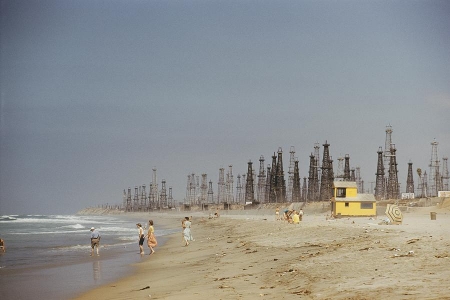
Now picture a different type of day, after a community decision to allow oil drilling just a handful of blocks from the very same beach.
Ahhh … take a deep breath and inhale diesel exhaust and the nauseating aroma of oil hydrocarbons wafting in the air. Listen to the sound of your kid coughing as you walk about the neighborhood greenbelt trails, which sit just across from the new corporate oil drilling site in town. Now imagine the unthinkable — an oil spill emanating from the supposedly safe facility. Inky, stinky, thick black oil runs down your street and into the storm drains that lead to the ocean.
This isn’t the stuff of fantasy. This nightmare scenario could well play out in Hermosa Beach if a controversial oil drilling plan is approved in the coming months.
The city is now reviewing an active proposal from E&B Oil to develop an onshore drilling and production facility that would access offshore oil reserves in Santa Monica Bay. Under a complex legal settlement, voters in Hermosa Beach will weigh in on a ballot measure to repeal an existing moratorium on oil drilling within city limits, likely this November.
Heal the Bay and a coalition of other environmental and community groups have spent the past few weeks reviewing a draft Environmental Impact Report for the proposed slant drilling operation.The draft lays out numerous unavoidable and significant impacts to the community and environment, should the project go forward. Our staff scientists reviewed and prepared comments on the Biological Resources, Geological Resources/Soils, Water Quality, and Water Resources sections of the EIR in a 38-page letter.
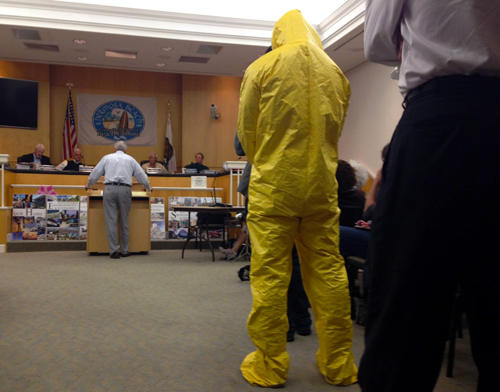
 At a recent Hermosa Beach city council meeting convened to discuss the draft EIR, a room packed with project opponents shared many of their concerns.
According to the draft EIR, there’s a 34% chance of an oil spill from the proposed facility pipelines. So an oil spill in Hermosa really isn’t a far off notion. In fact, the report states that “spills and ruptures from the installed Pipelines could result due to geologic hazards, mechanical failure, structural failure, corrosion, or human error during operations.”
You probably don’t need to be reminded about the impacts of an oil spill. We’re now remembering the 45th anniversary of the devastating Santa Barbara oil spill, which helped kick off California’s coastal environmental movement. More recently, wildlife still suffer from the disastrous effects of the Deepwater Horizon oil spill and explosion disaster in Louisiana. History and experience tell us that the long-term impacts of oil spills are felt decades later. Significant, adverse effects on native species and habitats, whales ingesting toxins, pelicans smothered with oil, accumulation of oil toxins in the food chain for years to come … these are realistic possibilities.
Dozens of threats are identified in the draft. The words significant and unavoidable are routinely used throughout the report to describe the risks of the proposed drilling operation. Sure doesn’t sound safe to me.
Listening to speakers at the city council meeting, it became clear that the idea of this project makes many residents sick. If just the idea of this project makes people sick now, can you imagine how sick people may get living next door to a project like this?
We’ve heard many concerns from South Bay residents about the geologic stability under homes, streets, and community infrastructure if this project moves forward. Hermosa Beach is a geologically complex and seismically active region that is subject to earthquakes and potentially strong ground shaking. So seismically-induced soil collapse, onshore subsidence, and sinkholes could occur. The area proposed for drilling is underlain by loose dune sands and similarly loose fill material. According to the EIR, these soils would be subject to sloughing and caving during excavations and could potentially destabilize offsite structures located immediately to the north. The impacts are considered significant.
 What about our local water quality? As stated in the EIR, “although mitigation measures would reduce potential water quality impacts associated with a large spills, the residual impacts to water quality would remain significant and unavoidable, based on the severity of impacts.” We’re talking about groundwater contamination, polluted oceans, and poor beach water quality. Is this really the vision for the South Bay? Is this our future? Our legacy to future generations?
The draft is 1,000+ pages filled with facts outlining the real environmental risks of oil drilling in a small beach community. I don’t expect most people to read it. It’s technical and very depressing.
But, you can rest assured that environmental scientists at Heal the Bay have gone over this EIR with a fine-toothed comb and are well-versed in the “significant” and “unavoidable” impacts associated with drilling along Santa Monica Bay. We are prepared to fight Big Oil along with our community and NGO partners and keep oil drilling out of our Bay.
The city of Hermosa Beach is expected to issue a final EIR later this summer, which will incorporate the feedback given at the public meeting and formal comments from stakeholders. It’s still unclear exactly when voters in Hermosa will be asked whether they want to repeal the existing moratorium. We are still operating under the assumption it will be on November ballot. (Update: The election is now scheduled for March 3, 2015.)
In the meantime, please join the fight and make your voice heard. You can sign up for updates and action alerts from Heal the Bay on this topic. And please join hundreds of your fellow ocean lovers at Heal the Bay’s Nothin’ But Sand beach cleanup, to be held May 17. We will be asking participants to stand together in opposition to oil drilling anywhere in our Bay.