
Top

Heal the Bay Blog

Uh oh. Here we go again.

The U.S. Environmental Protection Agency is once again recommending the complete elimination of the Beaches Grant Program, a key initiative for protecting public health at our nation’s beaches. Nearly $10 million in monitoring money is on the chopping block in the administration’s recently issued federal budget proposal for fiscal year 2014.

This is a déjà vu moment from last year, as EPA made a similar proposal for FY 2013. Luckily, program cuts were avoided then, thanks to Heal the Bay and our partner groups’advocacy and efforts from a group of 19 U.S. Senators including California’s Boxer and Feinstein.

Routine beach water monitoring, funded through the Beaches Grant Program, is essential for identifying polluted waters and promptly notifying the 90 million plus beachgoers who visit America’s beaches every year of potential waterborne illnesses such as diarrhea, nausea, ear and eye infections and skin rashes.

The majority of state beach programs are completely funded through federal grants. In California, federal money accounts for approximately one-third of the total funding of these critical programs (the state contributes about $1 million). The proposed cut is extremely concerning as states are only obligated to implement beach programs when federal funding is provided.

If implemented, these cuts will likely have a major impact on beach programs nationwide , including reduction in the number of monitoring locations, less frequent monitoring and elimination of off-season water testing programs. Reduced monitoring could compromise not only public health protection but also the ability to track chronically polluted beaches. Failure to protect public health will also endanger the coastal tourism and recreation economies that contributed over $61 billion to the GDP in 2009.

As Heal the Bay prepares for the May release of our 23rd Annual Beach Report Card, which provides annual water quality grades for approximately 650 beaches along the West Coast, we are concerned about the fate of beach water quality monitoring in the coming year.

Again, we call upon our Congressional representatives to take action against this proposal and for the public to sound their concerns. Historically, Congress has appropriated between $9.75 and $10 million to fund beach programs, and they should continue this level of funding to support our valuable coastal tourism-based economies and to protect beachgoers from getting sick from exposure to polluted water. While we understand that some cuts must be made in these difficult financial times, compromising public health is not truly a cost savings.

– Kirsten James

Science and Policy Director, Water Quality

Visit Heal the Bay partner Surfrider Foundation to contact your representatives in D.C. and let them know that you have the right to know if a day at the beach could make you sick.  


At long last we have some good news to share regarding the sea lion pup crisis. While we have yet to identify the cause of the huge spike in sea lion strandings, the California Wildlife Center, just let us know that they’ve begun construction of an emergency seal rehabilitation facility in the Santa Monica Mountains.

With most of the funding in place, supplies are being delivered and expedited, and the Center hopes to have this temporary shelter up and running within two weeks! At the very least, these animals will receive the care they need while we investigate the causes of their illness. This shelter will be used to house seals, as the sea lions have filled the Marine Mammal Care Center, which normally cares for the seals that typically strand at this time of year.

We thank our partners and supporters who galvanized to fulfill this major effort, such as our friends at the California Community Foundation. Compelled by the news of the strandings, our Development staff reached out to a colleague at CCF to see if one of their donors could provide the funding help needed. Within a work day, a match was found. Science and Policy staff also contacted the Waitt Foundation, which issued a challenge grant that to date has raised $50,000.

The Center still seeks donations to meet their fundraising goal.

While Heal the Bay does not work specifically with wildlife, our work is focused on keeping our oceans – and therefore the animals that live there—healthy. We are proud to be able to call upon our partners within our philanthropic network to help ease the pain of these animals. In the meantime, our staff continues to work to address the many facets of ocean pollution, striving to make real and positive change.


There are many ways to help. Donate items from California Wildlife Center’s Amazon wishlist to help alleviate this crisis.  The center’s first volunteer trainings for marine mammal rehabilitation have been scheduled!  Individuals can sign up to attend one of the orientation sessions below:

  • Saturday, April 20 at 10 a.m.
  • Saturday, April 20 at 3 p.m.
  • Wednesday, April 24 at 6 p.m.

Depending on the response, additional training sessions might be added.  Due to the amount of training and the skill level volunteers will need to develop, those interested in volunteering will need to be available to work at least one 4-6 hour shift every week.  RSVP to Cynthia Reyes.  

You can also donate to The Waitt Foundation challenge grant. Every dollar contributed by the public will be matched one-to-one by the Waitt Foundation and dedicated to the direct and urgent care of stranded sea lion pups.

Also, stay up-to-date via the California Wildlife Center’s Facebook page.


At Heal the Bay we celebrate Earth Day all month long. (Actually, all year long, but who’s counting?)

Throughout the month of April, you’ll probably see us out in the community at Earth Day events all across Los Angeles. We couldn’t possibly fulfill all of the requests we receive from schools, companies and community groups without our Speakers Bureau volunteers, who pitch in to help us spread our message.

We’d like to take this opportunity to congratulate our winter graduating class of Speakers! They devoted three afternoons and one morning to learning about water pollution and solutions and are now trained to answer questions about our work to improve the Santa Monica Bay. An extra big thanks to the Mountains Recreation and Conservation Authority (MRCA) for allowing us to use their beautiful space at the Los Angeles River Center to host our training. If you haven’t visited the L.A. River Center yet, you should definitely go check out this hidden urban gem!

Laker award to Heal the Bay

The Los Angeles Lakers tipped off Earth Month by joining us for a beach cleanup at Dockweiler. As if helping us remove 66 pounds weren’t enough, we also received a Lakers Eco All-Star award from East West Bank. We are grateful for the recognition and for the opportunity to share our Earth-friendly message with Laker fans before the game on April 12 at L.A. Live. (Hockey fans: Look for us on April 13 before the Kings game!)

Not to be outdone, Fox Corp. Broadcasting beach cleanupers were small in number, but mighty, with 20 people picking up nearly 100 pounds of trash near the Santa Monica Pier! That’s including the remnants of a romantic interlude with 97 candles and red roses and 2.5 feet worth of cigarette butts (ew!). The week before, Blackstone Consulting brought 22 people to the beach in Santa Monica, removing 42.5 pounds of debris.

Fox is also donating items to the silent auction at our upcoming Bring Back the Beach gala on May 16. Thank you, Fox!

And, as the weather warms, it’s time to start checking the Beach Report Card to make sure the water at your favorite beach is safe, healthy and clean. We thank simplehuman for its longtime support of this public health tool.

Find an Earth Month opportunity near you.

Learn how to take your love of the Earth to the next level, by volunteering with Heal the Bay throughout the year.


It’s not often that candidates running for Los Angeles City Council, City Attorney, and City Controller offices have an occasion to appear at the same event, but on April 1, candidates running in the May 21 election gathered at a unique forum to answer questions about the environment, transportation, the economy and their vision for a better Los Angeles.

Candidates from City Council districts 1, 6, 9 and 13, as well as the candidates running for City Attorney and City Controller, responded to questions from panelists, offering their ideas about how to address local issues like increasing the scope and accessibility of public transportation, conserving water resources, reducing poor air quality impacts on public health, increasing open space and urban greening, preparing for climate change impacts, attracting green jobs to Los Angeles, and mitigating environmental justice hot spots.

The event was well-attended by members of the public and various non-profit organizations, and staff from local city agencies.  The dialogue offered the public the chance to question candidates directly on these issues. The discussions between candidates were lively—sometimes heated—and the forum offered the candidates the opportunity to further distinguish themselves from their opponents and sharpen their positions on critical issues that will affect all Angelenos.

Watch video coverage from the Candidate Forum for the following races:

Heal the Bay was proud to sponsor the forum along with a broad coalition of organizations, including Climate Resolve, the Los Angeles League of Conservation Voters, Sierra Club, Tree People and Green LA Coalition. After all, the individuals who will be elected on May 21 will shape and influence Los Angeles environmental, transportation and economic policies for the foreseeable future.  

Read the candidates’ positions on these important issues here.  

Follow the Los Angeles Times’ coverage of the event.


Spring has sprung. And for Heal the Bay staffers, that means the beginning of a busy Earth Month 2013.

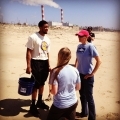
We kicked off the festivities Saturday afternoon with a special cleanup with the Los Angeles Lakers at Dockweiler Beach. Nearly 100 fans helped remove 66 pounds of ocean-bound debris from the sand and nearby dunes, including a rusted-out shovel and lots of plastic bottle caps.

Laker players Darius Morris and Robert Sacre hustled to Dockweiler following afternoon practice to lend a hand. Even after a long workout, the gracious duo wore big smiles and asked a lot of questions as they marched up and down the sand, blue Heal the Bay buckets in hand.

Morris, a native of nearby Hawthorne, did make one unfortunate discovery. He stumbled upon the carcass of a sea lion pup that had washed ashore, a victim of the wave of unfortunate strandings that has hit Southern California beaches.

Afterward, the players helped out with our raffle, then patiently posed for photos and signed autographs with fans, staff members from sponsor East West Bank and the Heal the Bay crew.

Over the years, we’ve been fortunate to participate in a number of community events with the city’s professional sports teams, including baseball’s Los Angeles Dodgers, hockey’s Los Angeles Kings and soccer’s Chivas USA.

On April 22, we will be hosting another cleanup with the LA Kings and will be recognized during the game the night before. On April 12 and 13, we also will be participating in an eco-awareness outreach event before Kings and Lakers games at Staples Center and LA Live.

If you can’t make it to any of the games, there are dozens of other Earth Month opportunities with Heal the Bay this April.

Please consider volunteering or becoming a member today.


UPDATE APRIL 12, 2013: The California Wildlife Center has begun construction of an emergency seal rehabilitation facility in the Santa Monica Mountains. Read more.

For the last couple of weeks, Heal the Bay staff have fielded questions about the hundreds of sea lion pups washing up on our local beaches. We love these animals too, so we’re very concerned. We’ve contacted our partners and compiled the latest information to inform you of the current status of this crisis.

The local California Wildlife Center (CWC) and other rescue/rehab places are inundated, and CWC is trying to raise emergency funds via grants and donations to set up a temporary rescue and rehab center for the overflow of seals and sea lions in L.A. You can donate to their efforts.

In addition to the rescue and rehabilitation efforts, the National Oceanic Atmospheric Administration (NOAA) is assembling an independent team of scientists to review data collected and to determine potential next steps. NOAA’s investigative team is in the process of developing a plan to test samples from both live and dead animals. Blood and tissue samples will be tested for bacterial, viral and other infectious agents. Samples will also be tested for radio-nucleotides. Results will be available in 1-3 months, and you can track the progress at California Sea Lion Unusual Mortality Event.

This is the sixth UME involving California sea lions that has occurred in California. Prior UMEs were declared in 1991, 1992, 1998, 2000 and 2002. Previous UMEs were caused by leptospirosis (1991), El Niño conditions (1992) and domoic acid toxicity (1998, 2000, 2002).

If you find a marine animal in distress:

  • Don’t touch! Do not pick up, pour water on or feed the animal. They are wild animals and can bite. They also are easily stressed by humans.
  • Do not return the animal to the water. Seals and sea lions temporarily “haul-out” on land to rest. Harbor seal mothers often leave their pups ashore while they’re feeding at sea. A beached whale, dolphin, or porpoise should be reported immediately.
  • Give the animal its space. Maintain a distance of at least 50 feet. Keep people and dogs away.
  • Call California Wildlife Center at 310-458-WILD if you find a distressed marine mammal in Malibu, or Marine Mammal Rescue at 1-800-39-WHALE for Santa Monica to Long Beach. For other areas, consult our list below of rescue and rehabilitation groups in Southern California. When calling, it’s important that you be able to identify your location and provide details of the animal and its condition.

Southern California Rescue and Rehab Groups:

Want to do more? Donate items from California Wildlife Center’s Amazon wishlist to help alleviate this crisis, or stay up-to-date via the California Wildlife Center’s Facebook page.

You can also donate to The Waitt Foundation challenge grant. Every dollar contributed by the public will be matched one-to-one by the Waitt Foundation and dedicated to the direct and urgent care of stranded sea lion pups.


— Dana Roeber Murray, Heal the Bay’s Marine and Coastal Scientist


Artist Erik Abel first volunteered with Heal the Bay at a Nothin’ But Sand beach cleanup in January 2012 where he was treated to a special tour of our Santa Monica Pier Aquarium. There, he found inspiration in the Aquarium’s “shark eggs and funky jellyfish” and realized he wanted to get more involved with our organization. Clean and healthy oceans have always been important to the California native, so partnering with Heal the Bay seemed an obvious choice.

“The ocean is my sanctuary, and I want to do my part to help it stay healthy,” Abel said. “Heal the Bay is a great organization that makes a difference. I’m stoked to work with them and contribute to their cause as a Heal the Bay 2013 Partner Artist.”

As our partner artist, Abel has created stunning artwork accompanying our Bring Back the Beach gala, including the invitation and a mural on display at the event. He will also donate an original painting to the gala’s silent auction and release prints after the event in May. 

As a Heal the Bay Partner Artist for 2013, Erik Abel is also releasing:

  • Three original paintings. Fifty percent of sales from paintings will be donated to Heal the Bay. Each painting 24″x36″ and priced at $1500.
  • 18×24 inch prints of each original painting on sustainably sourced Bamboo archival paper, hand signed by Erik Abel.The first print, “Kelpafornia”, is available now. The subsequent prints will be released in May and September. Prints are available at online for $40 with 15% of sales benefitting Heal the Bay.
  • Ten limited edition 20×30″ prints on solid bamboo of each original painting, hand signed and numbered by Erik Abel.
  • 24-ounce aluminum water bottles made in the US from recycled metal featuring the “Kelpafornia” artwork. Manufactured by Liberty Bottles in Yakima, Washington, the bottles are available online for $20. Fifteen percent of sales benefits Heal the Bay.
  • A series of four iPhone Cases made from 100% post-consumer recycled plastic in Glendale, CA by Tru Protection. The cases are available for the iPhone 4/4S and 5 for $39.95. The “Kelpafornia” design is featured on the newest case to be released. Fifteen percent of sales benefits Heal the Bay.

Abel’s eye-catching work is inspired by the ocean, surfing and travel. The Ventura-based artist uses geometric patterns and bold colors to exude an organic, tribal style. His work has been displayed at galleries nationwide and commissioned for clients including Patagonia, Reef and Billabong, but now Heal the Bay is lucky enough to call this talented artist a partner. Thank you Erik for using your incredible talents to beautify our oceans!

Join us May 16, 2013, for our annual Bring Back the Beach gala.

Visit Erik Abel’s site to learn more about the California artist or shop with Heal the Bay!


Katherine Pease, Heal the Bay’s Watershed Scientist, reflects on publishing and presenting Stream Team data from the Malibu Creek Watershed to the public.

Last week we received a box containing the much-anticipated and limited print copies of the Malibu Creek Watershed report. Holding the weighty report —140 pages! — in hand was extremely satisfying knowing all the hard work that was put into its creation over the last 15 years.

Despite that satisfaction, we also know that with the completion of this physical report only begins the next steps in its lifespan. We don’t want the report to sit on a shelf and gather dust or be downloaded and never examined. Our goal for the report is to share our findings far and wide and to use it to enact positive change.

We kicked off the process Tuesday night at a public workshop about the report. We saw an amazing turnout (over 80 people)! Clearly the topic resonated among community members who are actively engaged in protecting this watershed.

All in all, it was a great evening at National Park Service’s Diamond X Ranch in the Santa Monica Mountains. Sarah Sikich (Heal the Bay’s Coastal Resources Director), Shelley Luce (Santa Monica Bay Restoration Commission’s Executive Director), and I  presented the major findings and recommendations of the report along with ways for the public to get involved. A question and answer panel followed the presentation and two of our dedicated Stream Team volunteers joined us for that.

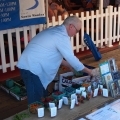
Attendees also had the chance to visit informational booths hosted by organizations working in the watershed and greater Santa Monica Mountains, including Mountains Restoration Trust, Santa Monica Mountains National Recreation Area, LA Waterkeeper, California Wildlife Center, Malibu Creek State Park Docents, Santa Monica Bay Restoration Commission & Foundation, and California Native Plant Society.

Moving forward, we will continue the watershed monitoring we’ve been conducting since 1998. If you’re interested in participating in monthly water quality monitoring, we will be training Stream Team volunteers (pictured here) on May 11, 2013 – please apply online.

We will also be meeting and working with the public, stakeholders, public officials, and decision-makers to begin to advance implementation of some of our recommendations. Some great ideas for moving forward were proposed on Tuesday night at the public workshop and we will follow up on those ideas for working together to protect and improve a watershed that we all care deeply about.

Read our State of the Watershed Report.

Get Involved: Join us for an Earth Month restoration event in Malibu Creek State Park.


Water is the driving force in nature.” – Leonardo Da Vinci

Tomorrow we celebrate the global importance of clean, fresh water as part of World Water Day. In most of the world, people don’t have access to safe drinking water, while here in Los Angeles protecting our water remains an ongoing challenge.

Which is why we are so grateful to our partners and friends who support our work to maintain a locally sustainable water supply and to protect what we all love and value—clean water!

Just this Tuesday we hosted a workshop focused on the Malibu Creek Watershed and our work to understand this vast clean water resource in our own backyard. We’d like to thank our partners who came out that evening to share their expertise about animals and native plants, scenic hiking spots and restoration activities in the area: Santa Monica Bay Restoration Foundation, Mountains Restoration Trust, Santa Monica Mountains National Recreation Area, LA Waterkeeper, California Wildlife Center, Malibu Creek State Park Docents, and California Native Plant Society.

We are also thankful to the 715 volunteers who joined us to pick up 371 pounds of trash at Nothin’ But Sand last Saturday at Venice Pier. Plus, as part of our ongoing Zero Waste initiative, we only used a handful of plastic bags, as most folks either brought their own buckets, or borrowed one of ours! A special shout out to Jason Holland and the Credit Suisse team, whose volunteer hours translated into donation dollars, ensuring that our effective pollution prevention programs such as Nothin’ But Sand keep running and keep our local waters clean.

We’d also like to thank Canehill Glass Ranch for donating to our clean water cause, including lovely repurposed glass “thank you items” to some of our top supporters.

Do you value clean water? Learn more about our work to maintain a healthy local water supply .

Join us on Earth Day (April 20) for our next Nothin’ But Sand cleanup.

Malibu Creek Watershed: Ecosystem on the Brink


A single storm can sweep billions of gallons of polluted runoff directly into Santa Monica Bay.  Yes, that’s billions with a “B.”  So it’s not much of a stretch to understand why the majority of waterbodies in Los Angeles County, including the Santa Monica Bay, are officially impaired by bacteria, trash and metals. In fact, 7 of the 10 most polluted beaches in California are located right here in our backyard.

Equally troubling, valuable storm water is literally going down the drain.  We live in in an area of permanent drought, yet we keep building and expanding, importing billions of gallons of costly and increasingly scarce water from our neighbors to fuel our growing demand. Imagine if we captured and reused the water from storms instead of funneling water into stormdrains and rivers and to be dumped full of pollution into the sea?

Take Action

Storm water, if recharged, can provide a safe and less expensive source of water.  Rainwater becomes an asset, rather than a liability.

Last week, the Los Angeles County Board of Supervisors considered moving forward with the “Clean Water, Clean Beaches” Measure, a funding measure that would help local cities and the County implement critical clean water projects to protect our region’s surface waters and also provide other added benefits such as increasing the local water supply and open space. Property owners would be assessed an annual fee based on the amount of runoff their parcels generate. The typical homeowner would pay roughly $54 a year.

The measure has been contemplated for the past seven years but gained momentum over the last year, as new storm water regulations were recently adopted.

A diverse mix of supporters – including representatives from local cities, businesses, environmental organizations and community groups from across L.A. County came out to support the Measure. The supporters outnumbered the protestors, despite the hearing being a “protest hearing” specifically required by law to consider opposition to the measure.

We are grateful that so many supporters showed up to make their voices heard, but it was especially gratifying to see middle school students from the Santa Monica Alternative Schoolhouse, who took the Santa Monica Blue Bus to the hearing, testifying as well as absorbing a valuable lesson in how our local government functions.

Some critics complained about how the outreach materials were assembled and distributed to the public. On principle, others opposed the idea of any more levies on property owners to fund public works infrastructure and programs, no matter the need.

While there was some positive discussion by the Supervisors about needing to clean up our region’s waterways, they did not all see the urgency in moving the measure forward expeditiously, despite three board members of the Regional Quality Control Board testifying in support of the measure and referencing looming compliance deadlines.

At times it felt like the supervisors wanted a silver-bullet solution to their water quality issues to avoid enforcement. Simply implementing a project or policy doesn’t mean that sufficient water quality improvement will result.   Several supervisors were disturbingly misinformed about their legal responsibilities to implement Clean Water Act requirements.

Instead, the approved motion contemplates a general election with a “goal” of 2014.  This direction deviates from the previous trajectory of presenting a mail ballot this spring to property owners, which seems fair given that they are the individuals most directly affected by the fee. Keep in mind, that 2/3 of voters are needed to pass a fee-related measure in a general election – a very high bar to meet — rather than a simple majority for a property owners ballot.  Some see the change as a significant setback for the measure, especially because a property owner ballot is a completely viable option.  However, stormwater advocates need to remain positive and vigilant.  

So what is next?

We will continue to work with the County to ensure that the content of the measure is as strong as possible. It’s almost there but just needs a little more work. The measure should include a refined rebate and incentive program for property owners who are already implementing stormwater capture practices. Parties are also debating the exact nature of a so-called sunset clause, which determines a phase-out period for the fees. With a report due back to the supervisors in 90 days, remaining issues should be hammered out by then.

Hopefully, the Regional Water Quality Control Board and staff responsible for implementing water quality requirements in cities and L.A. County can educate their elected officials about water quality requirements and the many consequences of not having the necessary funding to implement infrastructure enhancements.  There is an alarming disconnect here.

Concurrently, we need to strategize on additional paths forward to achieve a sustainable funding source for water quality improvement projects. The consequences of not doing anything are very dire. Not only will the benefits such as improved water quality, public health protection, job creation and increased local water supply not be realized, but municipalities will not be afforded this important source of funding for achieving compliance with mandatory Clean Water Act requirements.

Do you support a sustainable approach to clean water? Contact your Los Angeles County supervisor to support the “Clean Water, Clean Beaches” measure!