
Top

Heal the Bay Blog

Author: Heal the Bay

We celebrated Earth Day last Saturday with about 1,800 friends who cleaned the beach on the North side of the Santa Monica Pier, picking up more than 600 pounds of trash. Some also built sand castles and visited our Santa Monica Pier Aquarium – and a few capped the day with a cold Heal the Bay IPA.

Thanks to Stephen Supernor and his AmeriCorps group of Team Blue 4-Pacific region volunteers who provided help toting supplies and giving safety talks for the beach cleanup.  

Time Warner Cable’s Connect a Million Minds sponsored the family sand castle building contest, allowing us to provide everyone with those essential tools: a bucket and shovel. 

Kudos to our Corporate partners who took sandcastle-building to another level. The following nine firms participated: ARC Engineering, Bernards, Gensler, HOK, Pivot, REI, RTKL, Steinberg Architects and Tangram.

In the Aquarium, underwater photographer Richard Salas took us all along on his dives from Mexico to the Equator, sharing awe-inspiring photographs and accompanying stories.

Looking ahead, we’re thankful to Union Bank for renewing support for Coastal Cleanup Day.


The time has come to cast your ballots!

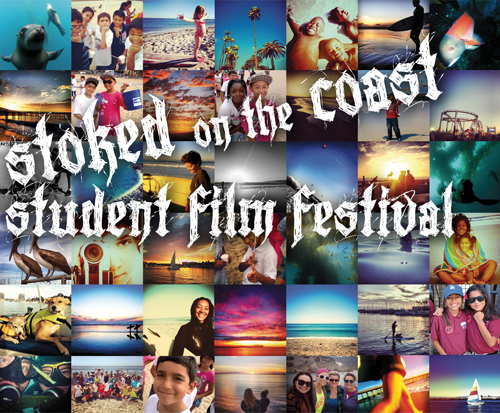
Attention film buffs: Our Stoked on the Coast Student Film Festival is closed to new submissions but OPEN for public voting between now and midnight, Saturday, September 12. Please share the link and encourage your friends to vote!

VOTE NOW!


Stoked on the Coast Student Film Festival Background

Supported by a generous grant from the California Coastal Conservancy, Stoked on the Coast is a new kind of film festival organized by Heal the Bay staff. As we’re firm believers in the wisdom of children, the contest is only open to students from 5th grade through age 21. We’re inviting young auteurs throughout California to submit a short film (from six seconds to three minutes) that tells the story of why they’re passionate about the ocean. It can be straightforward or silly, meditative or madcap, narrative or stream-of-conscious — it just needs to be authentic.


“This contest gives us a unique perspective on marine conservation: By seeing how the ocean creatively inspires young people, we can better channel that energy into the next generation of stewards,” says Meredith McCarthy, our programs director.

It wouldn’t be a festival without pomp and circumstance, so we’ll be hosting a special Stoked on the Coast soiree later this summer. All entries will be screened, and a variety of prizes will be awarded by celebrity judges. Ultimately, every Stoker is a winner.

Learn more about the festival and enter your films here.

Get stoked, and please share with educators, young film buffs and ocean-lovers everywhere!

Got questions? Contact Edward Murphy, Heal the Bay’s Watershed Education Manager and Stoked on the Coast program coordinator.

Stoked on the Coast Student Film Festival


Who would’ve thought you could make an environmental statement by sipping a cold one? This Saturday, April 26ordering a Heal the Bay IPA is one way to support a clean and healthy ocean. Thanks to Golden Road Brewing in Los Angeles for bringing back this ale and for donating a portion of the sales to us. Saturday a handful of the neighbors around our Santa Monica Pier Aquarium will pour this seasonal ale to benefit Heal the Bay. So come on out to help clean the beach and participate in our Earth Day activities, which include a massive beach cleanup and sandcastle building competiton. And when you get thirsty, continue to give back by having a Heal the Bay IPA in one of these nearby establishments:

And a special thanks goes out to Kaiser Permanente for supporting clean beaches by becoming a Corporate Healer!


Ruskin Hartley, Heal the Bay’s president, has found a reason to love an even rougher morning commute. 

It’s not often that a warning sign on my daily commute makes me happy. But this one did: In bold orange letters, it declared “Avoid PCH South of Temescal 2-5-14 to 4-15-15.” Anyone who knows the Pacific Coast Highway knows that is essentially impossible in Los Angeles. So why was I happy? Because this time, the big orange warning was a beacon of hope for the Bay.

A lot of construction is pretty mundane — filling pot holes or adding lanes so you can get to the next jam a little faster. This one, however, does something more important that will benefit millions every year. Let me explain.

Every day when I drive along the Bay there are a few places near the shoreline at creek and stormdrain outlets where water collects in the sand. Sometimes even at the end of summer these pools still lurk, rife with bacteria. One of these is right where Chautauqua Boulevard meets the Bay in Santa Monica Canyon. This stagnant pool is caused runoff from the canyon that has bypassed the current low-flow diversion. Upstream there are about 1,600 acres that drain to this one point. In a significant rainstorm the channel will breach the sandbar and flush a toxic soup of trash, bacteria and heavy metals into the Bay. But even in dry weather, without a properly maintained low-flow diversion this channel can seep the runoff from our daily lives — leaky pipes, irrigation water, washing your car – directly to the beach. All that water flows downstream, gathering nutrients and pollutants, until it hits the beach, resulting in a ponded area that attracts birds and other fecal bacteria sources. Authorities then advise everyone to keep away due to high bacteria levels. It’s a public health nuisance on one of the world’s most beautiful beaches.

Once this project is completed that stagnant pool will be history. The City of Los Angeles is about to embark on an $8 million, nine-month project to extend a 48-inch sewer line that that will divert all dry season runoff to the Hyperion treatment plant. Some of it will even be treated locally to provide irrigation water for the surrounding community. This is the next phase of the $20 million Coastal Interceptor Relief Sewer. When completed, it will help keep bacteria levels in Santa Monica Bay down and help protect your health every time you visit the beach.

For the past 29 years, Heal the Bay has been leading the charge to clean up this pollution by establishing strict pollution limits and by working with public agencies to secure the funding needed to upgrade our aging infrastructure. There’s much more work to be done, but this is an important next step.

I think a little traffic is a small price to pay to help protect the health of people who visit these beaches every year. I’ll report back next year and let you know how it worked.

So next time you’re stuck in traffic on PCH, remember that a healthier Bay is on its way…even if you’re not.


A day at the beach shouldn’t make you sick. It’s a core principle of Heal the Bay and many of our lawmakers deserve our gratitude for reminding others in Washington, D.C. of the importance of water quality testing. We especially want to thank Congressman Henry Waxman for his recent leadership and U.S. Sens. Barbara Boxer and Dianne Feinstein for their support in the effort to reinstate funding for the BEACH Act grant program at the $9.8 million level. The program, run by the Environmental Protection Agency since its enactment in 2000, helps local governments pay for regular water-quality testing and  has tripled the number of beaches monitored for unsafe bacteria levels, now more than 3,600 locations. These funds are crucial to local communities’ ability to pay for consistent monitoring, a critical element for letting the public know when it’s safe to dive into our coastal waters.


Sarah Sikich, co-director of Heal the Bay’s science and policy department, celebrates a big win for the Santa Monica Mountains

In a unanimous decision, the California Coastal Commission approved the Santa Monica Mountains Land Use Plan at yesterday’s hearing in Santa Barbara. The Land Use Plan, created by the planning department of L.A. County and Supervisor Zev Yaroslavsky’ s office, provides guidance for future development in a critical region of greater Los Angeles.

The plan, which had generated some controversy because of concerns from some landowners, ultimately protects scenic views, water quality, and wild lands in an area enveloped by the Santa Monica Mountains National Recreation Area, the largest urban national park in the U.S.

The Plan was endorsed by a wide group of supporters, including Heal the Bay, Los Angeles Waterkeeper, California Coastal Protection Network, Malibu Surfing Association, Mountains Restoration Trust, Surfrider Foundation, Las Virgenes Homeowners Federation, and many residents and equestrian groups from the mountains. Some members of the equestrian community and vineyard developers opposed the plan, arguing that it put undue restrictions on their activities. Each side packed the hearing room, adorned in stickers and buttons showcasing their respective positions

The Land Use Plan outlines the future of the 52,000-acre Santa Monica Mountains Coastal Zone, a region characterized by steep rugged mountains and wildlife ranging from large mountain lions to federally threatened red-legged frogs. It’s also dotted by large estates, ranches, and pockets of communities. Some highlights of the Plan include stream and riparian habitat setback requirements for development, measures to prevent erosion of hillsides and streambanks, policies to prevent polluted runoff and habitat damage from agricultural use in the mountains, and a provision that does not allow for new vineyard development in the mountains.

The provision prohibiting new viticulture drew vocal opposition from some members of the wine community. But, the rugged character of these mountains isn’t compatible with vineyard development. Erosion from soils between rows planted on steep slopes clogs stream habitat upon which newts and frogs depend, and excessive nutrients and pesticide runoff from vineyards can foul water quality.

“You would not plant vineyards in Big Sur, and they shouldn’t be planted in the Santa Monica Mountains,” said Supervisor Yaroslavsky, putting the policy into perspective when he explained the vibrant life and scenic quality of these mountains, which draw in millions of visitors annually. The Plan also grants existing permitted vineyards to remain, and also allows for organic farming in specific regions of the mountains.

The Coastal Commission and Los Angeles County will now work on a parallel path to create the Local Implementation Plan, which determines specific measures to bring the Land Use Plan into effect. That framework is slated for Coastal Commission consideration in June.

Want to learn more about the beautiful Santa Monica Mountain ecoysystem? Join the Stream Team, our citizen scientist program!


We love Earth Month. April is a time of renewal and rejuvenation, a time for millions to reflect on the health of the natural resources on which we all depend. But the reality is that every month is Earth Month for Heal the Bay. Our passionate staff members and dedicated volunteers work hard throughout the year to guard Southern California’s rivers, beaches and oceans. Protecting what you love is a 365 day-a-year job – be it fighting for strong pollution limits, providing hands-on marine education to local students or restoring habitat in degraded waterways.

Limited Edition T-Shirts Designed by local artists Tim Biskup and Florencio ZavalaWe don’t take our local beaches and local neighborhoods for granted, and we know you don’t either. Whether you’ve joined one of our beach cleanups, visited our Santa Monica Pier Aquarium or just shared one of our social media posts with your network of friends, you’ve shown a deep commitment to our shorelines and the animals that call it home.

In honor of Earth Month, we’re asking you to go a step further. By committing to a modest monthly gift of $9, you’ll help sustain our work year-round. You’ll also become a card-carrying Heal the Bay Hero.

$9. What can it really get you these days? Maybe we’re biased, but we’re willing to bet you’d prefer a month of clean beaches to buying a single designer cocktail or a movie ticket to the latest vampire meldorama. In appreciation of your gift, we’ll also send you a limited edition t-shirt designed by celebrated local artists Tim Biskup and Florencio Zavala so you can literally wear your love of the ocean on your sleeve. You can also snag a shirt at ZJ’s, Channel Islands Scuba or at this Saturday’s Earth Month Extravaganza at the Santa Monica Pier, while supplies last. Beginning May 1, you’ll be able to purchase shirts via our website!

30 cents a day may not sound like an heroic amount, but recurring gifts from Heal the Bay Heroes will provide us with a reliable stream of funding while allowing donors like you to spread out your charitable giving more manageably throughout the year.

Over the course of the year, your donation would underwrite any of the following:

  • Reusable supplies for five volunteer beach cleanups
  • Two days of water quality testing at our local rivers
  • Training for four volunteers to monitor newly established Marine Protected Areas
  • Bus rides and a day of hands-on marine education for 60 underserved students

Your gift today will help us protect the Bay year-round. Who knew becoming a Hero could be as easy as setting aside 30 cents a day?

Thank you!Be a Heal the Bay Hero for Earth Month

P.S.–Heal with your hands as well as your wallet! Check out our list of Earth Month goings-on here. 

Follow @healthebay on Vine for our ongoing #HtBHero video series


For the past few months, our Santa Monica Pier Aquarium has been graced with its very own in-house curator. Viki Stathopoulos, by day the Outreach Facilitator and Director of Fun at Trash for Teaching, inspires visitors of all ages to imaginatively repurpose discarded materials into whimsical marine-themed works of art — and the results are museum-quality. Thanks to Viki for bringing her contagious (and renewable!) energy to the Aquarium and to Trash for Teaching for providing the raw materials.

We applaud Environment California for organizing California Ocean Day, a statewide celebration that brought Heal the Bay together with other nonprofit ocean advocates, students and business representatives to raise awareness about the ocean while educating Sacramento legislators about pressing environmental issues. Special thanks to Monterey Bay Aquarium for hosting a festive and delicious reception that honored those who’ve helped advance ocean health.

California Ocean Day A few of our Ocean Day advocates, Heal the Bay’s Sarah Sikich (far right) and Assembly Speaker John A. Pérez (middle)


The folks at apparel company Horny Toad have supported Heal the Bay in many ways over the years, and we’re thrilled to be featured on their website in celebration of World Water Day, coming up March 22nd. They love us for our dedication to improving the health of the ocean – and we love them for their sustainably produced and stylish threads!

A big thank you to Amgen for its donation of equipment and supplies to our Santa Monica Pier Aquarium and water chemistry laboratory. Heal the Bay staff members were invited to visit the Amgen warehouse and pick out useful items…and we came away with a truckload! These much-needed items will be used to analyze water quality in our lab, grow food for Aquarium animals, and create interpretive materials for the Aquarium’s educational program “Who Pollutes?”

Our awesome new crew of Speakers Bureau volunteers enjoyed a delicious dinner – delivered in eco-friendly reusable bags – at their final training session, thanks to Rubio’s. And last but not least, thanks to the City of Santa Monica’s Office of Sustainability and Environment for for providing these volunteers with parking passes.


With tax season upon us, it’s actually a good time to think inside the box. As April 15 approaches, ocean lovers throughout the state now have a chance to support their local beach when they file their returns.
 
By simply checking a box on your state tax return, you can make a one-time tax-deductible donation to the California Coastal Commission for any amount you choose.
 
Under the measure sponsored by Torrance-based Assemblymember Al Muratsuchi, your contributions will support the Whale Tail Grants Program, doing an ocean of good for underserved kids, ocean-related museum exhibits, habitat cleanups and restoration projects.

So look sharp, feet-draggers: You’ve got a month to pinch those pennies for the Pacific!