Top

Heal the Bay Blog

A 12,000 gallon sewage spill on Saturday, Feb. 11 in Compton flowed into the Los Angeles River. City of Long Beach officials ordered all open coastal beaches closed.

According to the Long Beach Post, this spill–attributed to a blocked sewer line–is similar to the Studio City spill of last year and Burbank spill in 2010, each effectively shutting down the coastal areas of Long Beach.

The Los Angeles River ends in Long Beach, where beaches will remain closed until the Long Beach Health Department testing indicates the water is safe to swimmers.  

For the latest status on Long Beach recreational beach water quality, call the Water Hotline at 562.570.4199.

For up-to-date beach closure information, download the free mobile app for iPhone and Android, or visit the Beach Report Card.

Follow the Beach Report Card on Twitter.


The “Ocean Lover’s Choice,” El Matador, won our Facebook poll, which asked supporters to share their favorite romantic beach along the West Coast. You can’t get much more dramatic than this secluded rocky cove.

Discover the other top 10 most romantic beaches in our Valentine’s Day Beach Guide for Ocean Lovers.

Encinal Canyon, El Matador State Beach in Malibu, a Flickr photoset by “Mulling it Over”


We have a major victory to report in our ongoing fight to clean up San Pedro Bay and the Greater Harbor area, which is still riddled with toxic pollution such as PCB and DDT contamination.

Today the State Water Resources Control Board unanimously voted to approve the Dominguez Channel and Greater Los Angeles and Long Beach Harbors Toxics Total Maximum Daily Load (TMDL). These pollution limits put dischargers on a track for cleaning up the Harbor area of this legacy contamination, and as a result, should reduce fish contamination levels. Although this was one of the most complex TMDLs that has ever been adopted, it is also one of the most important. 

As we have learned from Heal the Bay’s Angler Outreach Program, which has educated over 100,000 anglers, there are many subsistence fisherman in the Harbor area that are currently risking their health and the health of their families by eating contaminated fish. This TMDL has the goal of meeting fish tissue targets to ensure public health is protected. 

Heal the Bay has been working with stakeholders on the development of this TMDL for over five years. Despite strong opposition from several stakeholders, the environment prevailed. The implementation of these pollution limits will be a big step in meeting our goal of fishable and swimmable coastal waters.


Today’s Los Angeles Times features an Op-Ed by Mark Gold, Heal the Bay’s former president, about his disappointment with new EPA beach water quality criteria that actually weaken public health protections for millions of recreational ocean users. It’s now OK for one in 28 people to get sick when they take a dip in the sea, the EPA says. Crazy, huh? 

Read more of Gold’s thoughts and please urge the EPA to amend these ill-conceived regulatory revisions.


Help the California King Tides Initiative document the impact of rising waters along the California coast by photographing the highest seasonal tides (a.k.a. king tides) occurring February 6-8.

Your photographs will help visualize the impact of sea level rise on homes,harbors, and other infrastructure, as well as beaches, wetlands, and public access to the coast.

According to the California King Tides Initiative: “Our shores are constantly being altered by human and natural processes and projections indicate that sea level rise will exacerbate these changes.  The images offer a living record of the changes to our coasts and shorelines and a glimpse of what our daily tides may look like in the future as a result of sea level rise.”

Here are local spots where you can view and photograph King Tides: Broad Beach, Malibu shoreline homes, Marina del Rey, Port of Long Beach and Port of Los Angeles.

Attention, Shutterbugs: Be safe! Take extra precautions when you walk on slippery areas or near big waves, and always be aware of your surroundings and the weather conditions.

Participants can submit and view images at www.flickr.com/groups/cakingtides

Find out more about the California King Tides Initiative at http://californiakingtides.org/.


Thank  you to all those who entered Heal the Bay’s Cirque du Soleil drawing to win a pair of tickets to OVO at the Santa Monica Pier.  The final pair of tickets will be given away for the following OVO performance:

  • March 13, 8 p.m.

Heal the Bay will randomly choose one winner from the drawing participants for the last Cirque du Soleil OVO performance. Congratulations to Kimberly Revere, Eddie Gonzalez and Sonia Sanchez – our first winners for the Heal the Bay OVO performance drawing and giveaway.

In addition, as partners in promoting community education, Cirque du Soleil  is sponsoring five field trip education programs, including bus transportation, to the Aquarium during the run of its OVO show, and has invited the public to visit the Aquarium for free during any Sunday in February. 

Read the official rules for the ticket drawing.


Listen to Meredith McCarthy’s interview on KFWB.

Don’t litter. Bring your own bag to the store. Volunteer for one of Heal the Bay’s monthly beach clean ups.

These are among the 10 ways you can keep our rivers, creeks and beaches clean, according to Heal the Bay’s Director of Programs, Meredith McCarthy.

In an interview with KFWB’s Maggie McKay, Meredith details the easy steps we can all take to protect our oceans and keep our families healthy.

For more plastic bag infotainment watch our latest video.


Plastic bags create loads of unnecessary litter; they are easily blown by the wind creating hazards for wildlife, and they often end up in the ocean where they can choke marine life.

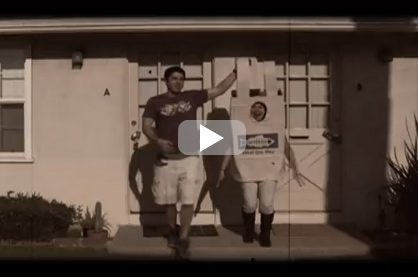
Heal the Bay Entertainment presents a silent film about a young man and his trusty reusable bag on an adventure to the supermarket. Will our heroes succeed against the dastardly, plastic Bag Monster villain?

To find out, watch it now!

Ten Ways to Heal: Sack the Plastic Bag - Video


Courtesy of Cirque du Soleil

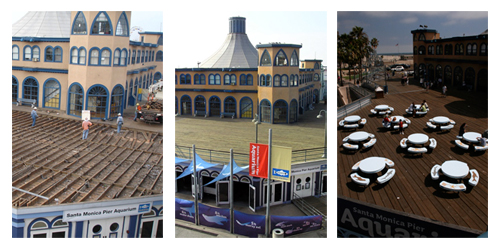
Santa Monica, CA  (January 18, 2012) – As partners in promoting community education, Heal the Bay’s Santa Monica Pier Aquarium and Cirque du Soleil invite the public to visit the Aquarium for free any Sunday in February. In addition, Cirque du Soleil, as a part of its commitment to community involvement, will sponsor five field trip education programs, including bus transportation, to the Aquarium during the run of the show. For many, the field trip to the Santa Monica Pier Aquarium marks the students’ first experience with the beach environment and observing marine life up close.

Cirque du Soleil is sponsoring free admission to the marine science center during public hours, from 12:30 to 5:00 p.m. The internationally known circus is performing its ode to the insect OVO, under the Grand Chapiteau in the parking lot adjacent to the Aquarium and the Santa Monica Pier.

OVO is described as “immersion into the teeming world of insects;” Aquarium visitors will be immersed in the underwater world, gaining knowledge about the creatures of the Santa Monica Bay through hands-on, interactive exhibits of more than 100 species native to the Bay. The free Sundays will in particular celebrate crustaceans – the ocean’s counterpart to insects on land – and as always, strive to inspire environmental stewardship for the benefit of all marine life.

In addition to the variety of crustaceans on exhibit, touch tanks at the Aquarium offer an opportunity to get up close and personal with sea stars, anemones, sea cucumbers and urchins. Moray eels, octopus, sharks, rays and a diverse number of fish species – all from the Santa Monica Bay – are displayed in habitat-specific exhibits.  Moon jellies – some as large as dinner plates – mesmerize as well as educate. The Aquarium has its own nursery to raise these majestic oceanic drifters.

The Aquarium is located beach level, beneath the Santa Monica Pier, at 1600 Ocean Front Walk. More information is available by calling 310-393-6149 or at www.healthebay.org/smpa.


Work by biologists, physicists and experts in finfish culture and pathogen pollution received a $1.4 million boost from California Sea Grant research funds.

Nine new science-based projects were awarded grants, including:

  • A sustainable domestic tuna farm;
  • a hatchery release plan and krill forecast strategy to help rebuild Central Valley salmon; and
  • a study of beach erosion in Southern California based on changing storm intensities.

Outside experts reviewed all the projects for their scientific merit and relevance to current marine issues.  The two-to-three-year projects are slated to begin in February.

Read more at the California Sea Grant site.

California Sea Grant is part of the National Oceanic and Atmospheric Administration (NOAA), U.S. Department of Commerce.