Top

Heal the Bay Blog

Category: Events

Sipping on an artisanal cocktail, winning a life-changing vacation and jamming to the music of Ziggy Marley during a Santa Monica beach sunset — does life get any better? Yes, it does when it goes to benefit clean oceans!

Bring Back the Beach on May 16, 2013, at the Jonathan Beach Club in Santa Monica, was truly the ultimate beach party. Hollywood A-listers and guests joined us for an evening under the stars to honor Heal the Bay’s former president Mark Gold, D. Env., Oscar-winning actor and environmental champion Jeremy Irons, and founder of the Inclusive Health movement and philanthropist Dr. Howard Murad.

Our supporters were treated to a special acoustic performance by five-time Grammy Award winner Ziggy Marley, who received the true VIP treatment, with Heal the Bay’s Marine & Coastal Scientist Dana Roeber Murray and her husband Brian chauffeuring him home after the show!

Guests had the chance to bid on a completely decorated cabana set, courtesy of Coastal Living magazine, and a new 2013 Scion FR-S, contributed by LAcarGUY.

Thanks to our dedicated guests, we exceeded our goal, and raised more than $1 million for programs that work toward clean beaches and oceans. Rest assured: Our teachers, water quality scientists, policy advocates, beach cleanup organizers, and aquarists, to name a few, plan to put those dollars to good work.

Check out photos from Bring Back the Beach or spot your friends in the Lucky Laughter Photo Booth!

Update: We’ve added even more photos of guests at Bring Back the Beach on Flickr! Or tag your blue carpet moment on Facebook!

To our table sponsors, ticket buyers, and auction bidders, new and long-time supporters alike, we are truly grateful.


Most surfers know Bay Street beach for its easily-accessible, often fun waves. But on June 1 we’ll be celebrating more than just a sweet surf spot. We’ll be honoring the memory of Nick Gabaldon, an ocean pioneer, the first documented surfer of African American and Mexican descent. Aside from being where Gabaldon experienced the ocean for the first time, the site itself holds cultural significance as a shoreside haven for African Americans during the Jim Crow era.

Here, historian Alison Rose Jefferson shares her thoughts about the cultural complexities of Bay Street/Inkwell as an historical site.

On June 1 we celebrate our shared California seaside, cultural and historical heritage, and outreach to promote the joys of surfing and the beach, historical studies and ocean stewardship. This event is also a way of using historic preservation, nature conversation and environmental justice movement ideals to engage broader audiences in the preservation and ocean stewardship of our precious cultural, natural and historical heritage.

The City of Santa Monica officially recognized the historical African American beach gathering place controversially known as the “Inkwell” during the nation’s Jim Crow era and Nick Gabaldon, with a landmark monument at Bay Street and Oceanfront Walk on February 7, 2008. This site and Gabaldon were locally recognized for cultural and social history significance, rather than architectural or natural aesthetics significance.

This kind of designation infusing a cultural and natural resource site with complexities of human history and experiences strengthens both the historic preservation and nature conservation movements by giving them a critical dimension beyond beauty, rarity and environmental protection. From an environmental justice viewpoint, the inclusion of this history is symbolic of limited social change and pushes forth a sense of shared cultural belonging and common membership in American society that helps in forming a basis for social progress and action in the future.[i]

In the more recent decades, the historic preservation movement has reconsidered the definition of what is worth protecting. Now there is an understanding of a need for a definition going beyond architectural significance in the traditional sense. The movement has slowly acknowledged there are layers of history at sites that deserve recognition, even when those layers affect the original character of the building or there is no extant building.[ii]

Sense of place stories, intangible cultural heritage or social value are the “heritage” that makes many historic sites important to communities of color. These types of social value sites remain a tough sell in many circles of preservation, as well as nature conservation. In order for the historic preservation movement to be relevant in diverse communities, it is slowly finding its way towards more recognition and affirmation of such sites and landmarks.[iii]

The inclusion of the ethnic history such as that of the Inkwell and Nick Gabaldon in the cultural landscape of Santa Monica requires engaging the painful as well as the prideful aspects of the past. Place memory and stories, and human connection are entwined with the built and the natural environment, creating a repository of environmental memory at these cultural landscapes. The Inkwell/Gabaldon monument creates an identified sense of place and inclusive social history in the landscape, allowing for a more culturally inclusive, shared civic identity, and history encompassing public process and memory.[iv]

All this being said, there are still large influential segments of white America, even in Los Angeles County, that continue to have a problem dealing with an identity as a more diverse nation, and the loss of “whiteness” as a defining feature of the dominant group’s American identity. Further this group continues to lag at embracing painful aspects of the past and the breadth of human experience in the nation’s history as a more complex multiracial landscape to see a common destiny. Popular memory of many historical events and sites has proven difficult to extricate or add new information to, even with new scholarship and more enlightened historical and cultural site administrators who began work in the 1990s.

African Americans pioneered leisure in America’s “frontier of leisure” through their attempts to create communities and business projects, as Southern California’s black population grew during the nation’s Jim Crow era. With leisure’s reimagining into the center of the American Dream, black Californians worked to make leisure an open, inclusive, reality for all. They made California and American history by challenging racial hierarchies when they occupied recreational sites like the Bay Street/Inkwell site, and public spaces at the core of the state’s formative, mid-20th century identity.[v]

Black communal practices and economic development around leisure created these sites, marking a space of black identity on the regional landscape and social space. Through struggle over these sites, African Americans helped define the practice and meaning of leisure for the region and the nation, confronted the emergent power politics of leisure space, and set the stage for them as places for remembrance of invention and public contest.

At leisure and recreational spaces, systematized white racism in ethnically diverse Los Angeles was most consistently targeted at African Americans. Yet they proved this regional style of racism more readily challengeable than elsewhere in the country. From working class roots, Nick Gabaldon participated in the sport of surfing at this time when bigotry and prejudice where not far away on land or in the ocean. His courage and dedication have empowered many to pursue their passion of surfing and other human experiences. His and others actions are the local stories historians identify as “document[ing] a national narrative of mass movement to open recreational facilities to all Americans.” In reconsidering the formation of California’s leisure frontier, scholars have moved beyond examination of economic and political issues, to demonstrate how the struggle for leisure and public space also reshaped the long civil rights movement.[vi]

Strategies may vary, but both historic preservation and nature conservation movements focus on the fundamental need to keep all the unique and irreplaceable pieces of our heritage intact for all people to enjoy. The nature conservation movement’s engagement of broader and more culturally inclusive audiences can be enhanced by developing the cultural and historical heritage of natural sites such as the Inkwell to reach specific audiences and align with community values. Both movements must acknowledge that issues of race, diversity and social justices are entwined with heritage matters. Inclusion of the language of injustice, discrimination, inequity and racism in the natural, cultural and historic heritage discussion acknowledges the continuing struggle to totally dismantle these conditions, which in more places than some may want to recognize continues inhibiting communities of color from full civic participation, human experiences, and civil society entitlements.

The Nick Gabaldon Day beach celebration, and, the identification of the historical Bay Street/Inkwell beach site as a local landmark, and as a Heal the Bay/International Coastal Cleanup site opens the door towards environmental justice by recognizing that communities of color have a right to historical and cultural sites, along with clean air, water and enjoyment of America’s nature resources.

These broad public process activities bring the work of the historic preservation, nature conservation and environmental justice movements together, giving us an amazing opportunity for action, education, remembrance of our collective history and shared cultural identity, and, new ways to connect people with natural, cultural and historical heritage. United by our love of the ocean, we remember the past and move forward together as stewards of this precious environment and cultural touchstones.

–Alison Rose Jefferson is a doctoral candidate in Public History/American History at University of California, Santa Barbara and a consultant on Nick Gabaldon Day celebration, June 1, 2013 event. She is the author of “African American Leisure Space In Santa Monica: The Beach Sometimes Known as the ‘Inkwell.’” Southern California Quarterly, 91/2 (Summer 2009). Her website, “Celebrating the California Dream: A Look at Forgotten Stories” is at www.alisonrosejefferson.com.

To learn more about Nick Gabaldon’s legendary surfing athleticism and why he inspires many surfers of color and otherwise to consider him a role model, you can read the BlackPast.com encyclopedia entry entitled “Nick Gabaldon (1927-1951).” 

Join us at the Nick Gabaldon Day, Saturday, June 1, 2013 celebration with the Black Surfers Collective, Los Angeles County Supervisor Mark Ridley-Thomas, the Santa Monica Conservancy, the Surf Bus Foundation, among others.  

[i] Delores Hayden, The Power of Place, Urban Landscapes as Public History (Cambridge, MA: The MIT Press), 8-9; Ned Kaufman, Place, Race, and Story, Essays on the Past and Future of Historic Preservation (New York: Routledge Taylor & Francis Group), 307.

[ii] Stephanie Meeks, “Sustaining The Future,” California Preservation Foundation Conference: Preservation on the Edge, Santa Monica, California, May 16, 2011, 5-7.

[iii] Ibid., Meeks, 6; Kaufman, 2-5, 12-13, 326; Hayden, 7-13, 15, 22, 46-48, 54.

[iv] Ibid., Hayden, 11, 227.

[v] Lawrence Culver, The Frontier of Leisure, Southern California and the Shaping of Modern America (New York, NY: Oxford University Press), 1-14.

[vi] Culver, 66; Victoria C. Wolcott, Race, Riots, and Roller Coasters, The Struggle over Segregated Recreation in America (Philadelphia, PA: University of Pennsylvania Press, 2012), 2-3, 6; Jacquelyn Dowd Hall, “The Long Civil Rights Movement and the Political Uses of the Past,” Journal of American History 91, 4 (March 2005): 1-28.

Seven years ago, Heal the Bay eliminated single use plastic water bottles from our events in an effort to not generate as much waste or trash as we were picking up at our cleanups.

Now when you join a Heal the Bay cleanup, you can visit the water station to refill your reusable water bottle, or use a 3 oz. paper cup.  This transition away from plastic to alternatives was so successful that we considered reducing or eliminating other waste-producing elements of our cleanups.

So in 2010, Heal the Bay introduced a “zero waste” clean-up idea at a number of Coastal Cleanup Day sites. The “zero waste” cleanup involved eliminating latex gloves and plastic water bottles, and significantly reducing the number of plastic bags used for collecting trash. Instead of latex gloves, Heal the Bay requested that people bring their own, or use one of our cloth gloves. In addition, Heal the Bay provided “painter’s buckets” for participants to place their collected trash. These “zero waste” events became so popular that we co-opted the “B.Y.O.B” acronym to mean “Bring Your Own Bucket”.

Over the last three years, Heal the Bay’s “zero waste” cleanups have been able to substantially reduce the trash generated from producing these cleanups. For example, the we’ve reduced the waste generated at an event from plastic water bottles from 100 12 oz. bottles to two or three gallon-size water bottles. We now use an average of 15 plastic bags, rather than 250; and 50 latex gloves versus 600.

This successful transition has encouraged us to expand our “zero waste” clean-ups beyond Coastal Cleanup Day to our other clean-up programs like Corporate Healers and Nothing But Sand events. In fact, Heal the Bay is striving to make this the “Zero Waste” Clean-up year. HOORAY!

Do you want to party with us in our “nothingness”? Great! You’re invited to celebrate our “Nothingness” and all its glory this Saturday, May 18 from 10 a.m. to Noon at our Nothin’ But Sand beach cleanup at Will Rogers State Beach (at the end of Temescal Canyon Road on PCH). The beautiful venue will be provided — all you have to do is bring yourself, your gloves, and your bucket. See you there!


On May 16, Heal the Bay honors three supporters who’ve lent their formidable voices to protecting the ocean from plastic pollution at our annual benefit gala Bring Back the Beach.

In 2010, Oscar-winner Jeremy Irons narrated our mockumentary The Majestic Plastic Bag, lending gravitas to the story of a single-use plastic bag as it migrates to the Great Pacific Garbage Patch. The film screened at the Sundance film festival and remains popular on the film festival circuit. To date, The Majestic Plastic Bag has been viewed more than 1.8 million times on Heal the Bay’s YouTube channel.

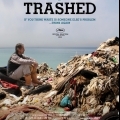
We honor Jeremy Irons, not merely for sharing his rich, haunting voice with us, but for his ongoing work to stop the proliferation of trash. In his new feature documentary “Trashed: No Place for Waste,” Irons takes a different journey, this one following the migration of rubbish, the tons of waste that goes unaccounted for each year. Irons serves as the film’s chief investigator as well as the executive producer.
Heal the Bay will also honor our longtime champion Mark Gold for his years of laser-like focus and tireless advocacy in support of clean water. Mark was Heal the Bay’s first employee and served with our organization for 25 years, leading and inspiring our work as our executive director and president. He continues to support us as a researcher, fundraiser and board member. We can count on Mark as a sounding board, resource and guiding force as we tackle future attacks on clean water.

Philanthropist Dr. Howard Murad will be honored on May 16 for raising awareness for environmental issues and causes. Employees from Dr. Murad’s skincare company Murad, Inc. have joined us on numerous beach cleanups, as well as solidly supporting our efforts in curtailing marine debris.

You’re invited to join our celebration of these eco warriors on May 16, 2013 at the Jonathan Beach Club.


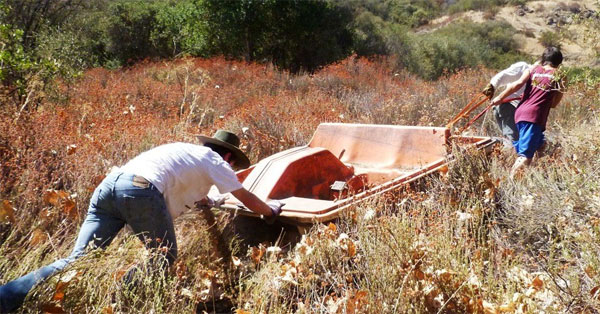
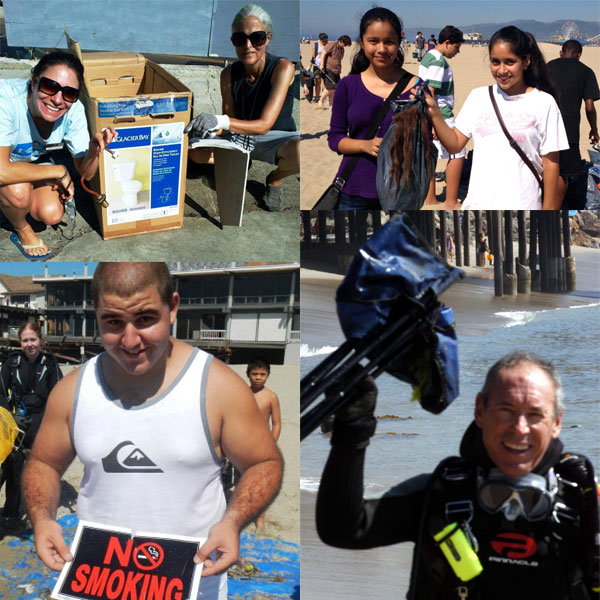
The most bizarre item found during 2012 Coastal Cleanup Day was a paddleboat in the woods. Yes! You read that right! It sounds like the lead in to a joke, but it’s the item Kentaro Lunn and Garrett Nas-tarin found during their mountain bike cleanup in Malibu Creek State Park. They not only found the boat, but hauled it over rough terrain to an access road where a state park crew could pick it up.

Other unusual finds this year included a hair weave, a rifle barrel found by divers in the water off Redondo Beach Pier (turned over to police), some toilets (including one still boxed), beach chairs, a “No Smoking” sign, and a 25 pound barrel of oil sludge.

Garrett and Kentaro received goody bags from Heal the Bay to thank them for their hard work!

See more photos from Coastal Cleanup Day 2012.

Coastal Cleanup Day 2012: Most Unusual Found Items

Coastal Cleanup Day 2012: They Found What?!


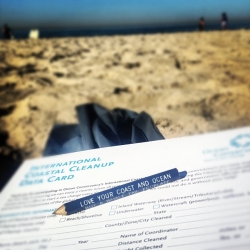
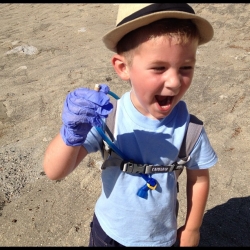
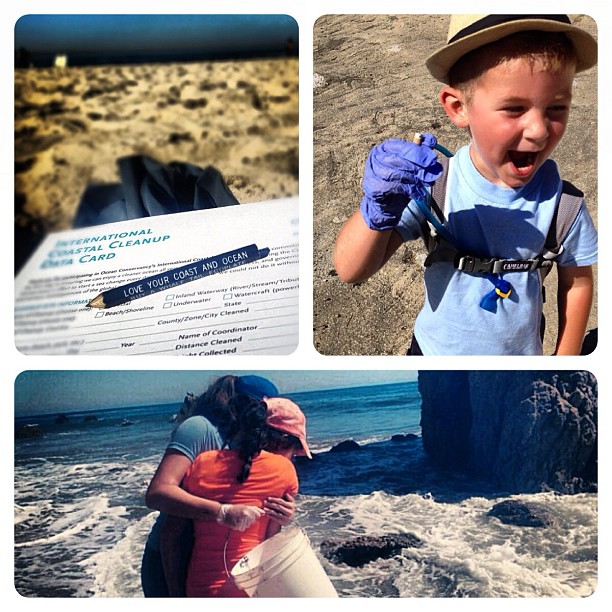
…Tiana Tinsley! Tiana’s photograph received a whopping 127 likes on Facebook and is our #CCD2012 Instagram Photo Contest winner! Tiana’s photograph will be exhibited at Heal the Bay’s Santa Monica Pier Aquarium and published in our Coastal Cleanup Day 2012 wrap-up book. Tiana and a guest will get to spend an afternoon exploring the aquarium with an exclusive behind-the-scenes tour! Congratualtions Tiana!


Tiana Tinsley Instagram photo winner CCD2012 beach coastal cleanupday

Second place went to Jacki Carr, whose photograph will be exhibited at Heal the Bay’s Santa Monica Pier Aquarium and published in our Coastal Cleanup Day 2012 wrap-up book.

Jackie Carr Instagram photo winner CCD2012 beach coastal cleanupday

Courtney Middleton’s photograph came in third place and will be exhibited at Heal the Bay’s Santa Monica Pier Aquarium.

Courtney Middleton Instagram photo winner CCD2012 beach coastal cleanupday

Thank you to everyone who participated in the contest and who voted for the winners on Facebook.


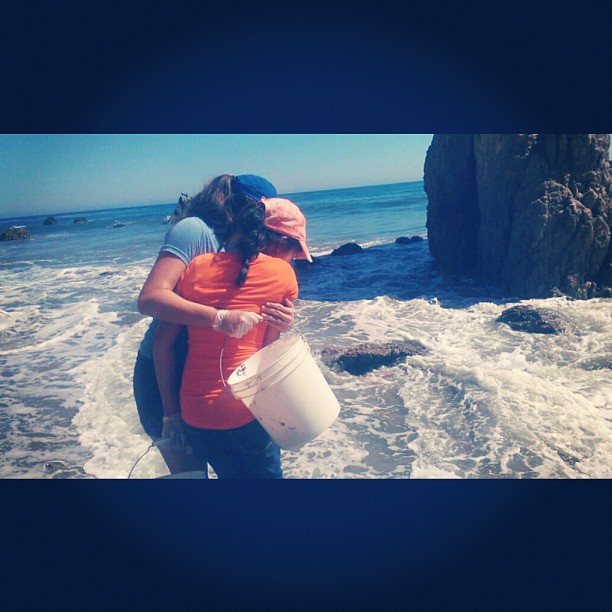
Thousands of Angelenos braved the heat on Coastal Cleanup Day, ridding their neighborhoods and favorite waterways of harmful and unsightly trash while simultaneously capturing the moments on their Smartphones and cameras.

After many days of deliberation, we have come up with three finalists in the #CCD2012 Instagram contest. Now we need you to pick a winner. To vote on Facebook, click on this link, then click on your favorite photo, click “Like” and you’re done! The picture with the most “Likes” by Monday, October 15, 2012, wins. Thank you to everyone who submitted such beautiful photographs, the decision was a very difficult one!

Prizes:

  • First Prize: The photograph will be exhibited at Heal the Bay’s Santa Monica Pier Aquarium and published in our Coastal Cleanup Day 2012 wrap-up book. You and a guest will also receive a private, behind-the-scenes tour of Heal the Bay’s Santa Monica Pier Aquarium!
  • Second Prize (2): The photograph will be exhibited at Heal the Bay’s Santa Monica Pier Aquarium and published in our Coastal Cleanup Day 2012 wrap-up book.
  • Third Prize (5): The photograph will be exhibited at Heal the Bay’s Santa Monica Pier Aquarium.
  • Top 3 Pictures: Instagram Photo Contest


Congratulations Julia Louis-Dreyfus on winning your third Emmy® award last night. The Heal the Bay family is fortunate to have you as a board member!

Julia earned her latest Emmy for her performance on HBO’s Veep. She won her other two awards for playing Elaine on Seinfeld and the title character on The New Adventures of Old Christine.

But here’s our favorite of Julia’s versatile performances: Her address to the Los Angeles City Council before it approved a ban on plastic bags earlier this year.

“What is hideously ugly, gigantically dangerous and outrageously expensive, and yet we still use it every single day in Los Angeles? No, it is not the 405. It is plastic bags,” Julia said in public comment.

Whether she’s lending her star power to our annual Bring Back the Beach gala, advocating for clean water issues in publicity interviews or lending her voice at city council meetings, Julia remains down-to-earth and charming no matter the task.

As the actress recently told an interviewer: “I have taken my so-called celebrity and occasionally spent it down on causes or things that I’m passionate about. I’m not running for office. I’m not a scientist. But I’m a concerned citizen.”

Watch Julia crack up Los Angeles City Council members during her testimony in support of the plastic bag ban.

Emmy winners aren’t the only people who can support Heal the Bay’s work. You can too! Join us today.


Despite scorching temperatures, Southlanders showed up in droves on Saturday to pick up nearly 20 tons of ocean-bound debris as part of Heal the Bay’s 23rd annual Coastal Cleanup Day.

From Agoura Hills to Wilmington, 9,323 Angelenos worked together to protect what they love, scouring local beaches, inland waterways, regional parks and urban neighborhoods from 9 a.m. to noon.

 Heal the Bay’s efforts spanned 58 sites and 56 miles, mobilizing volunteers from local corporations, service groups, faith-based organizations, school clubs and youth sports teams who worked in tandem to gather and remove 38,598 pounds of debris. Cigarette butts, plastic bottles and caps, snack-food packaging, plastic bags and Styrofoam fragments were among the most frequently found items at cleanups.

 Among the unusual objects found at the September 15 cleanups: a dead rooster with its head cut off, likely a remnant of a voodoo or Santeria ritual (Santa Monica Beach); a dead cat found in a bag (Ken Malloy Harbor Regional Park); a rifle barrel, later confiscated by police (Torrance Beach). And in the “Only in L.A.” file: a tattered headshot of an aspiring actor found by divers on the sea bottom near the Santa Monica Pier.

Read our news release for more details.

If you missed Coastal Cleanup Day, no worries! Heal the Bay hosts monthly cleanups, every third Saturday 10 a.m.-Noon. Learn more.

Still feeling left out? Donations fuel our cleanups. Just $20 can help run a cleanup site in your neighborhood. Donate now.


Thousands of Angelenos braved the heat on Saturday’s Coastal Cleanup Day, ridding their neighborhoods and favorite waterways of harmful and unsightly trash while simultaneously capturing the moments on their Smartphones and cameras.

This year’s CCD motto was “Every Piece of Trash You Remove Reveals Something Beautiful” and if you took a great photo we’d love to see it! Please share it with @HealTheBay on Instagram, and your photograph could be on exhibit at Heal the Bay’s Santa Monica Pier Aquarium and featured in the Coastal Cleanup Day wrap-up publication! Images can be of a beach or kayak cleanup, underwater photos from a dive cleanup, pictures of trash, clean beaches, volunteers, or anything from Coastal Cleanup Day 2012!

How to enter: Upload photos from Coastal Cleanup Day to your Instagram feed, make sure they are public, and tag them with #CCD2012 AND @HealtheBay, as well as including location information through Geo-Tagging and/or hashtagging with your cleanup site’s name (i.e. #DockweilerBeach). At the end of the contest, Heal the Bay will collect all of the photos and decide the winners. You can enter as many photos as you want!

You can submit photos from now until September 29, and the winner will be announced October 1 through Instagram, so start uploading to Instagram! Good luck!

Prizes:

  • First Prize: Your photograph will be exhibited at Heal the Bay’s Santa Monica Pier Aquarium and published in our Coastal Cleanup Day 2012 wrap-up book. You and a guest will also receive a private, behind-the-scenes tour of Heal the Bay’s Santa Monica Pier Aquarium!
  • Second Prize (2): Your photograph will be exhibited at Heal the Bay’s Santa Monica Pier Aquarium and published in our Coastal Cleanup Day 2012 wrap-up book.
  • Third Prize (5): Your photograph will be exhibited at Heal the Bay’s Santa Monica Pier Aquarium.

For those not familiar with the photo sharing app, Instagram is an app for Smartphones that lets you easily tweak photos from your mobile device to give them an artistic look. If you don’t have it already installed on your phone, download the app for free.

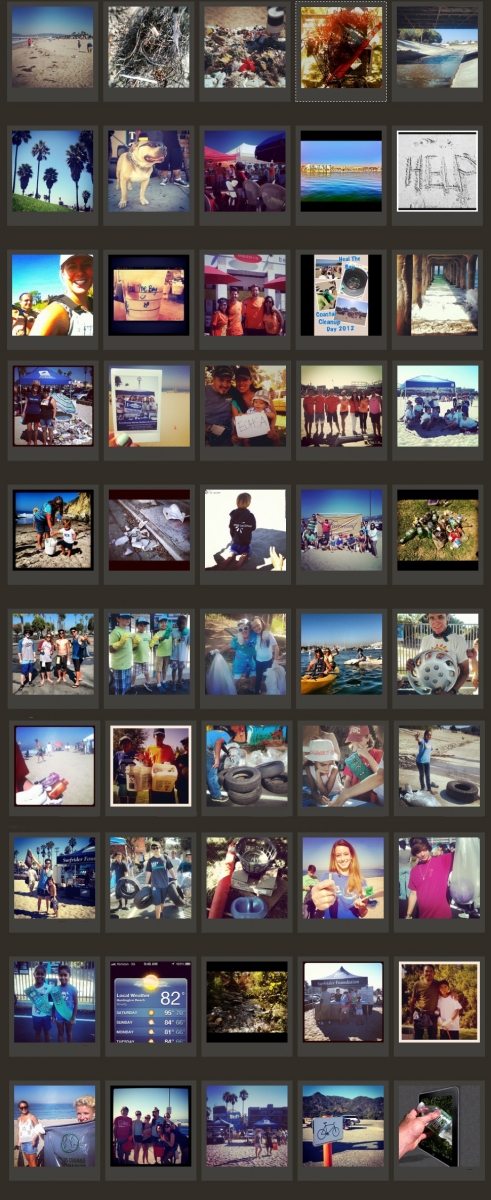
Entries to the #CCD2012 Instagram Contest!

No purchase necessary. No automated entries. Enter as many photos as you like. Photos must be taken at a Coastal Cleanup Day 2012 volunteer site in order to be eligible. By entering the contest, each entrant agrees that his or her submission is an original work of authorship and he or she owns all right, title and interest in the entry as of the date of submission. By entering the contest, entrants agree to assign all right, title, and interest, including copyright rights, in the entry to Heal the Bay and grant permission for Heal the Bay to publish or publicize all or part of their entry, including but not limited to entrant’s name, likeness and photo, in whole or in part, for advertising, promotional and trade or other purposes in conjunction with this and similar promotions in any and all media now known or hereafter developed, worldwide in perpetuity, without notice or permission and without compensation, except where prohibited by law.