
Much-needed winter storms may have relieved California’s historic drought, but all that rain came at some cost – poor beach water quality.
Bacterial pollution at some of California’s most popular beaches spiked dramatically in 2016-17, according to Heal the Bay’s 27th annual Beach Report Card, which the nonprofit released today.
- 2017 Beach Report Card (full report)
- BeachReportCard.org
- Beach Bummers Slideshow
- Northern California Press Release
- Southern California Press Release
Heal the Bay analysts assigned A-to-F letter grades to 416 beaches along the California coast for three reporting periods in 2016-2017, based on levels of weekly bacterial pollution. Some 96% of beaches received A or B grades during the high-traffic summer season (April-October 2015), slightly above the statewide five-year average.
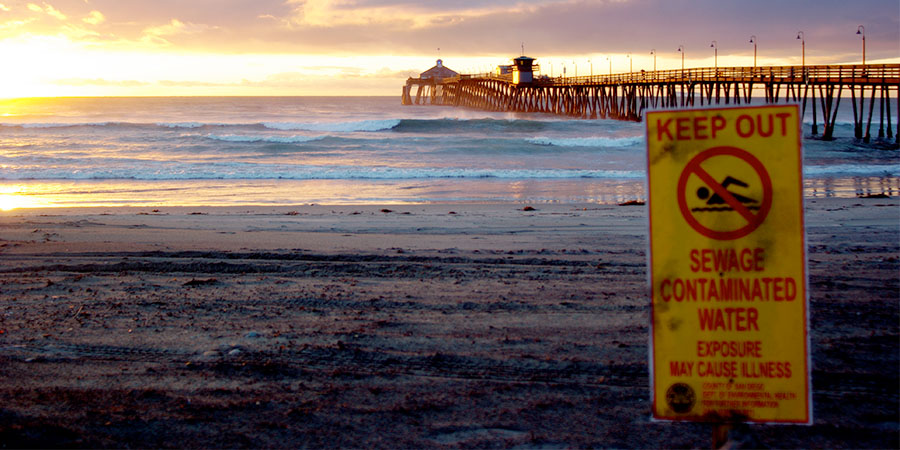
Wet weather was a different story, however. Record rainfall created billions of gallons of polluted runoff, which poured into storm drains and out to the ocean. Nearly 48% of California’s beaches received C to F grades, about 12% more than the statewide five-year average.
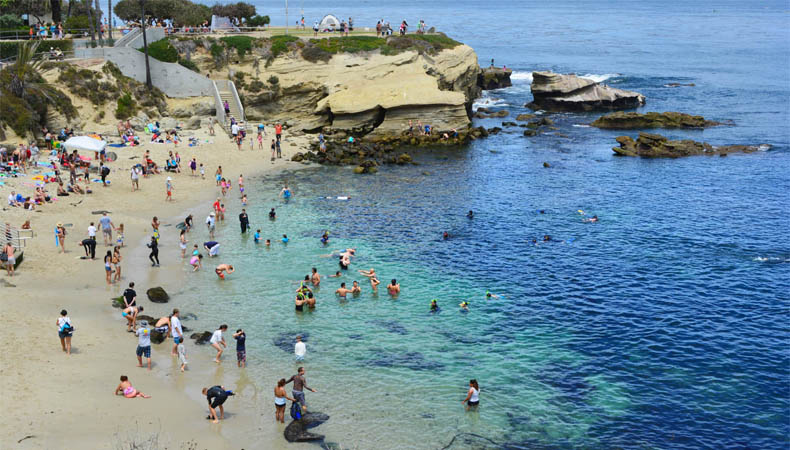
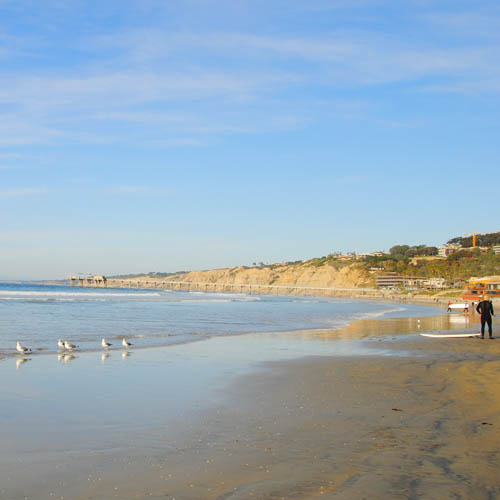
La Jolla Cove, a popular swim spot.
Polluted ocean waters pose a significant health risk to the tens of thousands of year-round ocean users in California. Those failing grades indicate a significant health risk to the tens of thousands of year-round ocean users in Southern California, who can contract a respiratory or gastrointestinal illness from one morning swim or surf session in polluted waters.
Beach Bummers
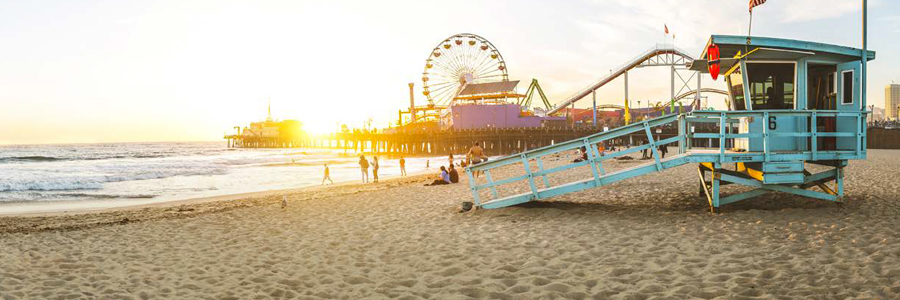
Heal the Bay’s infamous Beach Bummers List, which ranks the 10 most polluted beaches in the state, was split between Northern and Southern California. San Clemente Pier and La Jolla Cove are both making their first ever appearance on the Beach Bummer’s List. Clam Beach County Park, Mother’s Beach in Marina del Rey and Santa Monica Pier have each been Bummers for the past four years. Check out our Beach Bummers Slideshow, which has more details about each of the Bummers.
- Clam Beach County Park, McKinleyville (Humboldt County)
- San Clemente Pier, San Clemente (Orange County)
- Cowell Beach, West of Wharf, Santa Cruz (Santa Cruz County)
- Lakeshore Park, Marina Lagoon, San Mateo (San Mateo County)
- La Jolla Cove, La Jolla (San Diego County)
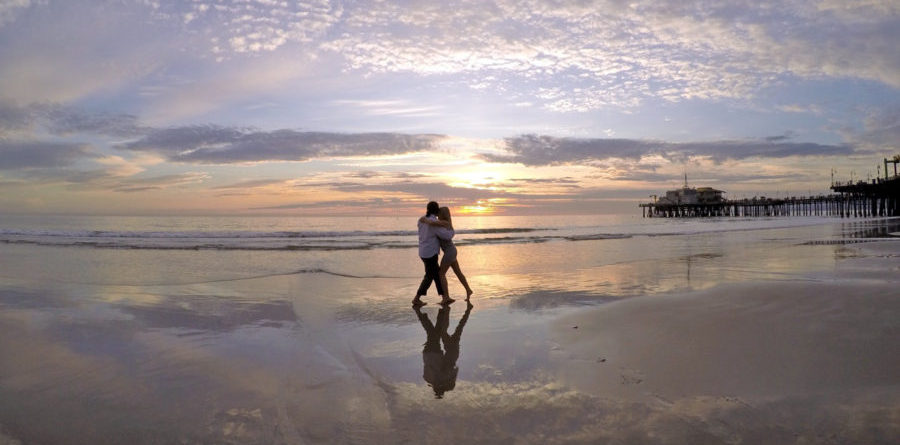
- Santa Monica Pier, Santa Monica (Los Angeles County)
- Capitola Beach, Capitola (Santa Cruz County)
- Luffenholtz Beach, Trinidad (Humboldt County)
- Mother’s Beach, Marina del Rey (Los Angeles County)
- Monarch Beach, North of Salt Creek, Dana Point (Orange County)
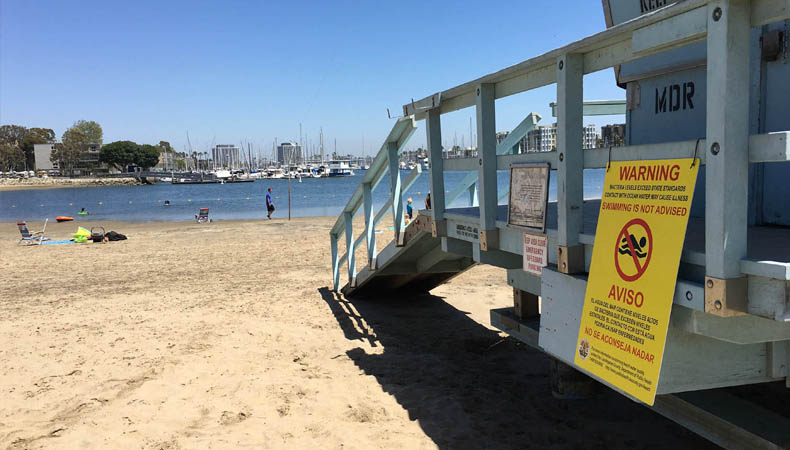
Mother’s Beach in Marina del Rey, a repeat Beach Bummer.
On a more positive note, 32 beaches in the state were named to Heal the Bay’s Honor Roll, meaning they were monitored year-round and received perfect A+ grades weekly, regardless of rain or dry conditions. Orange County boasted the most beaches on the Honor Roll, with 14 sites earning top marks.
Staying Safe at the Beach
“We want people catching waves, not bugs, when they head to the beach,” said Sarah Sikich, Heal the Bay’s vice president and longtime ocean policy advocate. “The reassuring news is that if you swim at an open-ocean beach in the summer away from storm drains and creek mouths you statistically have very little risk of getting ill.”
Swimming or surfing at a beach with a water quality grade of C or lower greatly increases the risk of contracting illnesses such as stomach flu, ear infections, upper respiratory infections and rashes.
Here’s how you can make sure that you stay safe at the beach:
- Check BeachReportCard.org for the latest water quality grades.
- Avoid closed beaches
- Swim at least 100 yards away from flowing storm drains and piers.
- Wait at least three days after rainfall before entering the ocean.

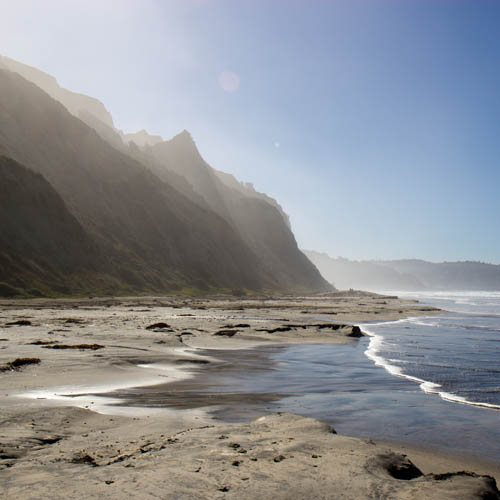
Baker Beach, San Francisco.
How to Stem the Tide of Bacterial Pollution
California often swings from extended dry periods to shorter periods of intense, wet weather. Our region needs to do a better job of capturing runoff before it hits shorelines. Heal the Bay advocates for reusing that water directly for non-potable purposes or sinking that water back into our aquifers rather than letting it flow uselessly to the sea.
If Southern California cities had the infrastructure in place, then they could have captured and reused a bulk of the 100 billion gallons of stormwater that drenched our region last winter. That’s enough water to meet the needs of 2.5 million people each year – about a quarter of L.A. County’s population.
In response, Heal the Bay’s policy staff is advocating for public funding measures to build nature-based projects that capture, cleanse and reuse runoff rather than dumping it uselessly into the sea. The Our WaterLA coalition is working with the L.A. County Board of Supervisors to place a funding measure on the ballot for innovative multi-benefit projects that will capture runoff and create public green spaces countywide. Look for the measure on the county ballot next year.
Heal the Bay to Forecast Water Quality
This summer Heal the Bay, Stanford University and UCLA are expanding their predictive beach water quality forecasting program. Using sophisticated statistical models, environmental data and past bacteria samples, the scientific team can accurately predict each morning when beaches should be posted with warning or open signs.
Promising results from the past two summers (at Arroyo Burro Beach, Santa Monica Pier Beach and Doheny Beach) demonstrated that agencies can post a warning notice immediately at pollution impacted beaches based on predictions rather than waiting days for test results. These new models will protect public health by providing more advanced water quality information to public health officials. This summer, Heal the Bay will run models for 10 beaches, from San Diego to Santa Cruz counties.


 Our NowCast system uses statistical models to provide daily water quality information during the AB411 season. These models predict the concentration of bacteria in the water every morning, and are derived from years of water quality data and a whole lot of environmental variables that impact bacteria levels. NowCasting helps us answer what we don’t readily know – how much bacteria is likely in the water each morning, and thus if it is safe to swim – by looking at what we do know – what was the weather like yesterday, were there a lot of waves this morning stirring up the water, is the nearby river a’ flowing, etc. All of this data crunching and statistical hog-wrestling boils allows us to predict whether beach bacterial concentrations are likely to be safe or hazardous each morning.
 The first major finding of the season was expected: the drought continues to positively impact beach water quality. Think about it like this: less rain means less runoff which means less bacteria in the waves. And as Californians continue to conserve water, there is less dry-weather runoff from outdoor watering (nice work, by the way!). Every beach in the NowCast program (except at the Santa Monica Pier) recorded water samples that came back under sample limits (the levels of bacteria below which it is reasonably safe to swim), much cleaner than those beaches’ historical trends! This is great news for California beachgoers – they were able to enjoy cleaner than average conditions this summer at the NowCast beaches, something that we were able to inform them of on a daily basis.
 That being said, we did have one site with more issues than the rest: Santa Monica Pier. The Pier has a chronic history of water quality problems. From 2008-2015, it experienced 28% and 10% exceedance rates for fecal coliform and Enterococcus standards respectively (two types of FIB) in the summer months. This season, it exceeded those FIB standards 41% and 10% of the time respectively, despite drought conditions. This suggests that water quality at Santa Monica Pier is especially affected by other factors in addition to rainfall. Because our models consider wave action, wind speed and direction, and tides, the fecal coliform model for Santa Monica Pier was able to predict 71% of actual exceedances, and 17% more exceedances than using days-old samples in the months of July, August, and September. This was the big result that gives us confidence in our models.
 Looking forward, we’re excited for the California NowCast program to enter its third year. We’ve got a whole bunch of good stuff up next on the menu. For the Summer 2017 season, we are looking to add up to eight new beaches to the program. NowCasting will eventually expand farther along the California coastline, creating a truly statewide program. Winter models at beaches with heavy year-round use are also on our radar (in case you surfers out there were wondering). We’re designing new NowCast beach signage to post on days where water quality is predicted to be poor. And keep an eye out for our groovy new Beach Report Card website and mobile app, an update launching in 2017 that will look and function better than ever, giving beachgoers up to date water quality information on the fly.