Top

Heal the Bay Blog

Category: Santa Monica

Santa Monica, California located in Los Angeles County is a popular eco-friendly coastal destination for families, couples, tourists and Southern California beachgoers.

Heal the Bay’s Santa Monica Pier Aquarium joins more than 1,800 museums nationwide in offering free admission to military personnel and their families this summer. In collaboration with the National Endowment for the Arts, Blue Star Families and the Department of Defense, the Aquarium will admit all active duty military personnel and up to five family members free of charge from Memorial Day through Labor Day.

This is the third year the Aquarium has participated in the Blue Star Museums program. Blue Star Families is a national, nonprofit network of military families from all ranks and services, including guard and reserve, dedicated to supporting, connecting and empowering military families. Blue Star Families hosts an array of programs with its partners and also works directly with the Department of Defense and senior members of local, state and federal government to highllight military family issues. Working in concert with fellow nonprofits, community advocates and public officials, Blue Star Families raises awareness of the challenges and strengths of military family life and works to make military life more sustainable.

Congress established the National Endowment for the Arts in 1965 as an independent agency of the federal government. To date, the NEA has awarded more than $4 billion to support artistic excellence, creativity, and innovation for the benefit of individuals and communities. The NEA extends its work through partnerships with state arts agencies, local leaders, other federal agencies, and the philanthropic sector.

View the complete list of Blue Star Museums.


Did you know that the Santa Monica Pier Aquarium annually welcomes more than 85,000 visitors to their education facility?That’s more than the capacity of Dodger Stadium and the Staples Center combined!

And even with such a talented staff, it’s still no wonder that the Aquarium relies heavily on the support and willingness of their volunteers. To date, the Aquarium has approximately 180 active volunteers serving within the numerous programs offered to the public. Some of these programs include Saturday story time, school field trips, Monday morning marine biology classes for three- to five-year-olds and marine-based presentations for visitors during public hours.

SMPA’s Volunteer Coordinator Jenna Segal started out as a volunteer herself back in 2010. She remembers the enjoyment of seeing students get excited about learning. “We might be their first point of [marine-related] education,” said Jenna. And with roughly 15,000 students visiting the Aquarium each year, education plays a key role in volunteering.

All volunteers go through a six-session training course, which involves learning some basics of marine biology and Heal the Bay’s hot topics. But don’t think it’s all work and no play here at the Aquarium. Most volunteers would agree that what they do is most gratifying, to say the least.

Barry Seid, a long time volunteer and honoree of the Bob Hertz Award for his loyalty and commitment, knows a little bit about the joys of being an Aquarium volunteer. “When you’re volunteering, you get more out of it than the people around you,” said Barry, who loves to mingle and joke around with every visitor. “It’s very satisfying, instant gratification.” When asked what might be his favorite volunteer-related memory, he answered sincerely. “Well, every memory has honestly been my favorite.” Which might explain the 13 years of service he has dedicated to the Aquarium thus far.

As we continue to celebrate the Aquarium’s 10-year anniversary and celebrate all that’s been accomplished, we can’t help but acknowledge the epic role each volunteer has played in this success. It’s not just about the training or the amount of hours invested, to volunteer is to pour your all into a cause that is dear to the heart; to educate and inspire the care and conservation of the Santa Monica Bay and its inhabitants. Here’s to another 10 years!

We make a living by what we get, but we make a life by what we give” –Winston Churchill

— Deana Fry
Aquarium Intern

Heal the Bay’s Santa Monica Pier Aquarium annually recognizes all the amazing work – and hours – put in by Aquarium volunteers. Last week the marine science center held its pin ceremony honoring the volunteers. 


What better way to celebrate Mother’s Day on May 12 than to adopt a shark egg at Heal the Bay’s Santa Monica Pier Aquarium? Moms can visit the Aquarium to check the progress of their swell shark or horn shark – both species grow in an egg casing for at least nine months – but the Aquarium staff will do all the work! It’s a day at the beach for Mom and an important way to connect with the marine environment, support an animal on exhibit and gain a greater understanding of the amazing ocean habitat of the Santa Monica Bay. An Aquadoption gift not only assists in the feeding and care of an animal, it also funds the maintenance of exhibits and the ongoing education and advocacy efforts core to Heal the Bay’s mission.

An Aquadoption includes a one-year family membership with free entry to the Aquarium, an adoption packet and a laminated animal ID card. Visit the Aquarium to get acquainted with prospective adoptees during public hours, Tuesday through Friday from 2-5 p.m. or weekends from 12:30 to 5 p.m. 

You can also treat your mom to a special sighting this Mother’s Day during a Grunion Run. Starting Thursday and through Friday, Saturday and Sunday nights, you’ll have a rare opportunity to spot the sleek fish that comes onto land in the thousands to lay eggs, flopping in the moonlight on our local beaches. We have times and tips to spot the Grunion

Consider dedicating a donation in honor of your mother. A gift to Heal the Bay is the perfect way to show someone how important they are while at the same time making a significant difference in our Bay. If you like, Heal the Bay will send notification of your dedication gift along with your personal note to the person of your choosing.

Whether you purchase a yearlong adoption for Mom, for a friend or for a child or grandparent, or foster an animal yourself, it is the gift that keeps on giving on behalf of marine life welfare. Newborn shark pups and eight other species of marine animals are also available for fostering through Aquadoption


The city of Santa Monica is bustling with development projects, and the area around our Santa Monica Pier Aquarium is at the hub of construction activity. We’re committed to providing updates on construction and links to websites that map the best routes and point out parking availability. Most importantly, please remember the Aquarium and the Pier are open! These links will help you get to the Aquarium — our sea urchins still need hugs.

More: Visitor Information for reaching the Santa Monica Pier Aquarium. Still have questions? Call the Aquarium at 310-393-6149.


When the Santa Monica Pier Aquarium asked our neighbors to help us celebrate the marine center’s 10th anniversary throughout the month of March, they jumped at the bait, creating ocean-inspired concoctions to serve in their establishments.

We’re looking forward to spending a week making our way through the signature libations and food specials at these seven Santa Monica businesses – beginning March 1st to allow time for return visits! 

Neptune's MuseThe Basement Tavern will be serving up the Green Barnacle cocktail: jalapeño and honey dew infused vodka, citrus, agave, mint, and cucumber over ice.

·      Beachy Cream Organic Ice Cream will be scooping the flavor of the month, Peanut Butter Jellyfish.

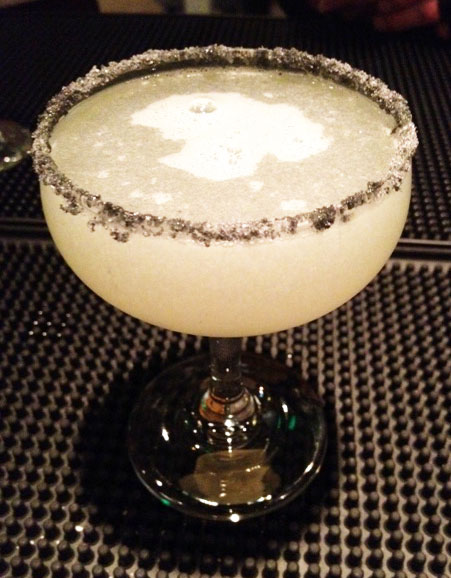
·      The Hungry Cat will be pouring Neptune’s Muse (pictured right): gin, lemon juice, simple syrup, liquore Strega, Creme de Violette, served up with a black lava salt rim.

·      Lago Santa Monica  presents the Santa Monica Starfish cocktail: fresh oro blanco grapefruit, blood orange, Tru Organic Vodka, splash of sparkling prosecco.

·      The Lobster, featuring the Heal the Bay Tide Pool: Rain organic vodka, Midori, Malibu rum, chambord, splash of pineapple and orange juice, served straight up, with 10% of the proceeds going to the Aquarium. 

·      Rusty’s Surf Ranch premieres the Rubyfish Red: Absolut Ruby Red Vodka, white grapefruit juice and grenadine, served in a souvenir Rusty’s glass. Mention the Aquarium’s anniversary and receive 10 percent off the check.

·     Mariasol Restaurant will offer a 10% discount on all food (not alcohol) for all those who mention the Aquarium’s anniversary. 

Many thanks to our 10th Anniversary Party Partners!

As we commemorate a decade operating our Aquarium, we’re highlighting our history, previewing our plans for the NEXT 10 years and encourage all to celebrate with us.

If you haven’t already, come visit our Aquarium, located beach level at the Santa Monica Pier, just below the carousel. Join us the first weekend of March to celebrate our 10-year anniversary!


We try to practice what we preach, so it’s gratifying that our Santa Monica Pier Aquarium is receiving recognition for being a green business.

The Aquarium was chosen to receive two awards — one for stewardship of the natural environment and the second for sustainable economic development — by the annual Sustainable Quality Awards program. The Santa Monica Chamber, the city’s environmental department, and Sustainable Works run the annual competition each year, acknowledging businesses in Santa Monica that have made significant achievements in the areas of sustainable economic development, social responsibility and stewardship of the natural environment.

With 19 businesses vying for the awards this year it’s a true accomplishment to receive honors in two categories. The Aquarium and the other winners will be honored at a luncheon next month. These awards will be added to the Sustainable Quality Award the marine science center received back in 2005 and our certification as a Santa Monica green business. It might be time to build a trophy case!

Sustainable Quality Awards


They’re exotic, and not in a good way, but why should you care about weeds? If you want to hang on to your favorite local nature spots, constant maintenance and eradication of these non-native, invasive plants, a.k.a. weeds, is an absolute necessity.

Here’s a primer, written by Tim Rosenstein, Mountains Restoration Trust Project Manager, on the problem with weeds.

Plants will often have natural defenses that keep them from being eaten by anything that hasn’t developed the tools necessary to take advantage. Plus there are simply huge physiological differences between species, which means an insect that can feed on one part of one type of plant, say soft leaves, won’t be able to eat a different sort of plant with hard, waxy leaves.

 The result of a diversity of plants then is a diversity of insects or varying specialty. Each plant supports a varying number of insects, some of which will feed on other plants, some of which will only feed on that plant. This diversity of herbivorous insects will then support a diversity of carnivorous insects, and the insects support small animals, which support other animals, etc., etc., you get the picture.

Weeds, because they evolved elsewhere, don’t support many insects. An infestation of weeds therefore decreases the amount and diversity of insects, which decreases the amount of small animals, which decreases larger animals, etc., etc., you get the same picture but this time in reverse. For a specific example the “common reed” Phragmites australis, an East Coast invasive that’s been studied extensively, supports 170 species of insects in its native Europe. Here in the U.S. it only supports five insect species.

Weeds Alter Natural Cycles

These “exotics” destroy habitat almost as completely as paving it over does. If weeds take over a landscape that area just isn’t going to support much wildlife, and it’s the interaction of wildlife and plants that make an ecosystem work (for more on this concept search the web for ‘ecosystem services’). 

But that’s not all! Weeds can also change natural fire cycles, affecting the frequency and intensity of fires. Plus weeds interrupt natural succession cycles after disturbances like fire. When there’s a fire in a stand of coastal sage scrub, what naturally happens is the first thing to pop up are fire-following annuals like grasses and wildflowers, things you don’t see much except after a fire.

These will dominate for a few years and the area will effectively be like a grassland until other non-fire-following plants and shrubs start to come up; bigger, longer-lived plants that, while sometimes present in mature coastal sage scrub, are not very common. These plants will proliferate and become more common for a while but eventually the dominant plants (sages, buckwheat, coyotebrush and the like) will reassert themselves and suppress the other species. That’s how it normally works. When weeds are present however this is how it works: After the fire weeds sprout first and dominate everything forever and ever the end.

Weeds Starve Natives

OK,  I’m being slightly dramatic. But only slightly.  Here’s another problem with weeds: They suppress the germination of native seeds. Many weeds have allelopathic properties, meaning they produce chemicals that affect the lifecycle of other plants. So not only do weeds germinate more and get established earlier than natives, starving natives of water and nutrients, they chemically suppress the germination and growth of natives as well. 

They also suppress the germination of native fungal spores. This is exceedingly important because much of our native plant life requires the help of what’s called mycorrhizal fungi in order to survive. It’s a symbiotic relationship– the fungi needs the plants and the plants need the fungi– and a hugely important biotic component in a Mediterranean climate such as ours. Weeds can suppress the germination of the fungal spores and the growth of the fungus itself, effectively killing the very soil they grow in, making it that much harder for any native to ever grow there again. So when I say: “Weeds sprout first and dominate everything forever and ever the end,” I’m just barely exaggerating.

 Sometimes people will ask me why we don’t just let “nature take its course” and let the weeds grow until a balance is reached. The thing is invasive species take over, that’s why they’re called “invasive.” There is no natural process by which an ecosystem can rid itself of weeds. Habitat is degraded when they enter the system, outright destroyed when they dominate it.

It is actually very much like cancer in a body, there is no “balance” to be had; either you fight the weeds or you let them win, there’s not much in between. I don’t want to be too dramatic but next to habitat loss from development the second greatest cause of habitat destruction is invasive species. Weeds, those innocent looking plants from the other side of the world, are pretty much an ecological nightmare.

Next up: We answer the crucial question; “How did weeds get here in the first place?”

Ready to help rid Malibu Creek of these harrowing invasives? Sign up now to volunteer on Sunday, February 10. If you can’t make it, no worries. Check Heal the Bay’s Calendar of Events for upcoming restorations.


Free Bird! You might be grateful to hear your favorite band cover this song…or not.

At Heal the Bay, we can say without irony that we are grateful to Freebirds in Agoura Hills for teaming with us to restore the Malibu Creek Watershed in January. Not only did a group of Freebirders join us, but they surprised us and brought burritos! It was an awesome day, pulling weeds, planting mulefat, eating burritos. Thank you, Freebirds!

A big thanks to the Gesso Foundation for their longtime support of our Key to the Sea program.  Due in large part to their generosity, we’ve successfully provided thousands of Los Angeles County-based students and their teachers (K-5th grade) with high-impact environmental education and memorable field trip experiences. For many of these students, participation in the program marked their first chance to explore the beach environment and witness marine life up close! 

The Gesso Foundation was created in accordance with the wishes expressed in the will of acclaimed artist Frank Moore, who died in 2002. The Foundation’s purpose is twofold: to preserve, protect, and expand awareness of Frank Moore’s art; and to support non-profit organizations devoted to the arts, social justice, environmental or AIDS-related causes.Morphing Swallow by artist-philanthropist Frank Moore

Much like Mary Poppins herself, moms rely on Mommy Poppins LA, consulting the site for non-boring, low-cost activities to do with kids. Meanwhile Heal the Bay and our Aquarium couldn’t spread the word about our kid-friendly, fun AND educational happenings without their help. As parents and as youth educators, we thank the staff at Mommy Poppins LA for being such a helpful resource.

Do you devote your free time to volunteer with Heal the Bay? Then it’s time for us to thank YOU. Please join us on February 19 at Bodega Wine Bar as we celebrate you and all that you do to help protect our Bay…and beyond.

Join us to help revive Malibu Creek by removing weeds and planting natives on February 10. 


Do you care about clean water in your community? Love putting on a show? Want to make change (not just the money kind)?

Join our elite Speakers Bureau team to help raise educational awareness across Los Angeles in schools, workplaces and social groups.

For more than 25 years, Heal the Bay has relied upon people just like you to help spread the word about ocean pollution.

Last year we were able to reach 55,000 people! Obviously, we can’t do this on our own: We need you!  

Our winter training sessions begin on Tuesday, March 5, 1-4:30 p.m. at the Los Angeles River Center. Sessions run through the month on Tuesdays in March  (the 12th and the 19th), with a talk on Saturday, March 16, 9:30 a.m.-noon at Venice Pier. Attendance at all sessions is mandatory.

Register for Winter Speakers Bureau Training.


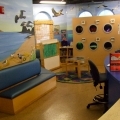
One of the first changes Heal the Bay made 10 years ago when becoming owners of the Santa Monica Pier Aquarium was to retire an underutilized gift shop in the Aquarium, converting the space into the Kids’ Corner. This section of the Aquarium has been through several renovations since its unveiling in 2003, but it still remains a comfy area in the marine education center where families can read marine themed books, commune with some of the smaller creatures of the Bay displayed in kid-friendly tanks, stage a puppet show or enjoy games and puzzles.

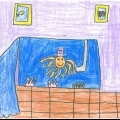
No matter the various upgrades of the surrounding décor, the Kids’ Corner is best known as the home of the wily octopus that figured out how to push the flow valve out of its tank one February night in 2009. When staff walked in the next morning, we were up to our ankles in water – approximately 200 gallons of seawater soaked the Kids’ Corner and the staff offices.

The flood harmed none of the Aquarium’s animals, but this tiny cephalopod – weighing about a pound – caused major damage to flooring and cabinetry and produced a flood of another sort, attracting tons of media attention and record-breaking visitors’ attendance. We ran a kids’ essay and art contest, encouraging students to come up with a narrative of what went on in the Aquarium the night of flood. Art work and stories decorated our walls for weeks.

Today, the Kids’ Corner features an ever-changing lineup of local species, displayed in six porthole shaped tanks.

Peer into the “holdfast haven” exhibit, for example, for a close look at the root-like structure, known as a holdfast, which is the anchor of the giant kelp. Chances are a keen eye will see a collection of crustaceans called Hemphill’s kelp crabs. Their first pair of walking legs is exceptionally long, and covered with numerous curved hairs. They decorate this pair of legs with kelp, grass, algae and other organisms. When feeling threatened, this crab will raise one of its adorned legs and hold it horizontally as a shield between itself and a predator. The Hemphill’s kelp crabs were just added to the holdfast, also home to brittle stars, snails and other tiny organisms. Visitors are charmed by their antics, but at least weekly someone will ask: “whatever happened to that octopus that flooded the Aquarium?”
Randi Parent, Aquarium Outreach Manager

An employee of the Aquarium since Heal the Bay took over the marine education facility in 2003, Randi is writing a series of blogs highlighting the SMPA’s 10-year history and previewing our plans.

If you haven’t already, come visit the Kids Corner of our Aquarium, located on the Santa Monica Pier, just below the carousel. Join us the first weekend of March to celebrate the Aquarium’s 10-year anniversary!