
Top

Heal the Bay Blog

CEO Ruskin Hartley gets up close with the wonders of the Bay.

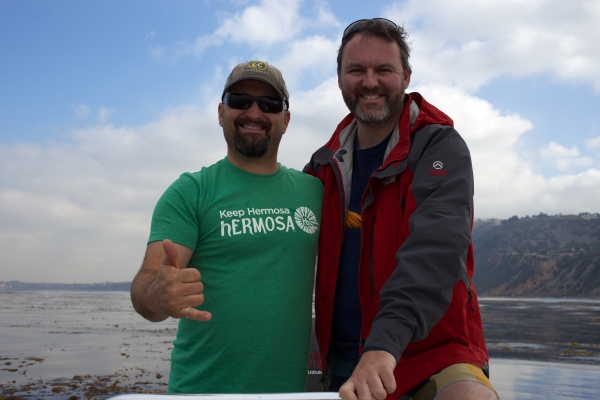
For the last eight weeks or so I have largely been looking at Santa Monica Bay from the shore. Since moving to Los Angeles, I’ve enjoyed playing in the waves and swimming along the shoreline, but today was my first chance to get further out into the Bay. I joined our Santa Monica Pier Aquarium team on one of its weekly collecting expeditions, which harvest kelp to feed the animals in the aquarium. As our aquarist, Jose, says, it’s the weekly trip to the farmers market.

The Bay, and indeed the oceans, give us so much. After all they cover 71% of the planet and provide everything from the oxygen we breathe, to the fish we eat, to the natural substances that thicken Jell-O. The list goes on. But a few hours on the water off Palos Verdes gave me something distinct – a profound sense of the wonder of the ocean.

It really is a different world out there. The solid earth is replaced by the ever-shifting, fluid ocean. Wave upon wave. Powerful forces gently lifting our 14-foot dinghy up and down as we leaned over the side, straining for the kelp. The constantly changing play of light and shade on the water as the clouds and sun slid overhead.

Where we first encountered the kelp, the long tendrils reached for the light, laying down when they reached the surface. This caused the ripples to flatten out, leaving a glassy surface. The seals, sea birds, and even the odd kelp crab seemed quite at home out there. I was a grateful visitor.

Bobbing around on the surface of the vast ocean gave me the same sense of walking amid the redwood giants. A sense of being a tiny part of the wonderful world.

ruskin            Santa Monica Pier Aquarium aquarist Jose Bacallao shows Ruskin the ropes off Palos Verdes.



Since 1985, we’ve partnered with people like you – volunteers, supporters and sustainers — to make Southern Californian waters safer, healthier and cleaner. And 2014 will prove no different.

As another year closes, it’s a good time to reflect, but also to look ahead to the challenges we’ll face in 2014.

Here’s our working list of the goals we’ve set for the coming year:

  • Uphold the moratorium on oil drilling off the South Bay coast. Hard to believe, but the risks from offshore oil drilling could once again become a threat to the health of our local waters. Voters in Hermosa Beach will decide In March 2015 whether to allow energy company E&B Natural Resources to conduct slant-drilling operations off the Hermosa shoreline. Heal the Bay, in partnership with Stop Hermosa Beach Oil, Keep Hermosa hermosa, and the Surfrider Foundation — will mobilize community support to protect our Bay throughout 2014.
  • Support strict limits on a planned string of ocean-based desalination plants along the California coast. If unchecked, these plants could suck in massive quantities of seawater — and marine life — to meet our region’s ever-growing demand for water.
  • Advocate for a regional funding measure that would underwrite numerous multi-benefit, clean-water projects throughout the Los Angeles region.
  • Protect marine life. Coastal oil drilling, power and water desalination plants sucking in sea water, and sonar blasts from Navy operations all harm marine mammals and represent just a handful of the upcoming threats that we’ll be watching closely in the next year.
  • Build a community park in South Los Angeles that will capture and infiltrate stormwater, as well as provide much-needed open space and fitness opportunities. Heal the Bay’s Healthy Neighborhoods team is overseeing the $1.3 million project, which is funded by California State Parks. It will serve as a model of how communities can work together to improve their neighborhoods while protecting the health of the Bay.
  • Implement a plan to mitigate the effects of climate change. Working together, our Science & Policy and Programs teams are reaching out to local communities to educate Angelenos about the simple steps they can take to adapt to climate change, such as capturing and reusing rainwater and planting drought-tolerant gardens.
  • Prime the next generation of eco stewards with the expansion of our Youth Summit programs for high school students throughout L.A. County, as well as expanding our field trip and speakers programs serving local classrooms.
  • Assemble a new predictive modeling tool that will determine water quality much faster than traditional sampling, which can take 24 hours. Working with Stanford University, we hope to predict bacteria levels at an initial set of 25 California beaches via our Beach Report Card®, identify specific sources of pollution in the watershed and better understand new threats, such as an increased number of vineyards in the Santa Monica Mountains.
  • Increase data collection for newly established Marine Protected Areas in Palos Verdes and Point Dume.
  • Strengthen community partnerships. Heal the Bay’s Santa Monica Pier Aquarium staff looks forward to curating education events for the Pier and working closely with Santa Monica officials on plans for the Pier bridge replacement project.

We don’t take clean water for granted, and we know you don’t either. Sustain our work: Make a donation to Heal the Bay.

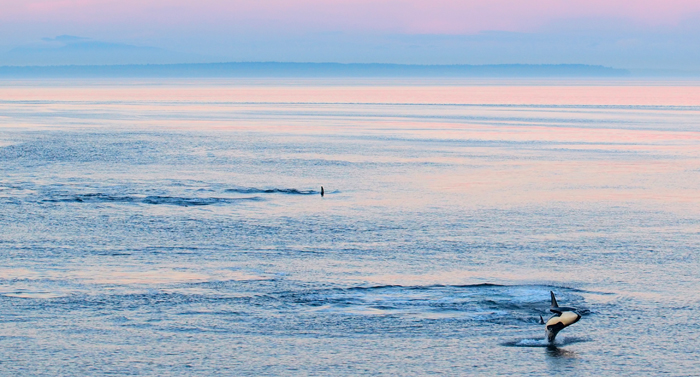
Orca breaching Donate Now Become a Member of Heal the Bay


As the nation takes stock on this Giving Tuesday, think about what the Bay means to you and your family. We can’t take our region’s greatest resource for granted. If you’re not already a supporter, please make this the day to donate to Heal the Bay, the longest-serving watchdog for Southern California’s beaches and ocean.

For a $35 donation, you can become a member of Heal the Bay and take pride in protecting what you love. The ocean belongs to all of us, and it’s up to all of us to care for it. It’s a great day to join us!

 It may be Giving Tuesday, but consider what our local beaches and ocean give to us every day of the year:

  • Sustenance  The ocean provides 70% of the world’s oxygen. Santa Monica Bay, home to thousands of marine species, is part of  an amazing local ecosystem.
  • Prosperity  Nearly 400,000 jobs in Los Angeles County are ocean-related, responsible for $10 billion annually in wages and $20 billion in goods and services. 
  • Connection  We are all linked to the sea via L.A.’s network of watersheds.  A day on the beach binds us together, regardless of our background.
Donate to Heal the Bay on Giving Tuesday #GivingTuesday

Yes, Black Friday, Cyber Monday and Giving Tuesday began as marketing gimmicks. But the reality is that December is a critical month for us. Nearly 70% of private donations to Heal the Bay are made in the final two months of the year. 

Private donors fund our annual operating budget. With recent cutbacks in government funding, contributions from individual donors like you are critical for maintaining proven and effective programs that keep our shorelines clean, healthy and safe.

As the year-end holidays approach, our local waters face a number of threats – from oil drilling off Hermosa Beach to a proposed string of desalination plants along the California coastline. Your gift today will help us hit the ground running next year and stand up for the bay we all love.


Heal the Bay chief Ruskin Hartley says sewage isn’t sexy, but it’s fascinating:

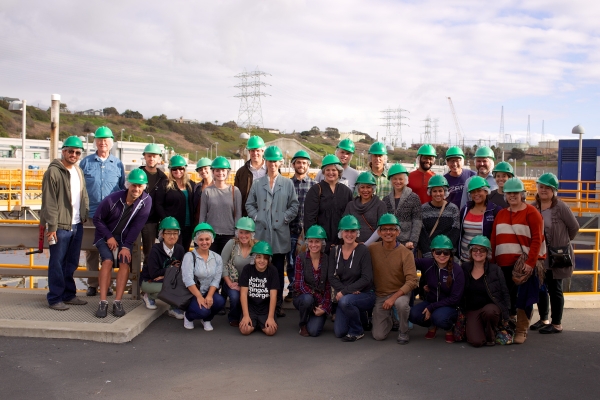
I recently had the chance to tour the Hyperion treatment plant with a group of staff and volunteers from Heal the Bay. Many thanks to our friends at the Bureau of Sanitation for organizing an instructive tour. Here’ some of what I learned:

1. Hyperion was one of the 12 Greek Titans and the father of the god Helius. Hyperion is also the name of a sewage treatment plant in L.A. It’s also the name of the world’s tallest tree — a 379-foot coast redwood in Redwood National Park.

2. Hyperion is the largest sewage plant, by volume, west of the Mississippi. It treats 300 million gallons a day (MGD) on a regular basis and can handle 900 MGD flat out. By comparison, you’d only need 100 MGD to fill the Rose Bowl. Or 90,000 fans. Take your pick.

3. You may have heard of effluent. It’s the treated wastewater discharged into a bay or ocean. But did you know that influent is the name for what they call the raw sewage that flows in the front door of the plant. I didn’t.

4. The city of L.A. purchased the land that Hyperion stands on in 1892 and built the first modern plant in 1949. Up until that time, raw sewage was discharged to the Bay. But I use the word modern loosely. From 1949-98, the plant blended treated and untreated effluent and then pumped it into the Bay. The result? Sick surfers, dead fish, and dolphins with skin lesions. Oh, and a fight with Heal the Bay.

5. Heal the Bay was founded in 1985 to get Hyperion to clean up its act. By 1987 officials had agreed to fix the problem. But it took 12 years and $1.6 billion to get to a place where only treated effluent was pumped into the Bay. Now surfers are healthier, dolphins are happier, and the fish die of natural causes. Unless it’s raining. But urban runoff is another story and a much more challenging problem we work on day in day out.

6. Despite the fact the new plant has allowed the Bay to recover, the treated effluent itself is not safe for humans. Seagulls may swim in the treated water ponds, but if you or I did the same we would get sick. So the last piece of the treatment puzzle is the dilution provided by the Santa Monica Bay. It does it tirelessly and doesn’t get paid.

7. It can take several days for influent to get from your toilet to Hyperion. But once there, the liquid is processed within a day. The solids take longer to be digested by beneficial bacteria and converted to compost that is used in Kern County farms and Griffith Park.

8. Some 6,700 miles of sewage line feed into Hyperion. That’s like L.A. to N.Y. and back.

9. About 80% of the power needs for Hyperion are met from methane gas generated on-site from all that poop.


hyperion Heal the Bay staff is all smiles after a tour of the Hyperion plant, the historic Ground Zero for the group.


It all adds up. Every minute we spent advocating for shark fin and plastic bag bans. Every piece of trash we picked up in our communities. Every student we led to the beach for the day. At the end of the year when we reflect on all that we accomplished, we are mindful that none of it would have been possible without the support of our network of donors, volunteers and supporters. Thank you! Take a look at what you helped get done this year:

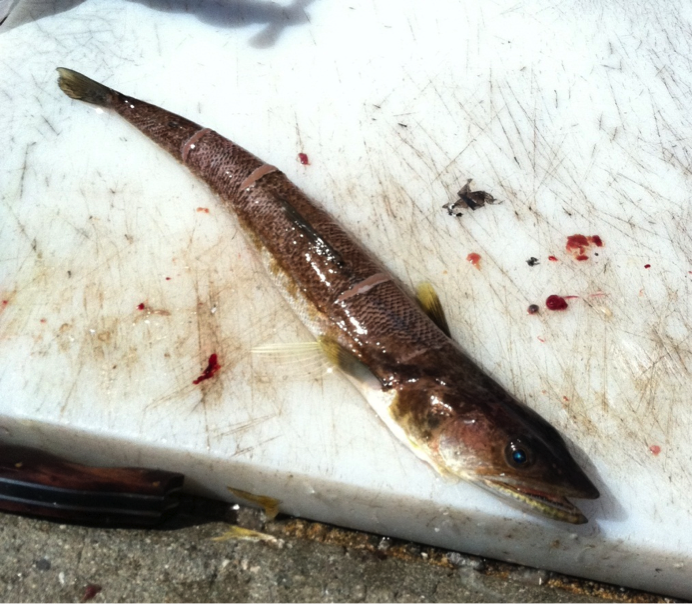
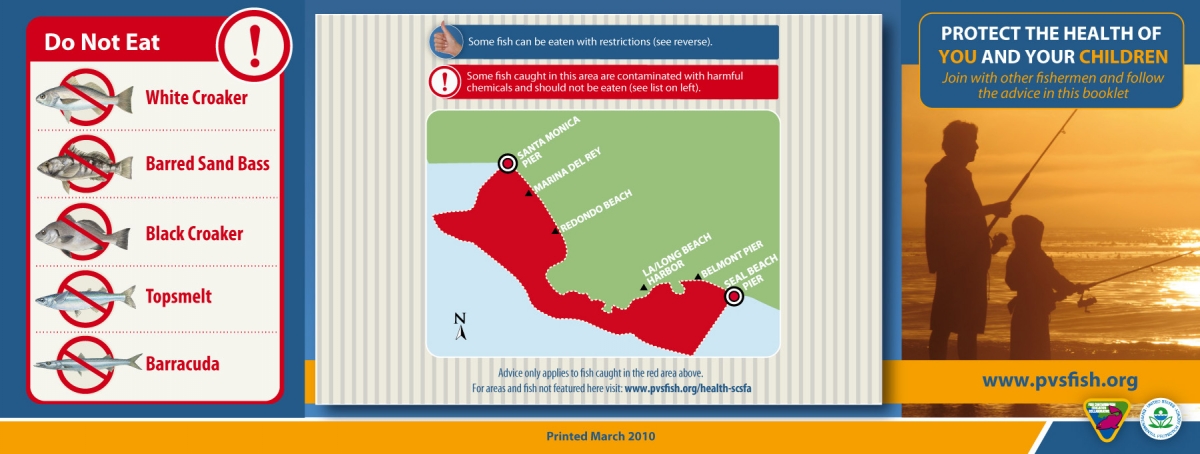
  • 10,000 anglers engaged directly about the dangers of con­suming certain fish caught off local waters.

Seeking more ways to make an impact? Partner with us as we head into 2014!


Back by popular demand, for a limited time only during the holiday season, Heal the Bay’s Santa Monica Pier Aquarium is offering its wolf-eel for adoption. Nine different marine animals on display at the Aquarium are available for adoption year-long through the Aquadoption program, but the wolf-eel is only available through January 1, 2014.

Nothing says the holidays like a wolf-eel, and because the Aquarium staff does all the work of taking care of this unique marine animal, it’s a hassle-free way to connect with the sea life of the Santa Monica Bay.

At nearly three-feet long, the young wolf-eel is neither wolf nor eel, but a member of the wolffish family (named for their large front teeth) and will grow to be about seven feet long. This fish is eel-shaped, with a grayish-indigo colored body patterned with gorgeous dark spots. The wolf-eel can be found peering out of a rocky outcropping in the Aquarium’s Kelp Forest exhibit.


Ben Kay, a marine biology teacher at Santa Monica High School and longtime partner of Heal the Bay in the fight against plastic pollution, took a midnight run to Santa Monica’s Pico Kenter stormdrain this morning. Here’s his alarming report about the effect the season’s “Second Flush” had on our local shoreline:

Sorry, had to share another shocking video from my midnight run today: copious plastic pollution and mystery foam strike again. With much more rain, the second flush of the stormdrains this early morning turned out to be much worse than the first flush back on Oct. 9., spraying debris all along the beach. The sad thing is that this is totally preventable, yet my students and I have documented the same phenomenon six years in a row.

Unmistakable negative human impacts to oceanic and land habitats stem from our increasing reliance on disposable plastic goods. Each flush of Santa Monica’s Pico Kenter Storm Drain exacerbates the problem. Even in our affluent, progressive, and green-minded community of Santa Monica, a thick stream of plastic pollutants flows unfiltered into the sea, and nothing meaningful has been done to systematically combat this crisis in my eight years of examining the issue with students.

We clearly have both a litter problem and a plastic packaging problem, not just the former. Real solutions include:

  • Mandatory environmental education in all schools at all grade levels
  • Banning and refusing to use single-use plastic bags, utensils, straws, water/juice/soda bottles, and polystyrene food packaging
  • Choosing reusable products
  • Listening to sound science on environmental issues, not what the plastic industry tells us

If this report bothers you, consider joining our emergency Storm Response Team, a hardy group of volunteers that removes debris from our most impacted beaches following heavy rainfall.

Second Flush Video


November’s Nothin’ But Sand broke Heal the Bay’s record for the most participants at one of our monthly volunteer cleanups. What a way to end 2013!

Some 1,111 participants picked up 210 pounds of ocean-bound trash at Will Rogers State Beach on Nov. 16.

Whether volunteers were lured to the beach that sunny morning to fulfill their community service or their own Karma hours, they can enjoy the holidays with an extra glow knowing they did their part to keep our local beaches safe, healthy and clean.

It’s not easy work! But it’s worthwhile, as the debris removed has now been categorized and catalogued, and used to help better inform our ongoing policy work to curb coastal pollution.

And the cleanups really make a difference, as Heal the Bay volunteers have collected and recorded more than 2 million pounds of debris over the past 20 years. That’s nearly the weight of two fully loaded 747 jumbo jets.

We started as an all-volunteer organization, and we still rely heavily on ocean-lovers who generously donate their time, as individuals or as part of their church, scout troop or even workplace.

While November’s Nothin’ But Sand represented our final cleanup of 2013, we’ll be back on the beach come January. Start 2014 off right and join us!

You might also consider becoming a member of Heal the Bay. It’s the easiest way to have the maximum impact on protecting our local beaches. The ocean belongs to all of us, so it’s up to all of us to care for it.

nothin but sand cleanup More than 1,000 cleanup volunteers canvassed Will Rogers State Beach — a Nothin But Sand record!


For six years, Heal the Bay has organized “A Day Without a Bag” to kick off the holiday season, encouraging people to skip single-use plastic. But this year we proudly celebrated “A Day With a Bag” – a reusable one – to commemorate the City of Los Angeles’ plastic bag ban, which goes into effect Jan. 1. Heal the Bay helped organize the distribution of 8,000 free reusable bags to residents in all corners of L.A. and every council district.

The mobilization wouldn’t have been possible without the assistance of the following groups: The Children’s Nature Institute, Tree People, One Generation, Temple Judea, PAVA, Sun Valley High School, Pacoima Beautiful, St. Raphaels, Augustus Hawkins Nature Park, Challengers Boys and Girls Club, EsoWon Books, Palisades Cares, Boys & Girls Clubs of Venice, CSUN service learning students, Echo Park TAP, LA Beautification Team, Urban Semillas, Punk Rock Marthas, Cathy Beauregard and a group of UCLA students. More information about all of these terrific partners can be found through our distribution site map.

Inland cleanups help beautify a community and educate about the connection between urban areas to the east and the Santa Monica Bay. We also salute JingTian Ye, president and founder of the Bottles for the Bay Foundation in Rowland Heights, who understands that connection and generously purchased three cases of heavy-duty bags for use at our inland cleanups.


Heal the Bay CEO Ruskin Hartley pays a visit to one of Heal the Bay’s greatest triumphs — Ahmanson Ranch, the largest parkland acquisition in the history of the Los Angeles-Ventura County region.

The early 2000s were heady days for land conservation. Flush with funds from voter-approved bond funds, the state competed for and secured protection for some remarkable pieces of property. At the time I was working in Northern California safeguarding redwoods. Save the Redwoods League had just protected the 25,000-acre Mill Creek property at a cost of $60 million. It seemed like a lot of money at the time, but I remember hearing of two transactions in Southern California that together cost the better part of $300 million. Wow, I thought. How could anything be worth that much?

Well, this past Saturday I finally stepped foot on one of these tracts of land: the former Ahmanson Ranch (now the “Upper Las Virgenes Canyon Open Space Preserve,” a natty name I know). In 1998, Washington Mutual acquired the Ahmanson Ranch Co. and set about developing a self-contained city (complete with two PGA golf courses) located in the rapidly urbanizing San Fernando Valley. The proposal set off a firestorm of local opposition. Locals hated the thought of all the additional traffic, and the loss of local open space that was valued by both them and the critters that called the 3,000-acre ranch home.

A textbook campaign ensued that ultimately led to the ranches protection as parkland for all to enjoy. But before it could succeed, it had to go beyond a local issue to an issue of regional and state-wide importance. And that’s where Heal the Bay came in.

Ahmanson marked the first time that Heal the Bay had played a leading role in opposing a private development, one located many miles from the coast to boot. The nexus was water quality in Santa Monica Bay and the impact that unchecked development would have on the headwaters of Malibu Creek. Heal the Bay scientists mapped red legged frog habitat, assessed downstream water quality, and mobilized regional and statewide support for what until that time had been a local issue. Ultimately the stars came into alignment and the recent passage of voter-approved park and water bonds provided the funding to halt the development and create public park land.

California Governor Gray Davis, state legislator Fran Pavley, and director-activist Rob Reiner announced the deal back in 2003. This weekend they reunited to celebrate the 10th anniversary of the acquisition.

Yes, $150 million was a lot at the time. But it truly was an investment in the future. Not only does Ahmanson Ranch protect water quality each and every day, it also provides a much needed green sanctuary in the heart of suburbia for the residents of the Valley and beyond.

It’s safe to say, that without the dogged and persistent engagement of Heal the Bay to transform a local issue to a statewide campaign, the land today would be just another subdivision and place to play golf (two rounds). And as we know, subdivisions and golf courses don’t help water quality. Quite the reverse. Society as a whole ends up paying the costs to clean up the runoff they create.

I no longer look at the $150 million as an expenditure. It really was an investment in protecting open space that has a direct return in terms of enhanced property values, forgone costs of water pollution clean-up, and the intangible values of providing people open space to recreate in. Thank you Heal the Bay!

P.S. I just read about the latest Lear Jet. For its $600 million-plus price tag you could buy four ranches (at 2003 prices). That said, you and three friends could get anywhere in the world quickly and comfortably. I will let you decide which is the better long-term investment.

Visitors enjoying the open space afforded by the Ahmanson Ranch purchase in 2003.