Like a national or state park on land, Marine Protected Areas, or MPAs, conserve and protect wildlife and habitats in the ocean. Here in California, we have a unique and science-based network of 124 MPAs all up and down the coastline. This network exemplifies a new kind of MPA science, designed to not only conserve the habitat inside the boundaries of the protected areas, but to enhance the areas in between as well.
The MPA Decadal Review
California’s MPA network has been around since 2012 and, per the Marine Life Protection Act (MLPA) passed in 1999, this network must be reviewed every 10 years. This year marks the very first Decadal Management Review of California’s MPAs. What does that mean for our network?
We sat down with Tova Handelman, the Senior Marine Protected Areas Program Manager at California’s Ocean Protection Council (and former Heal the Bay staffer) to give us the inside scoop on what’s in store for California’s treasured MPAs.
To get started, California’s MPAs are really special – what makes our network of 124 MPAs different from other MPAs in the United States and around the world?
Most MPAs around the world are designed as individual protected areas: a specific spot on the map that is set aside and conserved. Our MPAs are different; they span the entire California coastline and are ecologically designed as a network. They are meant to interact with each other, connected by the California Current, wildlife migration, and dispersal patterns.
Since California’s MPAs are a statewide network, we can actually manage them as a state. All 124 MPAs are managed to the same degree, unlike MPAs that are managed differently region by region. This allows for more equitable distribution of resources, no matter how remote an MPA may be.
Point Dume is one of 124 stunning Marine Protected Areas in the state that offer safe refuge for ocean inhabitants as well as breath taking views from the land that make up the California Coastline.
The state of California manages our entire MPA system, how exactly does that work?
We use “adaptive management” for our network of MPAs in California, which gives us an opportunity to change how we manage these areas as the ecosystems change over years or decades. What might be working in MPA management now, might not work in the future. It was quite brilliant to include adaptive management in the MLPA and we are already seeing now, with the climate changing so rapidly, how necessary it was.
A variety of information is taken into account when monitoring an MPA. Heal the Bay partnered with scientists like PhD candidate Dr. Zack Gold to study eDNA in protected waters over the past couple years.
A key part of adaptive management is checking in on our MPAs to see how they are working and then adapt management accordingly. Here in California we do that through the Decadal Management Reviews, and the very first one is happening this year. Tell us about this review.
The Decadal Management Review, which was written into the MLPA, is an opportunity for us to use science and monitoring to see what has been going on in MPAs over the past 10 years. Based on the evidence presented, we can determine if there are any ways we can strengthen MPA management to make it more effective.
What does this scientific evidence look like?
The state of California has been funding long term MPA monitoring for a long time, and it all started with baseline data. Researchers went to all different types of ecosystems like sandy beaches, rocky reefs, kelp forests, and estuaries and gathered information to get an idea of what was going on inside and outside MPA boundaries 10 years ago, before the MPAs were put into place. Since then, those same sites have continued to be monitored over time to look at changes and see if anything interesting has happened since the baseline data was collected. In addition to the long-term data sets, we also will be interested in community science, like MPA Watch, to give a broader picture of the human dimension of MPAs [how humans interact with, use, impact, and value these areas]. The review will also include Traditional Ecological Knowledge from Indigenous communities who have been stewards of these lands and waters since time immemorial.
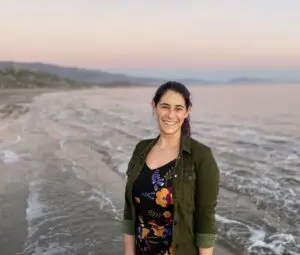
MPA volunteers like Sophia von der Ohe (seen in the picture above) are crucial to the success of the Decadal Review. Over 36161 surveys have been submitted by MPA watch volunteers to date.
How exactly will the review work, and who is involved?
The major players are the California Fish and Game Commission (FGC), the California Department of Fish and Wildlife (CDFW), and the California Ocean Protection Council (OPC). The review will start with the gathering and synthesizing of scientific evidence by CDFW – this is happening right now and will continue through the year [and Heal the Bay is helping to contribute evidence and data for this critical step]. As the managing agency of the MPA network, CDFW will present this evidence to the FGC through a report, a presentation at a Commission meeting, and a symposium. This is set to happen in early 2023. As the regulatory body, the FGC will then review the evidence and make the decision if any changes are needed in MPA Management. If they choose to make any changes, they would have to go through a full regulatory process.
What can we expect from this first review? Will the science show major changes? Will there be any big management adjustments like MPAs added/removed or shifting boundaries?
The science might show some changes [like this Channle Islands MPA study showed increased abundance and biodiversity] but we don’t know yet because we are still analyzing that data. These are cold water climates and here, things take a long time to change. So, even though we are reviewing the science every 10 years, and we will see some interesting things, this review isn’t going to definitively show an extremely different landscape from 10 years prior.
We don’t expect any major management adjustments during this first 10-year review, such as border changes, adding new MPAs, or removing current MPAs. If you have heard that this management review is going to determine whether or not we are going to keep our MPA network or not, that is not this case: this review isn’t like a pass-fail test.
What you CAN expect from this review is a very interesting narrative and look back on the past 10 years of MPA management. We will see the amount of effort that was needed to manage our MPAs and interesting ecological data and stories. We will see data on the human dimension, such as community science, socioeconomics, how communities have interacted with their MPAs, and a review of the resources that were put into the network. This review will help to show the international global significance of this network and how other managers are looking to us as an example.
How can folks get involved in the review process?
The state is working to involve all ocean users and MPA stakeholders in the review process. If you are interested in getting involved in the review, you can:
5. Go visit your MPA! We have four gorgeous MPAs here in LA County where you can swim, hang on the beach, surf, whale watch, snorkel, or tidepool!
So, folks, there you have it! All the information you need on California’s 2022 MPA Decadal Management Review. To close, some words of advice from an MPA: Be adaptive, base your decisions in science, protect yourself, get by with a little kelp from your friends, and do your own decadal review!
Thank you to all who rushed to the beaches of Southern California on December 4-5, 2021 and January 2-3, 2022 to help us document the King Tide. Your observations were vital to preparing Los Angeles for a future affected by climate change.
The culminating point of the King Tide gave us a glimpse of what California’s sea-level rise may look like, while the low tide during this phenomenon showed us the gravity of a shifting ocean.
This allowed scientists and the public to observe first-hand the intertidal habitats that are threatened by rapid sea-level rise. These habitats can be observed during normal low tides, but the extra low tide experienced during the event allowed for even more opportunities to observe and explore. During the King Tide, images were captured of threatened sea life, and people getting up close to observe it.
Although the low tide revealed a new view of ecosystems most people don’t get to see, capturing the high tide was just as important. The USGS has noted that “as beaches decrease in height and width with rising seas, the already narrow intertidal zones—supporting invertebrates that help cycle nutrients by breaking down organic matter—shrink further.” (How Rising Seas Push Coastal Systems Beyond Tipping Points | U.S. Geological Survey (usgs.gov)).
Images collected during these past King Tide events will not only help illuminate what the future impact of climate change will have on our California communities, but they also bring to light what ecosystems are threatened as climate change moves past the tipping point.
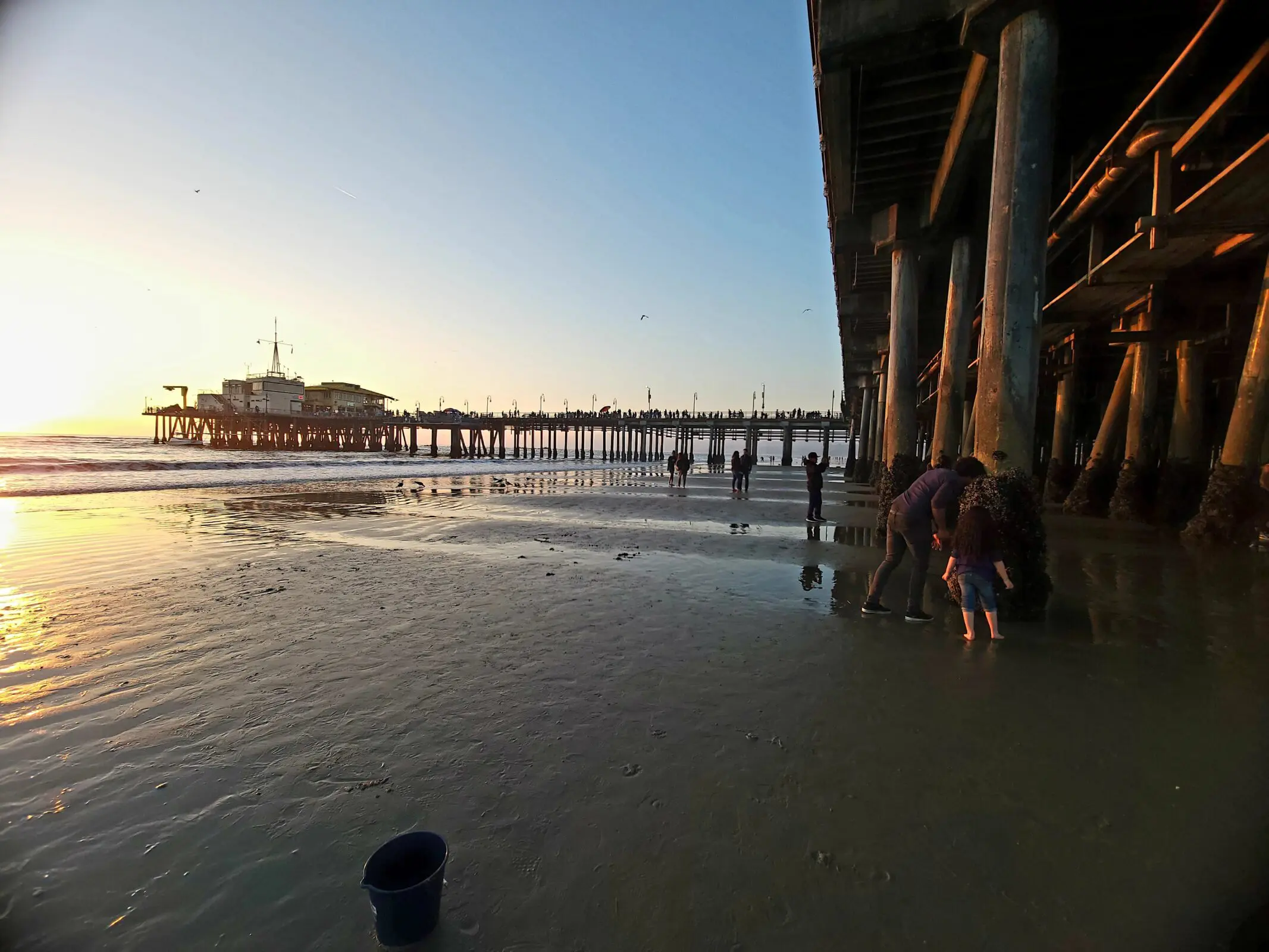
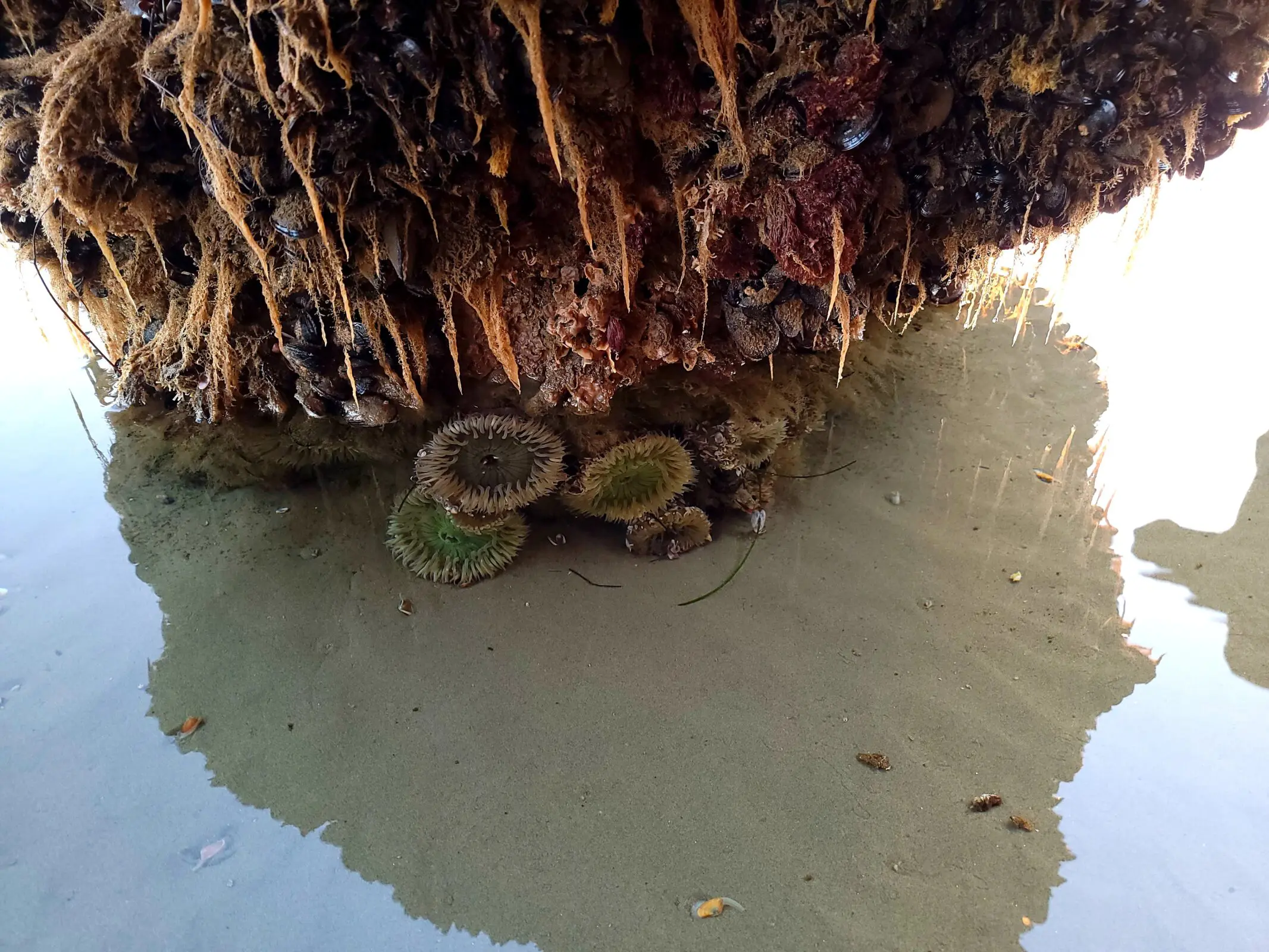
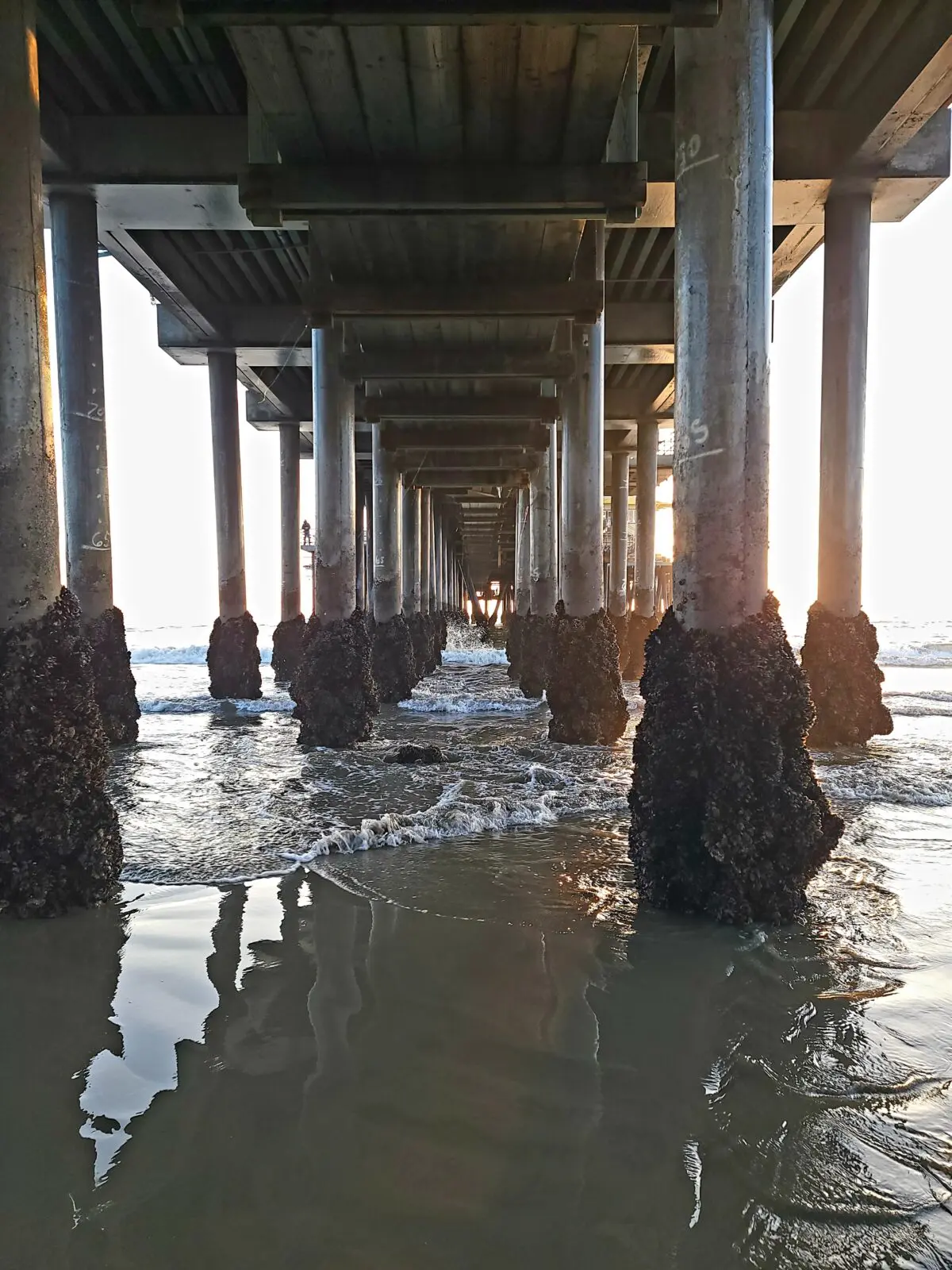
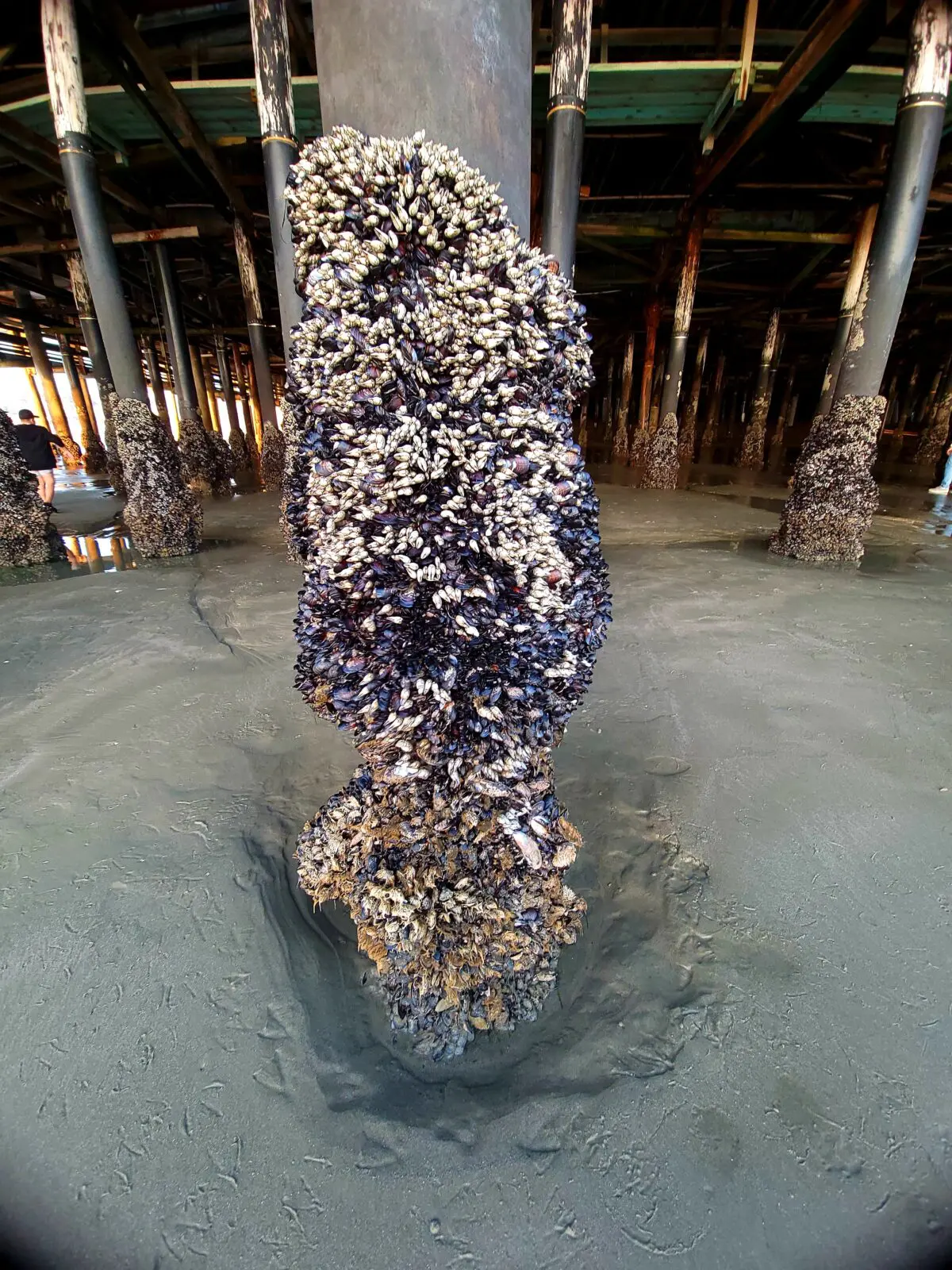
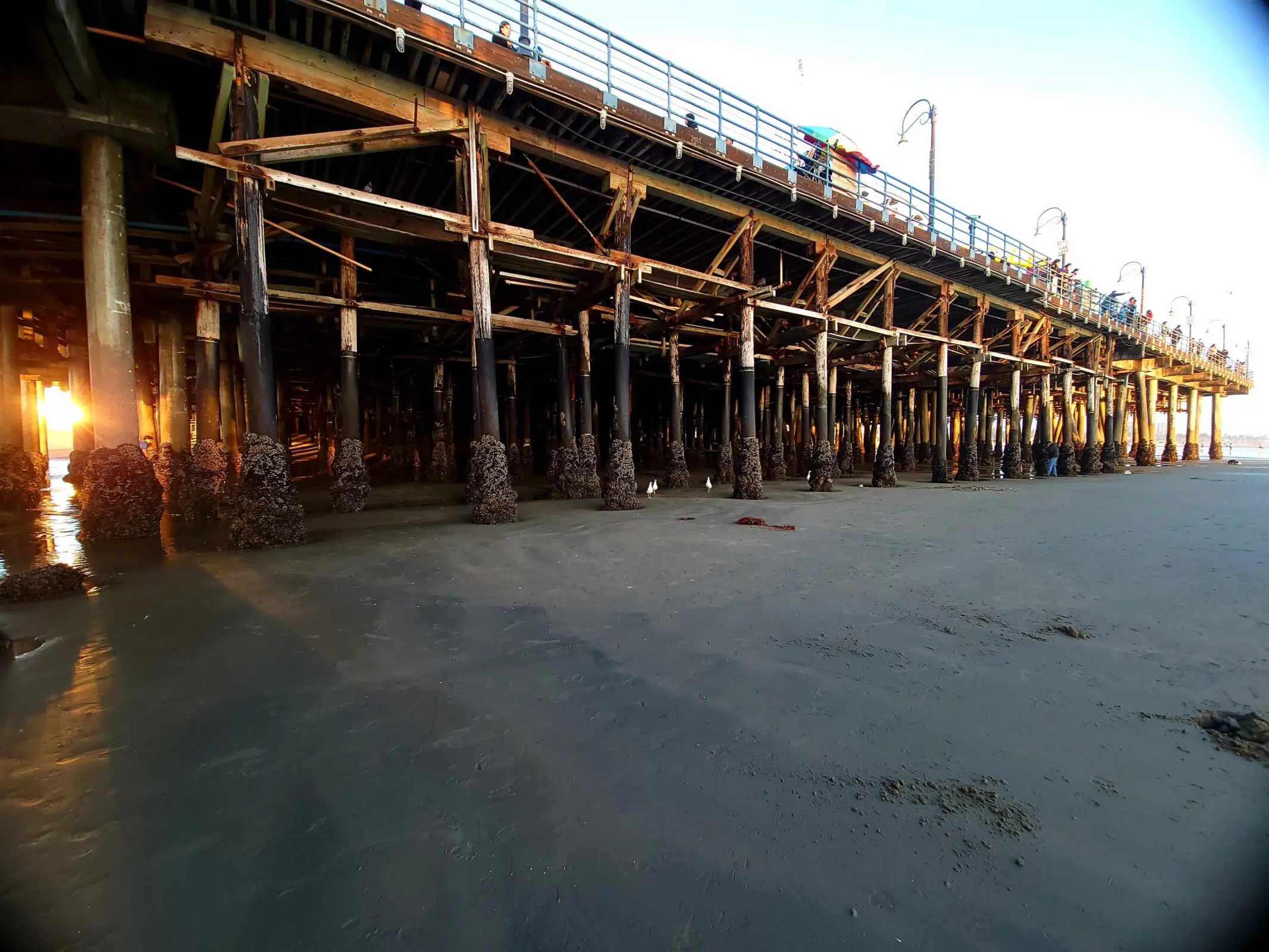
Photos of Santa Monica Pier at the low point during King Tide. Taken by Michelle Zentgraf.
We are heartbroken and outraged. Crude oil spilled from a pipe into the ocean near Huntington Beach, Orange County in October 2021. Here’s how to take action. This oil spill has taken place in unceded Acjachemen and Tongva ancestral waters.
LATEST UPDATE as of 2/8/22
The government agencies responding to the oil spill announced last week that their cleanup operations have ended for the two ruptured pipelines off the coast of Huntington Beach. All coastal habitats are deemed to be clean of oil, and the phone number and email address for reporting tarballs have been disabled. The public has been advised to contact the National Response Center (1-800-424-8802) if more oil is observed on the beach or in the water.
While the cleanup has concluded, the response to the oil spill is far from over. The California Department of Fish and Wildlife (CDFW) will now complete a Natural Resource Damage Assessment (NRDA). The NRDA will financially quantify the damage done by the oil spill in terms of habitat and human usage. The assessment has required that Amplify Energy pay that amount in restitution. The CDFW will need to conduct multiple scientific studies to collect and analyze a large volume of environmental data, so expect the NRDA to take several years to finalize.
We will not know the full environmental impact of the oil spill until the NRDA concludes, but we do have some preliminary details. The first ruptured pipeline released 25,000 gallons of oil into the ocean, and cleanup crews managed to remove 9,076 gallons. That means over half the oil that was spilled remains in the ocean or on the beach. In addition, the oil that was recovered may have harmed wildlife before being cleaned up. In total, 124 animals (birds, mammals, herptiles) were found to be oiled, and only 36 survived. The second ruptured pipeline released less oil into the ocean, but there is currently no estimate for how many gallons. Cleanup crews for the second pipeline recovered 176-236 gallons of oil from the ocean, and no oiled wildlife was observed.
Both pipelines have been emptied, and they are no longer in operation. However, the pipeline operators appear to be intent on repairing the pipelines and using them in the future. The Pipeline Hazardous Materials Safety Administration is reviewing permanent repair plans for the pipelines. Please direct any questions about this process to phmsa.publicaffairs@dot.gov.
LATEST UPDATE as of 1/11/22
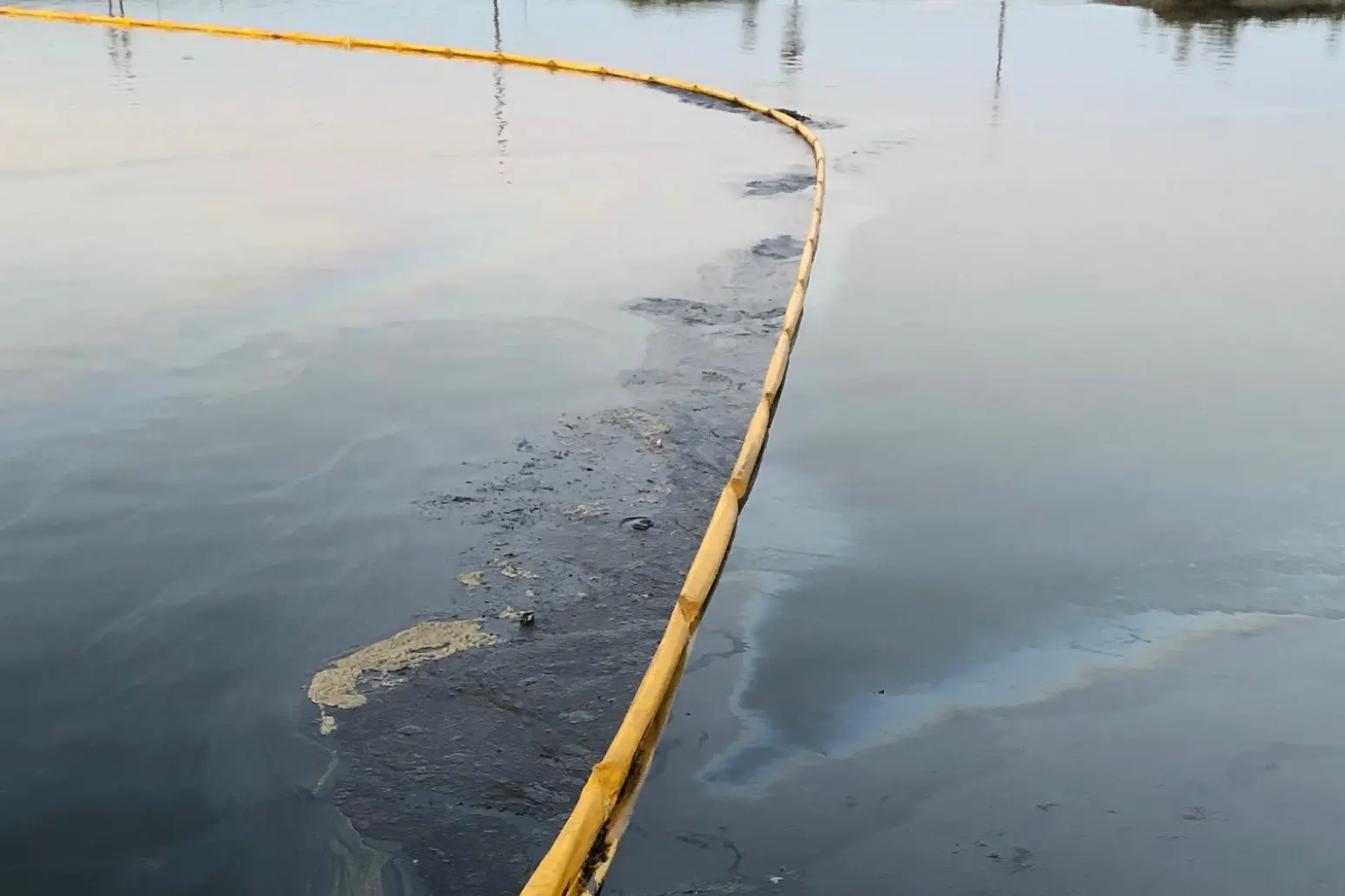
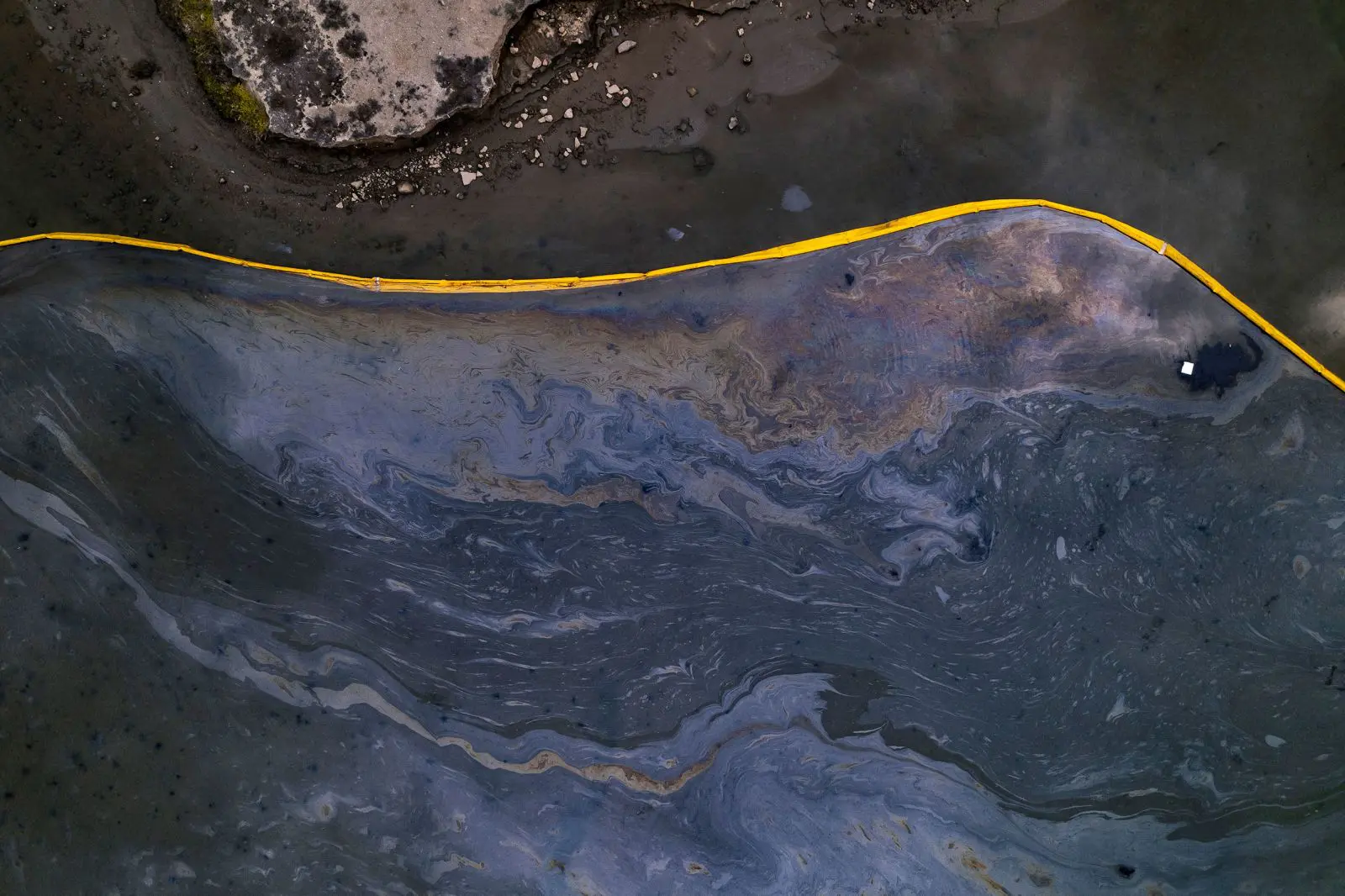
The agencies tasked with responding to the oil spill (U.S. Coast Guard, California Department of Fish & Wildlife, Orange County, and San Diego County), have ended their cleanup operations at all Orange County and San Diego County beaches. Tragically, a rupture was discovered in a separate but nearby pipeline on January 2, 2022. Crews were deployed to clean up the oil sheen, and protective booms were placed at the entrances to Orange County wetlands to absorb any floating oil. It is reported that no oil from the second pipeline rupture has reached the beaches. At this time, no fisheries closures have been recommended by the Office of Environmental Health Hazard Assessment.
The breach points in both pipelines have been identified and are being repaired. The remaining oil in the pipelines will be evacuated once repairs are completed. Cleanup crews will remain on call for an undetermined amount of time to respond to new incidents of oil sheens or tar balls. Oil and tar ball sightings should be reported to the National Response Center (1-800-424-8802) and California Office of Emergency Services (1-800-852-7550). For additional information about the oil spill, email ocoilspillinv@gmail.com
After the Orange County Oil spill released over 25,000 gallons of oil in early October, the Office of Environmental Health Hazard Assessment (OEHHA) recommended the closure of both commercial and recreational fishing to the California Department of Fish and Wildlife. The recommendation suggested a moratorium that would encompass the area from Huntington Beach to Dana Point. As of October 3rd, the closure prohibited the take of all fish and shellfish from an area that included over 20 miles of California coastline, with the boundary reaching 6 miles out to sea. The OEHHA had identified “that the threat to public health from consuming fish in the affected area was likely” and a few days after the original closure began, the CDFW expanded the prohibited territory to include bays and harbors from Seal Beach to San Onofre State Beach.
From October 14 to November 3, the OEHHA sampled seafood along this 650 square mile area to measure and evaluate polyaromatic hydrocarbon levels. PAHs are harmful chemicals found in oil and can accumulate along marine food chains, specifically in fish and shellfish caught for human consumption, “causing increased risk to cancer and other adverse health conditions.”
Three days ago, after extensive testing, the OEHHA announced that as of November 29, “there is no further risk to public health from seafood consumption in the affected area.” Following the OEHHA recommendation, Director Bonham of the CDFW signed a declaration lifting the ban on fisheries allowing fishing to resume no later than midday on November 30, 2021.
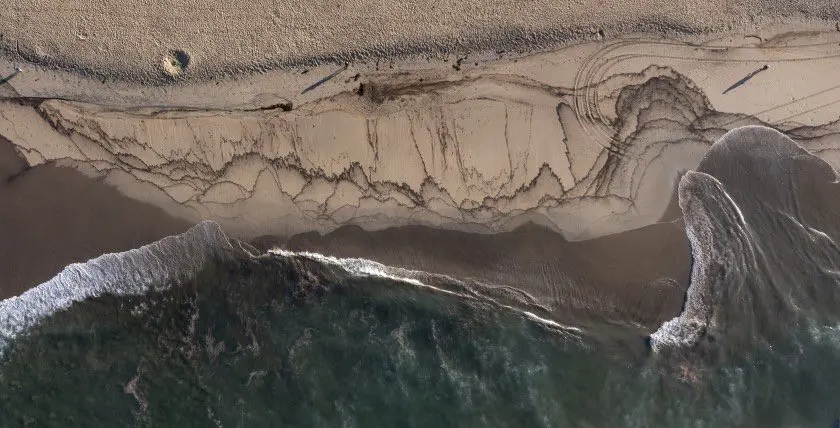
Beach and shoreline cleanup activities in Orange and Sand Diego counties are winding down as most beaches impacted by the spill have been deemed clear of oil by the spill response agencies (see here for how they determine this). There are still two segments of coastline in Orange County and three in San Diego County where there are ongoing cleanup activities. The US Coast Guard and Office of Spill Prevention and Response will respond to any new reports of oil on the coastline even at beaches where cleanup operations have ceased.
LATEST UPDATE as of 10/29/21
It has now been nearly 3 weeks since the Orange County oil spill.
Monitoring and cleanup continues by the Unified Command. More than 5,000 gallons of oil have been recovered by skimmers and over half a million pounds of oily sand and debris have been removed thus far. Based on a recently released water quality report, there appears to be very little detectable toxins in the water and all beaches and harbors are now open. Heal the Bay strongly believes that more monitoring is needed for the affected area and we encourage all beachgoers to continue checking the Beach Report Card before heading to the water.
The Talbert Marsh still has floating barriers in place, but all other barriers have now been removed. Boat decontamination stations are available in harbors and all affected boats can be cleaned at the expense of the responsible party. The oiled wildlife that were recovered alive are doing well, and fewer in number than originally feared. Of the 33 oiled birds recovered alive, 20 have already been released. The total number of animals affected is just under 100 and includes birds, marine mammals, and fish.
Tar balls still may occur on beaches, and can be reported to CDFW at tarballreports@wildlife.ca.gov. Questions still remain about when and how the damage to the pipeline occurred, the exact amount of oil spilled, when and how the response began and how effective that response has been in properly informing and protecting the public. It does appear that less oil was spilled than the first estimates, and the minimum estimate is now just over 25,000 gallons in total.
Orange County beaches are open, but please be cautious.
Orange County officials re-opened all beaches on Monday, October 11 after a week-long closure due to the oil spill. The decision to open the beaches appears to be based on a water quality report recently conducted by a third-party contractor. They collected water samples and measured the amount of harmful petroleum compounds present in the water. All sampling locations showed non-detectible amounts of petroleum compounds, and one site at Bolsa Chica State Beach had a non-toxic level of certain compounds.
While the results are encouraging, Heal the Bay believes this report alone does not provide enough information to confidently re-open beaches, and we would like more information before we recommend people head out to the beach. Therefore, we continue to have an advisory listed on our Beach Report Card for Orange County beaches. Here are some facts about the report that we would like you to consider before going in the water:
The report only includes water quality data. Given that petroleum-related fumes pose a health risk to humans (page 2 of report), we would like to see air samples taken as well.
The data in the report is only from one day of sampling. The City of Huntington Beach has stated that monitoring will take place twice a week, and results will be posted on their oil spill website.
Only Huntington Beach beaches were sampled. We would like to see data from every beach along the Orange County coast impacted by the spill.
If you do decide to go to the beach, please do the following:
Avoid contact with visible oil on the sand or in the water.
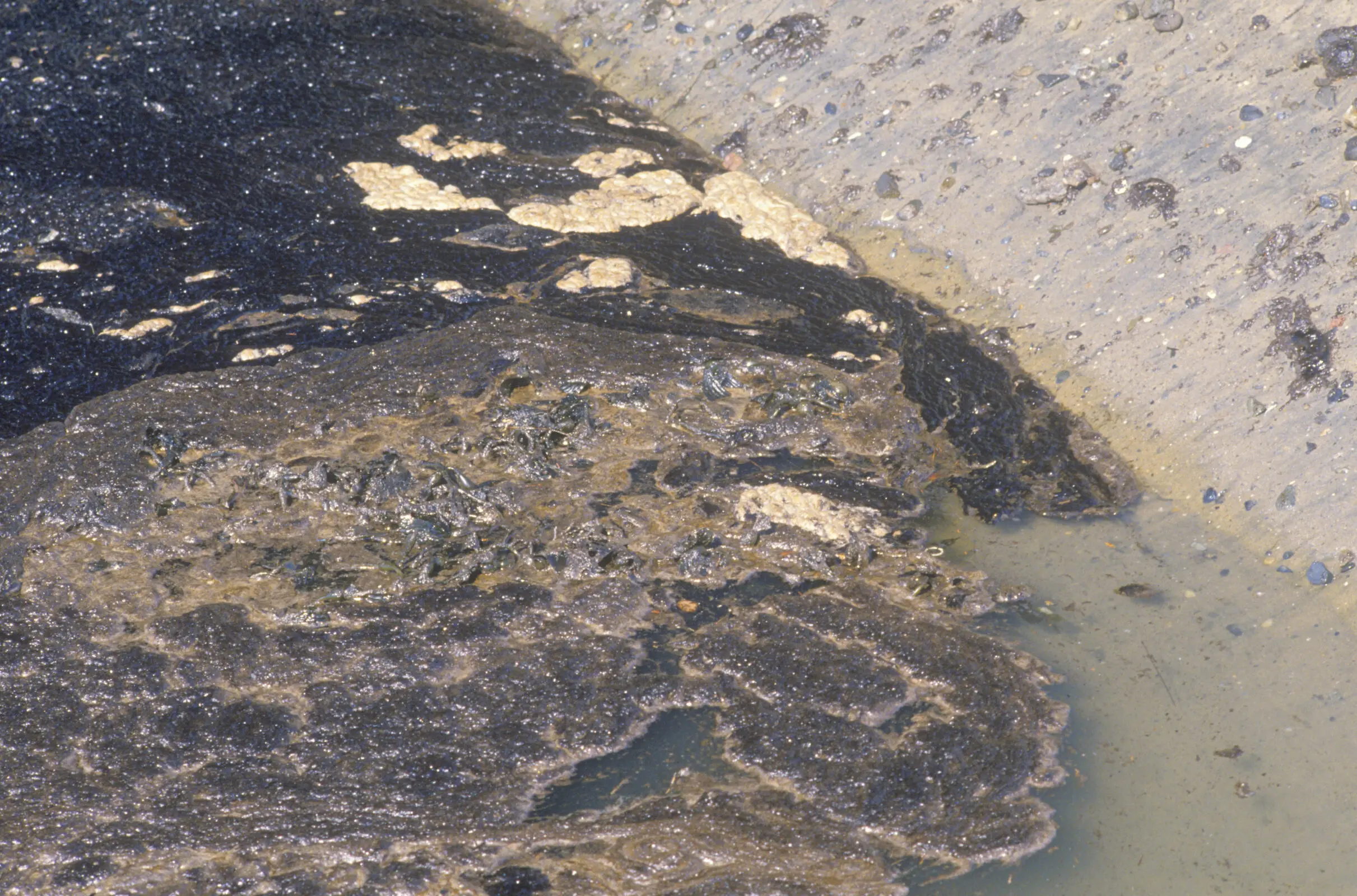
It began with reports from community members smelling gas on Friday afternoon, and evidence of a visible oil slick on the ocean surface by Saturday. The official announcement of the spill came later Saturday evening: 126,000 gallons of crude oil gushed from a seafloor pipe into the surrounding ocean. The pipeline (owned by Amplify Energy) transports crude oil from the offshore oil platform Elly, located off the coast of Orange County in federal waters, to the shoreline in Long Beach. According to the LA Times, US Coast Guard criminal investigators are now looking more closely into the events leading up to the spill and potential negligence in the delayed response.
Oil spills are terrifyingly toxic to public health and marine life. Beaches are closed, and dead and injured birds and fish are already washing on shore. Marine mammals, plankton, fish eggs, and larvae are impacted too, as this toxic crude oil mixes with the ocean water, spreading both across the water surface and down into deeper water. As of 1:45 PM on October 5, only 4,700 gallons of the 126,000 spilled gallons had been recovered. Sadly this oil has also reached the sensitive and rare coastal wetlands at Talbert Marsh, a critical natural environment not only for wildlife habitat, but also for improving water quality by naturally filtering contaminants from water that flows through; however, this wetland cannot filter out oil pollution on such a scale.
(Photo by City of Huntington Beach)
Major oil spills keep happening because oil companies prioritize profits over the health of people and the environment. This is evidenced by the fact that the oil industry has continuously sought to skirt regulations and loosen up restrictions on oil extraction. The danger posed by the oil industry’s pattern of reckless behavior is augmented when you consider that much of the oil infrastructure in California is decades old and deteriorating. This is the second major pipeline leak in 6 years. The last one in 2015 was the Refugio oil spill that resulted in 142,000 gallons of oil damaging our coastline in Santa Barbara.
Oil spills are part of a much larger pollution problem. The impacts of fossil fuels are felt at every stage, from extraction to disposal.
Major oil spills are disastrous, yet somewhat intermittent. But air pollution from fossil fuel extraction sites and oil refineries located on land have a harmful impact every single day for fenceline neighborhoods. Low-income communities and communities of color are exposed to disproportionate health and safety risks due to a history of abundant drilling within close proximity to where community members live, work, and go about daily life.
So, what does all this risky drilling get us? In the end we are left with products like gasoline, which contributes to the climate crisis when burned, or plastics that are used once (or not at all) and then thrown “away,” ultimately ending up right back here, polluting our neighborhoods and ocean.
WHAT WE DON’T KNOW
It is still unclear what caused the oil spill as well as exactly when it started and when it stopped. Divers are conducting an ongoing investigation, which will give us more information about what caused the rupture that led to thousands of barrels of oil spilling into the Pacific Ocean.
Crude oil is a mixture of toxic chemicals including benzene and other carcinogens, and oil can come in a few different forms, which can have different impacts on the ecosystem. Unfortunately, we do not yet know the type of oil that was spilled, and proprietary trade laws allow oil companies to keep their oil and chemical mixtures a secret. We also do not know how cleanup progress will be monitored and if water quality testing will be included in that process or not. Based on previous spills, we expect the beaches to be closed for several weeks, and we expect environmental harm to last for years.
WHAT NOT TO DO
At this time, the best thing you can do is to stay away from the oil spill area for your own safety.
Stay clear of oil-fouled and closed beaches, stay out of the water, and keep boats far from the existing oil slick. As of October 4, Newport Harbor and Dana Point Harbor are closed, and a beach closure has been put into effect in Huntington Beach. Allow plenty of space for rescue workers and cleanup crews from the US Coast Guard and California Department of Fish and Wildlife Office of Spill Prevention and Response (CDFW-OSPR) to access and work at the spill site. If you see any injured or oiled wildlife, DO NOT try to intervene on your own. Instead, report the animal to the Oiled Wildlife Care Network at 1-877-823-6926.
CDFW has issued an emergency fisheries closure between Anaheim Bay and San Onofre Beach. The closure extends 6 to 10 miles offshore. Any take of fish from this area is prohibited until further notice and CDFW is carefully patrolling the area. If you are an angler, check this detailed description and map to ensure you are staying outside the fishing closure for your own health and safety. Shellfish and fish may become contaminated from the oil and other chemicals in the water. Eating fish and shellfish from the contaminated area may make you sick, and it’s also hazardous to be out there fishing because of possible exposure to harmful fumes from the spill.
Heal the Bay’s Science and Policy team is working on a public call to action with specific policy demands that we will share soon on our blog and on our Twitter, Instagram, and Facebook channels. In the meantime, there is still a lot that you can do while keeping a safe distance from the oil spill.
If you are local, you can volunteer with spill cleanup efforts. The California Department of Fish and Wildlife is soliciting volunteers from the public to assist in volunteer tasks with the Unified Command.
You can contact the UC Davis Oiled Wildlife Care Network at 1-877-823-6926 to report oiled wildlife. Currently, only trained responders may assist in the cleanup efforts. However, if you would like to sign up to be trained for future emergencies, you can fill out this OSPR Incident Volunteer Form, or call the volunteer hotline at 1-800-228-4544 for more information.
You may encounter tarballs on San Diego and Orange County beaches. Oil contains hazardous chemicals, and for safety reasons we recommend not handling tarballs or any oil yourself. If you encounter tarballs, contact cleanup teams at tarballreports@wildlife.ca.gov for assistance.
Stay informed! Review the news and reports, follow the Southern California Spill Response for information and updates, and keep tabs on the Los Angeles Times, which is doing in-depth and up to date reporting during this emergency.
We encourage you to support and follow these organizations doing great work to rescue and protect wildlife from the oil spill and champion clean water and healthy wetlands locally in Orange County:
We suggest you follow and support these organizations who are tirelessly taking on the big fight to phase out oil drilling in our ocean, neighborhoods, and everywhere else:
This is NOT an exhaustive list; there are many organizations and individuals doing this hard work. If your group is working on the spill or fighting big oil and would like to be added to the above list, contact us.
THE TAKEAWAY
If we continue to rely on fossil fuels, oil spills and air pollution are inevitable and their impacts will continue to be devastating. The only solution is to shut down this dirty industry and protect ourselves and our environment through a just transition away from an extractive fossil fuel economy.
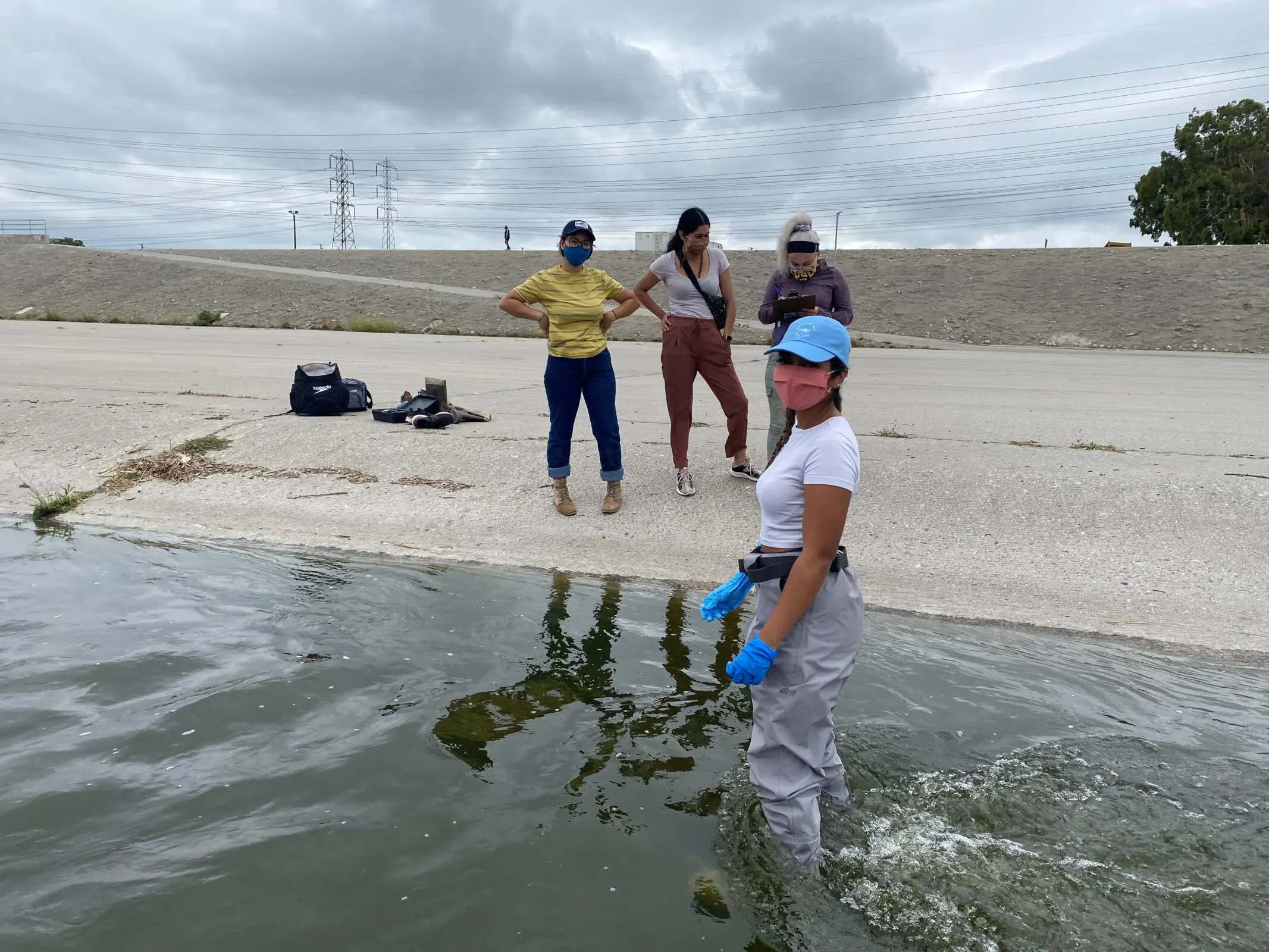
On warmer days when people are spending time outdoors in Los Angeles, Heal the Bay is there too, collecting water samples from rivers, creeks, and streams. Our River Report Card has issued water quality grades for freshwater recreation sites throughout LA County since 2017. The grades are based on levels of bacterial pollution in the water, and help the public make informed decisions about whether it’s safe to swim there. Local college students (our ‘Stream Team’) collect water samples from Malibu Creek State Park and the LA River in the San Fernando Valley and north of Downtown.
This fantastic achievement would not be possible without the hard work of our Lower LA River Stream Team, which is composed of five students from CSULB and Long Beach City College (LBCC).
We asked the students to share their thoughts on the work they did this past summer – read on to hear their voices and what this experience meant to them.
Sarah Valencia
“Throughout my entire experience with the Stream Team I learned so much about the activity surrounding the LA River. So many locals come out to enjoy the River and the space it has to offer. It made me realize how precious the River is to so many hidden communities and local families. Unfortunately, our samples collected from the lower part of the LA River yielded large amounts of E. coli and Enterococcus (which indicates the presence of fecal pollution). The River was not suitable or safe for any kind of in-water activities, so seeing locals try to catch fish or bathe in the water made our work feel needed and long overdue.
I grew up in Bell, California, just about a block from Riverfront Park. I remember hanging out by the River with friends, so I feel connected to the River in that it is part of my community and childhood. Joining the Stream Team helped me look at the LA River through different lenses. I can now see how the River is an integral part of the ecosystem there especially as we move closer to the ocean where the River ends. Animals were always a fun sight. We’d randomly find a snake, turtle, frog, and countless dogs. Each field day was its own new adventure.
I hope to continue my education in environmental science by attending graduate school so that I can take my knowledge and studies into helping watershed conservation and communities. I believe that the work the Stream Team does will prompt legislatures, other conservation groups, and the community to support efforts into watershed conservation and protecting the LA River for all its communities.”
Sarah Kambli
“I was so excited to have the opportunity to work as part of the Stream Team this summer. Originally a Marine Biology major, I switched to Environmental Science & Policy in the fall of 2019 and while I was excited at the new prospect, I wasn’t entirely sure what exactly this field would have in store for me. Cue the Stream Team! When I heard about this opportunity, I was so excited and jumped at the chance to apply, and I was absolutely elated when I got the position. I’ve always felt a connection to Nature, especially water, so to be able to get down into the River and study it was so exciting!
This project meant a lot to me in many ways. Scientifically, I was able to get some hands-on experience by collecting and analyzing samples. I was able to use some of the skills I learned in previous Science classes that, while enjoyable, I really struggled with. So, it really made me feel good to see that I was able to pull from some of that knowledge and put it to practical use, despite my previous difficulties. I gained so much confidence in myself through working both in the field and in the lab, and this experience showed me a potential road that I am excited to continue down after school. I’m still not completely sure what I want to do when I’m finished, but I know I want to work with ocean conservation; having this experience will really help me with that goal in the future.
On a personal level, this project also meant a lot to me. Like a lot of people, COVID has been very difficult for me. My entire family lives over a thousand miles away in the middle of the country, so I felt the forced isolation especially hard. When I joined the Stream Team, though, and got to work with these amazing young women, I felt myself come alive again. The five of us all got along exceptionally well from the start, and we worked seamlessly as a team. Besides amazing teammates, I made four wonderful friends that I foresee being in my life for many years down the road.”
Monet Pedrazzini
“Early morning air carries sounds of sweeping trucks on the 710 that mimic ocean waves, a foreshadowing of the eventual pelagic destiny of the Lower LA River runoff. We, the Stream Team, trudge in our waders and boots while taking note of cyclists and weekly algae bloom, watching dragonflies during the summer, and counting trash bags or shopping carts that decorate the concrete-floored watershed. Each site has its own expression of local flora, fauna, and activity. Families push strollers on the bike trail past the scattered duckweed and litter on the slopes of Riverfront Park’s riparian bank while Audubon Society members stake out at Willow (the furthest downstream site) to view Canadian geese or California terns taking a rest from migration commutes. As a part of Los Angeles history from early colonization to its present physical intertwinement that starts in Canoga Park, the LA River’s broad ecosystem spans time as well as the landscape with understatement. Shooting through downtown LA generally unnoticed and ending in Long Beach, it runs through and by us each day. The myth of nature as other erodes as we collect samples, commuting downstream, amongst the biodiversity and legacy of the LA River. We, as humans, are as much a part of this once wild river that’s laden with society’s trashy fingerprint as it is a part of us, as the watershed cycle flushes away our cityscape toxins like urban kidneys. Our connection is integrated, even interdependent.
Participating in routine, weekly visits cultivated an intimate relationship with each site, allowing us to more acutely observe seasonal shifts and differences in weather or time of day as patterns of the ecosystem. We learned to correlate these fluctuations with our lab analysis, excitedly putting into practice empirical observation along with the scientific method as we discovered the disappointing, but not so surprising, high levels of bacteria present in the River. This was each of our introductions to scientific field and lab work. Our worst fear was to feel intimidated, talked down to, or not smart enough to be there. Being an all-female team with varying abilities and backgrounds felt radically inclusive according to our understanding of the culture of STEM. With Heal the Bay’s encouraging support and example of relearning inclusivity in STEM, we intentionally empowered each other with compassionate accommodation that highlighted each member’s contributing strengths. Learning to practice consistency in standardized data collection and interpretive analysis as well as utilize unfamiliar lab equipment as a team allowed us to be more present, confident, and welcomed in the realm of science, transforming the fearful, projected legacy of competition into collaboration.
These embracing qualities have been so important to each of us as our initiating experience with scientific research. The opportunity to engage with science without feeling judged or insecure not only maintained a wholesome environment but has worked to affirm my own capacity, ability, and confidence to pursue a professional career in the STEM fields. Furthermore, as a Latinx, Long Beach native, relating data specific to my local ecosystems to the overarching narrative of climate change and environmental justice is a priority. Given this, my goal is to utilize my degree to advocate for Indigenous Land reclamation and stewardship in the process of decolonization along with environmental advocacy while continuing to nourish inclusivity in STEM. Working with Heal the Bay on the Lower LA River Stream Team has provided an incredible launching pad of curiosity, partnership, empowerment, and insight into the praxis of scientific pursuits. My experience with the LA River will always be a deep, personal reminder of the poetic resiliency and adaptive character of nature, moving me to remember that nature is not only all around us but more so, we have merely built ourselves around nature.”
Melissa Zelaya
“My time spent learning about the Lower LA River these last few months has been incredibly informative and inspirational. I was lucky to be part of the Stream Team which included a wonderful array of individuals that I learned from each day. Also training under Luke and meeting a community of like-minded individuals has been fuel to my already blazing need to work towards the health and protection of our natural environment.
I discovered that to understand the importance of monitoring the Lower LA River is to understand the importance of all the connecting waterways. The seriousness of a rainfall washing through these connecting channels bringing all the waste of our city to the ocean is one of the reasons it is instrumental in seeking ways we can make better changes. Not only were we able to see firsthand what rainfall does to the River but we were also able to quantify the difference it makes in our data. Monitoring the Lower LA River was challenging at times. Even though it holds the title of a river and is used recreationally, what we noted was a heavily impacted area not held to safe health standards. The qualitative data we recorded revealed that there is movement of birds as well as local activity using this area as recreational pathways. We saw fishes, insects, algae, vegetation, and life in and near the River. Our mission to the River was for the entirety. To advocate for those who cannot speak for themselves and to show the results of our current standing so that we can see positive improvements of the natural aspect of this area.
The direction of my personal and professional life has always been intertwined. As a first generation Latina college student, it was exciting being able to come home and explain to my parents the work I was doing in the River. My passion for my study came from their encouragement and compassion. I want to use my time and voice in ways that can be beneficial to the community and in the protection of the environment. I felt privileged to be able to do work that I loved at this point in my educational career. In addition, knowing that I would be gaining experience working with Heal the Bay who commits their time and resources to public health, climate action and education has been rewarding. I want to continue in this path that has been nothing but fulfilling. In educating others, as others have educated me. To advocate for an equitable future and use my training in ways that are going to help our diverse community flourish. I’ve been able to grow my confidence as well as knowledge of what it means to be a scientist thanks to an encouraging group putting work every day to see a better tomorrow.”
Jasmine Sandoval
“Hi, my name is Jasmine Sandoval and I had an amazing time being a part of the Stream Team this summer/fall! I am currently working on my Bachelor’s in Environmental Science and Policy, minor in Geology, and GIS certificate at Cal State University of Long Beach so this opportunity was right up my alley. During this time, I learned a lot about how to use lab equipment, how to set up, clean up, and perform testing on water samples, and how to take proper samples that would not introduce any bias or obstruct the sample as a whole. I also learned how to properly record data that is being collected! Working with the entire Stream Team has been such a blessing as the colleagues I worked with helped create such a fun, supportive, and respectful work environment. This whole experience has been so meaningful to me as it has helped me see how capable I am as a person, how much I love the field I am getting into, and how much work there is to be done that I can be involved in. I will take everything I learned from this and apply it to my future endeavors and for that I am truly grateful!”
The Stream Team will be back to issuing water quality grades next summer. In the meantime, keep an eye out for our annual River Report Card, which will be released in late spring 2022. Here’s our last report from 2020.
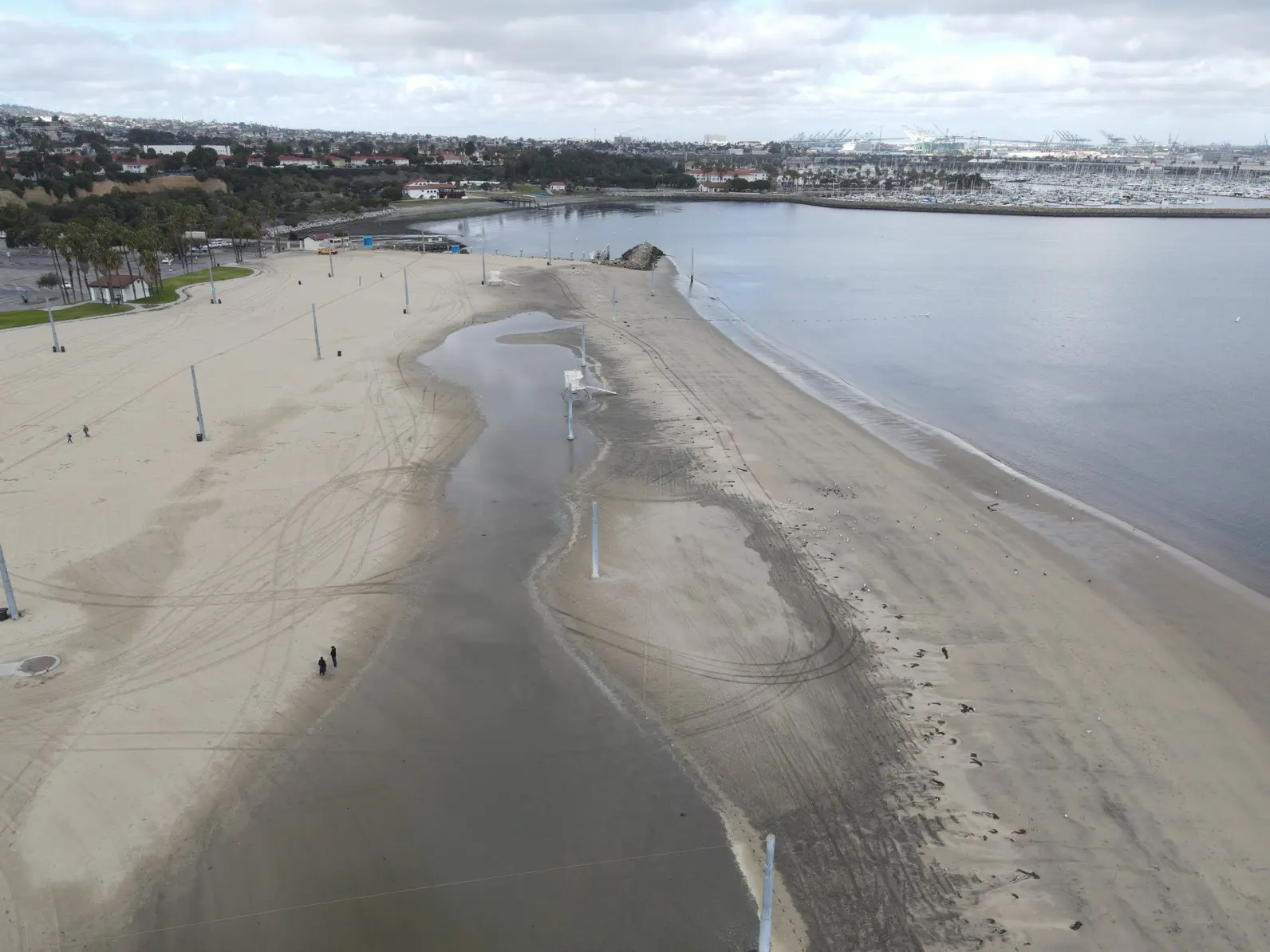
Cabrillo Beach is seen empty after the city of Long Beach closed the beaches due to a report of a spill of between two and four million gallons of untreated sewage into a canal in Carson, in Long Beach, California, US. December 31, 2021. Picture taken with a drone. (REUTERS / DAVID SWANSON – stock.adobe.com)
A massive and dangerous sewage spill happened late last week in Carson. Millions of gallons of raw sewage flowed through residential areas, into storm drains, in the Dominguez Channel, and out to the ocean.
Some Long Beach beaches, OC beaches and LA beaches are closed and will remain so until daily water quality testing for fecal-indicator bacterial pollution shows contaminants have reached an allowable level.
Heal the Bay is calling on officials and agencies to increase water quality monitoring during emergencies and to prevent sewage spills from happening by rapidly updating aging infrastructure.
Follow Heal the Bay’s Beach Report Card for the latest water quality information.
— Los Angeles County Sanitation Districts (@SanDistricts) January 3, 2022
The sewage spill is now estimated to be between 6 and 7 million gallons. A spill of this magnitude is dangerous and unacceptable, and we need to understand what happened. The recent storm undoubtedly contributed, but we need infrastructure that doesn’t fail when it rains. pic.twitter.com/OC1h5Mg2vl
A federal grand jury has filed charges against the Houston-based oil company responsible for the Orange County Oil Spill that dumped 25,000 gallons into the Southern California ocean coastline. Is this a step forward for environmental justice, or just barely enough?
Amplify Energy and two of its subsidiaries were charged on December 15, 2021 by the U.S. Attorney’s Office for negligence that led to the oil spill off the Orange County coast in October 2021. The energy company’s actions that led to the charges include:
Failing to properly respond to eight alarms from the pipeline’s leak detection system, and subsequently allowing oil to flow through a damaged pipeline for over seven hours.
Operating an oil pipeline with an understaffed and fatigued crew that was not properly trained on the leak detection system.
These charges come with a maximum penalty of five years of probation for Amplify Energy and potential fines, which may reach millions of dollars. We do not yet know what probation would look like for Amplify Energy, but in general, the judge presiding over the case can require them to change their operation or conduct if the corporation is placed on probation.
This action, while positive in that it highlights the extreme negligence that occurred, is unfortunately not enough of a deterrent for oil drilling companies to improve their practices or to go so far as to consider ending drilling. The fines are a drop in the bucket for an industry that generates over $100 billion annually, and indictments target the corporations and not the individuals in charge of the corporations, again softening the accountability blow.
The only way to prevent another oil spill from happening is to end oil drilling. It is clear that the system we have for overseeing and penalizing oil extraction companies is not sufficient for protecting our priceless and increasingly endangered ecosystems as well as fenceline communities and public health. Oil extraction companies continue to operate recklessly knowing that they can quickly recover financially.
To enact meaningful change we must phase out oil extraction all together whether it’s happening in the ocean or in our neighborhoods. We are excited to see the legislation that Senator Min will be introducing in January, which promises to end all drilling in California state waters. Ending offshore oil drilling does not mean that we can expand drilling on land – we must transition to renewable energy as soon as possible to address the climate crisis and the environmental injustices that the oil industry has inflicted on fenceline communities.
Take Action!
Urge the California State Government to place a buffer between oil and gas operations and our homes.
Get involved with local organizations working to end oil extraction in our neighborhoods.
Find out who your representatives are and ask what they are doing to protect the public and environment from oil extraction.
Our gift guide below features some goodies, that give back to Heal the Bay’s mission, which can be delivered instantly or picked up locally. All proceeds support our work to keep the coastal waters and watersheds of Greater Los Angeles safe, healthy, and clean.
Need a last-minute gift for the person in your life that is, let’s say, particular? Our Heal the Bay Shop gift cards are delivered digitally, and can be used on tee-shirts, hats, reusable bags, sustainable utensil kits, and more.
For someone who loves to volunteer with Heal the Bay, a special hoodie or hat with our iconic logo on it is a super thoughtful gift that keeps giving.
Happy Holidays and a Happy New Year from all of us at Heal the Bay!
P.S. — We encourage you to make your gift wrapping sustainable (use an old tee-shirt, reusable bag, or newspaper), to shop locally and support small businesses, and to be mindful that the best gift you can give is your presence.
Our winters bring increased rainfall in the Los Angeles region. During this season, when many don’t usually flock to the beach like during warmer months, our Storm Response Team is our ocean’s first responder after major rain events.
Winter Storms in LA
The biggest storm of the 2021-2022 winter season, as of yet, arrived in Southern California on Tuesday, December 14, 2021. “As far as intensity, it’s one of our stronger storms,” Kristan Lund, a meteorologist with the National Weather Service, said in the LA Times. “It’s definitely the strongest we’ve seen so far, and potentially one of the stronger ones we’ll see this season.”
While we desperately need the rain to quench our ecosystems, unfortunately it comes with a wave of trash.
Stormwater is the major source of pollution for rivers, lakes, and ocean in Los Angeles County, California. The first flush from a major rain event brings a flood of water, toxins, debris, and trash from our streets straight onto our beaches through the storm drain system. The untreated runoff eventually dumps pollution onto local shorelines. This waste poses a significant risk for wildlife and marine life who can ingest trash or get entangled, and also for the health of our communities who can get sick from bacteria-polluted water.
Our local waters need your help combating marine debris after every big storm in LA during the winter.
Take Part in a Self-Guided Cleanup
Gather friends and family or go solo to take part in a storm response cleanup by spending 30 minutes to an hour cleaning up around your neighborhood or local outdoor space. Remember, trash removed from a street or park means that less waste will make its way through the storm drain system, onto our beaches, and then out to sea.
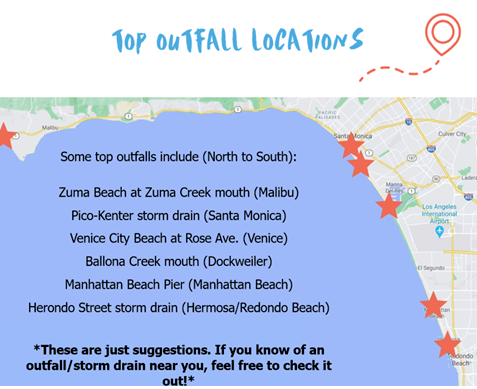
In addition to doing a cleanup near you, take a look at the map above and target these beach sites today or this week. Highlighted areas are near storm drain outfalls and usually have the most trash after it rains—so this is where you can make the biggest impact.
This won’t be LA’s last storm. Heal the Bay needs more volunteers to join our Storm Response Team for the rainy season to help remove trash, track data, and document photos. If you’re interested in joining our dedicated Storm Response Team to be the ocean’s first responder after #LARain, sign up to receive alerts about volunteer opportunities!
Keep an eye on your email inbox. About 24-hours after each rainfall has ended the Storm Response Team leader will email an alert with the location of the next cleanup. When the storm rolls in, collect your gear and get ready to answer the call! If you need a refresher on how to prepare, what to bring, and how to safely take part, review the most critical storm response information.
Whether you joined the Storm Response Team, are in the process of learning more about the issue, or are leading a cleanup of your own soon, THANK YOU!
Share your efforts on social media and encourage friends, family, and your network to get involved by tagging your finds with @healthebay and #healthebay.
If you have questions about our Storm Response Team, please reach out to Emely Garcia.
On December 3, 2021 our local water agency leaders gathered together to discuss the major water challenges impacting Greater Los Angeles and how to solve them at Heal the Bay’s first-ever ONE Water Day event.
ONE Water Day at Will Rogers State Beach
The sun was shining, the DJ was playing the hits, and our Heal the Bay team was setting up for a cleanup (while dancing in the sand) as we welcomed over 200 attendees to a first-of-its-kind networking opportunity at Will Rogers State Beach. ONE Water Day brought together many prominent heads of local government agencies and engineering companies to meet and discuss the future of water in Los Angeles. There were more than 26 different organizations represented at this networking event, sparking countless partnerships, and raising over $120,000 for Heal the Bay.
The Cleanup
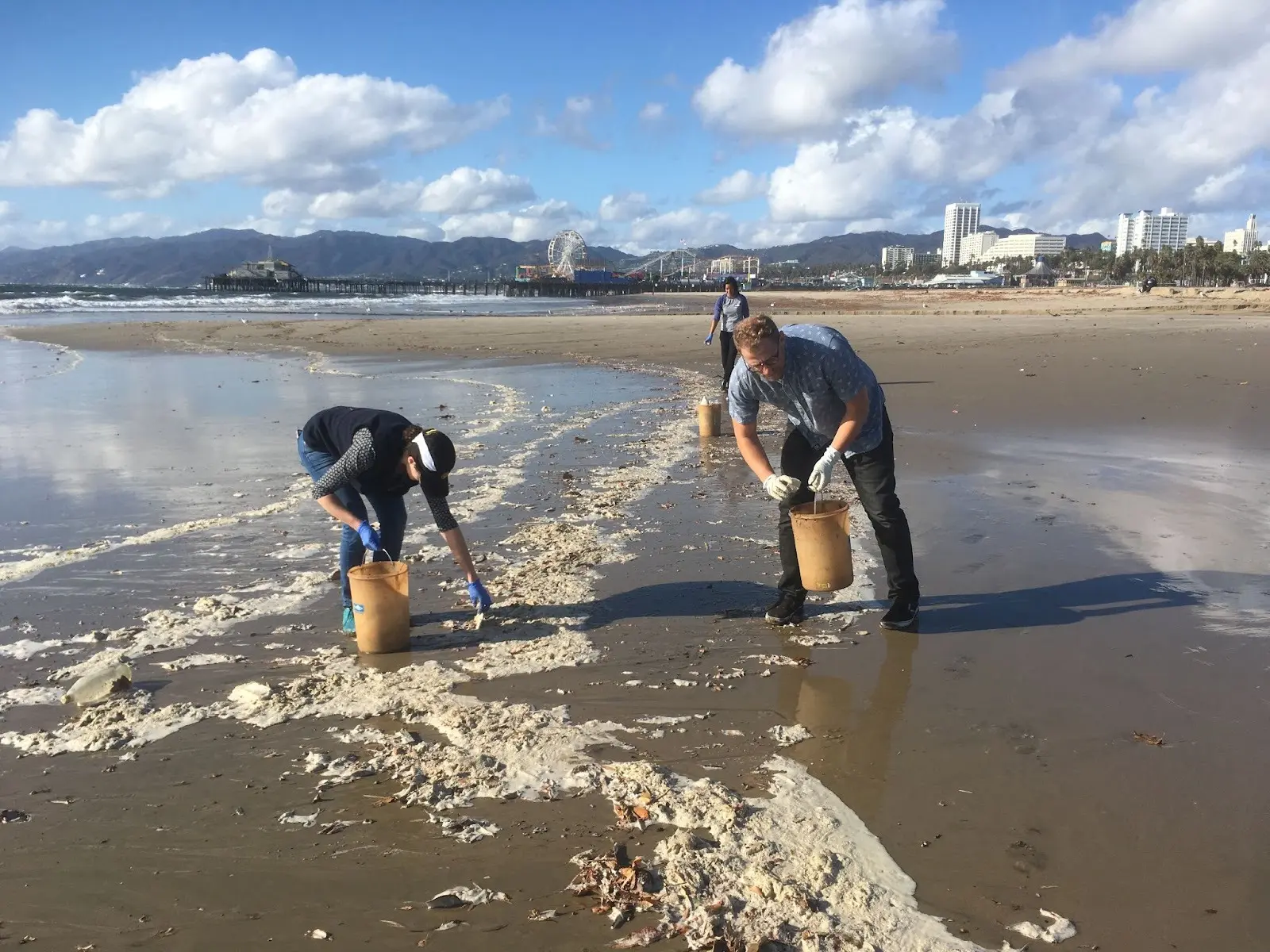
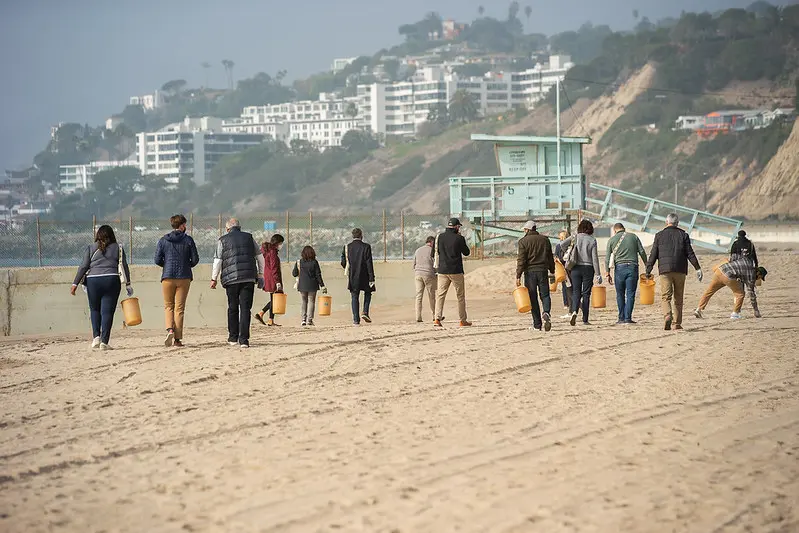
ONE Water Day attendees participated in a scavenger hunt to clean the beach and experience what trash and debris ends up at our beaches from all over our local watersheds.
After guests had time to mix and mingle, the day started off with a land acknowledgement to recognize the Tongva and Chumash tribal ancestral lands where the event was being held. Then attendees were invited to participate in a Heal the Bay scavenger hunt for trash. This hands-on and team-oriented beach cleanup was an opportunity for individuals from different organizations to collaborate and observe first-hand the realities of pollution.
In just 30 minutes, 19 teams collected 200 buckets of trash along two miles of the Pacific Palisades coastline. Amongst an eclectic array of waste, more than 600 cigarette butts were collected, with Team 12 taking home first place prizes for the most items captured.
After the cleanup, a panini lunch was served by the fantastic team of Critic’s Choice Catering, giving attendees a chance to recharge and enjoy the many event exhibitors and perfect beach weather on a winter day.
The Panel
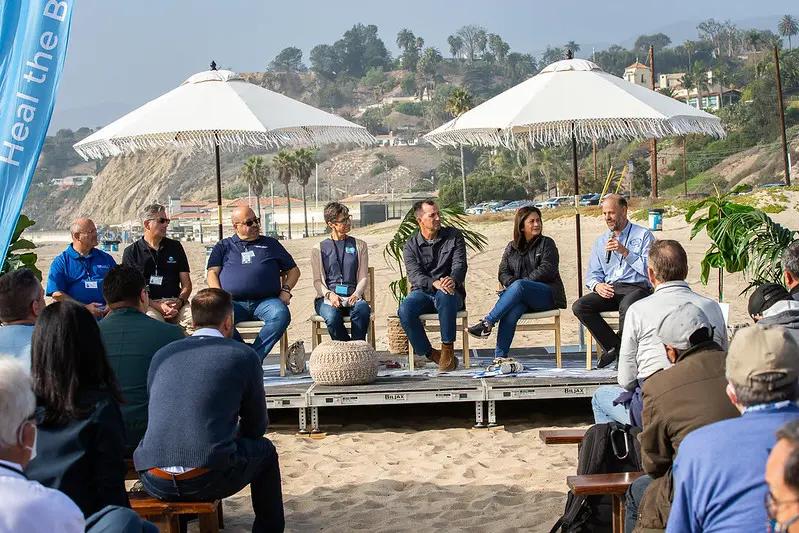
ONE Water Day Panel, guest speakers from left to right; Martin Adams, Robert Ferrante, Adel Hagekhalil, Dr. Shelley Luce (host), Mark Pestrella, Barbara Romero, Dave Pedersen.
Next on the agenda was a panel conversation hosted by Dr. Shelley Luce, Heal the Bay CEO and President. The panel guest speakers included six influential leaders speaking on the topic of Los Angeles water. All were eager to discuss systemic water quality issues, the impacts of climate change, and the cooperative solutions they envision for Los Angeles.
Speakers included: Adel Hagekhalil, General Manager, Metropolitan Water District of Southern California;Barbara Romero, Director and General Manager, LA Sanitation and Environment; Robert Ferrante, Chief Engineer and General Manager, Los Angeles County Sanitation Districts; Dave Pedersen, General Manager, Las Virgenes Municipal Water District; Martin Adams, General Manager and Chief Engineer, LA Department of Water and Power; Mark Pestrella, Director of LA County Public Works.
Energy was high and the feeling was hopeful as the ONE Water Day panel shared their visions for the future. Guest speakers from left to right; Adel Hagekhalil, Dr. Shelley Luce (host), Mark Pestrella, Barbara Romero.
Takeaways from the ONE Water Panel from Dr. Shelly Luce
ONE Water Day was a unique event. The panel was a rare honor and opportunity to question each of the guest speakers on their plans for building a sustainable water supply for Los Angeles in this time of extreme drought and climate change.
We learned so much from our panel speakers at the event. The Los Angeles Bureau of Sanitation and the Department of Water and Power are collaborating to recycle treated wastewater for drinking water. The LA County Sanitation Districts and the Las Virgenes Metropolitan Water District are doing the same in their respective areas, in collaboration with the Metropolitan Water District of Southern California. And, the Los Angeles County Department of Public Works is collaborating with cities throughout the region to capture and treat urban runoff, aka stormwater, so it can be infiltrated into groundwater or reused for irrigation.
This massive shift to conserving and recycling our water has taken place incrementally over decades. It requires a level of collaboration among agencies that has never occurred before.
Adel Hagekhalil, the General Manager of the Metropolitan Water District, stated it perfectly:
“We take water for granted, and we forget that water is essential to firefighting, to drinking, to our health and our safety; hospitals don’t run without water. Fire cannot be fought without water. Businesses cannot run without water Schools cannot be schools without water. Homelessness cannot be addressed without water. So, water is life,” Hagekhalil said. “Sometimes we’re willing to pay $200 for our cell phone, but are we willing to pay that money for the future of our water?”
To demonstrate this commitment, Hagekhalil asked everyone at the event to stand and pledge to work every day toward the ONE Water goals. All did so, willingly and enthusiastically. It was a great moment for all of us who care deeply about our sustainable water future to affirm our commitment.
Thank You
A huge thank you to the amazing ONE Water Day Sponsors, our proud partners of Heal the Bay, and organizations that are leading the way in their commitment to environmental sustainability:
Thank you to all the guests in attendance. Your initiative and dedication are vital toward building a bright and equitable future for water in Los Angeles.
Los Angeles has major water challenges to solve, and Heal the Bay sees events like this as an opportunity to upload the value of collaboration and accountability, to continue conversations that lead to solutions, and to create opportunities for partnerships like never before. This Heal the Bay event is the first of its kind for our organization, but is certainly not the last.
Want to support our ongoing efforts for for One Water? Donate Here
It’s hard to believe that it has been just over a year since the LA Times broke the shocking story of large-scale and widespread dumping of DDT (dichloro-diphenyl-trichloroethane) waste in the deep waters of the San Pedro Basin, off the coast of Southern California, prior to about 1960. The dumping of DDT took place in unceded Tongva, Acjachemen, and Kizh ancestral waters.
The revelation of this extensive, deep-water dumping by UCSB scientist Dr. Valentine and story by LA Times environmental reporter Rosanna Xia horrified even those of us who have worked for decades on the well-known DDT Superfund site in shallower waters off the coast of Los Angeles, in the Palos Verdes shelf. However, this deep-water dumpsite was a lesser-known piece of the toxic legacy of DDT production by the Montrose Chemical Company in Torrance.
DDT, a legacy pesticide, is known to have devastating and long-lasting impacts on wildlife, ecosystems, and human health.
DDT was produced by Montrose from 1943-1983 at their Torrance factory, with much of their DDT-contaminated waste dumped into the sewer system and eventually released in the waters of the Palos Verdes shelf, off the coast of Los Angeles. This created the largest underwater Superfund site in the United States. Stormwater runoff from the factory contaminated the Dominguez Channel and Port of LA too, both of which remain poisoned to this day. And, over the last year we learned that DDT-waste was also taken in barges far offshore and dumped in the deep ocean.
DDT is an especially devastating chemical because it never goes away. It gets into ocean animals and concentrates as it moves up the food chain. It harms untold numbers of fish, marine mammals, and birds, as well as people who rely on fishing to feed themselves and their families.
There are still many questions that need to be answered about the nature and extent of DDT contamination in the deep ocean. We must discover the hard truth about how it continues to poison our ecosystems, including people and marine life.
Since the LA Times article came out, there have been some steps in the right direction but much more needs to be done. Options for removal or mitigation must be explored. The health of people who eat local seafood, especially subsistence fishers, must be protected. Companies that caused the pollution must be held accountable, and government agencies that oversee research and cleanup must be proactive in their work. Above all, the public must be engaged and informed on progress clearly and frequently.
Led by Senators Feinstein and Padilla, the federal government has a proposed earmark of $5.6 million for NOAA, UC Santa Barbara, and Scripps Institution of Oceanography to study the San Pedro Basin deep-water DDT dump site. This is a great start but is not finalized yet and is only about half the amount needed to conduct a comprehensive assessment.
Further, research, mitigation, and cleanup efforts must be approached collaboratively at all levels of government to begin to understand and address this natural disaster as the implications for environmental and public health are far-reaching.
Sign this petition urging Governor Newsom and the California Senate and Assembly to commit, at a minimum, $5.6 M in the 2022-2023 Fiscal Year State budget to match the proposed federal funding allocated to DDT. The State of California permitted this dumping and needs to dedicate resources to tackling this disaster in collaboration with federal agencies.