
Getting a water-smart recreation area built in marginalized South L.A. was no walk in the park. But Heal the Bay persevered.
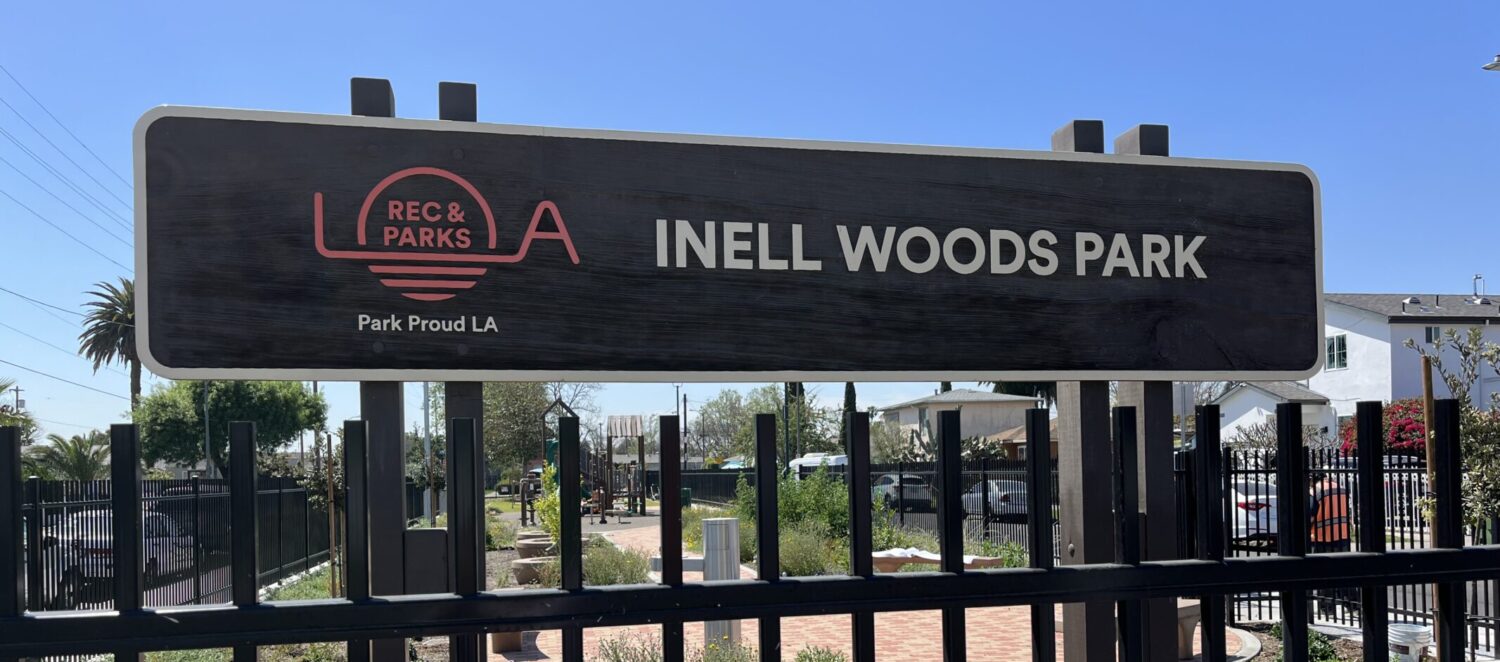
Seventeen years ago, residents of South L.A. began working toward a vision: to transform a long-overlooked lot into a vibrant community space. Heal the Bay’s Meredith McCarthy joined that effort as a committed partner, supporting the neighborhood’s leadership and helping to navigate the challenges of funding, permitting, and environmental planning. Together, they turned a neglected space into a thriving public park rooted in community vision and care.This June, Inell Woods Park officially opens—named in honor of a beloved local activist. The quarter-acre, multi-benefit park is designed to improve the quality of life for historically marginalized residents while enhancing the health of the surrounding watershed. Meredith’s persistence, creativity, and patience made this park a reality, despite major hurdles with funding, permitting, construction, and a global pandemic.
Read the full breakdown from Meredith on the story behind her, Heal the Bay, and the community’s shared labor of love, and how this space can serve as a model of hope and smart environmental planning across greater L.A.
So, how did Heal the Bay get involved in building a park in inland L.A.?
In 2008, Heal the Bay was working deep inside Compton Creek watershed, the last major tributary to enter the Los Angeles River before it enters the Pacific Ocean. We understood that the health of our rivers and coastal ocean cannot be separated from the health of our inland neighborhoods. We were committed to showing the interconnection of communities, green space, and public health, particularly in under-resourced neighborhoods. Our goal was to invest in areas where parks were most needed – in historically marginalized areas lacking green space, shade, and clean waterways. Through our community work, we identified a site in South L.A. that could potentially serve as a pilot for our Healthy Neighborhoods, Healthy Environments Initiative. The idea was fairly simple: build a small multi-benefit park that could achieve two goals simultaneously: make life better for residents while improving water quality in the watershed. Getting it done would prove to be much more complex. But we did it. 
Tell us about the site before it was a park?
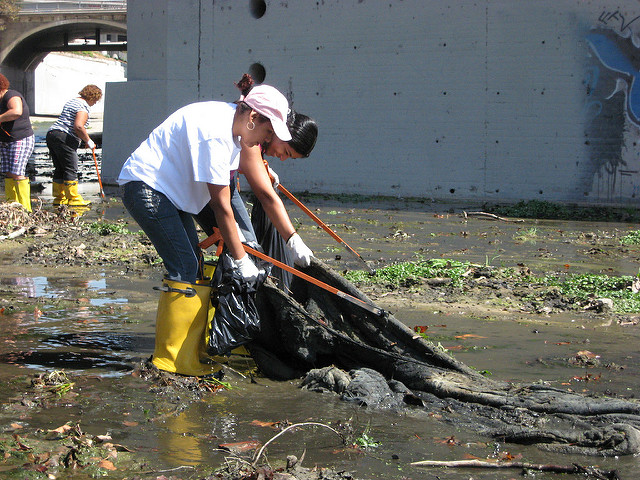
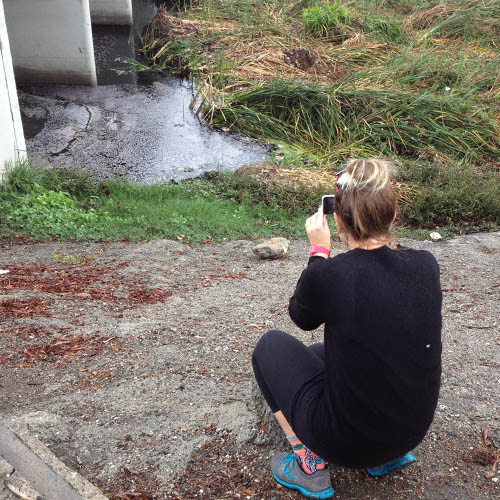
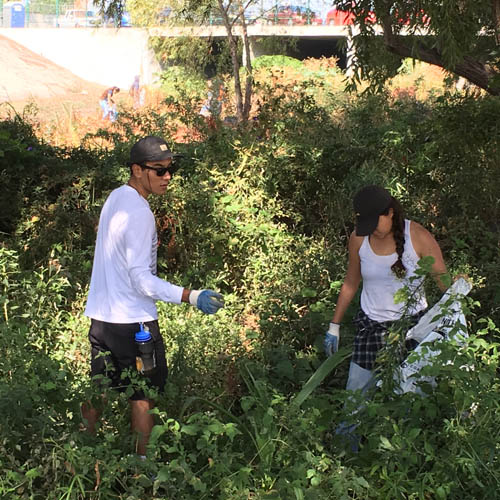
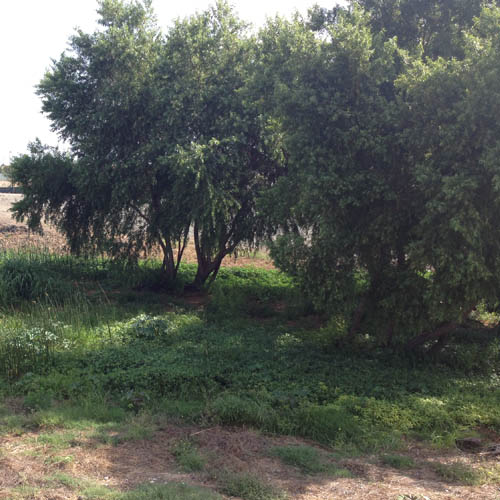
The park sits on what once was a vacant half-acre parcel of land at 87th Street and McKinley Place, owned by CalTrans. The site was riddled with broken concrete and asphalt, with only a few spindly trees. On any given day you could find abandoned desks, sofas, appliances and worn-out clothes littering the site. It was basically a trash dump. Not only a safety hazard, the eyesore became a magnet for crime and a symbol of civic neglect.
And what challenges does the surrounding community face?
The lot is surrounded by residential homes and apartments, including a large public housing complex to the southwest called Avalon Gardens. Almost 40% of residents live at or below the poverty level. In the State’s CalEnviroScreen, the neighborhood scored in the highest-impacted ranking of 91-100%. Recognizing the environmental and social challenges the community faces, we partnered with local residents to reimagine and revitalize the long-neglected lot into a space that serves their needs.
What are some of the features of this park? What makes it special for this community and the region as a whole?
The park serves as a green space, fitness area, a meeting spot, an environmental education site, and a water quality improvement project, bringing lasting benefits to a resilient and historically underserved neighborhood in Greater L.A. With exercise stations, a tot lot, shaded seating, biodiverse gardens, and a system that captures and reuses stormwater, the park is a prime example of smart water design—using green infrastructure to support both community well-being and cleaner waterways. It’s a valuable space for play, learning, and connection for kids, teens, and seniors alike. The project creates multiple benefits and distinct open spaces designed for active and passive recreation. Equally important, it serves as a beacon of hope for the hard-working families that live in a neighborhood that hasn’t received a lot of infrastructure love or funding.


Why is this project important to Heal the Bay from an overall water quality perspective?
It’s pretty simple: Creating more green space in individual neighborhoods improves water quality throughout all of Los Angeles County’s interconnected watersheds. In addition to providing recreation areas and wildlife habitat, green spaces can function as essential stormwater solutions by capturing and naturally cleansing polluted runoff. These multi-benefit parks improve local water quality, increase water reuse and supply, reduce carbon, and mitigate the heat island effect.

For all the “stormwater wonks” out there, can you explain how the park has been engineered?
The park is designed to capture water when it rains. This prevents polluted runoff from reaching Compton Creek and the Los Angeles River. The stormwater treatment component is the Permavoid system and has been used in several other City of L.A. parks. Permavoid is a multi-functional stormwater management system engineered to create functional and appealing stormwater capture. This system treats stormwater as a resource, rather than a waste product. The captured water will be filtered and used to irrigate the native plants and trees at the park.
How much water can the park capture and reuse?

How did the project come together in the beginning?
In 2012 Heal the Bay won an initial $1.3 million grant to design and build the park. But the logistics of remediating an abandoned lot became far more complicated than we had ever imagined. Leasing the land from CalTrans and getting the necessary permits became almost insurmountable, but we stuck to it. Construction costs began to mount, and then the pandemic stalled the park for two years. Councilmember Curren Price Jr., who represents the neighborhood, kept the park on track though. His office helped us secure additional funds from a federal Community Block Grant. Through the efforts of L.A. County Supervisor Holly Mitchell, Accelerate Resilience LA, the Rivers and Mountains Conservancy and the Bonneville Environmental Fund, we finally secured the $3.1 million to get the park built. After years of delays, we started construction on Feb. 12, 2024.
Meredith, what was the hardest part about getting this park built?
The city bureaucracy can be mind-numbing. There isn’t a rule book or an air traffic controller to help navigate the permitting process. If it weren’t for our amazing project manager, Erin Jones, at Griffin Structures, and engineer Barbara Hall, we wouldn’t be here today.
What’s next? Can these types of projects be replicated at scale?
Inell Woods Park is a good example of how the County’s Safe Clean Water Program aims to increase local water supply, improve water quality, and protect public health by focusing efforts on multi-benefit projects in marginalized communities. Multi-benefit projects are the most efficient and effective use of our taxpayer dollars because they are cost-conscious solutions that serve both community and environmental needs. Heal the Bay has spent decades working on smart infrastructure policies and funding measures like Measure A and W to create community-centered improvements. With commitment, we can build more parks like this throughout our region. It’s critical as climate impacts intensify and imported water supplies become more unreliable and expensive. 
Why is this project important to you personally?
Inell Woods is proof that multi-benefit projects work. We can use infrastructure dollars to improve the quality of life and clean up stormwater. We aren’t going to support the environment without involving the people, too.
Who motivated you? Who did you meet along the way?
Over the 10 years it took this project to come together, we watched the neighborhood kids grow up. So many amazing families came out to support and share their hopes and dreams about this space. Jimmie Gray, Inell Woods’ daughter, was a tremendous force of love and action. She became our greatest cheerleader.

There were a couple of people that really stuck with us that made the park possible. Darryl Ford at Parks & Rec, who I really believe is the smartest man in the city, never let us down. Sherilyn Correa and Xavier Clark from CD9 sat through hours of meetings and were always willing to go the extra mile and fight to make this happen. Michael Scaduto from LA Sanitation came in later in the process but was keen on streamlining and finding solutions to our permitting and construction frustrations. The vision of this park, however, really belongs to Kendra Okonkwa at the Wisdom Academy for Young Scientists. She made us believe that change could happen in her neighborhood. Finally, I have to honor my partner through most of this, ex HTB-staffer Delaney Alamillo. Her deep love of community and commitment to “listening first” is tattooed on my heart.
Make Your Impact
Your donation to Heal the Bay helps keep our watersheds safe, healthy, and clean for all.