
Top

Heal the Bay Blog

Category: News

Ben Kay, a marine biology teacher at Santa Monica High School and longtime partner of Heal the Bay in the fight against plastic pollution, took a midnight run to Santa Monica’s Pico Kenter stormdrain this morning. Here’s his alarming report about the effect the season’s “Second Flush” had on our local shoreline:

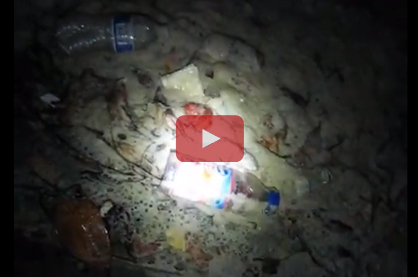
Sorry, had to share another shocking video from my midnight run today: copious plastic pollution and mystery foam strike again. With much more rain, the second flush of the stormdrains this early morning turned out to be much worse than the first flush back on Oct. 9., spraying debris all along the beach. The sad thing is that this is totally preventable, yet my students and I have documented the same phenomenon six years in a row.

Unmistakable negative human impacts to oceanic and land habitats stem from our increasing reliance on disposable plastic goods. Each flush of Santa Monica’s Pico Kenter Storm Drain exacerbates the problem. Even in our affluent, progressive, and green-minded community of Santa Monica, a thick stream of plastic pollutants flows unfiltered into the sea, and nothing meaningful has been done to systematically combat this crisis in my eight years of examining the issue with students.

We clearly have both a litter problem and a plastic packaging problem, not just the former. Real solutions include:

  • Mandatory environmental education in all schools at all grade levels
  • Banning and refusing to use single-use plastic bags, utensils, straws, water/juice/soda bottles, and polystyrene food packaging
  • Choosing reusable products
  • Listening to sound science on environmental issues, not what the plastic industry tells us

If this report bothers you, consider joining our emergency Storm Response Team, a hardy group of volunteers that removes debris from our most impacted beaches following heavy rainfall.

Second Flush Video


For six years, Heal the Bay has organized “A Day Without a Bag” to kick off the holiday season, encouraging people to skip single-use plastic. But this year we proudly celebrated “A Day With a Bag” – a reusable one – to commemorate the City of Los Angeles’ plastic bag ban, which goes into effect Jan. 1. Heal the Bay helped organize the distribution of 8,000 free reusable bags to residents in all corners of L.A. and every council district.

The mobilization wouldn’t have been possible without the assistance of the following groups: The Children’s Nature Institute, Tree People, One Generation, Temple Judea, PAVA, Sun Valley High School, Pacoima Beautiful, St. Raphaels, Augustus Hawkins Nature Park, Challengers Boys and Girls Club, EsoWon Books, Palisades Cares, Boys & Girls Clubs of Venice, CSUN service learning students, Echo Park TAP, LA Beautification Team, Urban Semillas, Punk Rock Marthas, Cathy Beauregard and a group of UCLA students. More information about all of these terrific partners can be found through our distribution site map.

Inland cleanups help beautify a community and educate about the connection between urban areas to the east and the Santa Monica Bay. We also salute JingTian Ye, president and founder of the Bottles for the Bay Foundation in Rowland Heights, who understands that connection and generously purchased three cases of heavy-duty bags for use at our inland cleanups.


Heal the Bay CEO Ruskin Hartley pays a visit to one of Heal the Bay’s greatest triumphs — Ahmanson Ranch, the largest parkland acquisition in the history of the Los Angeles-Ventura County region.

The early 2000s were heady days for land conservation. Flush with funds from voter-approved bond funds, the state competed for and secured protection for some remarkable pieces of property. At the time I was working in Northern California safeguarding redwoods. Save the Redwoods League had just protected the 25,000-acre Mill Creek property at a cost of $60 million. It seemed like a lot of money at the time, but I remember hearing of two transactions in Southern California that together cost the better part of $300 million. Wow, I thought. How could anything be worth that much?

Well, this past Saturday I finally stepped foot on one of these tracts of land: the former Ahmanson Ranch (now the “Upper Las Virgenes Canyon Open Space Preserve,” a natty name I know). In 1998, Washington Mutual acquired the Ahmanson Ranch Co. and set about developing a self-contained city (complete with two PGA golf courses) located in the rapidly urbanizing San Fernando Valley. The proposal set off a firestorm of local opposition. Locals hated the thought of all the additional traffic, and the loss of local open space that was valued by both them and the critters that called the 3,000-acre ranch home.

A textbook campaign ensued that ultimately led to the ranches protection as parkland for all to enjoy. But before it could succeed, it had to go beyond a local issue to an issue of regional and state-wide importance. And that’s where Heal the Bay came in.

Ahmanson marked the first time that Heal the Bay had played a leading role in opposing a private development, one located many miles from the coast to boot. The nexus was water quality in Santa Monica Bay and the impact that unchecked development would have on the headwaters of Malibu Creek. Heal the Bay scientists mapped red legged frog habitat, assessed downstream water quality, and mobilized regional and statewide support for what until that time had been a local issue. Ultimately the stars came into alignment and the recent passage of voter-approved park and water bonds provided the funding to halt the development and create public park land.

California Governor Gray Davis, state legislator Fran Pavley, and director-activist Rob Reiner announced the deal back in 2003. This weekend they reunited to celebrate the 10th anniversary of the acquisition.

Yes, $150 million was a lot at the time. But it truly was an investment in the future. Not only does Ahmanson Ranch protect water quality each and every day, it also provides a much needed green sanctuary in the heart of suburbia for the residents of the Valley and beyond.

It’s safe to say, that without the dogged and persistent engagement of Heal the Bay to transform a local issue to a statewide campaign, the land today would be just another subdivision and place to play golf (two rounds). And as we know, subdivisions and golf courses don’t help water quality. Quite the reverse. Society as a whole ends up paying the costs to clean up the runoff they create.

I no longer look at the $150 million as an expenditure. It really was an investment in protecting open space that has a direct return in terms of enhanced property values, forgone costs of water pollution clean-up, and the intangible values of providing people open space to recreate in. Thank you Heal the Bay!

P.S. I just read about the latest Lear Jet. For its $600 million-plus price tag you could buy four ranches (at 2003 prices). That said, you and three friends could get anywhere in the world quickly and comfortably. I will let you decide which is the better long-term investment.

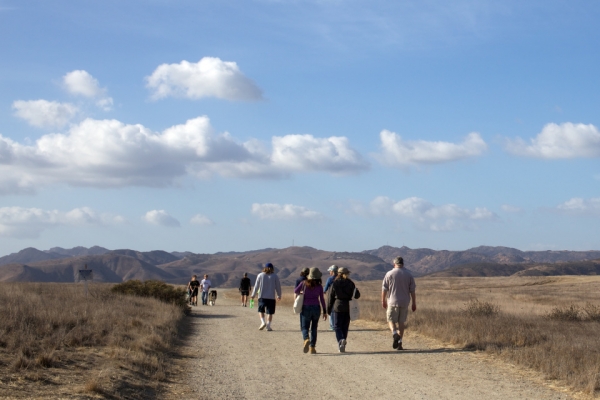
Visitors enjoying the open space afforded by the Ahmanson Ranch purchase in 2003.


Heal the Bay CEO Ruskin Hartley recently sat down with Saul Gonzalez from KCRW to share his vision for our organization and the unfinished business of cleaning up Santa Monica Bay.

Ruskin details how Heal the Bay is well-positioned to play a significant role in developing innovative solutions to our 21st century challenges: Water pollution and water conservation. If you haven’t had the chance to meet Ruskin yet, the interview is a great way to get to know him a bit better.

Listen to the full interview.


Heal the Bay chief executive Ruskin Hartley says it doesn’t do much good to fight over the specifics of particular desalination projects.

Wednesday was a big day for us at Heal the Bay. After years of work, days spent reviewing environmental documents, and five hours at a contentious hearing, the proponents of a massive desalination plant in Huntington Beach withdrew their project. The writing was on the wall — their project, as presented, was not going to be approved.  Of course, the project has not gone away. Not yet anyway.

We’re not opposed to desalination. We believe other, more cost-effective and energy efficient measures, like water reuse and conservation, should be maximized first. The body of research on best practices for desal is still growing, and we recognize that it could be a tool to meet future water needs, when used carefully in the right setting. The Huntington Beach project was simply at the wrong place, at the wrong time, and at a massive scale (the largest proposed plant in the Western Hemisphere). You can read more about the hearing and the issues in a recent blog post by my Heal the Bay colleague Dana Murray.

This week’s desal debate did have me drawing similarities to my work for years in the redwoods. My experience has been that any time you start to focus down on one patch of dirt (or forest, or water), the temperature rapidly rises and agreement can be elusive. If you can step back and look at the issue more holistically and from a broader geographic perspective, you can back into an agreement that works for all. 

It reminds me of watching my two older boys play in the woods. While there may be sticks all around, when it comes down to it, they both want the same one. It’s tough to share one stick. But step back and look at the forest and there’s a way.

To take a broader example: an aggressive timber harvest plan adjacent to a beloved park is always going to be contentious. Especially when it involves ancient redwoods. But pull back a bit and look at how and where to meet our need for timber and park protection, and you may have the basis for an agreement. Similarly, a  massive desalination plant near ecologically important places, like marine protected areas and wetlands, is always going to be given a tough look (we and are colleagues will make sure of that).

It’s time to step back and look more holistically and regionally at our water needs.  Desalination — as part of a portfolio of local water supply, smart conservation, and re-use — may well be appropriate if smart technologies are employed and siting doesn’t significantly degrade marine life or habitat. But to my knowledge, the question of places to best site such desal plants has never been asked (let alone answered).

Meanwhile, we are left fighting over particular projects. I for one feel our time would be better spent figuring out a long-term solution that protects our bay and coastal waters, while providing reliable water at reasonable cost.


Our first-ever S.T.E.A.M. Machines event Nov. 9 on the Santa Monica Pier was a smashing success. Presented by Heal the Bay and Time Warner Cable’s Connect a Million Minds initiative, the day included LA’s inaugural Rube Goldberg Contest and a host of innovative activities for all ages.

A huge thank you goes to sponsor Time Warner Cable and to the staff of the Santa Monica Pier Corporation for their collaboration. Contestants in the Rube Goldberg Machines competition brought their enthusiasm, passion and engineering acumen to the curious contraptions they created to complete the task of zipping a zipper. Kudos to the teams from Santiago Canyon College, Rancho Dominguez Preparatory School, Malibu High School, King Drew Magnet High School and Washington Preparatory High School.

Judges Dina Keirouz, Preston Williams, Hector Alvarez and Dan Busby get perfect scores for not only judging the contest, but for going above and beyond by providing invaluable feedback to all.

Pacific Park, Marbles the Brain Store, Trash for Teaching, Two-bit Circus, The Exploratory and the reDiscover Center brought games and materials that delivered hands-on fun for all. Ben Kay and his Santa Monica High School students of Team Marine provided a lesson in converting a car from gas to electric. Peddlers’ Creamery brought the sweet, cold treat everyone enjoyed on an unseasonably warm November Saturday atop the Pier. DJ Agent Blak created the perfect soundtrack for the day.

Beneath the Pier, visitors to our Santa Monica Pier Aquarium spent hours driving an underwater R.O.V. (remotely operated vehicle) thanks to Aquarium advisory board member Kurt Holland. Kurt financed, built and staffed the Aquarium’s ROV station vehicle during S.T.E.A.M. Machines. And finally, Dale Voelker of Digital Lava Graphic Designs created a Rube Goldberg-esque graphic of Heal the Bay’s successful efforts to ban plastic bags in the city of Los Angeles. The poster remains as a teaching tool in the Aquarium’s Green Room.

We can’t wait for next year’s S.T.E.A.M. machines event!

Awesome paintings created at STEAM


Heal the Bay staff scientist Dana Murray reports on the shelving of a poorly conceived desalination plant in Huntington Beach.

What is the future for ocean desalination in California?

That’s what hundreds of passionate people came out to debate at today’s California Coastal Commission meeting about Poseidon Water’s proposed desalination plant in Huntington Beach.

There’s no debate that the Poseidon project is precedent-setting and will have long-term impacts on the future health of California’s ocean. A coalition of groups concerned about the devastating effects that open-ocean intakes can have on marine ecosystems, including NRDC, Surfrider, California Coastal Protection Network, Orange County Coastkeeper and Heal the Bay, has been monitoring the situation closely. If the proposed plan went forward, it would inform decision-making on several other plants now on the drawing boards up and down the coast.

I may have griped a bit about rising before dawn and driving more than five hours round-trip in traffic jams to the meeting in Huntington Beach, but today turned out to be a wonderful day for ocean advocates fighting for sustainable seas. It also reinforced my trust in Coastal Commission staff doing a thorough job and Commissioners’ exercising sound judgment.

Our communications department is always admonishing us to not “bury the lead.” So here it is: after hours of debate and staff presentations that made it clear that the current proposal wouldn’t pass muster, Poseidon pulled it off the table.

Huntington Beach residents clad in white holding “NO PO$EIDON” signs, union workers in construction helmets, staff from environmental NGOs that have been working on desalination issues for years and just about every past mayor of Huntington Beach all showed up today.

Four hours into the meeting, Commission chair Mary Shallenberger reported that staff had received so many public comment request cards that it would take 12 hours to hear everyone if we were each given two minutes to speak! An already long day had just gotten longer…

Coastal Commission staff presented well-researched facts about Poseidon’s project, recommending significant changes should the Commission decide to approve it. Referring to California’s Marine Life Protection Act and Once-Through Cooling Policy, Commission staff stated that “approving the project today ‘as is’ would set California’s marine and coastal policies backwards.”

Heal the Bay supported Commission staff’s recommendations and stressed the precedent-setting nature of today’s decision, asking Commissioners:  “What do we want future desalination in California to look like? This outdated and environmentally destructive design?”

Heal the Bay and other NGOs urged  the Coastal Commission to set the desalination bar higher. Approving the proposed project today would set the bar far too low for environmental sustainability in California.

One of the critical areas of debate was whether Poseidon’s plan of using open ocean intakes versus environmentally preferred sub-surface intakes made sense. Open ocean intakes can pull in more than 100 million gallons of water each day and tens of millions of fish larvae, eggs and marine invertebrate.

Many public commenters, Commission staff, and Commissioners pointed to the superior technology of sub-surface intakes and stressed that the better technology is available. Poseidon refused to incorporate it, with numerous excuses about infeasibility, costs, and time.

Some elected officials and union workers testified in support of the proposal, but didn’t discuss the specific merits of the project or rebut challenges. Rather, they talked in a general way about how Southern California needs drinking water and desalination is a key way to ensure future supply.

However, not everyone is drinking what Poseidon has to offer. Commissioner Dayna Bochco summed it up: “Logic is against this project.”

Following five hours of public comment, deliberation began with Bochco, who is also a Heal the Bay board member, directly stating: “We must do [desalination] right and I do not believe this project is right.”

Bochco underscored the negative environmental impacts of the proposed plan, noting “this is an area surrounded by marine protected areas … and this intake and outflow will affect the MPA network connectivity … with potential for very severe marine life harm.”

After more than two hours of deliberation among Commissioners, and a couple of different motions, Poseidon ultimately withdrew its application for the project permit. Company officials indicated they plan to re-apply with a more complete application, and more feasibility studies.

Shallenberger advised Poseidon that the “best way to get a ‘yes’ is to work with staff … going forward, get all the studies done and bring it to us complete.”

Today, we helped stall a badly conceived proposal, but the general discussion about the feasibility of desal plants up and down the coast continues … and Heal the Bay will be part of it.

While we will keep a close eye on Poseidon’s reworked proposal in the near-term, the state needs to have long-term desalination policy that ensures we don’t suck the life out of the ocean to meet our never-ending thirst for water. Our science and policy team will continue to track the process and weigh in on the formulation of the upcoming statewide policy.

Stay tuned.

poseidon rally            A packed house debated the future of desalination in California at  the November 13 Coastal Commission hearing.


We’re still glowing from a sunny Tuesday morning on the beach with a group of third graders from Parthenia Elementary School in North Hills.Yes, a late autumn sun contributed to the color in our cheeks, but the lasting glow comes from the generous assistance to our field trip programs provided by the Ella Fitzgerald Charitable Foundation and Duke’s Malibu.

The foundation and the iconic surfside restaurant support our Lunch n’ Learn initiative, designed to help foster a love of the ocean in students from the region’s underserved areas. The students’ transportation to the beach and the gift of a book for each child were provided through the foundation’s Fairy Godmother Grant program. After a morning of science-based ocean exploration, the kids were treated to a lunch hosted by Duke’s – with Hula Pie for all!

Meanwhile, Santa Monica Pier Aquarium volunteers do an amazing job at helping us keep our marine science education center spotless and volunteer Lennie Shelton took that responsibility above and beyond last week to give some of our artifacts a thorough cleaning. Set in super thick resin, the preserved skeletons and invertebrates had become so scuffed it was impossible to see what they were. Lennie gave these vital teaching tools a proper buffing – and he’s taken a second set home to buff out as well. Many thanks for the extra effort, Lennie!


Ruskin Hartley, Heal the Bay’s chief executive officer, says the L.A. Aqueduct changed the world. But now we must change.

When you have been working with redwoods, 100 years is a moment. Enough time for a giant to grow a few inches in girth and a few feet in height, But when you’re dealing with water and Los Angeles it is a game changer.

A century ago, Los Angeles was largely reliant on the water that fell in its own backyard. Then Mulholland opened the canal gates and the people of L.A. took what they had been given.  Rain and snow from the eastern Sierra mountains could now flow under gravity to fuel the growth of suburban Los Angeles. It was then and is now an engineering marvel.

It’s all too easy to see this as a bad thing.  After all, as water flowed south the Owens Valley and Mono Lake suffered. I went there earlier this summer and saw the toxic dust clouds myself. The lake levels are down and the natural system is suffering as a result of all the water that is shipped south to this day.

At the same time, that water has changed the world.

Really.

I grew up in England in the 1970s and 1980s. It was a long way from Los Angeles. But L.A. loomed large in television shows, popular culture, and fast food.  And the world tried to emulate it.  It is not a stretch to say that the Hollywood dream machine was built on the back of water from the Owens Valley.

And that’s where the problem comes in.  Classical economic theory would have it that a rational person chooses the option that maximizes economic return. Well that water diverted from the Owens Valley has created an awful lot of value down here in Southern California and around the world. Some might argue that it is greater than the value of all the fish and critters that lived in the Owens Valley.  So in theory if we had it over, we’d do it all again. Personally, I think that a simple economic approach is short-sighted and ignores the intrinsic values of nature that cannot (or should not) be monetized.

Because there is no going back, the challenge is where we go in the next 100 years. Realistically, we are going to continue transferring water from the Owens Valley (and Colorado and Bay Delta). The promise ahead is to do it in a way that helps L.A. and the Owens Valley, Colorado Basin and Bay Delta recover. One way to do this is to make better use of our water resources here in Los Angeles.

And that brings me to Heal the Bay. We’ve been focused on water quality in Santa Monica Bay for 28 years. We’ve also focused not only on water quality, but water supply as well. The two are inextricably linked. Our science and policy team has been working with local municipalities to mobilize public support for a stormwater funding measure that would build green infrastructure throughout the county. Capturing and reusing stormwater helps reduce water pollution, helps develop local water supplies, and in turn reduces our dependence on imported water. So it’s good for our bay, good for the Owens Valley, good for the Colorado River system, and good for the Bay Delta.  I am sure it makes economic sense. But it also just happens to be the right thing to do.


Ruskin Hartley, Heal the Bay’s CEO, says trees in the Valley hold some valuable clues.

I’m slowly exploring more of the greater Los Angeles area. Recently I drove over the mountain in Topanga to the San Fernando Valley. Before the switchbacks, a sign and pull-out pointed me toward the Topanga Overlook. Turns out people have been stopping here for as long as cars have been on the road. Early in the morning, the air was still clear. The overwhelming impression looking north was of a green valley punctuated with grey tower blocks, with desiccated hills beyond.

But it hasn’t always been this way. There’s a great interpretive sign at the Overlook that shows what you would have seen about 70 years ago. As I expected, the space looked more open. Back then farms and rangeland filled the Valley. But what really struck me were the trees. I expected to see the change in the built environment. But not the trees. (It’s telling that Encino, one of the Valley’s more notable communities, is named for the Spanish word for oak.)

As people moved to the Valley they brought the trappings of modern suburbia with them. Freeways. Strip malls. Tract homes. And trees.

Trees are great. Don’t get me wrong, I spent the better part of the last 15 years protecting them. But trees don’t thrive in arid environments. I have no idea what the proliferation of trees has done to the water budget for the Valley. But I do know that the vast majority of the water used to sustain them is imported from far away. Both the suburban sprawl and the trees are testament to that. Obviously, trees in the Valley aren’t the root of our water issues in L.A., but they do symbolize our complicated relationship to our surroundings.

Over the recent decades, Angelenos have embraced water conservation, reducing consumption while our population continued to grow. However, we’ll need to do more if Los Angeles is to secure a reliable water future. We’ll have to get smarter at retaining, recycling and re-using local water. That way we can retain our trees and ensure the future of our cities.

Heal the Bay is working with local communities in South Los Angeles to build urban pocket parks that both clean up stormwater and put it to beneficial uses to irrigate parks that people can enjoy. You can learn more about our Healthy Neighborhoods initiative here.

topanga overlook Signage at the Topanga Overlook.

(Historic oak image courtesy of CC Pierce Photography Collection, USC Libraries)