Top

Heal the Bay Blog

Category: Locations

001-intro-slide 010-monarch-beach-beach-bummer-2017 009-mothers-beach-beach-bummer-2017 008-luffenholtz-beach-beach-bummer-2017 007-capitola-beach-beach-bummer-2017 006-santa-monica-pier-beach-bummer-2017 005-la-jolla-cove-beach-bummer-2017 004-lakeshore-park-beach-bummer-2017 003-cowell-beach-beach-bummer-2017 002-san-clemente-pier-beach-bummer-2017 001-clam-beach-beach-bummer-2017
<
>
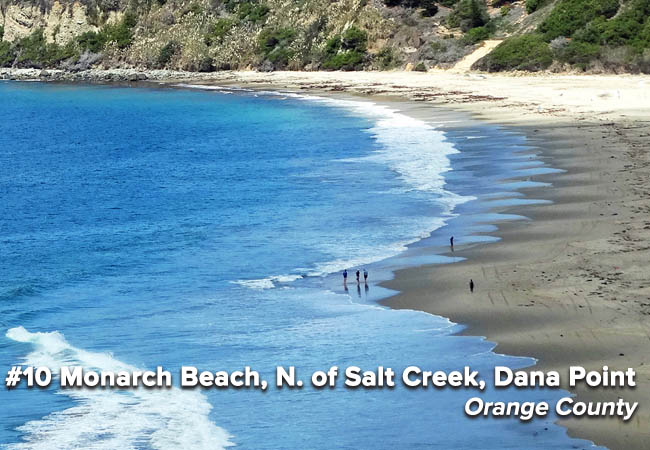
This site is right in front of the luxurious five-star Ritz Carlton resort in Dana Point, but one-star water quality persists in the bird-ridden spot. Local agencies have argued that the meandering portion of Salt Creek has facilitated a greater bird population, and in turn increased the amount of bird feces at this location—ultimately leading to the poor water quality. A falconry program was implemented to reduce bird-related bacterial counts at the mouth of the creek. However, potential harm to federally threatened snowy plovers during their nesting season halted the program—a decision Heal the Bay supported. The City of Dana Point has also invested in an Ozone Treatment Facility to treat dry weather runoff.

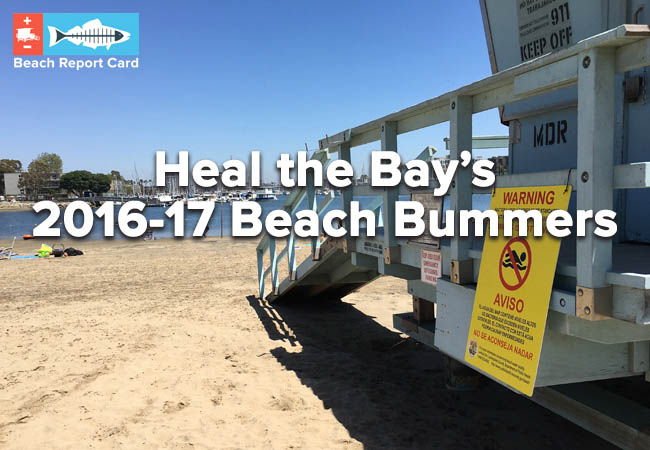
Heal the Bay analysts assigned A-to-F letter grades to 416 beaches along the California coast for three reporting periods in 2016-2017, based on levels of weekly bacterial pollution. Some 96% of beaches received A or B grades during the summer.

But pockets of fecal bacteria still trouble our waters and threaten the health of millions of beachgoers. Here’s our look at the 10 most polluted beaches in the state – our annual Beach Bummer List.

To avoid illness, ocean-goers can check the latest water quality grades at their favorite beaches, based on the latest samples, each week at beachreportcard.org (or download the Beach Report Card app for Apple or Android). For more information, check out our Beach Report Card blog post or read the full report here.


Much-needed winter storms may have relieved California’s historic drought, but all that rain came at some cost – poor beach water quality.

Bacterial pollution at some of California’s most popular beaches spiked dramatically in 2016-17, according to Heal the Bay’s 27th annual Beach Report Card, which the nonprofit released today.

Heal the Bay analysts assigned A-to-F letter grades to 416 beaches along the California coast for three reporting periods in 2016-2017, based on levels of weekly bacterial pollution. Some 96% of beaches received A or B grades during the high-traffic summer season (April-October 2015), slightly above the statewide five-year average.

Wet weather was a different story, however. Record rainfall created billions of gallons of polluted runoff, which poured into storm drains and out to the ocean. Nearly 48% of California’s beaches received C to F grades, about 12% more than the statewide five-year average.

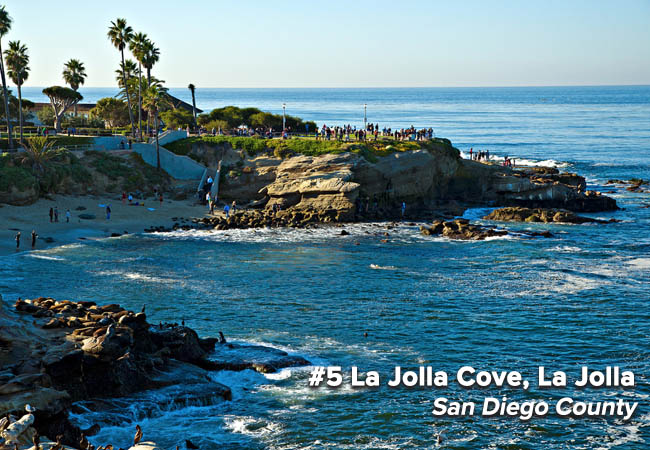
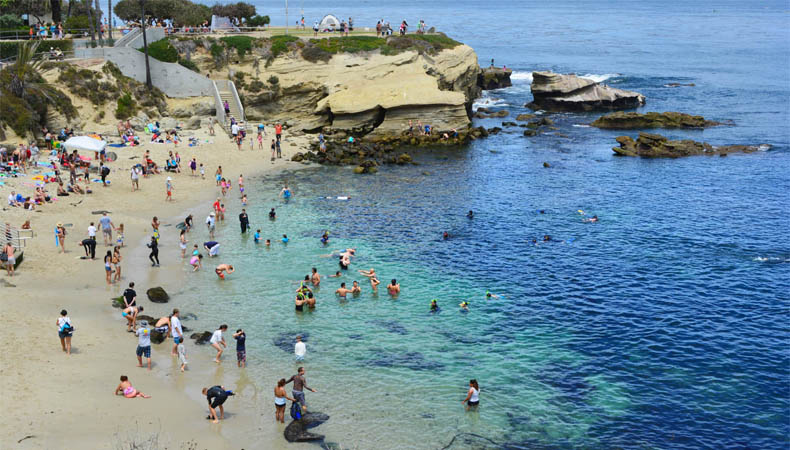
La Jolla Cove, a popular swim spot.

Polluted ocean waters pose a significant health risk to the tens of thousands of year-round ocean users in California. Those failing grades indicate a significant health risk to the tens of thousands of year-round ocean users in Southern California, who can contract a respiratory or gastrointestinal illness from one morning swim or surf session in polluted waters.

Beach Bummers

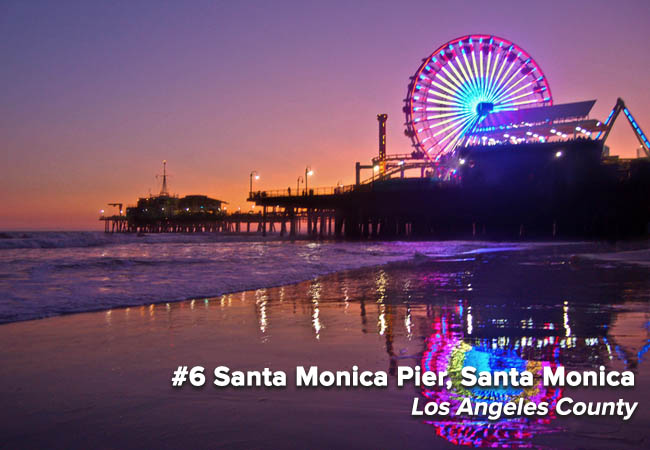
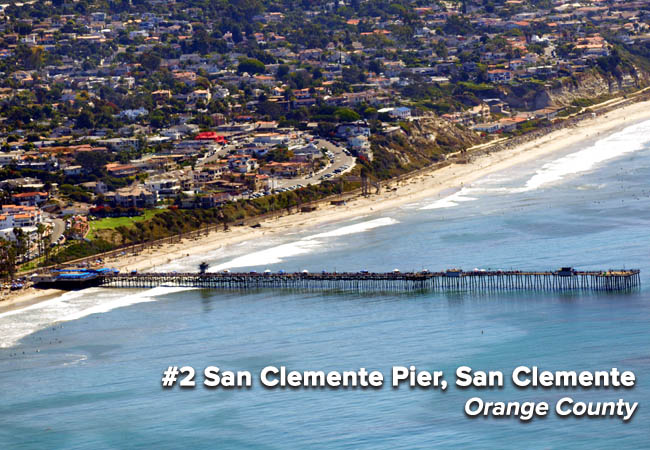
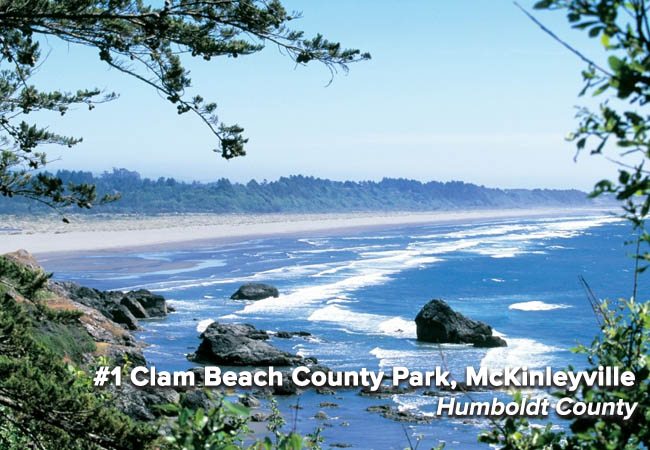
Heal the Bay’s infamous Beach Bummers List, which ranks the 10 most polluted beaches in the state, was split between Northern and Southern California. San Clemente Pier and La Jolla Cove are both making their first ever appearance on the Beach Bummer’s List. Clam Beach County Park, Mother’s Beach in Marina del Rey and Santa Monica Pier have each been Bummers for the past four years. Check out our Beach Bummers Slideshow, which has more details about each of the Bummers.

  1. Clam Beach County Park, McKinleyville (Humboldt County)
  2. San Clemente Pier, San Clemente (Orange County)
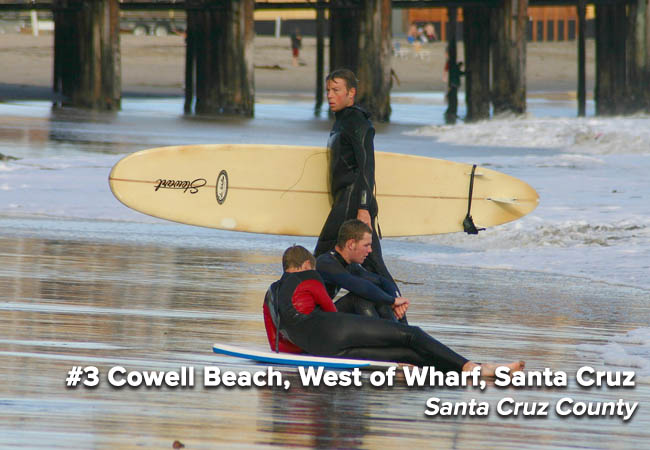
  3. Cowell Beach, West of Wharf, Santa Cruz (Santa Cruz County)
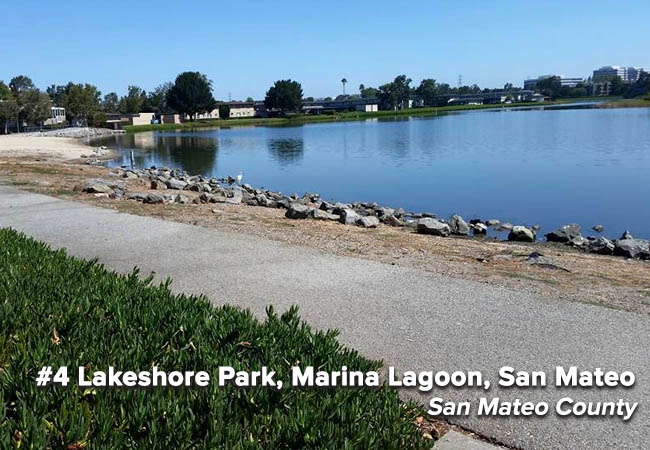
  4. Lakeshore Park, Marina Lagoon, San Mateo (San Mateo County)
  5. La Jolla Cove, La Jolla (San Diego County)
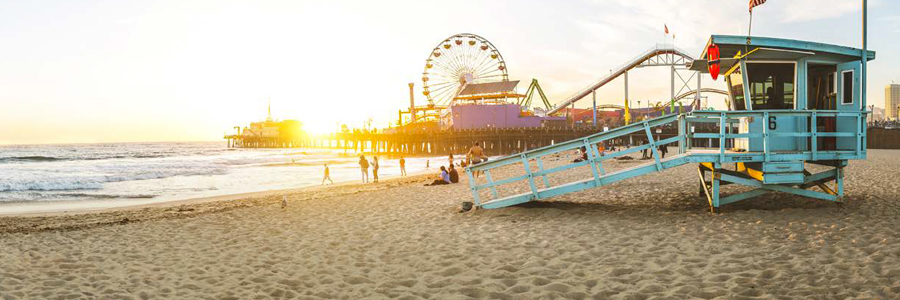
  6. Santa Monica Pier, Santa Monica (Los Angeles County)
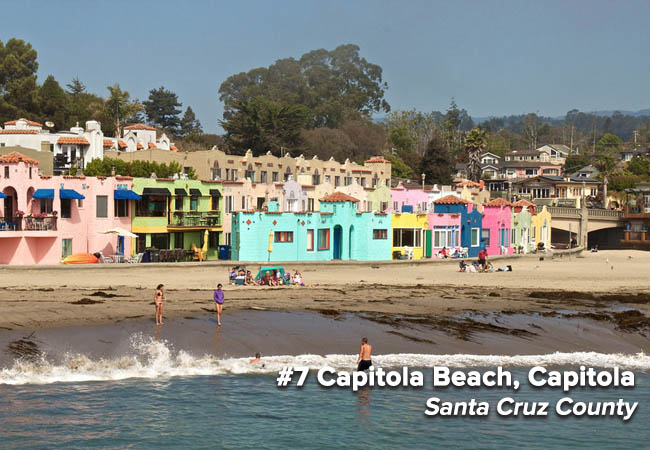
  7. Capitola Beach, Capitola (Santa Cruz County)
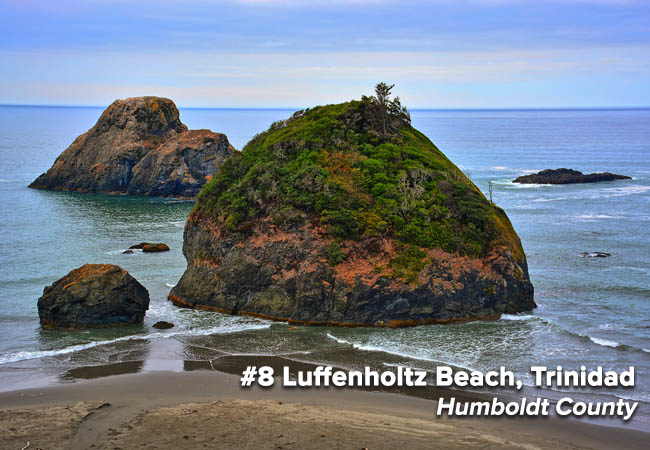
  8. Luffenholtz Beach, Trinidad (Humboldt County)
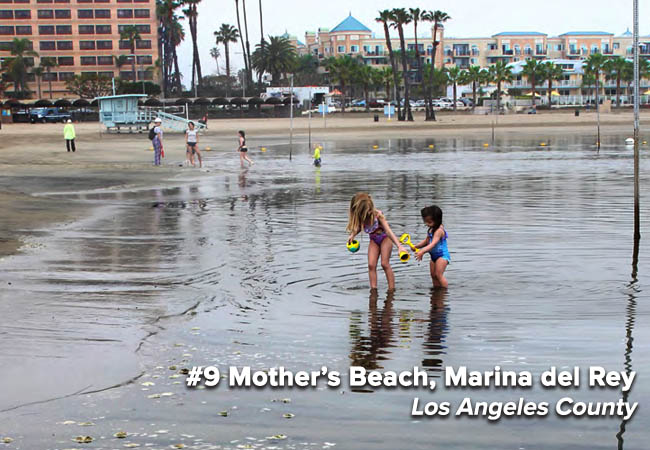
  9. Mother’s Beach, Marina del Rey (Los Angeles County)
  10. Monarch Beach, North of Salt Creek, Dana Point (Orange County)

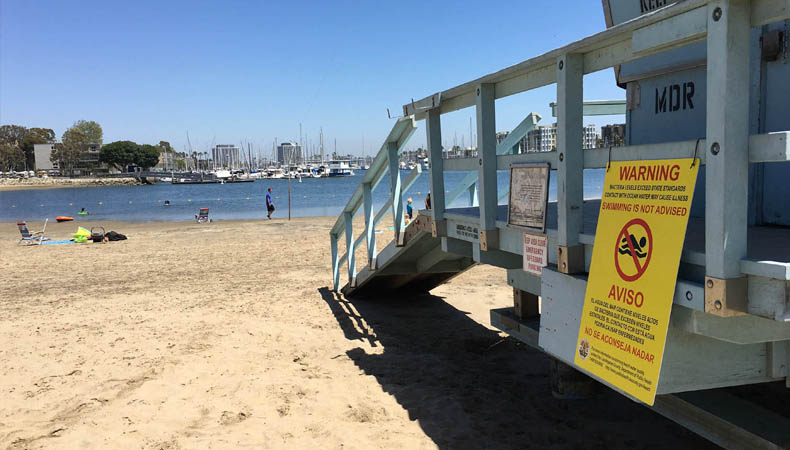
Mother’s Beach in Marina del Rey, a repeat Beach Bummer.

On a more positive note, 32 beaches in the state were named to Heal the Bay’s Honor Roll, meaning they were monitored year-round and received perfect A+ grades weekly, regardless of rain or dry conditions. Orange County boasted the most beaches on the Honor Roll, with 14 sites earning top marks.

Staying Safe at the Beach

“We want people catching waves, not bugs, when they head to the beach,” said Sarah Sikich, Heal the Bay’s vice president and longtime ocean policy advocate. “The reassuring news is that if you swim at an open-ocean beach in the summer away from storm drains and creek mouths you statistically have very little risk of getting ill.”

Swimming or surfing at a beach with a water quality grade of C or lower greatly increases the risk of contracting illnesses such as stomach flu, ear infections, upper respiratory infections and rashes.

Here’s how you can make sure that you stay safe at the beach:

  • Check BeachReportCard.org for the latest water quality grades.
  • Avoid closed beaches
  • Swim at least 100 yards away from flowing storm drains and piers.
  • Wait at least three days after rainfall before entering the ocean.

Baker Beach, San Francisco.

How to Stem the Tide of Bacterial Pollution

California often swings from extended dry periods to shorter periods of intense, wet weather. Our region needs to do a better job of capturing runoff before it hits shorelines. Heal the Bay advocates for reusing that water directly for non-potable purposes or sinking that water back into our aquifers rather than letting it flow uselessly to the sea.

If Southern California cities had the infrastructure in place, then they could have captured and reused a bulk of the 100 billion gallons of stormwater that drenched our region last winter. That’s enough water to meet the needs of 2.5 million people each year – about a quarter of L.A. County’s population.

In response, Heal the Bay’s policy staff is advocating for public funding measures to build nature-based projects that capture, cleanse and reuse runoff rather than dumping it uselessly into the sea. The Our WaterLA coalition is working with the L.A. County Board of Supervisors to place a funding measure on the ballot for innovative multi-benefit projects that will capture runoff and create public green spaces countywide. Look for the measure on the county ballot next year.

Heal the Bay to Forecast Water Quality

This summer Heal the Bay, Stanford University and UCLA are expanding their predictive beach water quality forecasting program. Using sophisticated statistical models, environmental data and past bacteria samples, the scientific team can accurately predict each morning when beaches should be posted with warning or open signs.

Promising results from the past two summers (at Arroyo Burro Beach, Santa Monica Pier Beach and Doheny Beach) demonstrated that agencies can post a warning notice immediately at pollution impacted beaches based on predictions rather than waiting days for test results. These new models will protect public health by providing more advanced water quality information to public health officials. This summer, Heal the Bay will run models for 10 beaches, from San Diego to Santa Cruz counties.


Update: The California Department of Fish and Wildlife (CDFW) has issued a reminder that White Sharks are a protected species under both state and federal fisheries laws and regulations.

An increase in shark sightings in Southern California – and even some beach closures – have raised long-standing concerns among many ocean users. Here staff scientist Dana Murray Roeber separates fact from fiction.

Why are we seeing reports of white sharks in the Bay?

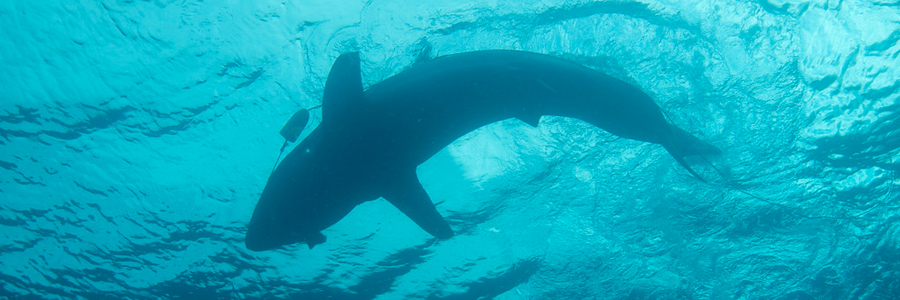
Santa Monica Bay is home to dozens of species of sharks and rays. Many of them are small, like the swell shark and horn shark, and live in kelp forests and rocky reefs. Juvenile great white sharks are seasonal residents of Southern California’s coastal waters, likely congregating in Santa Monica Bay due to a combination of abundant prey and warm water as summer comes. White sharks are frequently spotted by boaters, pier-goers, surfers and paddlers – especially between the surf spot El Porto and the Manhattan Beach Pier. Juvenile white sharks, measuring up to 10 feet long, prey mostly on bottom fishes such as halibut, small rays and other smaller sharks. Progress to protect marine species has advanced over the past 50 years, including protections for marine mammals, an important food source for adult white sharks. These protections have likely led to a healthier and growing population of white sharks and marine mammals alike, which is a good sign for our oceans.

Is it a good or bad thing there are so many of them in the water?

Sharks are at the top of the food chain in virtually every part of every ocean. They keep populations of other fish healthy and ecosystems in balance. In addition, a number of scientific studies demonstrate that the depletion of sharks can result in the loss of commercially important fish and shellfish species further down the food chain, including key fisheries such as tuna.

Where are they coming from and where are they going?

White sharks usually migrate south in the winter when California’s coastal waters drop below 60 degrees. However, our local ocean waters stayed warmer in 2014-16 due to El Niño-like conditions and climate change. Again this winter, it is believed that most of the juvenile white sharks didn’t leave Southern California.

What are the popular spots from them in So Cal?

White sharks are congregating in shallow waters off Huntington Beach, San Onofre, Long Beach, Santa Monica Bay and Ventura.

What are the real dangers to humans?

There is always a risk when entering the habitat of a large predator – whether in the ocean, or the African savanna, or Kodiak Island. Poor water quality, powerful waves, strong currents and stingrays pose a greater threat to local ocean-goers than sharks.

How can I avoid sharks in the sea?

According to the Department of Fish and Wildlife, there have only been 13 fatal white shark attacks in California since the 1920s. Eating a hot dog poses a greater danger to life and limb than any shark. If you’re still concerned, here are some quick tips to avoid run-ins with fins:

  1. Avoid waters with known effluents or sewage.
  2. Avoid areas used by recreational or commercial fishermen.
  3. Avoid areas that show signs of baitfish or fish feeding activity; diving seabirds are a good indicator of fish activity.
  4. Do not provoke or harass a shark if you see one!

What should you do and what shouldn’t you do if you think you see a shark?

First, assess the risk. If you see as small horn shark or thornback ray, it is safe to swim in the area. But keep your distance from the animal. If a larger shark is spotted, it is best to evacuate the water calmly, trying to keep an eye on the animal. Do not provoke or harass the shark. Report your shark sighting, with as much detail possible, to local lifeguards. If you or a companion are one of the very, very few people each year bitten by a shark, experts advise a proactive response. Hitting a shark on the nose, ideally with an inanimate object, usually results in the shark temporarily curtailing its attack.

Why are many species of sharks protected?

Despite popular perceptions of sharks being invincible, shark populations around the world are declining due to overfishing, habitat destruction and other human activities. It is estimated that over 100 million sharks are killed worldwide each year. Of the 350 or so species of sharks, 79 are imperiled according to the International Union for the Conservation of Nature. There are several important spots for Northeastern Pacific white sharks in California, yet they are vulnerable to ongoing threats, such as incidental catch, pollution and other issues along our coast. White shark numbers in the Northeastern Pacific are unknown but are thought to be low, ranging from hundreds to thousands of individuals. They’re protected in many places where they live, including California, Australia and South Africa. It is illegal to hunt, pursue, catch or kill a great white shark in California, with anyone caught causing harm liable to criminal prosecution.

Can I fish for white sharks in California?

Federal regulations implemented in 2004 prohibit white shark retention in California, requiring their immediate release if caught. Additionally, in 1994, white sharks received special protected status in California State law, which prohibits take of white sharks except by special permit and some commercial incidental take allowances. State of California regulations also protect white sharks from recreational fishing. Under these protections, it is illegal to fish for or pursue white sharks, and they must be released immediately if caught inadvertently while fishing for other species.


More than 700 walked the planks at our annual awards gala … and lived to tell the tale, reports Communications Director Matthew King.

“And remember: Mermaids smoke seaweed!”

With that offbeat reminder, actress and honoree Sharon Lawrence brought Heal the Bay’s 26th annual “Bring Back the Beach” gala last night to a funny, fitting close.

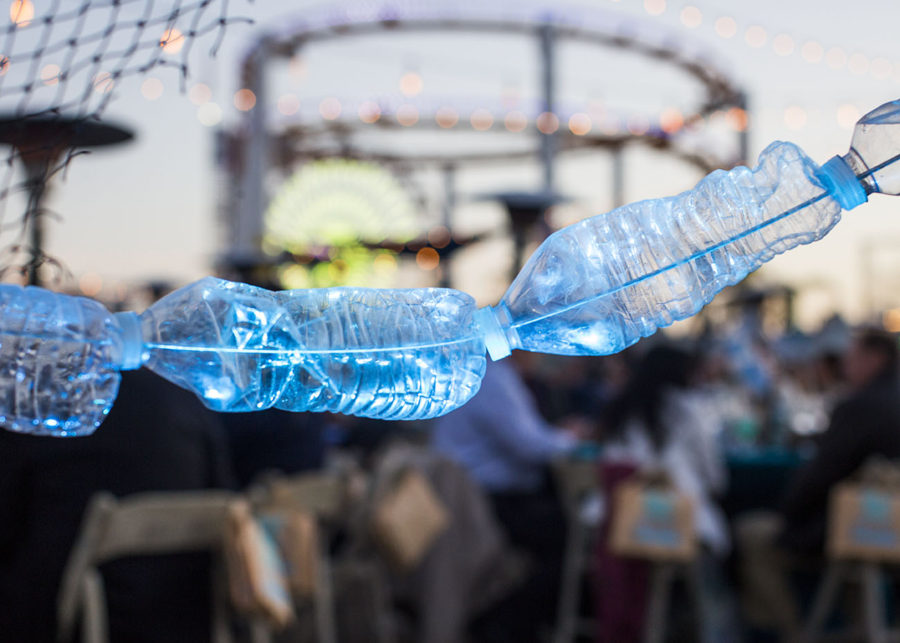
Single-use plastic items were incorporated throughout the gala decor (Photo by Nicola Buck)

Over 700 guests joined us on the wonderfully funky deck of the historic Santa Monica Pier for a night of celebration and renewed commitment to the ongoing fight for clean oceans and inland watersheds.

Entertainers and artists featured plastic pollution that ends up in our ocean (Photo by Nicola Buck)

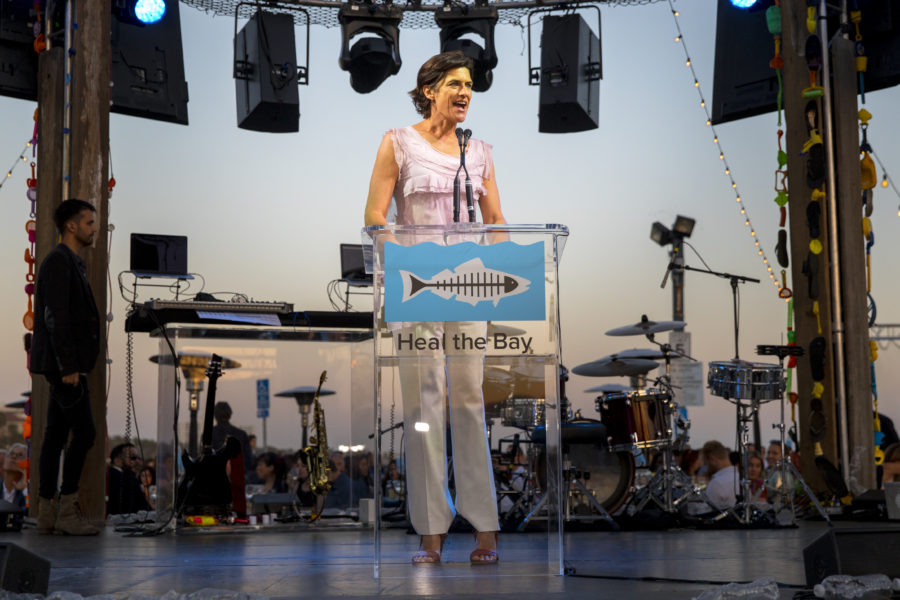
While a carnival atmosphere prevailed (stilt walkers, jugglers, popcorn, spinning Ferris wheel), the true spirit of the evening was one of resolve. Dr. Shelley Luce, our new president and CEO, earned rousing applause for vowing to thwart the new federal administration’s plan to downsize the EPA and weaken the Clean Water Act.

Shelley Luce (Photo by David Young-Wolff)

Sharon Lawrence, a longtime board member and public ambassador for our work, received the Dorothy Green Award, named after Heal the Bay’s late, founding president. Gracious as ever, Lawrence recognized by name the long lineage of female water warriors – including mermaids! – involved in our work. Her mother and father, who had driven across the country to see Lawrence receive the award, beamed with pride. A very sweet scene.

Sharon Lawrence and Ed Begley Jr. (Photo by David Young-Wolff)

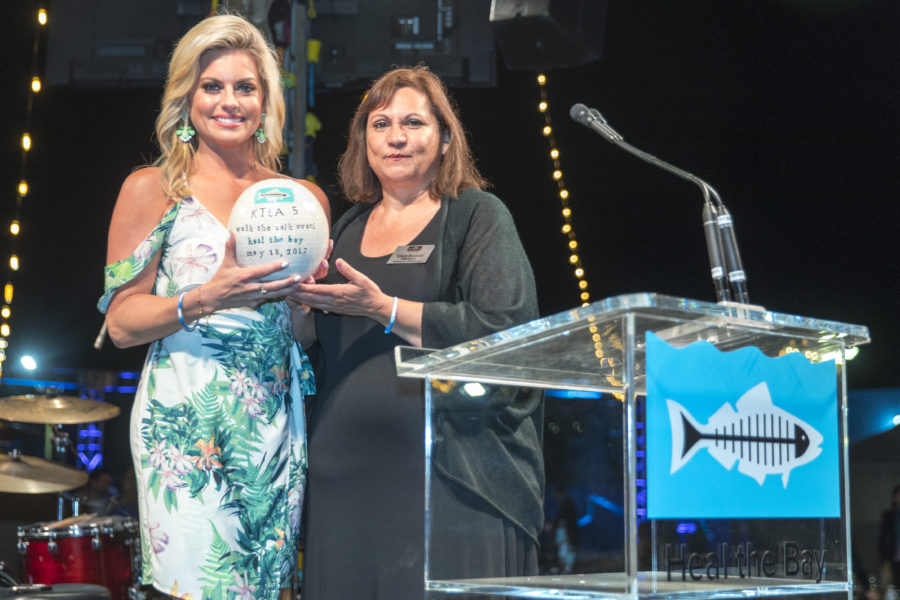
Local broadcast station KTLA 5 earned the night’s “Walk the Talk” award for its decades-long connection to Heal the Bay. Led by surfer and media honcho Don Corsini, KTLA has made space on its airwaves to promote our events and highlight ocean-related environmental issues. Anchor Courtney Friel accepted the award on the station’s behalf.

Courtney Friel and Stephanie Medina (Photo by David Young-Wolff)

In between speeches and presentations, a lively mix of surfers, politicos, water policy wonks, engineers, business owners and everyday ocean lovers mingled and schmoozed as the sun set over a calm sea. Event planners earned well-deserved praise for an innovative menu (roasted beet salad and Aussie handpies) and ocean-themed cocktails (blue margaritas and Golden Road’s kelp forest canned Heal the Bay IPA!).

Good times for a good cause at @healthebay Bring Back the Beach gala last night #lacarguy #healthebay

A post shared by LAcarGUY (@lacarguy) on

Mike Sullivan, LAcarGUY owner and longtime boardmember, won the best-dressed award in a vibrant Wonka-like suit-jacket and matching Technicolor shorts. But even he was upstaged by a bevy of guest models sashaying down the catwalk in astonishing and truly beautiful dresses fashioned out of plastic trash commonly found on our shorelines. Kudos to designer Marina DeBris for raising awareness in such a creative way! View our Facebook Live video of the “Beach Couture: Haute Mess” fashion show.

NB-24 Marina DeBris Fashion Show 2017 - Heal the Bay NB-25 Marina DeBris Fashion Show 2017 - Heal the Bay Marina DeBris Fashion Show 2017 - Heal the Bay Marina DeBris Fashion Show 2017 - Heal the Bay Marina DeBris Fashion Show 2017 - Heal the Bay Marina DeBris Fashion Show 2017 - Heal the Bay Marina DeBris Fashion Show 2017 - Heal the Bay Marina DeBris Fashion Show 2017 - Heal the Bay
<
>
This guest model is wearing "Washed Up Saleman." Men's briefs, board shorts, hats and clothing tags are a frequent find on any beach. Not to mention the single-use plastic bottles on the inside of the jacket. (Photo by David Young-Wolff)

The gala is designed as a gathering of the tribe, but it also serves as a critical fundraiser for us. Attendees dug deep this year, breaking our all-time records for our live and silent auctions.

Sarah Sikich, Meredith McCarthy and Matthew King (Photo by Nicola Buck)

Santa Monica Mayor Ted Winterer won a stand-up paddleboard and then realized he had no way to get it home. (He didn’t take our suggestion to paddle by sea back to his Ocean Park home.)

Funds raised from the evening directly support a number of our education and advocacy programs, from sponsored field trips to our Santa Monica Pier Aquarium to cleanups and water quality monitoring at local beaches and streams.

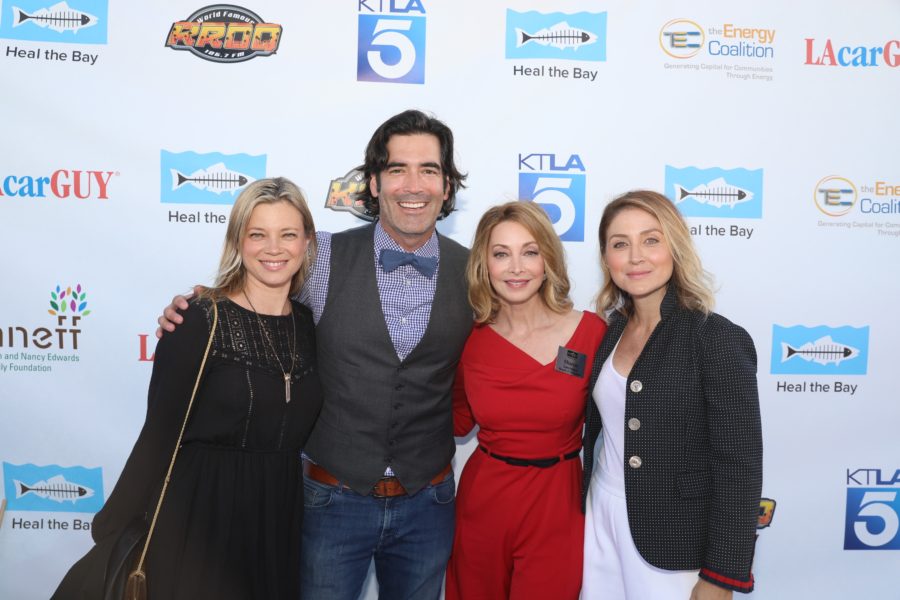
Amy Smart, Carter Oosterhouse, Sharon Lawrence, Sasha Alexander (Photo by David Young-Wolff)

Among the other guests bidding and bubbling: actress, board member and new mom Amy Smart, getting a rare, free night-out with husband Carter Oosterhouse; Smart’s BFF and Heal the Bay ambassador Ali Larter; Oscar-nominated actress and new-to-us Marianne Jean-Baptiste; “Roxy Girl” and Heal the Bay activist Bruna Schmitz with husband and pro surfer Dane Zaun; KROQ brass dancing away to SoulCirque (Heal the Bay is longtime beneficiary of the station’s annual “Weenie Roast” benefit concerts); legislative environmental leaders Assemblymember Richard Bloom and former Senator Fran Pavley; skateboard legend Natas Kaupis; and kid celeb Heal the Bay ambassadors Chloe Noelle and Jax Malcolm, along with actors Carolyn Hennesy, Sasha Alexander, Gregory Harrison and Ed Begley Jr.

(Photo by Alvin Lam)


View photos from the 2017 Gala at Santa Monica Pier and the Blue Carpet.

Also, thanks to our sponsors The Energy Coalition, The John and Nancy Edwards Family Foundation, LAcarGUY, KROQ, and KTLA 5 as well as our brilliant volunteer photographers Nicola Buck and David Young-Wolff for making it a very memorable evening.


#BringBackTheBeach Instagram & Twitter

Just a couple of chicks trying to #healthebay @smarthouse26 #bringbackthebeach xx

A post shared by Ali Larter (@alilarter) on

We're healing the bay tonight ✌???????????? @healthebay #healthebay #bringbackthebeach #gala #sm #smpier #wavemaker

A post shared by Jillian Allen Kotler (@jmakproperties) on

#healthebay #healthebaygala2017 #savetheoceans #votesyesonsb705

A post shared by Arz Yus (@happinessizhere) on

Beautiful day supporting @healthebay #BringBackTheBeach fundraiser gala. ☀️

A post shared by ➳⠀B R U N A SCHMITZ Z A U N (@brunasschmitz) on

Heal The Bay…rock on! #healthebay #conservation

A post shared by Carolyn Hennesy (@carolynhennesy) on

On the Santa Monica Pier #healthebay #bringbackthebeach

A post shared by mel_koel (@mel_koel) on

Our 2017 #BringBackTheBeach Annual Awards Gala is groovin' and shakin' at #SantaMonicaPier! (@lacarguy)

A post shared by Heal the Bay (@healthebay) on


UPDATE: On May 8, Culver City’s City Council voted unanimously to adopt the single-use polystyrene ban. The ban goes into effect on November 8, 2017.


Earlier this week, the City of Culver City took the first step to join other local municipalities to pass a ban on two types of plastics which wreak havoc on marine life and are often used by food providers: polystyrene foam (commonly known as Stryofoam™) and oriented polystyrene.

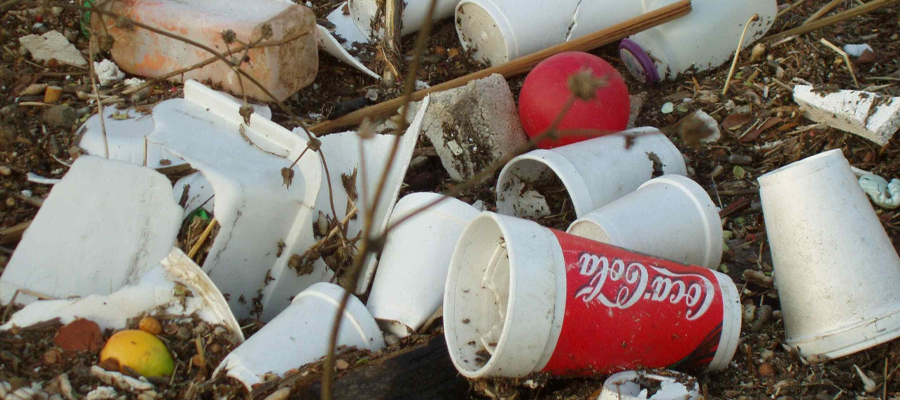
Polystyrene foam is frequently used in take-out food packaging like cups and to-go boxes. It’s very lightweight and often flies away from trash bins and landfills. Oriented polystyrene (aka solid polystyrene) is used to make items like utensils, lids and food packaging.

A post shared by @dcwjr78 on

Polystyrene is seldom recycled due to its low quality and value, even though it’s designated with recycling code 6.

As a result, both types of polystyrene are ubiquitous at beach and watershed cleanups. According to Heal the Bay’s Marine Debris Database, our volunteers have picked up 504,832 Styrofoam™ items from beaches in L.A. County in the last 10 years. Banning these specific plastics is a big win for our coastal environment, especially considering Culver City is situated within the watershed of Ballona Creek and its downstream wetland habitat.

A post shared by Cate D (@cleancoast_angel) on

Santa Monica started banning polystyrene ten years ago, and there continues to be talk of a ban on a state-wide level. But now Culver City has the bragging rights. This local municipality courageously chose to adopt some of the most stringent policies in the area by banning polystyrene coffee lids and straws from businesses as well.

The Culver City ban will begin on November 8, 2017, giving local businesses time to run through their current stock and prepare for the changes. According to the Culver City ordinance, no food provider shall use, distribute, or sell any single-use foam polystyrene or polystyrene service ware, denoted by recycling identification code 6 (PS).

In an additional and welcome caveat to the ordinance, Culver City businesses now must first ask if you want cutlery before simply throwing in plastic utensils with your take-out food. This idea works hand in hand with Heal the Bay’s Rethink the Drink campaign—coming soon to a neighborhood near you.

A post shared by 4Ocean Bracelets (@4ocean) on


Ballona Creek Renaissance lead the charge on this effort, with multiple Surfrider chapters reliably showing up in force over the nearly year-long endeavor. Our own Gnarly Beach Cleaner, Michael Doshi, was consistently there for the countless council and sustainability sub-committee meetings, while recent Heal the Bay Super Healer award winner, environmental science educator, and Team Marine leader at Santa Monica High School Benjamin Kay was present to seal the deal on Tuesday, April 11 right before midnight.

If there was one loser in this endeavor it would have to be impromptu beach parties.  Starting in November, “No [Culver] City business shall sell polystyrene coolers.” So in light of this, Heal the Bay recommends you simply do not procrastinate in the planning of those.

A post shared by Tyler Hess (@vericooler) on


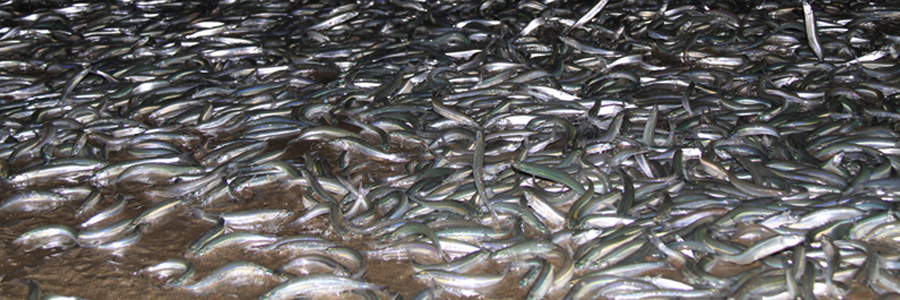
The waves curl and crash ashore before slowly bubbling back to sea, a potion of water, foam and sand. The light of the full moon grazes the sandy beach at its feet while a bright Pacific breeze wanders through the night. There’s an air of romance. Thousands of wild fish certainly got the memo as they flop and dance around on the beach, performing one of nature’s most exceptional reproduction rituals.

If you’ve never witnessed a grunion run, you’ve been missing out on a classic Southern California beach tradition! Tonight and over the next few weeks you will have the rare opportunity to spot grunion coming to spawn.

Heal the Bay’s Marine Scientist Dana Murray answers some common questions about these special fish:

What are grunion?
Grunion are a sleek, silver fish that are most well known for their unique spawning behavior. These charismatic 6” fish surf the waves to shore, flop onto land to lay and fertilize eggs in the moonlight on our local beaches. Grunion are found in California (including Baja) and nowhere else in the world!

Why do they come to shore?
Grunion come to shore to lay their eggs at high tide. Spawning on sandy beaches, their eggs remain buried in the sand where they incubate for about two weeks until the next high tide comes and they hatch and return the ocean. The premier grunion expert in the world, Dr. Karen Martin, has written a book, “Beach-Spawning Fishes: Reproduction in an Endangered Ecosystem,” where you can read all about these fascinating fish.

When is the best time to try and see them?
At nighttime high tides during the spring and summer. Grunion may run as early as March on into September but peak season is from the start of April through June. Runs typically occur for a few nights after the highest tides during full and new moons. Your best chance to spot them is to plan ahead and stay out on the beach for an hour or so on either end of high tide.

Consult this grunion run 2017 schedule for the best times to observe these “silver surfers.”

What So Cal spots are best to try and spot them?
All you need is sand and a very high tide at night during grunion season! In the greater Los Angeles area, good grunion run locations include Surfrider in Malibu, Cabrillo Beach in Santa Pedro, Santa Monica State Beach, Hermosa Beach and Venice Beach.

What can I expect to see?
Although grunion sightings are never guaranteed, with a keen eye you can increase your chances. Look for predators such as black-crowned night herons or raccoons waiting for the surfing silversides along the shore. Some grunion runs are just a few scouts flopping onto the beach, whereas other runs involve thousands of fish, covering the wet sand entirely!

What should I do to prepare?
Bring warm clothes, your patience and a friend to walk the shoreline with. Leave your dog at home, and come knowing that as with any wildlife it’s a chance and not a guarantee that you’ll see them.

Are there things I shouldn’t do?
Do not to touch or interfere with spawning – especially during closed fishing season (April and May). Also, don’t shine lights on the water or grunion as it can interfere with their spawning, as can loud talking and noisy crowds.

Are grunions doing well? Are they in danger in any way?
The grunion population is believed to have decreased, so it’s important to protect them during spawning for the future population. Leaving domestic predators like dogs at home is advised, as canines may devour the eggs or disturb the fish. Also, not disturbing the buried grunion eggs along the high tide line after a spawning event helps ensure that grunion remain around into the future.

Dr. Karen Martin from Pepperdine University regularly works with and trains beach groomers to avoid the high tide line in grunion season, so as not to disturb eggs. Beach grooming operators now follow a specific protocol during grunion season to avoid disturbing sand where grunion eggs incubate.

How can I help grunion?
Observers of grunion runs are urged to report the time and location of the run for scientific purposes for Grunion Greeters.

Try not to disturb spawning grunion, and encourage others to do the same. During open season, follow the Fish and Game Regulations (which include not using any form of gear, nets or traps – only bare hands) and encourage observation or “catch and release.”  If you observe poaching or any violations of grunion fishing regulations, such as use of gear or nets, please advise the California Department of Fish and Game or call 1-888-DFG-CALTIP.


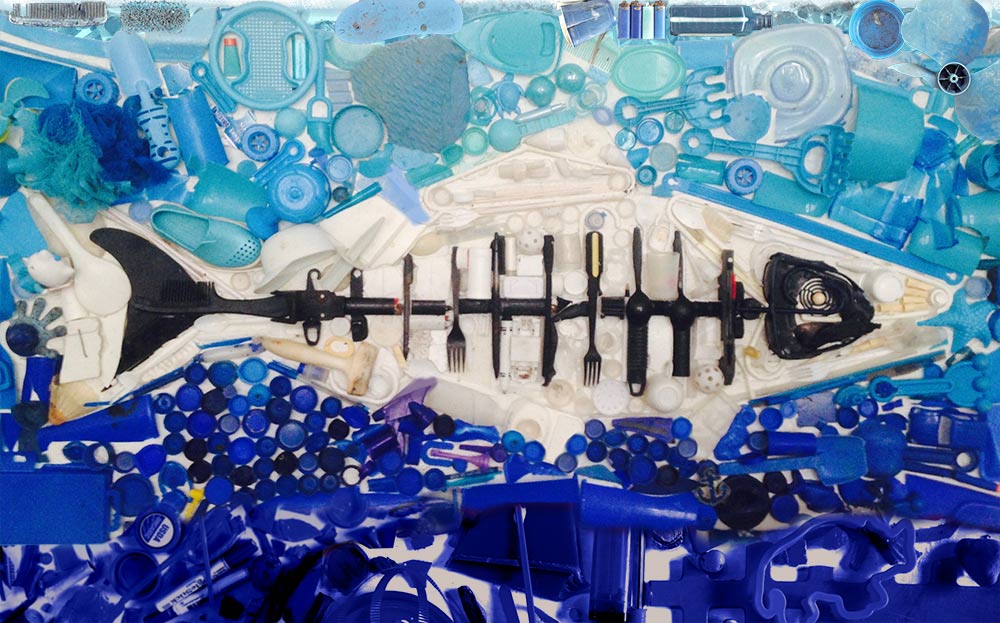
Plastic Pollution Reduction - Heal the Bay

Advocates form the backbone of our work at Heal the Bay. Where would we be without passionate people and organizations rising up, speaking out and taking action?

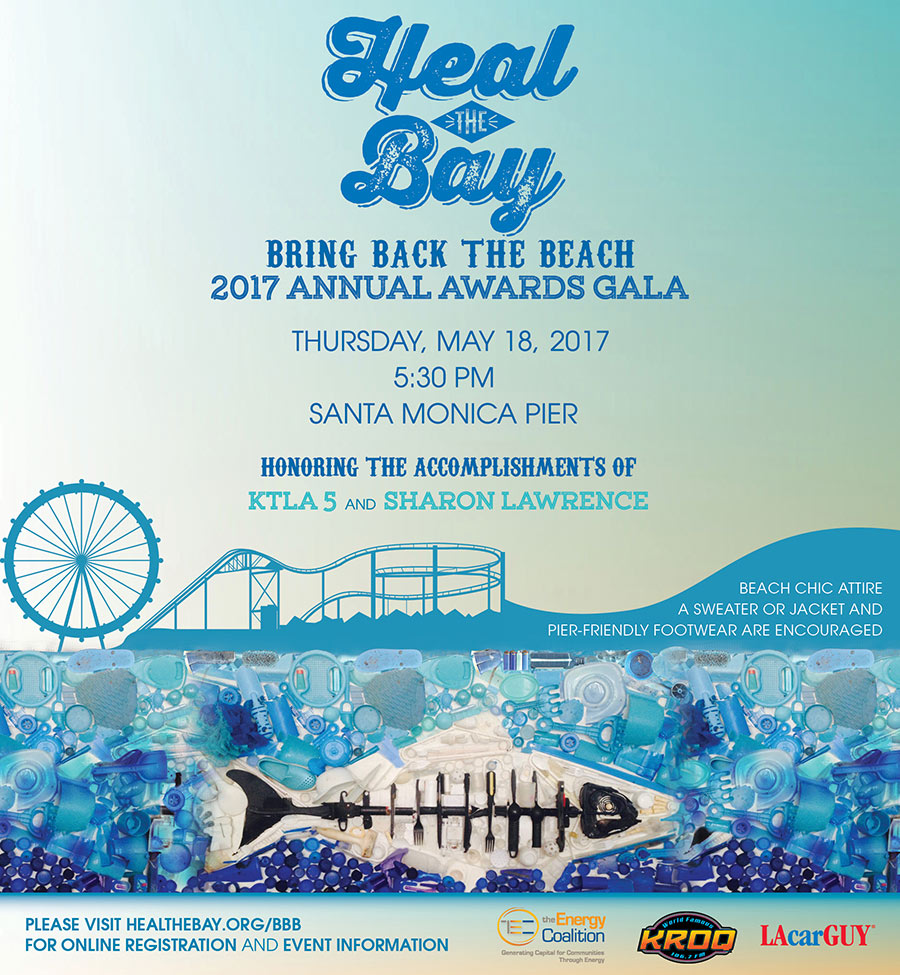
At this year’s Bring Beach the Beach: Annual Awards Gala on Thursday, May 18 at the iconic Santa Monica Pier, we are excited to honor two of our most authentic and vocal supporters: KTLA 5 and Sharon Lawrence.

Our Gala honorees continue to generously open up their trusted platforms to evangelize Heal the Bay’s mission, going above and beyond the call of duty to protect our local ocean, rivers, and watersheds. These incredible advocates don’t wait for change to take place they’ve taken the lead to spark change right here in L.A. County.

Please join us in recognizing this year’s Gala honorees:

KTLA 5 is Heal the Bay's 2017 Annual Awards Gala Honoree

KTLA 5

As the trusted news source for millions of Southern Californians since 1947, KTLA 5 has also been a generous media supporter of Heal the Bay.

The dynamic team at KTLA 5 continues to elevate and celebrate our efforts to protect the environment. Their deep involvement spans across the media organization from Don Corsini, KTLA’s President and General Manager, to the news team and staff. They can always be counted on to help us spread the word about the complex environmental issues we face here in L.A.

From special broadcasts about our ocean and watersheds to year-round coverage of Heal the Bay’s milestones to covering events on KTLA’s award-winning newscasts, the KTLA 5 team has created a more informed and aware public, fostering deep connections between our community and the environment.

KTLA channel 5 is a CW television station located in Los Angeles, California. Follow KTLA 5 at ktla.com, Facebook, Twitter and Instagram.

Sharon Lawrence is Heal the Bay's 2017 Annual Awards Gala Honoree

Sharon Lawrence

For more than six years, Sharon Lawrence has served on Heal the Bay’s board, championing the vision of clean and thriving oceans both locally and nationally.

Whether it’s on the red carpet, a podcast, on social media or at a Heal the Bay Board meeting, Sharon speaks about our mission from her heart. She’s catalyzed peers, colleagues and fans in the entertainment community to become environmental stewards. Her thoughtful messages about caring for the environment and living a green lifestyle instill a real urgency to take action.

We thank Sharon for her strong advocacy and support of Heal the Bay for nearly a decade.

Sharon Lawrence is an Emmy Award nominated actress and an illustrious, longtime member of the entertainment community. You may know her from leading roles in NYPD Blue, One Tree Hill, Rizzoli & Isles, and Shameless. Follow Sharon Lawrence at Facebook, Twitter and Instagram.


Don’t miss out! Reserve your seat for our annual awards Gala at the Santa Monica Pier. This exclusive seaside experience happens just once-a-year and goes a long way towards our mission of making Greater L.A.’s coastal waters and watersheds safe, healthy and clean.


Imagine what the rush of a wave looks like from underneath. The powerful pressure culminating, viciously spinning around you, and vanishing before the very eye.

Chris DeLorenzo, LA and NY based photographer, captures the essence of a breaking wave in his current exhibit “Breath of Disruption” at Gallery 169 in Santa Monica. His collection of moving, abstract photographs were taken just off the coast of Southern California.

“Many artists approach Gallery 169 to show their work, and many photographers have brought beach and water scenes,” says Frank Langen, Owner of Gallery 169. “It is difficult to find something new … a fresh perspective. When I met with Chris I was immediately intrigued by his statement coming from a sincere, unique connection to the ocean. From this sacred relationship he fosters with the ocean, its currents and waves, his eye provides a sensational, humbling, and original vision.”
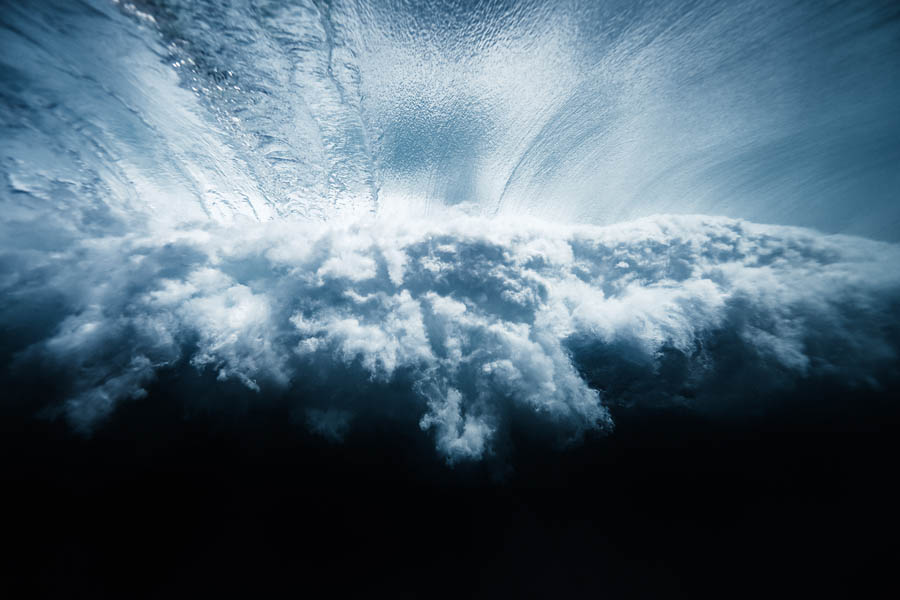

“Genesis” by Chris DeLorenzo

Ocean photography serves many purposes, from scientific documentation to education to cultural symbolism. Photos and videos deepen our understanding of the complexities of marine life, and also help us reflect on our connection with water.

“I have spent my entire life in, on, and under our beloved Pacific. Living and working along the edge of the continent has been my good fortune,” says Brian Murphy, an architect and surfer who helped discover Chris DeLorenzo. “There is something unique in this young man’s connection to the ‘wet side.’ His work manages to capture something that few artists convey in their work. Special, magical, uplifting … are but a few words that come to mind.”

We recently sat down with Chris for an interview and chatted about how he got started with ocean photography, his favorite ocean in the world, and his go-to green traveling tips.
How did you get started with ocean photography?

Chris DeLorenzo: It’s kind of funny because I’m not a surfer or diver, but the ocean always had a huge place in my life. I didn’t even grow up near the ocean. It’s so crazy though, because I swear­ my first memory is from the beach in Florida. I must have been three years old … for some reason the ocean has always stayed with me.

I went to college for a semester and then dropped out and started working. Photography is not easily taught, and I’m not the best person to be told what to shoot in an academic setting. School is great, but it just wasn’t my path at the time. I did take some awesome classes, like entrepreneurship at Santa Monica College.

I spent a year and a half in Cali before I started landing professional work. Los Angeles is a photographer’s dream location; it has the city, sea, snow, and desert all so close by. I was able to build my professional portfolio in California in under two years. It’s a great place to launch a career.

As I was getting started, a few mentors helped me gain a strong base. I interned with Steven Lippman, renowned commercial photographer and former competitive surfer, for a year and put to use all this knowledge about how to work with clients and promote myself.

At first I thought I wanted to be a surf photographer. I do surf, but wouldn’t necessarily call myself a surfer — it’s the community I love. When I was swimming in L.A. one time about two years ago, I saw this incredibly clear water. I was maybe 50-100 feet out, very close to the shoreline. From then on I started to look for clear water. It was trial and error. And I really started to think about this: why is the water clearer on some days and in some locations than others?
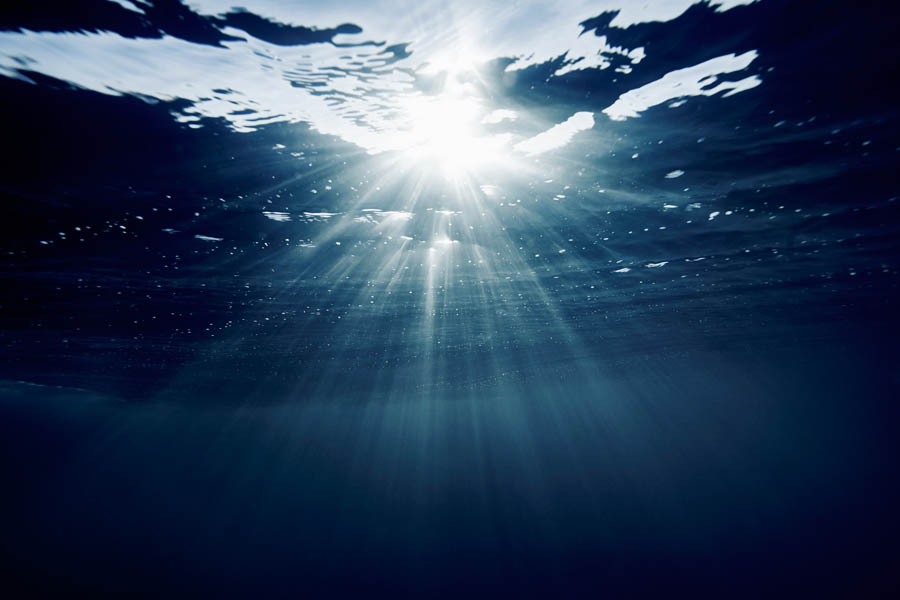

“Venus” by Chris DeLorenzo

I began to discover that water’s clarity has to do with quite a few factors, including pollution and ocean sediment. Location matters too, like whether there are cliffs nearby. Most of the time the farther out you go, the clearer the water is. But after a certain point the waves stop breaking, so you have to stay relatively close.

From then on, whenever we go surf I always ask whether the water was clear. People will laugh. Whatever … these narrow windows of clear water … I am drawn to them.

For the “Breath of Disruption” series, I photographed some 50,000 images of waves in Southern California over the course of 40 days. 9/10 days the water isn’t clear enough to shoot in.

What does “Breath of Disruption” mean?

Chris: It’s me in the space with the ocean on the edge of violent storm clouds. It’s a quick breath, the ocean lets you see it, and then it’s gone.

It’s my favorite thing in the world, being under the water and looking at waves going over my head. No one sees what I see. I feel like other people need to witness this amazing world … the air, water, sand, and the ocean floor … it’s a serene space that we think we know; a sacred paradise juxtaposed with sudden, fierce forces.
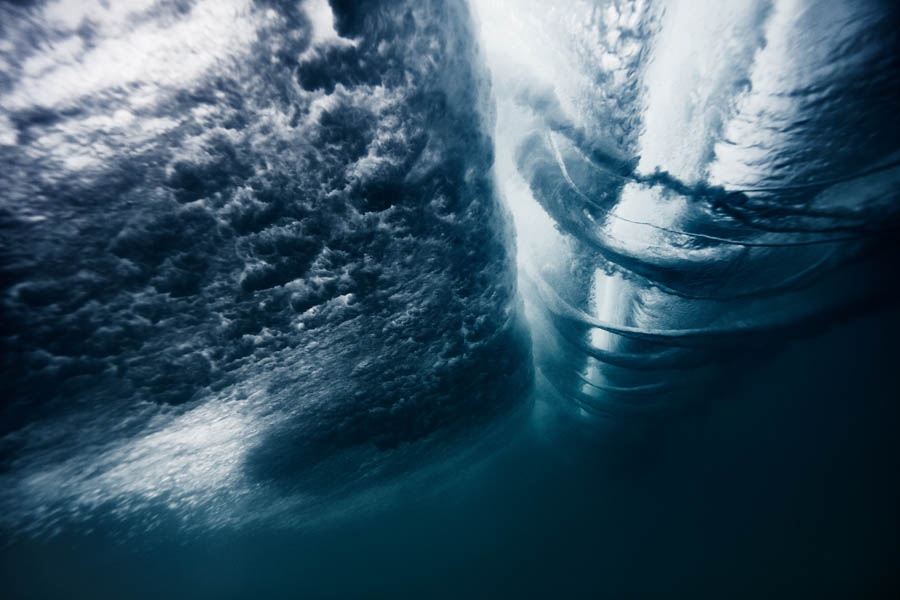

“Aquatic Cumulus” by Chris DeLorenzo

Everyone says, “Let’s go to the ocean and relax on the beach.” But this series is not that tranquil, peaceful vibe. It’s moody, intense, and electric. Beneath the surface, the waves look like arteries and veins with severe momentum. There are deep tints as the water swells, big vast concepts of time, space, light, and energy.

It’s surreal and humbling to use the reality of waves to create thoughtful, self-interpretive abstractions.

Photography is so relatable because it’s actually real life and energy; by its very nature it’s not abstract. But there is a fine balance when you’re creating impactful work in an oversaturated market. I want to do something different in my personal work, and connect with a deeper purpose.

It’s very easy to take a photograph that means nothing. It’s very powerful when you get it right, especially as the internet, computers, and cell phones make it possible for tens of thousands of people to see your work.
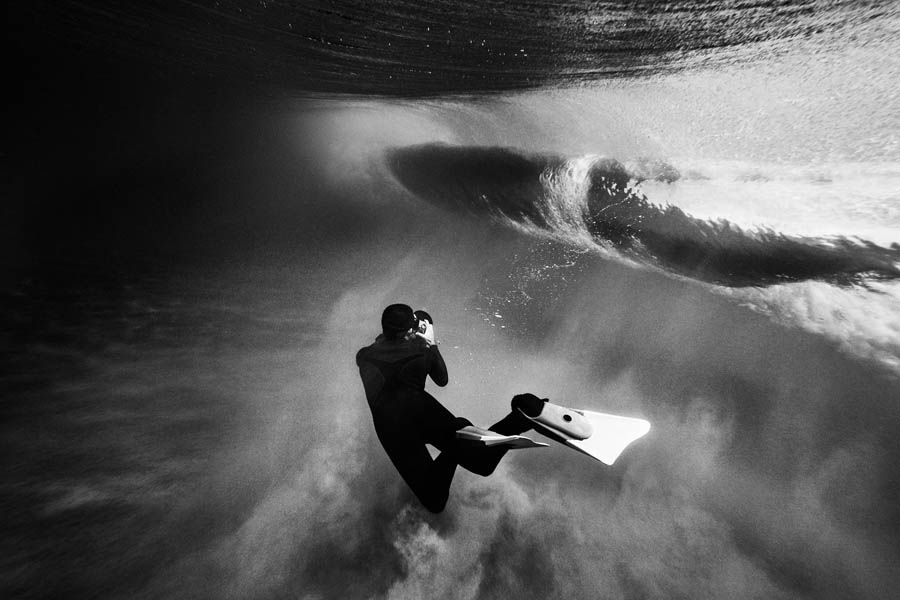
Do you have any professional advice about how to safely take photographs in the ocean?

Chris: Don’t get hit by the waves. And … you only have one shot. [Chuckles]

Physicality is key. You have to be pretty agile, and quickly get your body in the right position to take the shot at the right angle; it’s a very physical approach to photography. The tricky part is staying under. I can only hold my breath for about a minute, but when swimming intensely underwater, I last even less time.

My ocean photography gear includes a wet suit, fins, mask, and an underwater case for the camera. The camera is strapped to me, but it floats as well. Saltwater destroys equipment, so you have to clean and soak it all after every swim.
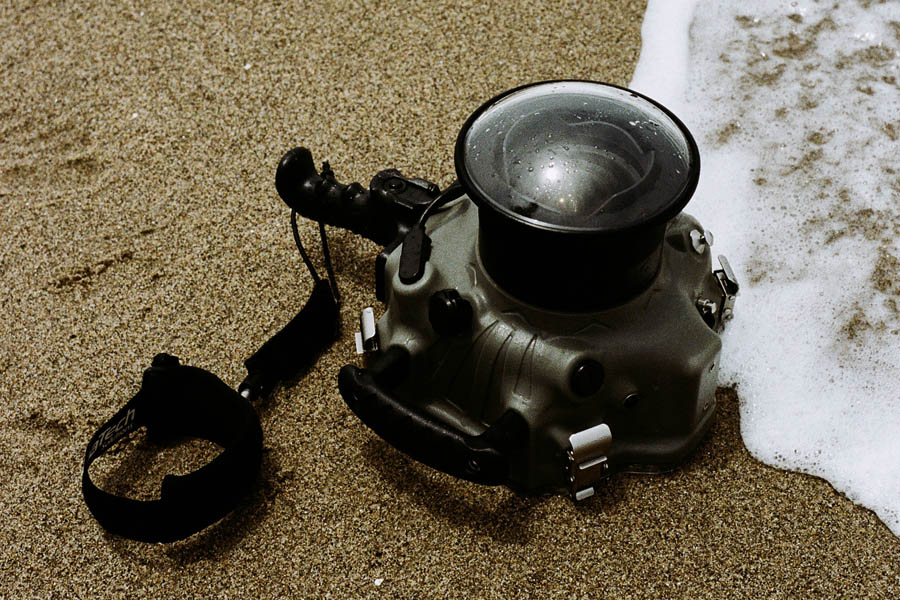
Where is your favorite ocean in world?

Chris: Indian Ocean, Maldives – it’s the ocean as it should be. Perfect water, 85 degrees. You can find your own spot. Door to door from L.A. to Maldives is 30 hours … it’s totally worth it.

What are your go-to tips for staying green while traveling?

Chris: I carry a big 64 ounce reusable water bottle around, which I think is made for beer, but works just fine for water.

I’m obviously against pollution in water. If I am out by the ocean and I see trash I’ll throw it away right there on the spot. We really have to be aware of our actions.

I think people just have to understand that everything comes full circle. What you do has an impact. There’s the whole “I’m just one person” thing, but if everyone doesn’t think like that, we are going in the right direction. For instance, in New York, they used to plow the streets and dump the snow in the water, but they stopped it, which is great. But there are so many other actions happening that have to stop to make our oceans cleaner. Fortunately, people are more aware than ever before.
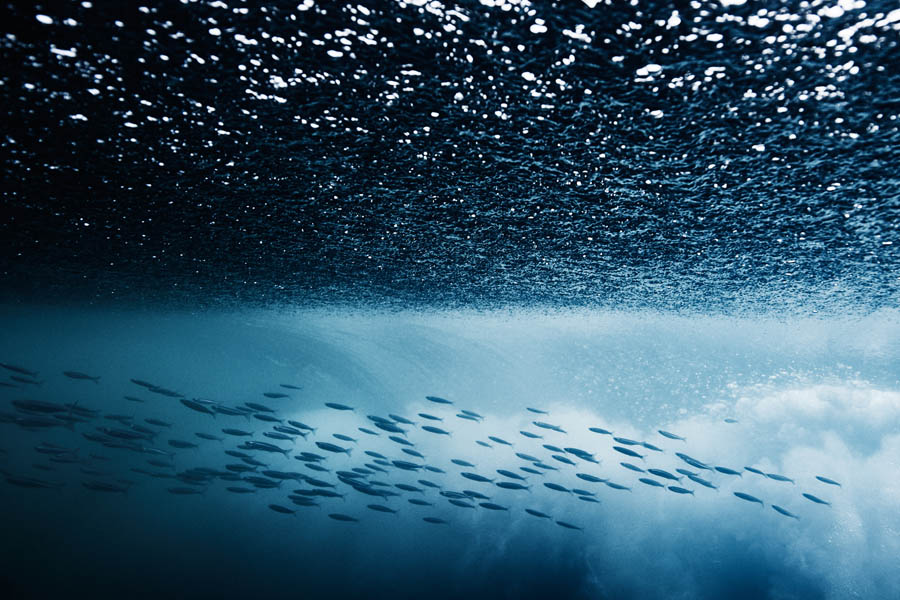

“Layers of Life” by Chris DeLorenzo


Come to our Featured Earth Month Event:
“Breath of Disruption” Exhibit by Chris DeLorenzo at Gallery 169

Gallery 169, the “hub + cultural generator” of Santa Monica Canyon, is hosting an exhibit “Breath of Disruption” by LA/NY based photographer Chris DeLorenzo. The collection features beautiful, abstract photos taken under waves along the Southern California coast. Gallery entry is free. Best of all, 10% of proceeds from artwork sales in April support Heal the Bay.
When: April 8, 5-8pm (Artist meet and greet with Chris DeLorenzo from 5-5:30pm)
Where: 169 W Channel Rd, Santa Monica, CA 90402
See More


Chris DeLorenzo is a 22-year old photographer based in Los Angeles and New York. When he’s not capturing waves underwater he works with top agencies and brands on advertising and editorial content. See his “Breath of Disruption” collection prints and follow him on Instagram.

 

Gallery 169 is the “hub+cultural generator” of Santa Monica Canyon exhibiting established and emerging artists drawing from a rich reservoir of residents. Gallery 169 is located at 169 W Channel Road in Santa Monica, CA 90402. View current exhibits at their site and see more art at Instagram.

Climate change is real. We could lose two-thirds of our beaches in L.A. by 2100, writes Heal the Bay vice president Sarah Sikich.

As a surfer, scientist, and unabashed fan of romanticized sunset walks on the beach, my heart sunk as my news feed was blasted with a double whammy of bad beach news this week.

First, the White House declared war against the smart climate change policies enacted by the previous administration, which served to protect our communities and the economy. Second, the U.S. Geological Survey unveiled a report that projects that Southern California could lose up to two-thirds of its beaches by 2100 due to climate-related sea-level rise. We cannot afford to move backwards with climate policy when now, more than ever, public health and our environment need proactive solutions to mitigate against and adapt to negative impacts related to rising temperatures.

Los Angeles is known for its beaches. They fuel tourism in the region and provide Angelenos a place to breath, relax, and take in the horizon – offering a break from the buzz and stress of city life. But, these beaches also buffer our coastal communities from the incoming tide and pounding waves. With sea level rise projections of up to 6.5 feet by 2100, eroded beaches would give way to flooding in low-lying neighborhoods, such as Wilmington and Venice. Floods would do damage to coastal infrastructure, like PCH and water treatment plants, pump stations, and other structures that service our communities. A detailed report came out last month from USC Sea Grant that projects detailed impacts from sea level rise along the entire Los Angeles County coastline, and the projections are even starker with the new USGS study released this week.


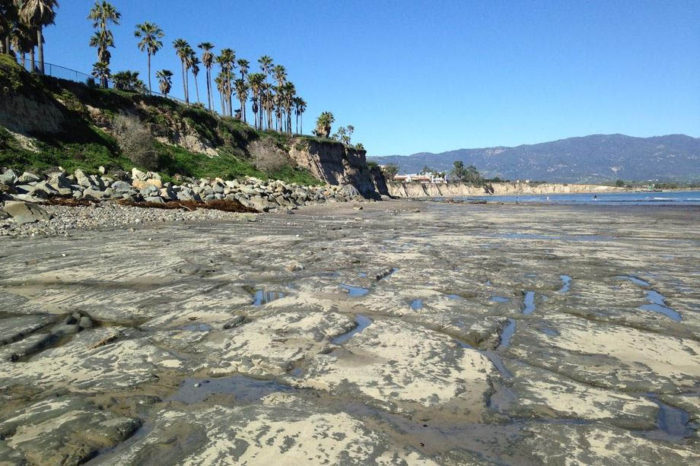
Exposed bedrock on a beach near Santa Barbara. Daniel Hoover, U.S. Geological Survey

The best way to prepare our coastal communities is to invest in strong climate policy in two ways: mitigating the impacts of climate change by curbing emissions, and by buffering our built and natural environments through adaptation measures that help protect against climate change impacts already underway.

These measures work best when the natural environment is enhanced through measures like dune restoration, protecting and restoring kelp forests, and beach nourishment. And, as demonstrated by the USGS study, agency research is a critical part of the process. Unwinding climate policies and gutting budgets for EPA and NOAA — key agencies that invest in climate research and preparedness — will only leave us with our heads in the sand, drowning from the rising seas.

The good news is that research, planning, and management measures can be put into place to help curb the impacts from sea-level rise. But, the longer we wait, the more difficult it will be to take meaningful action. Now is the time to double down on efforts to prepare and defend our coastlines. Please join Heal the Bay and our supporters in making your voice heard by signing our petition calling for funds to be maintained for climate programs in both NOAA and EPA. More than 70,000 ocean lovers and science believers have joined the call. Please add your voice.

Some comments from our supporters around the nation:

“I’m signing because I believe in science. Climate change is real, and our planet is in peril.” – Andrea from Mill Valley, CA

“These cuts in funding are directly against our country’s and humanity’s best interests.” – Floyd from Anchorage, AK

“The EPA is indispensable – I want myself, my family, my community, my country and my planet to be protected!” – Meg from Salt Lake City, UT

“Any proposed reduction in funding for the EPA and NOAA will adversely affect the U.S.’s ability to combat climate change in ways that we cannot afford.” – Elizabeth from Dallas, TX


california earth month and earth day with heal the bay

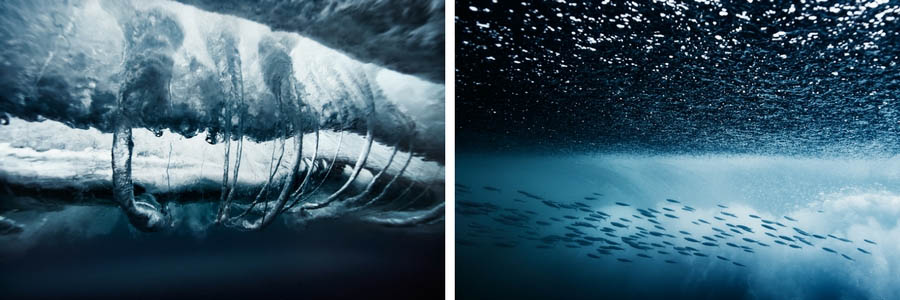
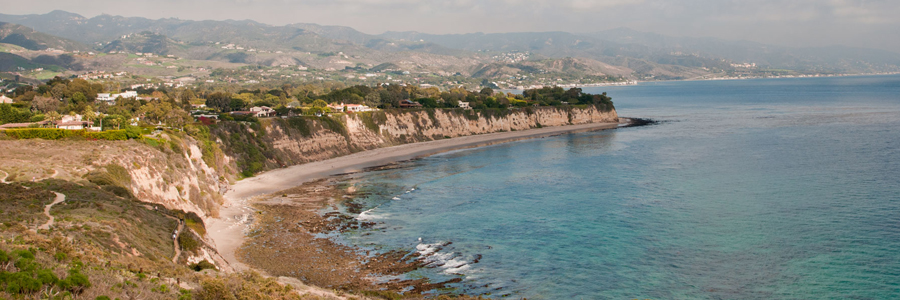
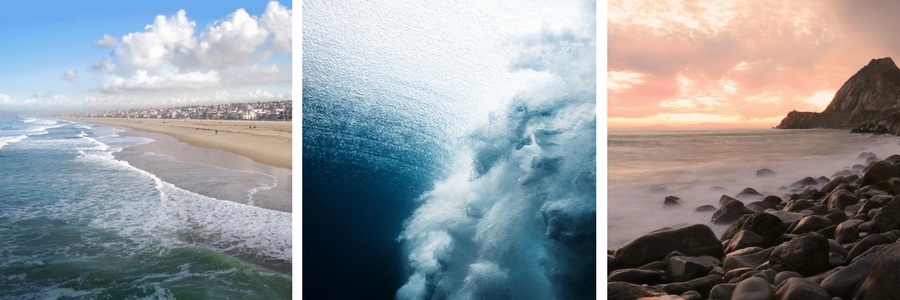
L: South Bay. C: Underwater in SoCal by Chris DeLorenzo. R: Rocky Point at Mugu Beach.

Our excitement for Earth Day can’t be contained to just 24 hours – that’s why we’re celebrating our environment all month long. Of course it goes without saying, every month is Earth Month at Heal the Bay, but April will be something else altogether.

This month, Heal the Bay is involved in over 40 different events and programs all over Los Angeles County. From an epic sandcastle competition to our monthly beach cleanup, to exciting new activities at the Santa Monica Pier Aquarium — below are the best science, art, and educational events to celebrate a clean and thriving ocean this April.

So choose your path, have fun, learn something new, and make a wave with us all month long to protect what we love.

Featured Earth Month Events

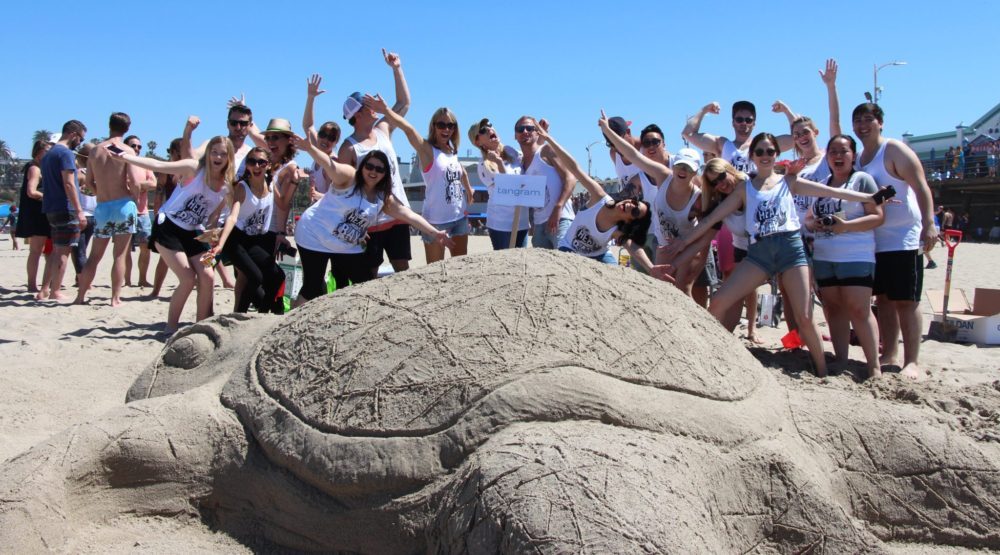
Protect What You Love Sandcastle Competition

Unleash your inner architect! Builders are wanted for a friendly competition with Heal the Bay and the Boys & Girls Club to design some amazing sandcastles in celebration of Earth Month. Do you have what it takes to work on the sandy shores while curious beach cleanup volunteers stand by?
When: April 15, 8:30-11:30am
Where: Santa Monica Beach near Lifeguard Tower 1550
Sign Up


Nothin’ But Sand Beach Cleanup

UPDATE: Amazing! This Earth Month event is totally maxed out. Lots more to sea hare… eh hem… see here:

-Hop on over to the beach cleanup at Ballona Creek on Earth Day.

-Help out Pacoima Beautiful at a cleanup in the City of San Fernando on Earth Day.

-Come to our volunteer orientation in April to learn more about all the opportunities to give back with Heal the Bay.

-Sign up for our beach cleanup in May.

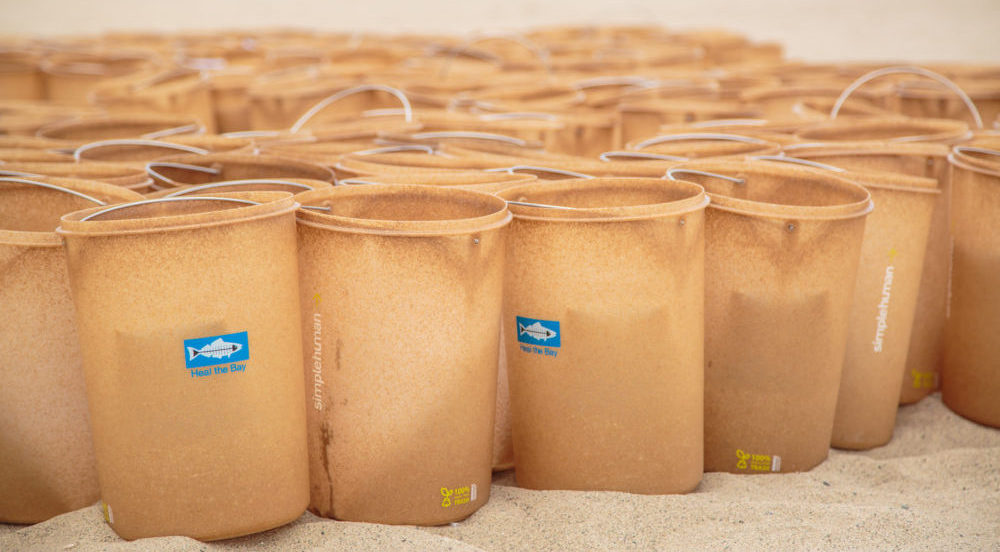
Do you like dirty beaches? NO!? Then, one of these buckets has your name on it. In April, we’re gathering in full force to sweep Santa Monica Beach clean and leave behind Nothin’ But Sand. This is a great opportunity for families and friends to volunteer for good cause. Feel free to saunter on over to the nearby Sandcastle Competition and gaze upon the sandy constructions. Participants also earn free admission to the Santa Monica Pier Aquarium that afternoon, and with it the chance to interact with the local animals that call our Bay home.
When: April 15, 10am-12pm
Where: Santa Monica Beach near Lifeguard Tower 1550
RSVP


March for Science on Earth Day with Heal the Bay

H2O is life! The rest is just science. As a science-based organization, we know that scientific literacy drives informed decision-making. That’s why on Earth Day we are marching for science in Los Angeles — joining hundreds of other locations worldwide and thousands of scientists and advocates — because the threats to our local waters and waterways are real and must be addressed scientifically.
When: Earth Day, April 22, 9am-12:30pm
Where: Pershing Square, 532 South Olive Street, Los Angeles, CA 90013
See More


Earth Day at Santa Monica Pier Aquarium

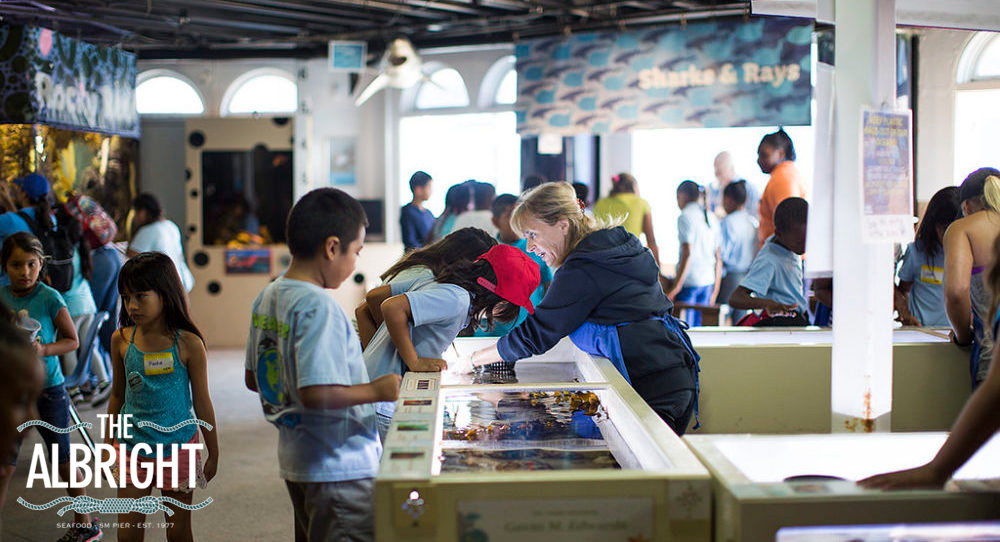
Thanks to our friends at The Albright, admission to the Santa Monica Pier Aquarium will be free on Earth Day! It will be chock-full of eco-friendly activities down at the Santa Monica Pier Aquarium. Make a biodegradable planter, enjoy a special Earth Day story time followed by live animal presentation, join in our interactive “Who Pollutes?” presentation, and check out the local fauna.
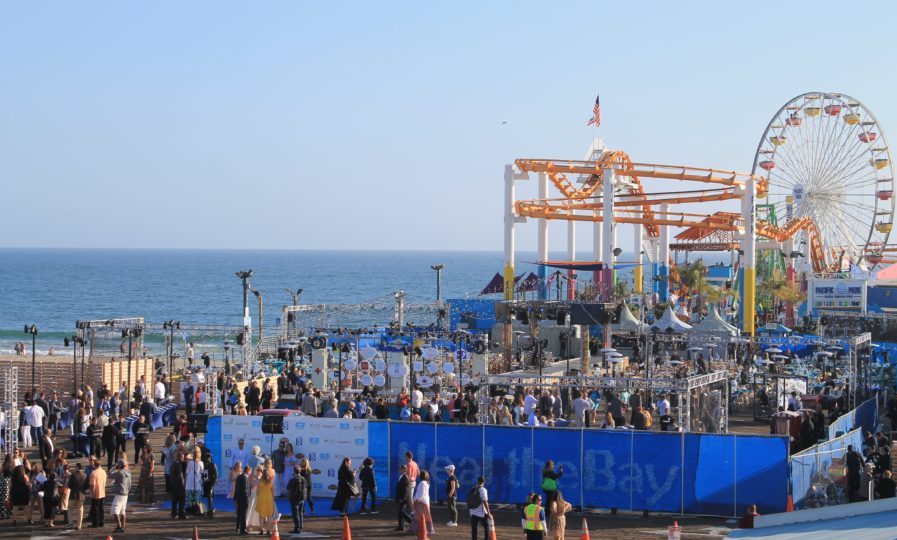
When: Earth Day, April 22, 12:30pm-5pm
Where: Santa Monica Pier Aquarium
See More


“Breath of Disruption” Exhibit by Chris DeLorenzo at Gallery 169

Gallery 169, the “hub + cultural generator” of Santa Monica Canyon, is hosting an exhibit “Breath of Disruption” by LA/NY based photographer Chris DeLorenzo. The collection features beautiful, abstract photos taken under waves along the Southern California coast. Gallery entry is free. Best of all, 10% of proceeds from artwork sales support Heal the Bay. See a fresh interview with Chris DeLorenzo.
When: April 8, 5-8pm (Artist meet and greet with Chris DeLorenzo from 5-5:30pm)
Where: 169 W Channel Rd, Santa Monica, CA 90402
See More


Spring Break Camp at the Aquarium

In honor of Earth Month, our campers will have fun becoming Planet Protectors as they explore the ocean through games, crafts, animal interactions, beach investigations, and science experiments.
When: April 10–14, 9am–2pm daily
Where: Santa Monica Pier Aquarium
Sign Up


Malibu Library Speaker Series Presents Dr. Sylvia Earle

The April 2017 Malibu Library Speaker Series has a special treat in store for Earth Month. Dr. Sylvia A. Earle, world renowned oceanographer, explorer, author, diver, and former chief scientist of NOAA (among many, many other brilliant things) will speak about her extraordinary experiences.

When: Wednesday, April 12, 7pm
Where: Elkins Auditorium, Pepperdine University
See More


Aquarium Volunteer Open House

Learn about all our amazing volunteer and internship opportunities at the Santa Monica Pier Aquarium, requirements to join our volunteer and intern teams, and Aquarium expectations, as well as all the great benefits the Aquarium has to offer our volunteers and interns.
When: April 13, 6-6:45pm
Where: Santa Monica Pier Aquarium
RSVP


The City Nature Challenge 2017

Even in urban settings the natural environment is all around us, sometimes hidden in plain sight. Exploring and documenting nature in cities is critical, which is why we rely on citizen science to sustain and grow our knowledge. What better way to celebrate National Citizen Science Day on 4/15 than to rep Los Angeles in the the City Nature Challenge 2017? Roll up your sleeves, whip out your cellphone or camera, and go for a walk outside to help Los Angeles get smarter about its natural environment. Over a dozen U.S. cities are competing to see who can observe the most nature from 4/14-4/18. PS – When you are documenting species, please be mindful not to disturb the wildlife and habitat.
When: April 14-18
Where: Everywhere in L.A.! No, really.
See More


Heal the Bay’s Volunteer Orientation

Get an introduction to Heal the Bay, our current issues, and how you can get involved in one of our many exciting volunteer programs. Founded on the principle that one person can make a difference, we’ve empowered thousands of volunteers to improve their environment and communities. Now you can make a difference too.
When: April 17, 7pm-9pm
Where: Heal the Bay main office, 1444 9th St, Santa Monica, CA 90401
RSVP


Earth Focus: “Vanishing Coral” Documentary

Tune in for the latest episode of EARTH FOCUS, a television program that reflects on Earth’s changing resources and climates and how it affects people, animals, and habitats all over the world. This installment explores the story of scientists and naturalists who are working with local communities to protect coral reefs that are facing imminent danger from warmer seas, pollution, and unsustainable fishing practices. 
When: April 18, 8:30pm
Where: Your couch or on the go via: KCET in Southern California, Link TV Nationwide. Also streaming at KCET.org/Coral and LinkTV.org/Coral.


Ella Fitzgerald’s 100th Birthday

We’re thrilled to celebrate Ella Fitzgerald’s “would-be” 100th birthday at the Santa Monica Pier Aquarium. There will be Ella-themed decor and music, and the chance to feed some sea stars in honor of one of our favorite stars. The Ella Fitzgerald Charitable Foundation has been an amazing partner to Heal the Bay for the past 7 years, providing assistance in educating over 7,760 students about protecting the ocean.
When: April 25, 2-5pm
Where: Santa Monica Pier Aquarium
See More


LA2050 #EarthMonthLA Pledge

Did you know Los Angeles has an ambitious goal of becoming the healthiest place to live by the year 2050? Metrics like sourcing local water, utilizing public transportation and reducing air toxins are all being tracked so we can see our progress and reach our target. What better time to reflect on creating a more resilient LA than Earth Month? Take LA2050’s Earth Month Pledge with us and learn more about our 2050 goal.
When: All Month Long
Where: Anywhere
See More


If you can’t make it to any of our events in April, you can still make your voice heard by signing our petition urging Congress to maintain EPA & NOAA funding. Keep the Earth Month party going in May, and reserve your seat for our annual awards gala at the Santa Monica Pier. Don’t miss out! This exclusive seaside experience happens just once-a-year and goes a long way towards our mission to make Greater L.A.’s coastal waters and watersheds safe, healthy, and clean.