Top

Heal the Bay Blog

Category: Locations

Leslie Griffin, Heal the Bay’s chief water quality scientist and Beach Report Card manager, likes to kiss and tell. Here’s her list of the cuddliest spots for couples along the California shoreline.

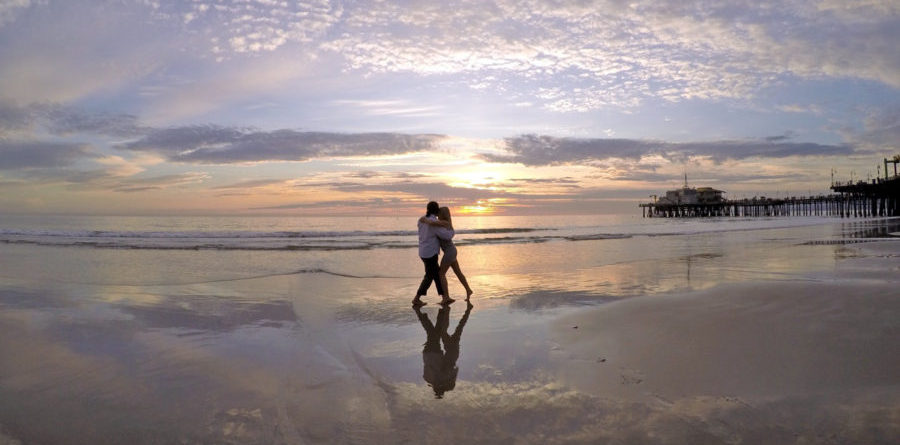
Wanna enjoy a long walk on the beach?

I know it sounds like a line, but this lovers’ activity is a cliché for a reason. A seaside stroll proves both calming and romantic, with the vast ocean rippling along the shore while your toes sink into the cool sand. Or maybe your dream beach date consists of gazing at a gorgeous sunset while you enjoy a seaside picnic.

Either way, we are all about getting a little sandy, whether with a loved one, a friend, or for a little solo escape into the outdoors for some dedicated me time.

Here are 10 spots we love for love (and their great water quality too!):

Torrey Pines, San Diego
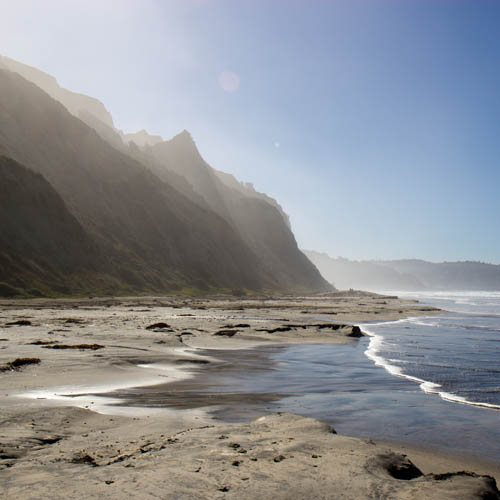
Source: Dan_H, flickr

What we love about it: Torrey Pines State Beach has picturesque views of the San Diego coastline and the adjacent Torrey Pines State Reserve is filled with little trails leading down to the shore. We recommend that you only take marked trails and watch your footing, but the views are worth the adventure.

What to do here: We love the Torrey Pines Trail to Black’s Beach in the morning for a beautiful way to start your day. Fair warning: some nudists like to visit this beach as well.

Water Quality: The only sampling site at Torrey Pines is at the Los Penasquitos Lagoon outlet. That site received good grades in our most recent annual Beach Report Card.


La Jolla, San Diego
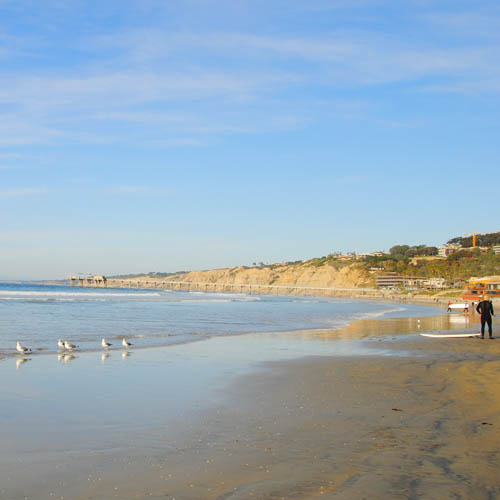
Source: Wikipedia Commons

What we love about it: This spot is great for lovers and families alike, with plenty of adventure to be had by all ages.

What to do here: This is the perfect spot for a SUP (stand up paddleboard) adventure, snorkeling, kayaking, or even just a picturesque walk along the beach. For stunning ocean views over dinner, check out the Marine Room at the La Jolla Beach and Tennis Club.

Water Quality: La Jolla shores received great grades in our annual report last year.


Victoria Beach, Orange County
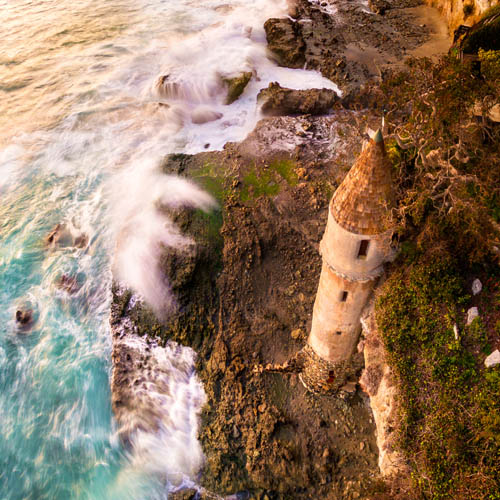
Source: Daniel Peckham, flickr

What we love about it: Straight out of a fairy tale, this shoreline spot is guarded by La Tour, a 60-foot castle-inspired tower.  Built in 1926, the structure provided beach access for a home on the cliff above.

What to do here: Looking to be someone’s knight in shining armor? Look no further. To get here, walk to the north end of Victoria Beach in Laguna Beach, around the bluff and past another sandy section of beach. (This is a privately owned structure, so while you can walk up to it, please do not try to go inside or climb on the structure.)

Water Quality: Victoria Beach received A+’s across the board in our last annual report.


Crystal Cove State Park, Orange County
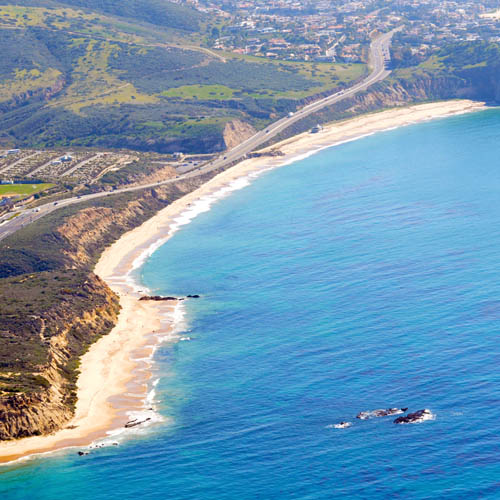
Source: Wikipedia Commons

What we love about it: With such a long swath of open sandy shores, this is an ideal spot for a romantic seaside stroll, or perhaps for a love-inspired photoshoot.

What to do here: If you’re looking for post-beach walk eats with an ocean view, the Beachcomber Café is a fun option.

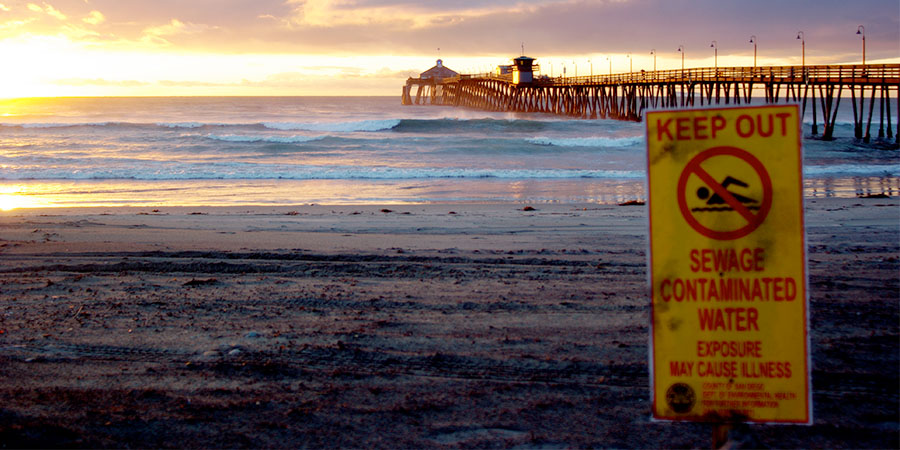
Water Quality: Crystal Cove has great water quality in the summer or whenever the weather has been dry. Given the buckets of rain we have (thankfully) gotten this year, make sure to heed any beach posting signs you may see.


Palos Verdes Peninsula, Los Angeles
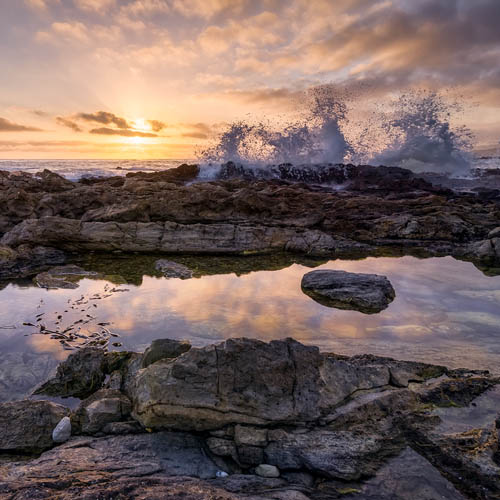
Source: Mark Esguerra, The Marke’s World

What we love about it: We love the PV areas so much, we had to lump the whole peninsula together as one of our top locations. Palos Verdes wraps around from the base of the South Bay down to San Pedro, and features beautiful neighborhoods, coastal trails, clean beaches, and tidepool adventures.

What to do here: If you’re looking for some marine biology-inspired adventure, time your visit for low tide to go tidepooling at Abalone Cove. For a short hike and a hidden rocky beach, check out Palos Verdes Bluff Cove.

Water Quality: The Palos Verdes area is home to multiple Honor Roll beaches, including Abalone Cove Shoreline Park.


El Matador State Beach, Malibu
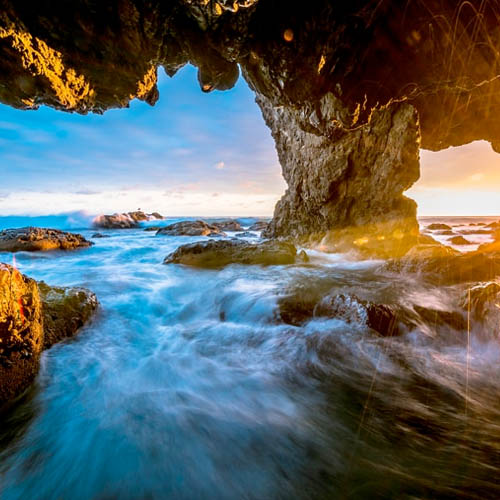
Source: Elliot McGucken, 500px

What we love about it: This was easily the top rated romantic spot by Heal the Bay staff. Dramatic cliffs and coves (and even secret sea caves) make this beach feel like the backdrop of a steamy Hollywood romance scene. Whether it’s energizing a new flame or a longtime squeeze, you can expect El Matador to light your fire.

What to do here: Explore the dramatic landscape, take Instagram-worthy photos, find little hideaway spots for you and your date to share secret kisses, and wrap up your evening with a gorgeous sunset view.

Water Quality: El Matador is an Honor Roll beach with awesome water quality.


Arroyo Burro, Santa Barbara

Source: Damian Gadal, flickr

What we love about it: Santa Barbara is the perfect little getaway for a weekend of romance. If you’re looking for some time together to rest, rejuvenate, and rekindle the fire, Santa Barbara is the perfect place.

What to do here: We love Arroyo Burro for a sunset walk, and with plenty of parking and restroom access it’s a stress-free beach walk experience.

Water Quality: Arroyo Burro has great water quality in the summer or whenever it has been dry enough that the creek hasn’t breached. Make sure to heed any beach posting signs you may see if you’re feeling like taking a dip. But if the creek is flowing, be sure to stick to the sand over the waves.


Big Sur Coastline, Monterey
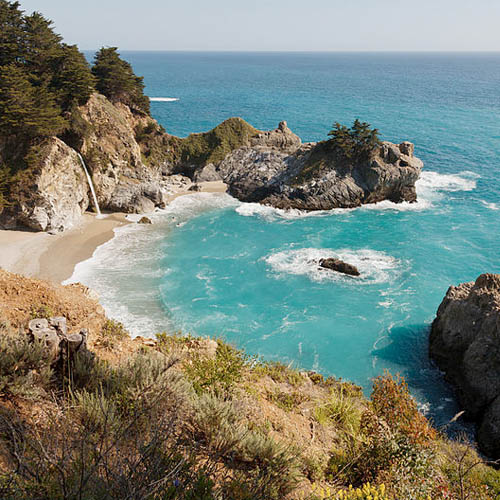
Source: Wikipedia Commons

What we love about it: Another area that is just so beautiful, we can’t limit it to just one beach. The shoreline in Big Sur is renowned for its rustic coastal beauty. A drive along the twisty coastline is certain to inspire awe. Pull off whenever your heart desires, and be sure to take photos so you can revisit the view whenever you like.

What to do here: McWay Falls is a stunning spot where you can watch a perfect little waterfall pouring directly to the beach. The Bixby Canyon Bridge is another cult favorite, and there’s even a Death Cab for Cutie song to match. There are plenty of hiking trails, camping sites, and little cafes to warm up in.

Water Quality: Monterey water quality testing only extends as far south as Carmel, so while there aren’t any sampling sites to rely on, the area is un-urbanized and thus less likely to have bacterial problems.


Baker Beach, San Francisco
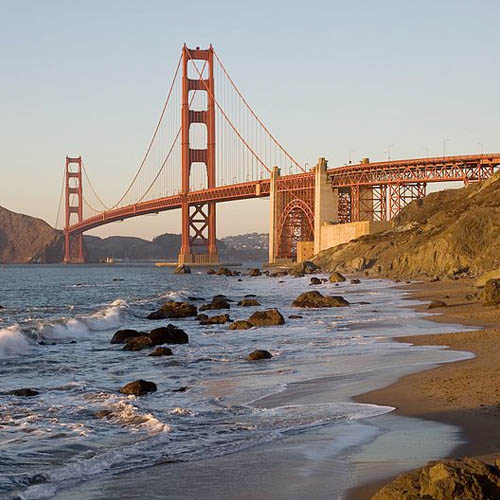
Source: Wikipedia Commons

What we love about it: If you’re in the Bay Area and looking for an ideal view of the Golden Gate Bridge, this is our favorite sandy spot.

What to do here: The dramatic backdrop makes this spot ideal for a photo shoot, or even just a quick selfie-sesh. We’d recommend cuddling up for a romantic picnic and enjoying the sunset together.

Water Quality: Just be sure to avoid swimming near the creek outlet if you’re looking to take a penguin dip.


Point Reyes National Seashore, Marin County
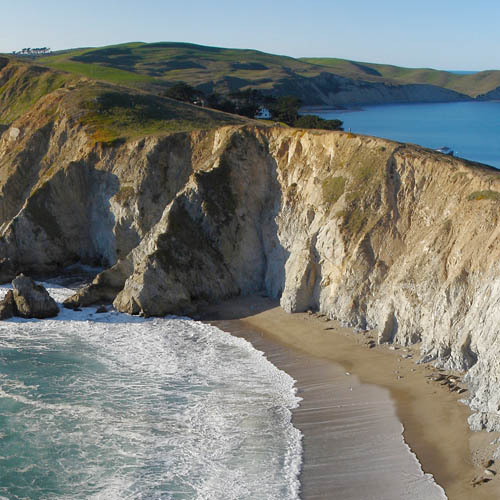
Source: Wikipedia Commons

What we love about it: The farther north you go in California, often the more dramatic and rural the coastal landscape. This National Seashore is a prime example of that raw beauty, and it is sure to take your breath away.

What to do here: There a quite a few campgrounds and hiking trails within the area if you’re looking to get back in touch with nature.

Water Quality: Marin County no longer samples within this area. The closest active sampling station is Bolinas Beach (another beautiful spot), just south of Point Reyes.


Heal the Bay’s Beach Report Card is the only comprehensive analysis of coastline water quality in California. We monitor more than 500 beaches weekly from Oregon to the Mexico border, assigning an A to F grade based on the health risks of swimming or surfing at that location.

summer camp in los angeles

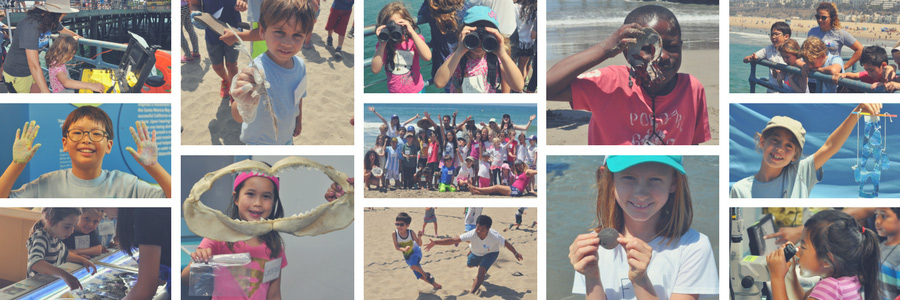
When school is out, camp is in. Whether it’s during spring break or summer vacation, our aquarium camp at the Santa Monica Pier Aquarium offers the perfect balance of fun and learning for your child in an environment that fosters interaction with 100 species of marine life.

Wondering what your child can expect at camp? Here are some of the fun activities young marine biologists can look forward to at our Santa Monica Pier Aquarium camp:

1. Interact with live animals.

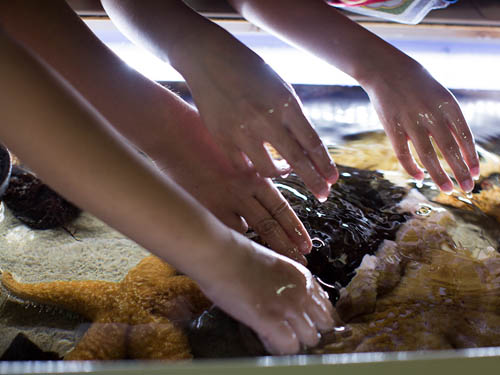
Whether you’re having a staring contest with a wolf eel or getting a hug from a sea urchin, you’re sure to fall in love with the animals that call Santa Monica Bay home.

2. Explore the beach like a scientist.


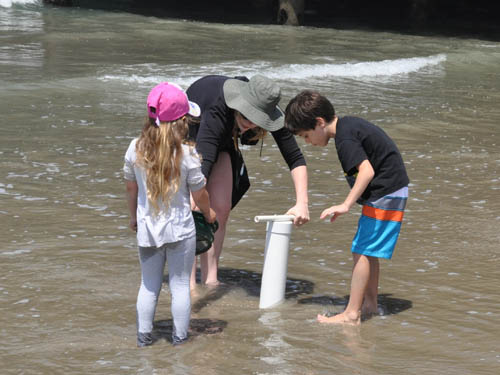
Become a beach detective by looking for clues of life and living animals. The Santa Monica Beach is home to lots of cool critters and we regularly find sea birds, sand crabs, worms, striped shore crabs, and more.

3. Play awesome games.

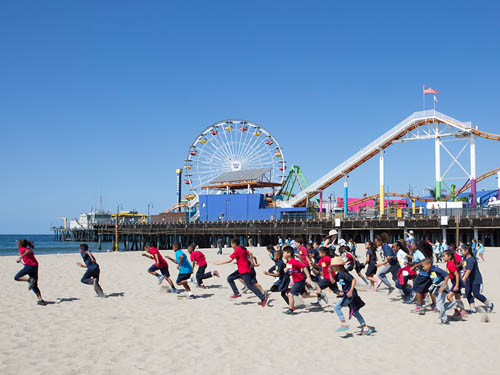
It wouldn’t be camp without time to just run around and play in the sand, sea, and sunshine.

4. Let your creativity shine with arts & crafts.

Crayons, check. Glue, check. Scissors, check. Streamers, check. Put it all together and you get…an eviscerating sea star! Our ocean crafts are super fun and add the “A” for “Art” into STEAM education.

5. Excite your curiosity with hands-on science.

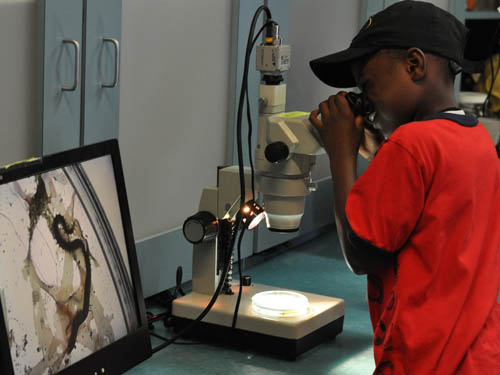
The minute our campers walk through our doors, they become scientists with us. From looking at plankton under the microscope, to running a test on water density, to dissecting a squid, our camps encourage scientific questioning and experimentation in a safe and educational environment.

6. Have fun with your friends – both new and old.

Whether you come to camp with your buddies, or meet new ones here, camp is always better when you have someone to share the experience.

7. Help protect your favorite animals by becoming an ocean steward.

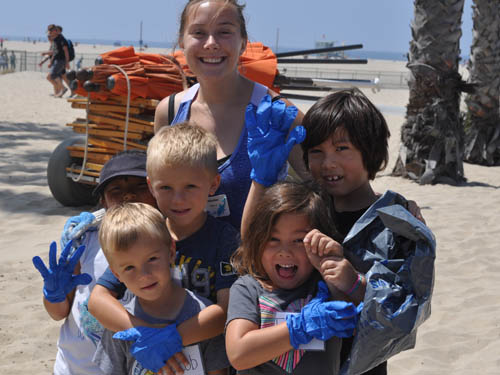
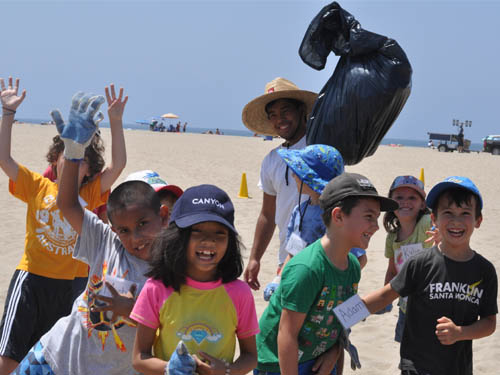
Just like our Heal the Bay mission, our camp focuses on ways we can protect the ocean and its inhabitants. As we clean trash off of the beach and brainstorm ways to go green, our campers earn the right to call themselves Planet Protectors.


And here’s what some parents are saying about our camps:

“Amazing counselors, well-organized, enthusiastic children and overall excellent!”

“My daughter loved dissecting squid and all the beach activities. This is the second year she has gone to Santa Monica Aquarium Camp and it is her favorite camp of the summer. She loved her counselors and how exciting they all made marine science and ecology to her – she wants to be a marine biologist!”

“First day my son said, ‘I learned a new word, Bioluminescence’ to multiple people!”

So what are you waiting for? Let’s dive in!

Please visit healthebay.org/camps for more information and enroll today.


Por Matthew King | traducido por Beatriz Lorenzo | 25 enero 2017

La semana pasada el nuevo gobierno ordeno la congelación de los fondos para las becas y los contratos con la EPA. El director de comunicaciones Matthew King repasa cinco formas en las que esta directiva podría dañar la bahía.

Estos son tiempos revueltos y extraños en Washington D.C. Muchos conservadores y populistas están eufóricos con el nuevo gobierno, mientras que los progresistas cada día que pasa se sienten más pesimistas.

También nos podemos aventurar a decir que también son tiempos revueltos en nuestras oficinas a medida que vamos entendiendo y procesando lo que las acciones de la administración de Trump suponen para nuestro trabajo y para la bahía.

Como un perro guardián de confianza, Heal the Bay se guía por la mejor ciencia y no por las emociones. Y cuando una acción federal de la nueva administración amenaza la salud y el bienestar de la Bahía, hablamos bien claro.

Pues bien, éste es uno de esos momentos.

La semana pasada llegué al trabajo y nos enteramos de que la nueva administración había impuesto la congelación inmediata de todos los contratos y becas de la Agencia de Protección Ambiental de Estados Unidos (U.S. EPA). El alarmante procedimiento “amenaza con interrumpir operaciones tan importantes como las limpiezas de tóxicos o la monitorización de la calidad del agua”, según la investigación de ProPublica.

En total, la U.S. EPA reparte aproximadamente unos $6.4 billones en becas federales cada año para apoyar testeos, limpiezas e iniciativas para la recuperación, incluyendo varios de los programas de Heal the Bay.

Los funcionarios de la transición insisten en que es una mera pausa para permitir a los nuevos gerentes valorar si los programas deben continuar. Pero los empleados con más antigüedad y abogados especializados dan una imagen diferente – normalmente se congelan las contrataciones de empleados, pero no las becas, esto es inusual y amenaza con la interrupción de las contratas.

Según ProPublica, así respondió un contratante con la EPA a las preguntas de un empleado de una gestora de aguas pluviales: “ahora mismo estamos esperando. La nueva administración de la U.S. EPA ha pedido que todas las contratas y becas se suspendan temporalmente con efecto inmediato. Y hasta que recibamos clarificación del asunto, esto incluye tareas y asignación de proyectos.”

Hay muchas preguntas en el aire con esta suspensión, como cuanto durara y a que contratas impactara de modo más directo.

Como destinatarios de casi $200,000 anuales en formas de becas de la U.S. EPA estamos preocupados. De forma similar, muchas de las organizaciones con las que estamos asociados reciben fondos federales que impulsan iniciativas de colaboración con Heal The Bay.

Aún tenemos más preguntas que respuestas, pero vamos a ver el top 5 de los que se podrían ver afectados por la congelación de los fondos:

  1. Monitorización habitual de la calidad del agua de las playas

Nuestro Informe de Playas da una nota semanalmente de A a F a más de 500 playas en California, evitando que millones de personas que van a la playa se pongan enfermas. Los fondos de la U.S. EPA respaldan el testeo semanal del agua llevado a cabo por muchas agencias de salud condales por todo el estado. Sin dinero = no hay testeo = no hay datos = no hay informe de playas = puesta en peligro de la salud pública. En el pasado nos hemos enfrentado a problemas de este estilo cuando ha habido reducciones temporales del presupuesto, y hemos podido articular fondos poco a poco para poder seguir haciendo la monitorización. Pero ahora mismo, respecto a programas en las playas, no hay un plan del estado u otras instituciones financieras de recoger los pedazos que la EPA ha dejado.

  1. Mantener los ríos y arroyos locales sanos.

La salud de la bahía no se puede separar de la salud de las aguas que desembocan en ella. Arroyos, ríos y riachuelos fluyendo limpios traen consigo numerosos beneficios medioambientales, de hábitat, de mejor calidad del agua y de espacios de ocio. La U.S. EPA financia nuestro programa Stream Team pagando a los científicos empleados en la monitorización del agua y educación del público en lo referido al rio de Los Ángeles. Programas como el U.S. EPA’s Urban Waters Grant están especialmente diseñados para respaldar la restauración y protección de importantes vías de agua que fluyen por nuestras comunidades en los sitios en los que se necesita más un entorno natural al aire libre. La pérdida de programas como este es particularmente devastador para L.A.

    1. Proteger nuestros menguantes humedales

L.A. ya ha perdido el 95% de sus lagunas costeras. Con el cambio climático y la urbanización invadiendo los pocos humedales que quedan, es crítico que actuemos ya para defender este hábitat natural. A través del National Estuary Program, la U.S. EPA trabaja para coordinar la protección y restauración de hábitats importantes en la bahía de Santa Mónica, como el Ballona Wetlands o las dunas costeras. Sarah Sikich, vicepresidenta de Heal the Bay’s, es también la vicepresidenta de la Junta Directiva de la Comisión de Restauración de la Bahía de Santa Mónica (Santa Monica Bay Restoration Commission Governing Board), el socio estatal del programa nacional de estuarios (National Estuary Program). Sin esta comisión, la protección y revitalización de los hábitats y de la calidad del agua en la Bahía de Santa Mónica quedaría seriamente incapacitada.

Son iniciativas esenciales para la salud a largo plazo de la bahía y en último caso, del sur de California. Congelar o reducir estos programas sería realmente imprudente.

      1. Deshacerse del DDT en la Bahía

Mucha gente no se da cuenta de que la Bahía es lo que se llama un EPA Superfund site – que significa que somos uno de los lugares más peligrosamente contaminados de la nación. Un espacio de 180 acres de fondo marino cerca de Palos Verdes es el depósito más grande del mundo del pesticida DDT, un legado químico de los años 50 y 60.

El plan a largo plazo de la EPA de limpiar este desastre no debería quedarse en el limbo, ya que existe un acuerdo legal que requiere la limpieza de estos vertidos para proteger la vida animal y la salud pública.

      1. Prevenir el consumo de pescados locales contaminados

Gran cantidad de los peces pescados en la Bahía de Santa Mónica son aptos para el consumo. Pero algunas especies están contaminadas con niveles tóxicos de DDT, PCB y mercurio. Gracias a los fondos de la EPA, nuestro laureado equipo “Pier Angler Outreach” ha sondeado los sitios comunes de pesca local y ha advertido directamente a cerca de 150,000 personas sobre los peces aptos o no para consumo en una variedad de idiomas, desde tagalo a español. Por ser este un trabajo contratado requerido por un acuerdo legal, se encuentra en peligro por la congelación de fondos.

Por último, la congelación de fondos y contratas son parte de preocupaciones mayores. El nuevo gobierno ha empezado a avanzar amenazas reales para reducir programas de aguas limpias y regulaciones para proteger la salud pública; proteger hábitats como humedales y arroyos que amortiguan los impactos del cambio climático en comunidades y salvaguardan la fauna y otros logros importantes en materia de medioambiente.

Amordazando a sus agencias para que no comuniquen su importante labor y el estado real del medioambiente también es perjuicio enorme para el público, pues mantiene a los americanos en la ignorancia sobre importantes descubrimientos y sobre el estado de sus recursos naturales.

En los próximos días, prometemos compartir más información sobre los cambios de la U.S. EPA según los vayamos recibiendo. Y aun preocupados por las acciones de la semana pasada, seguimos en alerta por si se retira algunas de las regulaciones federales de las que se ha hablado que tuviese impacto en California. Si le preocupan estos problemas, es el momento de hacer oír su voz.

Contacte a su representante para pedirle la protección de estos programas tan importantes para el medioambiente. Pronto pondremos en marcha una alerta para que pueda pedir a los legisladores que mantengan los fondos de la EPA que más afectan a la Bahía en marcha. Permanezca a la escucha.

Según vamos haciendo la estrategia para la respuesta formal a la congelación de fondos, le animamos a hacer una donación para respaldar nuestro trabajo protegiendo la Bahía.


Por Matthew King | traducido por Beatriz Lorenzo | 25 enero 2017

La semana pasada el nuevo gobierno ordeno la congelación de los fondos para las becas y los contratos con la EPA. El director de comunicaciones Matthew King repasa cinco formas en las que esta directiva podría dañar la bahía.

Estos son tiempos revueltos y extraños en Washington D.C. Muchos conservadores y populistas están eufóricos con el nuevo gobierno, mientras que los progresistas cada día que pasa se sienten más pesimistas.

También nos podemos aventurar a decir que también son tiempos revueltos en nuestras oficinas a medida que vamos entendiendo y procesando lo que las acciones de la administración de Trump suponen para nuestro trabajo y para la bahía.

Como un perro guardián de confianza, Heal the Bay se guía por la mejor ciencia y no por las emociones. Y cuando una acción federal de la nueva administración amenaza la salud y el bienestar de la Bahía, hablamos bien claro.

Pues bien, éste es uno de esos momentos.

La semana pasada llegué al trabajo y nos enteramos de que la nueva administración había impuesto la congelación inmediata de todos los contratos y becas de la Agencia de Protección Ambiental de Estados Unidos (U.S. EPA). El alarmante procedimiento “amenaza con interrumpir operaciones tan importantes como las limpiezas de tóxicos o la monitorización de la calidad del agua”, según la investigación de ProPublica.

En total, la U.S. EPA reparte aproximadamente unos $6.4 billones en becas federales cada año para apoyar testeos, limpiezas e iniciativas para la recuperación, incluyendo varios de los programas de Heal the Bay.

Los funcionarios de la transición insisten en que es una mera pausa para permitir a los nuevos gerentes valorar si los programas deben continuar. Pero los empleados con más antigüedad y abogados especializados dan una imagen diferente – normalmente se congelan las contrataciones de empleados, pero no las becas, esto es inusual y amenaza con la interrupción de las contratas.

Según ProPublica, así respondió un contratante con la EPA a las preguntas de un empleado de una gestora de aguas pluviales: “ahora mismo estamos esperando. La nueva administración de la U.S. EPA ha pedido que todas las contratas y becas se suspendan temporalmente con efecto inmediato. Y hasta que recibamos clarificación del asunto, esto incluye tareas y asignación de proyectos.”

Hay muchas preguntas en el aire con esta suspensión, como cuanto durara y a que contratas impactara de modo más directo.

Como destinatarios de casi $200,000 anuales en formas de becas de la U.S. EPA estamos preocupados. De forma similar, muchas de las organizaciones con las que estamos asociados reciben fondos federales que impulsan iniciativas de colaboración con Heal The Bay.

Aún tenemos más preguntas que respuestas, pero vamos a ver el top 5 de los que se podrían ver afectados por la congelación de los fondos:

  1. Monitorización habitual de la calidad del agua de las playas

Nuestro Informe de Playas da una nota semanalmente de A a F a más de 500 playas en California, evitando que millones de personas que van a la playa se pongan enfermas. Los fondos de la U.S. EPA respaldan el testeo semanal del agua llevado a cabo por muchas agencias de salud condales por todo el estado. Sin dinero = no hay testeo = no hay datos = no hay informe de playas = puesta en peligro de la salud pública. En el pasado nos hemos enfrentado a problemas de este estilo cuando ha habido reducciones temporales del presupuesto, y hemos podido articular fondos poco a poco para poder seguir haciendo la monitorización. Pero ahora mismo, respecto a programas en las playas, no hay un plan del estado u otras instituciones financieras de recoger los pedazos que la EPA ha dejado.

  1. Mantener los ríos y arroyos locales sanos.

La salud de la bahía no se puede separar de la salud de las aguas que desembocan en ella. Arroyos, ríos y riachuelos fluyendo limpios traen consigo numerosos beneficios medioambientales, de hábitat, de mejor calidad del agua y de espacios de ocio. La U.S. EPA financia nuestro programa Stream Team pagando a los científicos empleados en la monitorización del agua y educación del público en lo referido al rio de Los Ángeles. Programas como el U.S. EPA’s Urban Waters Grant están especialmente diseñados para respaldar la restauración y protección de importantes vías de agua que fluyen por nuestras comunidades en los sitios en los que se necesita más un entorno natural al aire libre. La pérdida de programas como este es particularmente devastador para L.A.

    1. Proteger nuestros menguantes humedales

L.A. ya ha perdido el 95% de sus lagunas costeras. Con el cambio climático y la urbanización invadiendo los pocos humedales que quedan, es crítico que actuemos ya para defender este hábitat natural. A través del National Estuary Program, la U.S. EPA trabaja para coordinar la protección y restauración de hábitats importantes en la bahía de Santa Mónica, como el Ballona Wetlands o las dunas costeras. Sarah Sikich, vicepresidenta de Heal the Bay’s, es también la vicepresidenta de la Junta Directiva de la Comisión de Restauración de la Bahía de Santa Mónica (Santa Monica Bay Restoration Commission Governing Board), el socio estatal del programa nacional de estuarios (National Estuary Program). Sin esta comisión, la protección y revitalización de los hábitats y de la calidad del agua en la Bahía de Santa Mónica quedaría seriamente incapacitada.

Son iniciativas esenciales para la salud a largo plazo de la bahía y en último caso, del sur de California. Congelar o reducir estos programas sería realmente imprudente.

      1. Deshacerse del DDT en la Bahía

Mucha gente no se da cuenta de que la Bahía es lo que se llama un EPA Superfund site – que significa que somos uno de los lugares más peligrosamente contaminados de la nación. Un espacio de 180 acres de fondo marino cerca de Palos Verdes es el depósito más grande del mundo del pesticida DDT, un legado químico de los años 50 y 60.

El plan a largo plazo de la EPA de limpiar este desastre no debería quedarse en el limbo, ya que existe un acuerdo legal que requiere la limpieza de estos vertidos para proteger la vida animal y la salud pública.

      1. Prevenir el consumo de pescados locales contaminados

Gran cantidad de los peces pescados en la Bahía de Santa Mónica son aptos para el consumo. Pero algunas especies están contaminadas con niveles tóxicos de DDT, PCB y mercurio. Gracias a los fondos de la EPA, nuestro laureado equipo “Pier Angler Outreach” ha sondeado los sitios comunes de pesca local y ha advertido directamente a cerca de 150,000 personas sobre los peces aptos o no para consumo en una variedad de idiomas, desde tagalo a español. Por ser este un trabajo contratado requerido por un acuerdo legal, se encuentra en peligro por la congelación de fondos.

Por último, la congelación de fondos y contratas son parte de preocupaciones mayores. El nuevo gobierno ha empezado a avanzar amenazas reales para reducir programas de aguas limpias y regulaciones para proteger la salud pública; proteger hábitats como humedales y arroyos que amortiguan los impactos del cambio climático en comunidades y salvaguardan la fauna y otros logros importantes en materia de medioambiente.

Amordazando a sus agencias para que no comuniquen su importante labor y el estado real del medioambiente también es perjuicio enorme para el público, pues mantiene a los americanos en la ignorancia sobre importantes descubrimientos y sobre el estado de sus recursos naturales.

En los próximos días, prometemos compartir más información sobre los cambios de la U.S. EPA según los vayamos recibiendo. Y aun preocupados por las acciones de la semana pasada, seguimos en alerta por si se retira algunas de las regulaciones federales de las que se ha hablado que tuviese impacto en California. Si le preocupan estos problemas, es el momento de hacer oír su voz.

Contacte a su representante para pedirle la protección de estos programas tan importantes para el medioambiente. Pronto pondremos en marcha una alerta para que pueda pedir a los legisladores que mantengan los fondos de la EPA que más afectan a la Bahía en marcha. Permanezca a la escucha.

Según vamos haciendo la estrategia para la respuesta formal a la congelación de fondos, le animamos a hacer una donación para respaldar nuestro trabajo protegiendo la Bahía.


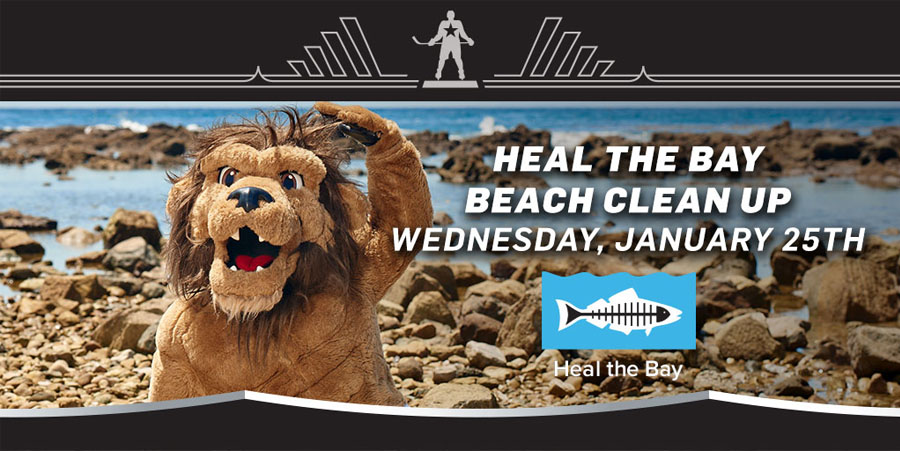
The L.A. Kings and Heal the Bay are lacing up their flip-flops for a multi-site beach cleanup on Jan. 25. Here, communications director Matthew King muses about sports stars on the sand.

OK, I’ll admit it. I’ve become a little jaded after participating in dozens of beach cleanups.

As a Heal the Bay staffer, I know exactly what we are going to find (a disheartening mix of chip bags, plastic bottles, and bits of Styrofoam). And I know exactly what participants’ reactions will be (“OMFG, look at all these disgusting cigarette butts!”).

I have another admission to make – like most Angelenos, I’m a bit star struck. You’d think after years of working as an editor at The Hollywood Reporter early in my career, I’d be more blasé about celebrity. But I still get a charge out of seeing stars out in the wild – especially at one of our events. I still proudly carry my green reusable bag signed by #4 Luke Walton, former forward and current coach of the Los Angeles Lakers, at our downtown rally in support of L.A.’s plastic bag ban.

Cleanups and celebs are an interesting mix. The stars usually come on their own time and out of their own volition, without makeup artists or publicists in tow. So out of respect, I’m not going to name names. But we’ve had several Oscar- and Emmy-winning performers roll up their sleeves with us and humbly mingle with the general public. I’m proud to say I haven’t seen an ounce of ego or attitude.

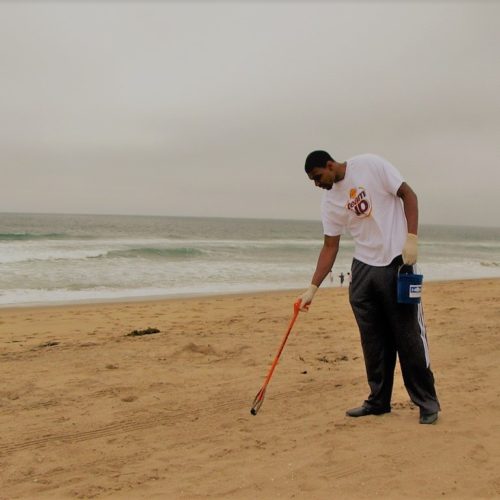
As a hopeless sports junkie, I’ve had the most fun working with L.A.’s professional sports teams. I’ve picked up trash with former Lakers center Andrew Bynum, probably the only time I’ve participated in a cleanup with someone taller than I am. (I’m 6’6” – Kobe Bryant size, as I like to say.)

Ex-Laker center Andrew Bynum helps pick up trash off of the beach.

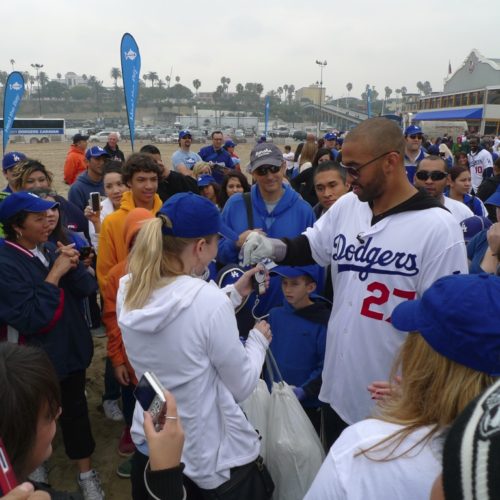
Former All-Star Dodgers outfielder Matt Kemp and I scoured for bottle caps beside the Santa Monica Pier. (I think he was dating Rihanna at the time, and I can tell you he is one handsome dude.)

Former Dodgers outfielder Matt Kemp weighs his trash totals.

But my favorite cleanup of all time was with the L.A. Kings in 2008, the year I started working at Heal the Bay.

I even allowed my young teenage son to skip school that day and help out, just to show him that working at a nonprofit has a little bit of cool to it. Hockey is my favorite sport, but that isn’t what made the day so memorable.

When a sports team hosts an event with us, two or three athletes will typically attend. But at the Kings cleanup in Redondo Beach, every player on the roster, except one, participated. This was 10 a.m. in the morning following a tough game the night before at Staples Center! I don’t know if the Kings have a culture of strict discipline or genuine community connection, but seeing two dozen players happily canvassing the sand on a foggy morning really impressed me.

Since then the Kings have gone on to win two Stanley Cup® championships. (I was in the house when defensemen Alex Martinez tucked in a reflex rebound at Staples Center to secure their second Cup against the New York Rangers!)

They’ve also grown into a great partner with Heal the Bay and have been honored at our annual Bring Back the Beach gala for their community outreach programs. Check out the video below to learn more.

Defensemen Matt Greene lent his voice to one of our most important battles – last year’s successful coalition effort to reject a ballot measure that would have allowed oil drilling beneath the Hermosa Beach seafloor. And all the other Kings live along the South Bay shoreline, so it’s no surprise they care about our local beaches.

In advance of this year’s NHL All-Star Game at Staples Center, we are hosting a volunteer cleanup at three locations on Wednesday afternoon, January 25. You can register and get more details here. (You might have to play hooky from work, but we can have one of our two staff Ph.D.s write you a doctor’s note!)


Is all this rain a good or a bad thing for greater Los Angeles? It all depends on your point of view, explains Communications Director Matthew King.

As a surfer, I hate the rain. As a Californian, I love it.

The recent series of downpours has kept me out of the ocean for weeks. I’ve gotten violently ill from surfing in water polluted with runoff and have learned my lesson. Maybe the deluge up north has been a boon for our parched state. But we are not out of the desert yet…

Below, we’ve answered our top 10 most frequently asked questions about what the #LArain really means:

1. Does all this rain mean the drought is over?

The recent rain might temporarily relieve drought effects, but it is not a cure-all. Yes, reservoirs up north may be filling again, but SoCal reservoirs are still dry. It will take years for our depleted groundwater aquifers to catch up. A good analogy is relating the drought to your credit card: a series of big storms is like paying off the minimum balance. You have temporary relief, but you still have a lot of water debt to pay off from the water you took out before. We require much more water to reach healthy and secure levels.

Locally, our regional infrastructure is not set up to store rainwater or capture runoff, and reuse it. The system is currently designed to move rain water to the ocean as fast as possible. Only 12% of Southern California drinking water comes from locally captured rainwater seeping into our groundwater.


2. What is “stormwater capture” and why is Heal the Bay so excited about it?

The L.A. region now imports more than 80% of our water from Northern California and the Colorado River watershed, using enormous amounts of energy and capital to do so. In an era of permanent drought, we simply must do a better job of using the water we already have by investing in innovative infrastructure projects that capture and reuse stormwater. We need to capture and infiltrate water on-site, replenishing aquifers instead of funneling runoff uselessly to our seas via the stormdrain system.

Current mood ☂️????

A photo posted by Sol Angeles (@solangeles) on


3. What needs to be done to improve stormwater capture in Los Angeles?

Runoff — if held, filtered and cleansed naturally in groundwater basins — can provide a safe source of water for human use. That means building so-called multi-benefit projects like green streets, water-smart parks and low-impact commercial development. Philadelphia and Portland have made enormous strides in treating stormwater as a resource rather than a nuisance, and so can we. The city of Los Angeles, for example, has created an ambitious master plan for stormwater capture. But all this innovative replumbing requires capital. Heal the Bay has joined a broad array of environmental and business groups asking regional lawmakers to craft a public-funding measure, perhaps in the form of a reasonable parcel tax. It’s a needed investment, one that will replace outmoded ways of thinking and pay dividends for years to come.

A video posted by Manolow (@manolow) on


4. The rain increases supply, but what about reducing demand?

Most conversations about water in our state revolve around supply. We often fail to talk about demand, and how we can reduce the strain put on our unreliable delivery system by simply being smarter about the water we already have. Los Angeles residents have done a remarkable job of reducing their average daily per-gallon usage over the past decade, but we can still do better. The average DWP residential customer used about 68 gallons per day in November, compared to about 42 GPD in Santa Cruz. A good place to start is rethinking our love affair with gardens and lawns in arid Southern California. Nearly 50% of water used residentially in greater L.A. goes to watering lawns and other landscaping.


5. I thought rain was a good thing. Why is Heal the Bay worried about it?

Yes, we desperately need rain. But rain creates urban runoff — the No. 1 source of pollution at our beaches and ocean.


6. How does rain create pollution?

Rimmed by foothills and mountains, Los Angeles County is like a giant concrete bowl tilted toward the sea. When it rains, water rushes along paved streets, picking up trash, fertilizer, metals, pet waste and automotive fluids before heading to the ocean via the region’s extensive stormdrain system.


7. How do stormdrains trash the beach?

With memories of historical deluges on their mind, engineers designed L.A. County’s 2,800-mile stormdrain system in the ‘30s and ‘40s to prioritize flood prevention.  Moving stormwater out to sea quickly was their number one goal. But it also has the unintended function of moving trash and bacteria-laden runoff directly into the Santa Monica and San Pedro Bays, completely unchecked and untreated. An average one-inch storm will create about 10 billion gallons of runoff in L.A. County stormdrains. That’s 120 Rose Bowls’ worth of dirty water!

A photo posted by Josh Choo (@joshchoo4444) on


8. What does all this runoff have to do with the ocean and marine animals that call it home?

Hundreds of thousands of animals each year die from ingesting trash or getting entangled in human-made debris. Seawater laden with chemicals and metals makes it harder for local marine life to thrive and reproduce.


9. What about the human health impacts?

Beachgoers who come in contact with polluted water after storms face a much higher risk of contracting illnesses such as stomach flu, ear infections, upper respiratory infections and skin rashes. A UCLA epidemiology study found that people are twice as likely to get sick from swimming in front of a flowing stormdrain than from swimming in open water.


10. How can ocean lovers stay safe during the storms?

  • Wait at least 72 hours before entering the water after a storm
  • Stay away from storm drains, piers and enclosed beaches with poor circulation
  • Go to Heal the Bay’s BeachReportCard.org to get the latest water quality grades and updates
  • If you find a gutter that’s blocked, call the City’s Storm Drain Hotline at (800) 974-9794 so that L.A. Sanitation can remove the debris


You can support Heal the Bay’s efforts to make L.A. smarter about water. Here’s how:

  • Come to a volunteer cleanup to learn more about stormwater pollution and what can be done to prevent it. Invite family and friends to help spread the word
  • Share information on your social networks and support our green infrastructure campaigns
  • Become a member. Your donation will underwrite volunteer cleanups, citizen data-collection efforts and advocacy efforts by our science and policy team to develop more sustainable water policies throughout Southern California.


Dec. 16, 2016 — Once again, rain is falling throughout the Los Angeles Basin.

Angelenos are expected to experience heavy rainfall during winter months. This weekend’s storm is predicted to generate an inch or two of precipitation throughout the basin, with some areas receiving as much as four inches.

How much water is that?

The County of Los Angeles estimates that during a typical storm event upwards of 10 billion gallons of storm water flushes into the ocean. That’s enough to fill nearly 120 Rose Bowls. Thinking about it another way, 10 billion gallons would provide enough water for a city the size of Santa Monica for more than three months.

Dang, that is a lot of water! Wait… Aren’t we in a drought?

Why are we letting this precious water resource flow into the ocean without trying to capture it? That is odd given we Angelenos import nearly 80% of our potable (safe to drink) water.

What a waste.

Our historic single-use approach to water has long shaped our hydrologic infrastructure, yet the non-use of large quantities of storm water is wasteful. In case you didn’t know, the gutters and catch basins at the end of almost every street in Los Angeles drain to a local river, stream, or creek, and ultimately out to the ocean.

More galling than the opportunity cost lost from not capturing rainwater and instead allowing it to flow out to sea, is the actual cost incurred from these events.

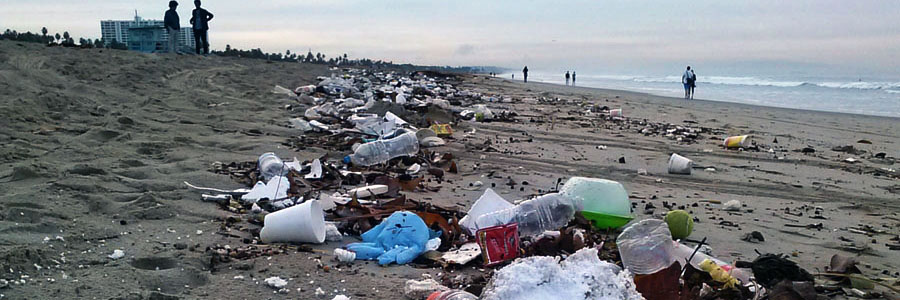
The usual, depressing detritus littered Santa Monica beaches after the recent storm.

The usual, depressing detritus littered Santa Monica beaches after the recent storm.

Almost every storm event brings physical debris, mostly plastics, to our rivers, creeks, and oceans. In addition, poor water quality after a rainstorm can make rivers and oceans unhealthy for aquatic organisms and recreational users.

In Los Angeles County alone, there are more than 70 major outfalls that spew trash, animal waste, pesticides, automotive fluids, and human-gastrointestinal viruses into our county’s bodies of water. This urban micro-brew of pollution can accumulate in just a couple days on sidewalks and roadways – 12 million people in a highly urbanized landscape – before being washed into the storm drains after a rain event.

The storm drain system is responsible for discharging this pollution into our rivers, creeks, and ocean. This causes potential human health risks, harms marine life, and dampens the tourist economy by littering shorelines.

The more we know, the better the flow.

Rainwater runoff can be captured for future use, whether we are in a drought or not.

Water literacy is a way of understanding the connections between the drought and imported drinking water, local storm water runoff and sewage, land-use and flooding, water quality, and water use.

Rain provides an ideal opportunity to explore water scarcity.

As individuals, we must reflect on our daily water consumption, our own ability to conserve and capture water, and evaluate with a critical eye the systems that handle water. Let the rain hit you, let it revitalize your thoughts on water, and then let’s begin to learn how to use it more efficiently.

Tips for Angelenos after rain storms:

  • Stay out of the water. The County of Los Angeles Environmental Health Department and Heal the Bay urge residents and visitors to avoid water contact at Los Angeles County beaches for at least 72 hours following rain event. In some locations and for long-duration rainstorms, staying out of the ocean for more than five days may be more appropriate.
  • Know the flow. Test your water knowledge, and share insights about rainwater runoff and where Los Angeles gets its water in your community.
  • Be a responder. Heal the Bay’s volunteer Storm Response Team goes on scene at local beaches after big storms to remove the nasty debris flushed from across Los Angeles before this waste ends up in the ocean. Get alerts for more info.


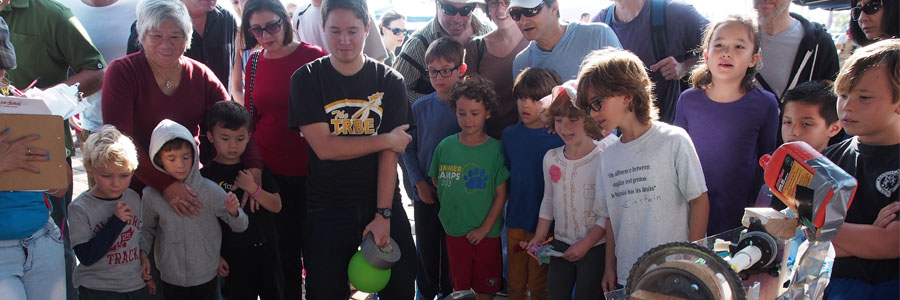
Dec. 15, 2016 — Calling all inventors, tinkerers, makers, “mad” scientists, DIY’ers, or just anyone with a good sense of humor. It’s time to get ready for Los Angeles’ 4th annual Rube Goldberg Machine Contest at the Santa Monica Pier!

Rube Goldberg Machine is a crazy contraption that accomplishes a simple task in the most complicated – and funniest – way possible! Based on the “invention” cartoons of the famous Pulitzer Prize-winning American cartoonist, Rube Goldberg, actual machines are at the heart of the Rube Goldberg Machine Contest. They use everyday items (mostly junk), to tell a story and, most important of all – they make you LAUGH.

The competition is open to middle school, high school, and college level teams. This year, teams will be faced with the challenge of “applying a Band-Aid” at the end of their multistep chain reaction. This is a great way to showcase your talent to elite industry judges. Last year’s judges were from SpaceX, Google, and NASA’s Jet Propulsion Lab.

The competition is part of the larger S.T.E.A.M. Machines Festival on the Santa Monica Pier scheduled for Sunday March 5th. It will be a full day of gadgets, innovation, creativity, and fun. For additional information, including registration details and financial aid opportunities, please contact Tara Crow or call 310-564-6126.


Dec. 7, 2016 –Dr. Katherine Pease, Heal the Bay’s wetlands scientist, takes the wraps off a new website to guide the restoration of L.A.’s few remaining wetlands.

In April 2015, Heal the Bay, along with partners Friends of Ballona Wetlands, Surfrider Foundation, and Los Angeles Waterkeeper, released a comprehensive, scientific set of principles for wetland restoration projects in Southern California.

Now that greater Los Angeles has lost 95% of its coastal wetlands, a concerted effort to protect the remaining 5% is critical for the overall health of our region. Using a science-based approach, the coalition has developed clear guidelines to support the restoration of such key ecosystems as the highly degraded Ballona Wetlands in Playa del Rey.

Besides providing habitat for animals, wetlands help buffer against climate change, provide much-needed open space, and act as natural water-purification systems.

Nine other organizations signed on in support of those guidelines. Since then, we have shared our principles with the California Coastal Commission, the California Fish and Game Commission, elected officials, and the public at our “Meet the Wetlands” event in July 2016. Now we are hitting the web!

The coalition has created a website to showcase our collective Principles of Wetland Restoration. We have shared the site with the nine groups that signed on to the principles as well as with local wetlands experts; their constructive feedback has been instrumental in the website development. Individuals and organizations can sign on in support of the Principles.

The website will serve as an additional tool for educating the public, as well for advocating for the restoration of Southern California’s remaining wetlands. We expanded on the pithy principles and gave examples of each principle in practice. We also compiled a list of restoration projects that have implemented a majority of the principles we believe are necessary for a successful and comprehensive project.

Looking forward, we are eagerly awaiting the long-delayed release of the plans (draft Environmental Impact Statement/Report) for the restoration of the Ballona Wetlands, expected from the state’s Department of Fish & Wildlife and the U.S. Army Corp of Engineers sometime next year.

We will use this website to educate elected officials and the public about the need for scientific and comprehensive wetland restoration projects that bring back functioning ecosystems. We look forward to seeing the principles in action at Ballona and beyond.

If you support the restoration of Southern California’s wetlands, read more about the Ballona Wetlands and sign our petition asking for an expedited EIR release.


Reusable bags at Walmart, courtesy of Zbigniew Bzdak / Chicago Tribune

Dec. 8, 2016 — Way back in the old days (before Nov. 8, that is) your trip to a grocery store in California frequently ended with two options: paper or plastic. Since then, voters across the state passed Proposition 67, and California became the first state in the nation to ban single-use plastic bags. Now you are faced with two new options at the grocery store: paper or reusable.

But wait … why does it look like grocery stores are still offering plastic bags? And why are you getting charged for taking bags? What does this new era of grocery shopping mean?

Have no fear! We’ve compiled a Prop 67 sheet to address all of your questions about the bill and what will happen at the checkout stand going forward.

Plastic bags at checkout, image courtesy of Zbigniew Bzdak / Chicago TribuneWhy are some grocery stores still offering plastic bags at the checkout?

While it does look like plastic bags are still an option at some stores (we’ve seen them at Ralphs, Vons, CVS, and Smart & Final), these bags are different than the ones you’re used to seeing. The new law forbids grocery stores from providing single-use plastic bags to customers, even if they sold it for a fee. Instead, stores can sell thicker-skinned bags that can be reused at least 125 times over its lifetime. (And the reusable bag must be able to carry 22 pounds over a distance of 175 feet and must be at least 2.25 mm thick, if you want to be exact.)

These reusable bags can be made of plastic, so yes, they can still pose a threat to ocean animals. While this bill is not perfect (no bill can be passed without some compromise!), getting rid of all those flimsy one-use bags will still have incredible positive impacts on California’s waste stream and environment. We’ve already seen significant reduction in the amount of plastic bags in cities that had their own bag bans in place before Prop 67 passed. In the one year since its bag ban was enacted, the city of San Jose saw a 76% reduction in creek and river litter, a 59% drop in park and roadside plastic bag litter, and a 69% reduction in plastic bag litter in storm drains.

This shows how just a simple change in consumer behavior can have a significant impact on the environment. Millions of Californians in the more than 150 cities and counties that already had their own bag bans have proved that it’s easy and effective.

Paper grocery bagWhat does the law say about paper bags?

The law states that paper grocery bags must contain a minimum of 40% post-consumer recycled materials. Smaller paper bags, like the ones you would typically find in the produce or deli sections, must contain a minimum of 20% post-consumer recycled materials. Many stores are offering paper bags that are made out of 100% post-consumer recycled materials, which is a good thing.

However, there are still environmental consequences from the production and distribution of paper bags. Though Proposition 67 banned single-use plastic bags, the bag ban has also caused a dramatic decrease of paper bags used across the state. Because shoppers are bringing reusable bags with them to the grocery store, the use of paper bags in Los Angeles dropped by about 40% since its bag ban went into effect.

So bring your own durable reusable bag with you. When the checkout clerk asks you if you want paper or reusable plastic, you already have your answer – neither!

coins-can-be-exchanged-for-goods-and-servicesHow much can I be charged for a paper or reusable bag?

According to the law, a grocery store must charge at least 10 cents for a paper or reusable grocery bag. This was put in the bill to ensure that the cost of providing a reusable grocery bag is not subsidized by a customer who does not need that bag. However, stores can charge more than 10 cents for a bag if they want to, just as they can set the price point for any other good sold.

Participants in WIC or CalFresh (SNAP) using a voucher or EBT card are exempt from the bag fee and reusable or paper bags must be offered to these customers free of charge.

I heard people opposing Prop 67 say that the grocery stores are being greedy and are making a profit by charging us for bags. Is that true?

Simply put, this was a lie spread by the plastic bag manufactures to spook people into voting against the proposition. The law clearly states that the money collected from bag sales may be used only for the following purposes:

  • Costs associated with complying with the law.
  • Actual costs of providing recycled paper bags or reusable grocery bags.
  • Costs associated with a store’s educational materials or educational campaign encouraging the use of reusable grocery bags.

Are plastic produce bags still allowed? Are we being charged for them?

Yes – plastic produce bags, meat bags, and bread bags are exempt from this law. While the law does not require that a store charges for the sale of these bags, the store can if it wants to, just as it can set the price for any good it sells. It seems that most stores are continuing with business as usual, which means that the cost of the bags are lumped in with other operational costs that are absorbed in the price of the goods you buy.

What types of stores are included in the ban? What types of stores are exempt?

Plastic bags are banned from the following types of stores:

  • Grocery stores (e.g. Albertson’s, Ralphs, Target, Walmart, Vons, 99 Cent Only, etc.)
  • Drug stores and pharmacies (e.g. Walgreens, CVS, Rite Aid, etc.)
  • Convenience food stores and food-marts (e.g. 7-Eleven, AM PM Mini Markets, etc.)
  • Liquor stores (e.g. BevMo, local liquor stores, mini-marts, etc.)

The following types of stores are exempt from the plastic bag ban:

  • Restaurants
  • Farmers markets
  • Hardware stores (e.g. Home Depot, Lowes, etc.)
  • Retail stores (e.g. Macy’s, JC Penny, Ross, TJ Maxx, etc.)

Blue recycling binsWhat should I do with all of the plastic bags I’ve saved under my kitchen sink?

With the New Year approaching, now is a great time to set your resolution to free yourself of single-use plastic! The best thing to do is recycle the single-use plastic bags you have. Did you know that in the City of Los Angeles, you can put them straight into your blue curbside recycling bin? We recommend you bundle them all together in one bag to reduce the chances of them flying away in transport and becoming pollution. If you don’t live in L.A., check with your city about what is and is not accepted in your curbside recycling program. You can also check out Earth911 to search for recycling facilities near you. Most grocery stores collect plastic bags for recycling as well.

Want to nerd out and read all of the policy language written into the bill?

We did! You can read the bag ban’s official text on the California Legislature’s website.