Top

Heal the Bay Blog

Category: News

Staff scientist Dana Murray reports on our ongoing efforts to inform the public about the value and beauty of our local Marine Protected Areas.

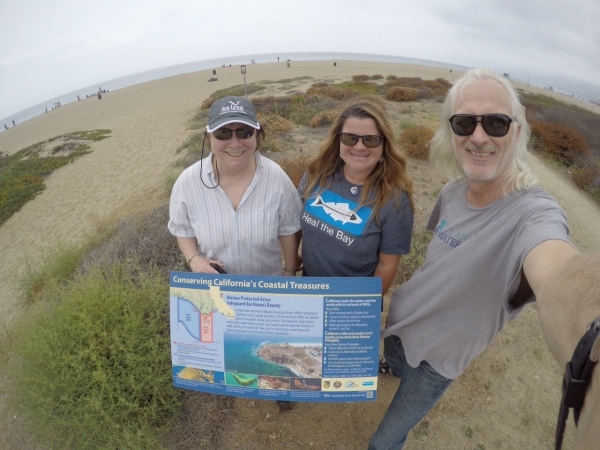
Call them a sign of the times. Heal the Bay staff travelled along our local shorelines last week to help install informational displays about our fledgling Marine Protected Areas in Southern California.

Over three years in the making, the public signage informs beachgoers about the creation and importance of formally designated marine safe havens along the coastline — from San Diego to Santa Barbara, including our local MPAs in Malibu and Rancho Palos Verdes.

These beautiful and informative interpretive signs include maps, underwater images and bilingual descriptions of these underwater parks. California lays claim to the only statewide network of Marine Protected Areas (MPAs), where ocean wildlife can thrive with less disturbance from humans. Southern California’s MPAs have been in effect since 2012, following years of hard work by Heal the Bay and other coalition partners to implement them through the Marine Life Protection Act.

Illustrating the collaborative nature of MPA implementation, the sign project included a wide array of stakeholders and partners. Since 2012, Heal the Bay’s been working together with state agencies such as the Ocean Protection Council, Department of Fish and Wildlife, State Parks, and the Coastal Commission; Los Angeles MPA Collaborative members such as USC Sea Grant and Los Angeles Waterkeeper; cities such as Malibu and Rancho Palos Verdes; landowners such as Paradise Cove and L.A. County Beaches and Harbors; and other partner organizations such as the California Marine Sanctuary Foundation and Natural Resources Defense Council.

These organizations worked together to identify strategic sign locations, designed the content of the signs and provided Spanish translation, and procured landowner permission and coastal development permits to install the displays. All this work culminated in planting these signs in the sand late last week.

The first interpretive signs were installed Thursday at one of the world’s most popular coastal destinations — Malibu’s Zuma and Westward Beach, which is part of Point Dume State Marine Reserve and Point Dume State Marine Conservation Area. These beaches attract millions of visitors each year. The MPAs here encompass Point Dume’s rocky headland peninsula and deep sea canyon offshore, El Matador State Beach’s iconic rock arches, and a wide array of marine wildlife. Migrating gray whales often stop off and feed along Point Dume, and the reserve’s kelp forests, submarine canyon, and tide pools teem with octopus, anemones, and crabs. Historically, Point Dume’s kelp forest has been one of the largest in Southern California, providing food and shelter for a variety of sea life, including sea lions, lobster, grunion, and spawning squid.

Two years ago, we installed the first MPA regulatory signs in Los Angeles County along access points in Malibu and Palos Verdes, which simply reflect the new fishing regulations that accompany these MPAs. The newly designed educational signs installed this week will serve as a helpful public education tool, highlighting the importance of underwater parks and showing scenic underwater photos of the protected habitats and wildlife. Public education about our MPAs is imperative to help foster stewardship and advance MPA compliance.

Heal the Bay’s MPA Watch program surveys show that most people are respecting the new MPAs. However, a few hotspots exist where people are still fishing in reserves. Educational signs at key access points will help inform the public about where they can and cannot fish, while providing the important context as to why MPAs are beneficial to our coastal environment.

Earlier this year, Heal the Bay worked with partners to successfully pass new legislation that will strengthen enforcement of our state’s MPAs.

Beginning Jan. 1, Assemblywoman Lorena Gonzalez’ AB 298 will allow Department of Fish and Wildlife officers and other law enforcement agencies to combat poaching and illegal fishing in the MPAs off California’s coastline by issuing violators with a ticket – akin to a traffic violation – to enforce restrictions.

MPA violations are currently misdemeanor crimes and often prosecuted without priority. AB 298 gives officers the discretion to cite people that are illegally fishing in MPAs with an infraction or a misdemeanor, ensuring that lawbreakers are held accountable without placing a burden on the courts. AB 298 passed both the Assembly and the Senate on unanimous votes, and enjoyed widespread support from law enforcement, user groups and environmental organizations, including WILDCOAST, Heal the Bay, Monterey Bay Aquarium, San Diego Council of Divers, CA Fish and Game Wardens Association, California MPA Collaborative Implementation Project, and the Los Angeles District Attorney’s Office.

To join the statewide celebration of our MPAs, search your local MPA shoreline for these new interpretive signs, snap a picture, and post your photo on social media with #mpaswork and #healthebay.

To help with monitoring our local MPAs, join our upcoming MPA Watch training this October.

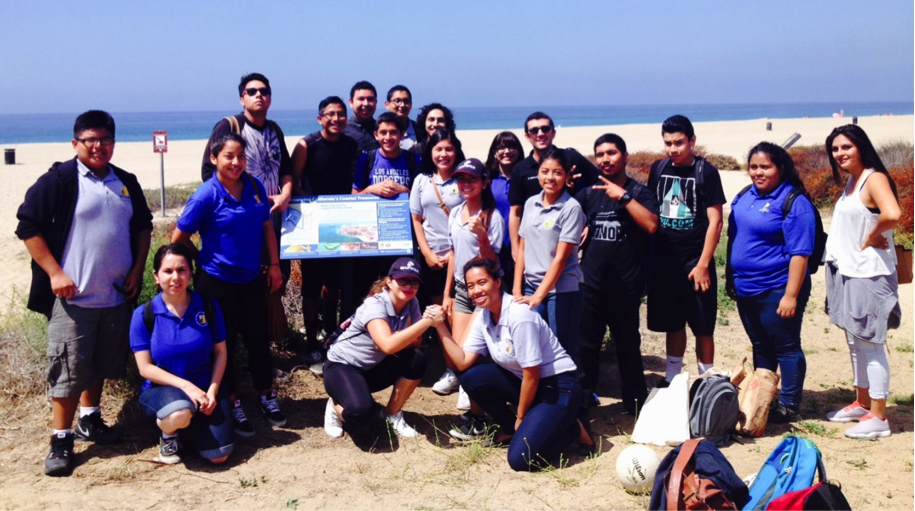
         Staff scientist Dana Murray, center, helped install new signs in Malibu.

Marine Protected Area

A group of Los Angeles high schoolers stoked about their MPAs! 


A completely subjective list of when Heal the Bay has shone the  brightest.

 After 30 years of achievement, Heal the Bay can sometimes be taken for granted. Many Angelenos view us as they do their utilities – always on, always working, not requiring a lot of thought. So as we begin our fourth decade, here’s a crash-course reminder of how we’ve continuously healed the Bay.


1. SPAWNING A MOVEMENT

Heal the Bay founder Dorothy GreenMeeting in her Westwood living room in spring 1985, housewife Dorothy Green and schoolteacher Howard Bennett mobilize a small squad of grassroots activists to conquer ongoing pollution in Santa Monica Bay. Brilliantly taking its mission as its name, Heal the Bay is officially born later that year.

 

2. FIRST FIGHT

Hyperion wastewater treatment plantThanks to intense lobbying from Heal the Bay and a federal consent decree, Hyperion Treatment Plant agrees in October 1986 to stop dumping partially treated sewage into Santa Monica Bay.  Sewage pollution levels in the Bay have since decreased by more than 90%.

 

3. THE FISHBONES

Heal the Bay's first fishbones logoVolunteers Gabrielle Mayeur and Sherry Johannes unwittingly create one of L.A.’s great brands in October 1987.  Their evocative and provocative fishbone logo creates instant recognition for the fledgling organization.  Whether it’s slapped on a skateboard or a Prius, the fish remains a powerful marker for L.A.’s tribe of ocean lovers.

 

4. MAKING THE GRADES

Heal the Bay's Beach Report CardAiming to protect the health of millions of ocean users, Heal the Bay publishes its first Beach Report Card in 1992, giving A-to-F grades to local beaches based on levels of bacterial pollution. Developed by outspoken executive director Mark Gold, the grading program shines a bright light and eventually helps secure $200 million in state funds to clean up chronically polluted beaches.
 

5. MINDS IN THE GUTTER

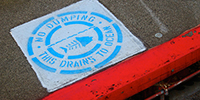
Stormdrain stencilThe first storm drains stenciled for our Gutter Patrol Program in October 1992 reminded would-be litterers that “This Drains to the Ocean.” Volunteers paint more than 60,000 catch basins with our message and logo over two years, connecting residents throughout L.A. County to their watersheds and our work.
 

6. TAKING IT TO THE LIMIT

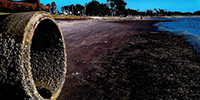
Outflow drainpipe TMDLArguing that impaired water bodies in Los Angeles and Ventura counties are not being adequately remediated, Heal the Bay files an intent to sue the EPA in December 1997. A settlement compels the EPA to create 92 “Total Maximum Daily Load” limits over 13 years. With these measurable benchmarks in hand, Heal the Bay can now pressure dischargers to reduce pollution levels or meet stiff fines. The new TMDL model is copied nationwide.

 

7. SCALING UP

Heal the Bay's Santa Monica Pier AquariumHeal the Bay gets into the aquarium business by acquiring UCLA’s Ocean Discovery Center in March 2003 for the princely sum of $1. The rechristened Santa Monica Pier Aquarium becomes a beachhead for our youth education programs. We’ve since inspired more than 1 million guests to become better stewards of our local ocean and watersheds.

 

8. BANKING ON THE FUTURE

Ahmanson Ranch MalibuAfter years of pressure from Heal the Bay, Washington Mutual agrees in November 2003 to sell Ahmanson Ranch at the headwaters of the Malibu Creek watershed to the State of California.  The coalition of environmental advocates, scientists and celebrities successfully preserves 2,300 acres of open parkland and 20 miles of streams, thereby reducing pollution and protecting several threatened species.
 

9. YOSEMITES OF THE SEA

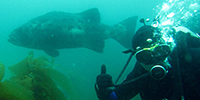
Marine Protected AreasEnsuring a vibrant local ocean for generations to come, Heal the Bay’s policy staff leads an often contentious process with the state and anglers to create 52 Marine Protected Areas along the Southern California coast in January 2012. Our most biologically rich underwater habitats get a reprieve from human pressures, allowing depleted stocks in such areas as Malibu and Palos Verdes to recover and thrive.
 

10. IT’S IN THE BAG

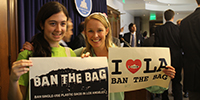
Los Angeles Plastic bag banHeal the Bay’s programs and policy staff spearhead a plastic bag ban in Los Angeles, which in January 2014 becomes the largest city in the nation to take on Big Plastic. The unanimous City Council vote triggers a nationwide debate about sustainability and catalyzes other bans throughout the country.


Help us win 30 more years of victories.


August 11, 2015 — Communications Manager Nick Colin stepped away from social media one morning for an unforgettable boat trip to Palos Verdes.

I’ll never take seaweed for granted again.

This is what I repeated to myself as I held on to the gunnels of our speeding, swell-hopping cruiser. It was 7 a.m. when we left Redondo Beach’s King Harbor, bound for Palos Verdes to collect seaweed for the Aquarium. Before, I had assumed our seaweed rations were replenished by mail or procured at a local seaweed shop. Turns out, one must embark on a lusty maritime expedition every week to feed the fishies.

At the helm: two salty cubanos: José Bacallao, our longtime Aquarium operations manager, and Lazaro Serrano, his fellow aquarist. They were born with sea legs, and thus had no problem singing and dancing to a medley of top 40 hits while also captaining and navigating. I wanted to join in, but didn’t want to go overboard…literally.

After about an hour, we reached a site known for top-shelf aquarium fare like Macrocystis (kelp), Egregia and Plocamium. Laz dropped anchor and we began suiting up. Not only was the water wintry at 58 degrees, but José cheerfully announced that the surge was strong and underwater visibility was next to nil. I hoped my wetsuit was thick enough to conceal my pounding heart. I thought fondly of my cubicle.

José and Laz slipped into the water with a casualness I’d never known; I had to be coaxed in like a reluctant toddler. I managed a clumsy back-roll into the churning waves and gave the requisite “I’m ok” signal–which was only partly true.

Once I got my bearings, I began looking. Up at the golden cliffs of Palos Verdes, down into the emerald-turquoise depths, around at the vivid blue wildness. I found myself in a Whitmanesque rapture, making peace with sharks and guessing the Pantone color of the waves. But while I dithered, José and Laz had already set to work harvesting seaweed with an automatic elegance. I snapped out of my reverie and dog-paddled fast through thick snarls of kelp to catch up.

Breathe, dive, cut, surface. Repeat until exhausted. I thought I would take a stab at it, but came up empty-handed. Not 35 pushups hard, but I’m really not sure my body can do this hard. I resigned myself to documenting José and Laz’s labor as best as I could.

Once they’d collected about 20 lbs. of seaweed (and I’d snapped about 100 blurry GoPro photos) we lumbered back aboard. José was satisfied with the haul and charted a course for home. We idled over a particularly lush kelp forest, dragging our nets along the surface to collect tiny mysid shrimp–a special treat for aquarium omnivores. José said he’d never netted so many before and attributed the bounty to my good shrimping juju. I swelled with pride.

The cruise back to Redondo felt quicker than the journey out. I peeled off my wetsuit and air-dried on the deck, tracing our wake until it disappeared into the waves.

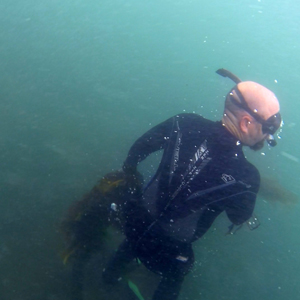
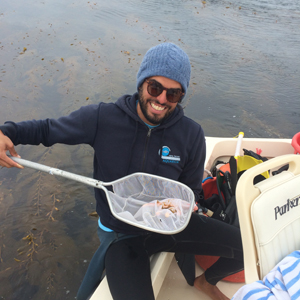
Nick Colin diving for seaweed at Palos VerdesJosé and Laz ready to collect seaweed at Palos VerdesJose with plocamium

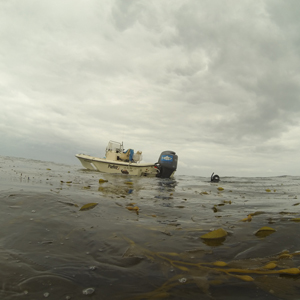
Jose diving for seaweed at Palos VerdesLaz with mysid shrimp for the aquariumThe S.S. Dorothy anchored at Palos Verdes

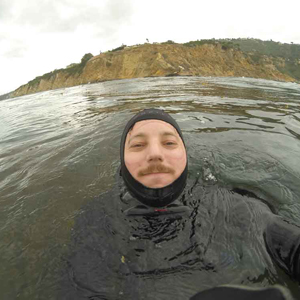
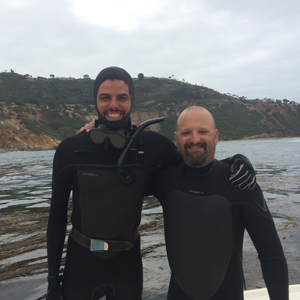
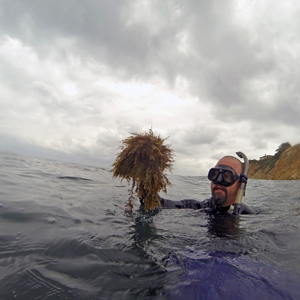
Clockwise from top left: Author Nick bobbing blissed-outedly; Laz and José; José with a handful of Plocamium; the S.S. Dorothy anchored off Palos Verdes; Laz with a netful of mini mysid shrimp; José surfacing after a dive for kelp.


Desalination is not a cure-all, writes our science and policy chief Rita Kampalath.

It costs too much.  The price of a gallon of water produced by a new desal plant in Carlsbad is expected to cost twice as much as a gallon derived from recycled water, and three times or more than a gallon sourced from groundwater storage, or conservation through programs like turf replacement rebates. For desal plants to make financial sense, cities must agree typically to long-term contracts. Given our boom-and-bust rain cycles in California, we will surely see more deluges in years to come. The fixed costs of desal plants won’t just go away in rainy years when their water isn’t needed.

It uses too much energy. Currently, the most energy-intensive portion of our water supply is the water that we import from Northern California through the State Water Project and the Colorado River. That water has to travel over 600 miles to get to us, yet it still uses less energy per gallon (though not by much) than desalinating ocean water. Desalination simply can’t compare to relatively low-energy water supplies like groundwater or stormwater capture (or just using less water, which takes no energy at all!) More energy means higher costs, but it also means more greenhouse gases.

It kills marine life. Ocean intakes can suck up millions of gallons of seawater daily, along with any marine life unlucky enough to be in close proximity. Subsurface intakes extract water underneath the seabed or nearby beach and have less negative impacts to animals. But both methods leave an enormous by-product of salty brine, a toxic by-product that is challenging to dispose of.  Unfortunately, many facilities want to use surface intakes because they can be cheaper and tend to have a greater capacity. California’s recently adopted desalination policy mandates that facilities use subsurface intakes when possible, but we’re wary that the desal industry will find loopholes.

It takes too long. From start to finish, getting a desalination plant up and running is at least a multi-year process. Construction on the Carlsbad plant started in 2012, and isn’t expected to be completed until later this year – and that doesn’t take into account all the planning and design that had to happen as well. This drought is happening now, and it’s just a simple fact that desalination can’t start quickly enough to help. And as crazy as it seems right now, in a year or two, we may be out of the drought, especially with forecasters predicting El Nino conditions. We don’t want to commit ourselves to spending over a billion dollars on something that we may not even need by the time it’s completed.

It eclipses better options.  The Carlsbad plant, which is the largest plant in the Western hemisphere, can only produce about 7% of San Diego’s water supply! How about we use that billion dollars to cut down our water usage by that percentage instead? Let’s invest in proven processes that are more efficient, take less money and have much less negative impacts on the environment. Instead of building desal plants, we should be investing in facilities that capture and reuse of urban runoff, as well as fast-tracking the recycling of highly treated wastewater from Hyperion and other plants. 


Heal the Bay board member and former DWP chief David Nahai knows his water. Here he shares how L.A. will beat the drought.

Aug. 11, 2015 — As a former CEO of the LADWP and former Chair of the L.A. Regional Water Quality Control Board, David Nahai has a unique perspective on Southern California’s water woes. Urbane and erudite, the London School of Economics-trained attorney has been a longtime Heal the Bay board member. Both a pragmatist and an optimist, he firmly believes that L.A. can fix its water woes if its leaders act decisively today. He recently shared his views with Heal the Bay’s communications director, Matthew King.

Heal the Bay: Do people in L.A. even know where the water comes from?

David Nahai: Generally, no. The history of L.A, which is inextricably linked to our relationship with water, is not generally taught in our schools, nor is there an ongoing, ever present campaign to inform the public.  Public outreach efforts surface only during shortages. That may have been fine while our imported water was cheap and plentiful and droughts were periodic occurrences. But importing 90% of our water supply is no longer a sustainable model.  Climate change and other factors necessitate a fundamental change.  We must conserve more and produce more local resources (from wastewater recycling, stormwater capture, aquifer remediation, infrastructure repair, new building standards and so on).  This shift will require an investment, which, in turn, must have public support.  So, having an informed, engaged public is essential. 

HTB: Do you dislike the word drought? Does it imply something temporary?

Nahai: This drought has galvanized attention and mobilized action in a remarkable way.  I would not jettison the word because it technically describes the current condition.  Rather, the messaging around the word has to convey the fact that we are in uncharted territory, that, with the advent of climate change,  this could well be our “new normal.” 

HTB: Is agriculture being scapegoated by media or given a free ride by water regulators? Or something in between? 

Nahai: Some facts are undeniable: Ag does account for the vast bulk of water used in California; some farmers do lag behind in adopting modern, efficient irrigation techniques, as well as farm runoff control practices; the water rights system in California is inequitable and must be revisited; and the farm lobby is a formidable force in Sacramento.  On the other hand, Ag is important to us economically, historically, and culturally; it employs many people who need and deserve our protection; and possible impacts on food prices resulting from greater regulation must be considered.  It is encouraging to see the administration take action to restrict water use by the senior rights holders, and the voluntary cut backs offered by the senior holders are certainly welcome.  But finger pointing won’t solve the problem.  Rather, all interests must contribute to the solution.

HTB: Is desalination our savior or the definition of insanity?

Nahai:   Ocean desal must be our last resort in LA.  It remains the most expensive, most energy intensive, most environmentally impactful alternative.  While our conservation record is good compared to other U.S. cities, it is not impressive judged against the levels reached by Israel, Australia and other countries. Further, our rate of wastewater recycling is very low; we fail to retain the rainfall that we do receive (allowing it instead to run untreated to the coast only to pollute our beaches and marine environment); our San Fernando Valley groundwater basin is contaminated; and our infrastructure is deteriorating.  Addressing these challenges has to be our first priority.  

HTB: What’s the biggest obstacle? Money? Complacency? Political Will? Technology?

Nahai: I believe the main obstacle is money.  While there are pots of money that agencies can look to, such as Prop 1, to defray some of the cost of the various steps outlined above, it appears to me that water rate increases will be necessary.  LADWP has started to present its case for rate increases.  I hope, and believe, that Angelenos will support the necessary investments.

HTB: What are the consequences realistically if we don’t? Are we all moving to Portland?

Nahai:  If we don’t act now, our future choices may be limited, drastic, and financially wrenching.  But let’s not dwell on failure; it’s not an option.  L.A. has clear measures that it can take to conserve water and produce local water, thus gaining some level of independence from imported water.  It needs to seize the opportunity.

HTB: Why is Heal the Bay positioned to change the dialogue and encourage massive investment in more local water? 

Nahai: Heal the Bay is the leading environmental organization in Southern California on water.  Its voice is trusted and its opinions are respected.  Thus, Heal the Bay enjoys tremendous political capital which can be deployed to compel needed action.  With this power comes responsibility.  I believe that Heal the Bay has an obligation to lead – because it can.


Cindy Crawford and Heal the Bay president Alix Hobbs at Duke's MalibuIt’s not every night we get to schmooze with a supermodel. And when the schmoozing takes place overlooking the ocean, well, what could be more perfect? Thanks to our friends at Dukes of Malibu for donating the room with a view. And special thanks to Cindy Crawford for joining us late last month for the evening of drinks and small bites.

Our Santa Monica Pier Aquarium’s Science Adventures Camp crew had a thrilling day walking the planks and riding the rides at Pacific Park during the camp’s Pirate Week. Pacific Park kindly gave us a special pirate rate. We arrrrgh grateful!

Everyone should be thankful that the Special Olympics World Games are underway right here in SoCal. Seeing the athletes around Los Angeles, cheering them on at athletic events or witnessing the Opening Ceremonies on July 25th are all inspirational moments. Heal the Bay thanks our board member Stephanie Medina for providing staff with the opportunity to attend the opening ceremonies at the LA Memorial Coliseum. Stephanie is Sr. Vice President, Community Relations, of the Special Olympics. Bravo, Stephanie!


July 20, 2015 — A thunderstorm in July? You can thank Tropical Cyclone Dolores. But while the deluge was a delight for many, the drought is far from done.

This weekend’s storm smashed July precipitation records throughout California and brought much-needed relief to the wildfires that raged alongside Interstate 15 between L.A. and Las Vegas. However, lest we get lulled into a false sense of drought security after the downpour, here’s a few reminders to bring us back down to Earth:

  • A couple storms over a period of months won’t stop a 4+ year drought. Yes, they provide relief, but we need over 2 FEET of rain to put any significant dent in the drought. Water conservation measures must be the new normal for desert-dwellers like us. Sporadic storms are the exception to the rule.
  • We get most of our water from elsewhere. SoCal imports around 85% of its water from the Eastern Sierras, Northern California and the Colorado River–regions that were not affected by this weekend’s storm. This is one reason why Heal the Bay is working on efforts to beef up our local water supplies.
  • Groundwater is at an all-time low. We’ve been sucking our wells dry since the drought began, so it’ll take a truly massive influx of water–think 11 trillion gallons–to replenish them. This could take years.

Ready for another reality check? This one’s a real mind-blower:

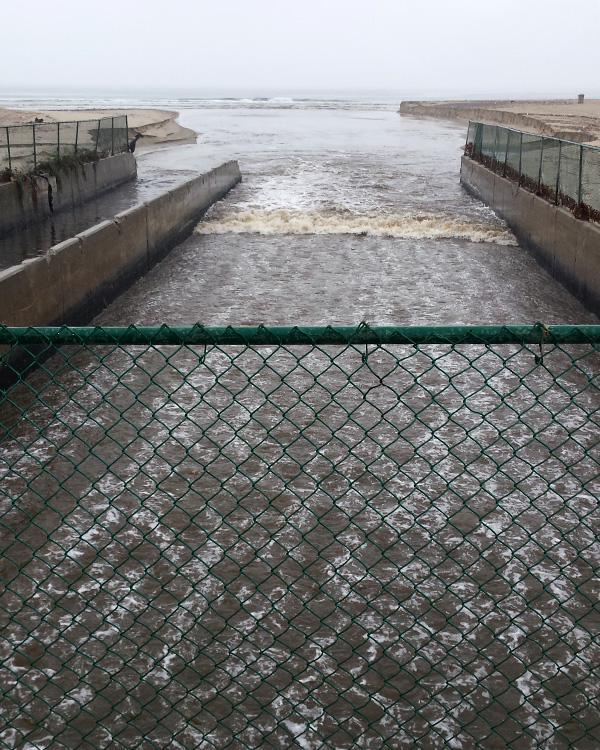
On an average dry, non-rainy L.A. day, around 10 million gallons of urban runoff flows, untreated, into the ocean. When it rains, the runoff making a beeline to the beach soars to over 10 BILLION gallons per day.

 Yes, it’s true: There is currently no mechanism in place in L.A. to capture and reuse this precious gift from above in significant amounts. Yet. Stormwater capture is one of Heal the Bay’s Top 3 Drought Fixes, and we’re making it happen.

And last but not least: We understand how tempting it is to head to the beach for some relief from the heat and humidity–and snag some leftover swell from Dolores. But we urge you to put your health and safety above all else and remember the Big Three Beach Safety Tips following any rainstorm:

  1. After a rainfall of any severity, wait at least 3 days before entering the ocean.
  2. Always swim at least 100 yards away (the length of a football field) from a stormdrain outlet.
  3. Check the Beach Report Card for the most recent beach water quality grades before you head to the beach.

For more safety tips, visit our Beach Report Card FAQ page.


California drought map
This graphic shows how much more rain California would need to approach normal precipitation levels.


July 5, 2015 — Lots of math and a sunny day at the beach.

Doesn’t sound like a match made in heaven, does it? Well, it is for our science and policy staff, who went public this week with a long-in-the-works project – a new statistical model that lets us predict beach water quality.

We’ve just taken the wraps off our “nowcasting” tool, which will allow visitors to some of Southern California’s most polluted beaches to access real-time beach water-quality data online before they hit – or don’t hit – the water.

We’ve spent the past two years working with researchers at Stanford University, who have developed, refined and validated statistical models that provide beach water-quality information similar to a daily weather forecast.

Working closely with researchers at UCLA and Stanford, Heal the Bay is overseeing a pilot program this summer that predicts good or poor water quality for the day at three beaches that have historically struggled with bacterial pollution: Doheny State Beach in Orange County, Santa Monica Beach at the Santa Monica Pier and Arroyo Burro Beach in Santa Barbara County.

The nowcasts are based on the results of predictive computer models that estimate fecal bacteria levels in the surf zone in real time, based on both water quality data (most recent samples and historic trends) and weather conditions (rain, wind and waves). The new tool is a significant improvement from current monitoring and notification methods, which can take days to complete.

Since Memorial Day, Heal the Bay has been running a multiple linear regression model for each of the three pilot beaches on a daily basis to confirm the accuracy of the predictions. Early results have been very promising, with researchers able to successfully predict three significant bacterial exceedances at Santa Monica Beach 24 hours before authorities posted warnings near the Pier.

Heal the Bay is now working directly with local government agencies to provide them nowcast data by 10 a.m. each day. By comparing these computer results to the state’s bacteria health standards, agencies can post warning notices in the morning if warranted, before most people arrive at the beach.

Swimmers at beaches riddled with bacterial pollution face a much higher risk of contracting illnesses such as stomach flu, ear infections, upper respiratory infections and skin rashes.

Starting today, ocean users can now visit www.beachreportcard.org to access the nowcasts at the three beaches. Sites are clearly marked as “good” or “poor,” depending on whether the model predicts bacterial levels will exceed state health standards.

Currently, local health agencies throughout coastal California use laboratory analyses of water samples collected at the beach to determine if it is safe for recreational use. Unfortunately, there is a long delay in this approach. It typically takes 24-48 hours to collect the samples, transport them to the lab and analyze the beach water samples. Meanwhile, water quality can change with environmental conditions and swimmers can be put at risk of illness.

In response, researchers have developed the more timely predictive model, which has been used successfully in the Great Lakes region, on the coast of Scotland and at Hong Kong beaches.

If all contiues to go well, we hope to secure future funding to expand the nowcasting model statewide next summer.

The nowcasting tool augments Heal the Bay’s Beach Report Card program, which provides A-to-F water quality grades to more than 400 beaches statewide based on weekly levels of monitored bacterial pollution.

Available online, these weekly grades have become a valuable public health tool for beachgoers all over California. The grading is important because it holds authorities accountable, and has spurred remediation efforts at dozens of chronically polluted beaches.

If you have any questions about the program, please contact Leslie Griffin, our staffer who is overseeing the initiative.


June 24, 2015 — Brittany Hoedemaker is a summer intern for Heal the Bay’s MPA Watch. She is currently an Environmental Studies student at the University of Southern California. Here, she writes about her first time conducting an MPA Watch survey and her observations of those mysterious oil blobs that have since been confirmed to originate from the Refugio Oil spill in Santa Barbara.  

As an intern at Heal the Bay working on the MPA Watch program, I’m spending my summer completing fieldwork along the beautiful beaches in Los Angeles’ marine protected areas. With miles of Southern California’s beaches covered with the mysterious oil blobs that first made their appearance along Manhattan Beach in late May, it could not have been a better time to be out there surveying our coastlines. 

After getting trained on how to complete MPA Watch surveys, I headed out with my fellow interns to Westward Beach to conduct an MPA Watch survey in the Point Dume State Marine Reserve (SMR). There, we practiced identifying consumptive (fishing) and non-consumptive activities (surfing, tidepooling) occurring within the Point Dume Reserve. Some activities we observed included sunbathing, swimming and even rock climbing. We were happy to see our fellow Angelenos enjoying the marine protected area while also keeping it clean and respecting its wildlife. 

Our field training continued from the beach up onto the bluff at Point Dume, where we learned to identify different types of boats and to gauge the three nautical mile distance from the shore that marks the boundary of state waters and the MPAs. To everyone’s delight, our boat-watching turned into whale watching, as three gray whales—including a calf—surfaced right below our vantage point on the bluffs. This incredible sight was a reminder of the importance of our MPAs, and a confirmation of the strategic establishment of the Point Dume SMR. The SMR encompasses an upwelling zone and a submarine canyon, providing food for the whales on their path to the Arctic.

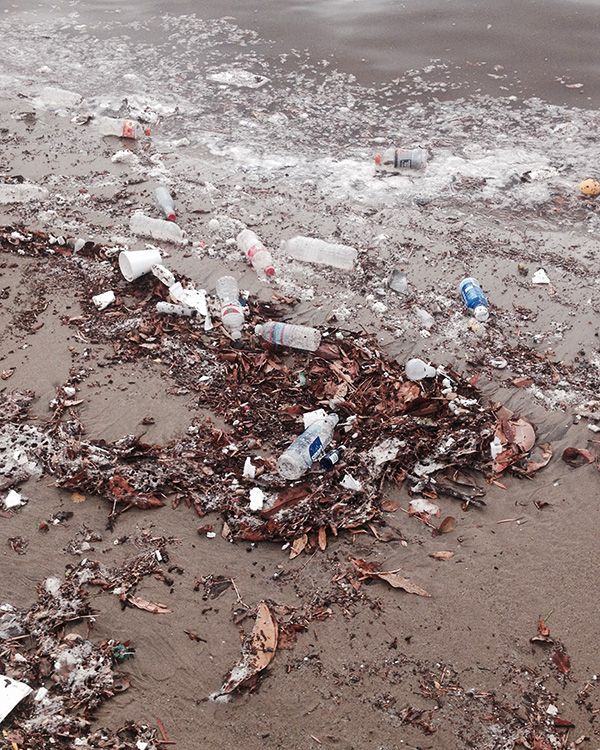
The field training also reminded us of why our work and our MPAs are so important, as a contour of oil blackened the mean high tide line. MPA Watch interns and volunteers have been tasked with documenting and reporting the extent of oil blobs on our beaches–and we’ve already seen quite a bit. Heal the Bay will continue to provide updates from the oil spill at Refugio Beach and the connection to the recent spike in oil on our L.A. beaches. 

As we walked away from Point Dume with tar on our shoes and clipboards in hand, we felt a renewed drive to heal the Bay. We can’t do it alone, though.

If you see oil blobs on the beach, please call the National Response Center at 1-800-424-8802.

If you see an oiled animal or wildlife in distress, call the OWCN response hotline at 1-877-823-6926.

Also, take pictures (with an item in the frame for size reference) and post to Instagram with a geotag and #healthebay.

And remember: Please don’t touch the oil!

Westward Oil Blobs

(Clockwise from left: Tar on Westward Beach; Oil blob on Santa Monica beach; Tar on Santa Monica Beach looking toward the pier)


 SM Pier Oil Blobs SM Pier Oil Blobs


School’s out for summer… but the grades are in for California’s beaches!

The Report

News Releases

Media Coverage

Californians heading to the shoreline this summer will be heartened by continued excellent water quality at beaches statewide, according our 25th annual Beach Report Card.

Heal the Bay analysts assigned A-to-F letter grades to 468 beaches along the California coast for three reporting periods in 2014-2015, based on levels of weekly bacterial pollution. Some 95% of beaches received A or B grades during the summer (April-October 2014). That figure is essentially steady with the last year’s report.

Overall, only 13 of the beaches monitored statewide received D to F grades during summer dry weather, when most beachgoers typically use the ocean. High bacteria counts at these sites are linked to potential illnesses like stomach flu, ear and upper respiratory infections and major skin rashes.

Southern California had excellent summer dry weather water quality with 97% A or B grades. Summer dry weather grades in the San Francisco Bay area (Marin County through San Mateo County) were also excellent with 93% (39 of 42) of ocean-side locations receiving A or B grades.
 
The severe drought now impacting California appears to be a major contributing factor to generally strong water quality at beaches statewide. With record low rainfall reducing the amount of polluted runoff funneled into our seas, beach grades across the state are consistently outperforming their five-year average.
 
Beach water quality grades may be higher in a given year due to less runoff, yet the resulting improved water quality may be providing a false sense of long-term beach water quality improvement. While low rainfall totals have led to significantly improved water quality statewide, it should be noted that California often swings from extended dry periods to shorter periods of intense, wet weather.
 
In response, Heal the Bay’s policy staff is advocating for a public funding measure to build infrastructure projects that capture, cleanse and reuse stormwater rather than dumping it uselessly into the sea. Progressive city planning, smart public infrastructure and so-called Low Impact Development in the private sector would turn a nuisance into a resource.
 
Nearly one in four monitored beaches in California received F grades for wet weather in the report, a figure that raises public health concerns for the state’s growing legion of year-round surfers, paddle-boarders and divers. The marked seasonal difference in water quality is why Heal the Bay recommends that ocean-users avoid the water for at least three days after a storm.
 
Heal the Bay’s annual Beach Bummer List, a ranking of the state’s 10 most polluted beaches,  is evenly split among beaches in Southern and Northern California. Cowell Beach in Santa Cruz has the dubious distinction of topping the list for a second year in a row. New entrants this year include Mission Bay at Clairmont Drive in San Diego, Candlestick Point/Sunnydale Cove in San Francisco and Huntington State Beach at Brookhurst in Orange County.
 
This Year’s Top 10 Beach Bummers

  1. Cowell Beach – at the wharf (Santa Cruz County)
  2. Marina del Rey – Mother’s Beach (Los Angeles County)
  3. Clam Beach County Park (Humboldt County)
  4. Marina Lagoon (San Mateo County)
  5. Mission Bay at Clairmont Drive (San Diego County)
  6. Stillwater Cove (Monterey County)
  7. Candlestick Point/Sunnydale Cove (San Francisco County)
  8. Santa Monica Pier (Los Angeles County)
  9. Cabrillo Beach harborside (Los Angeles County
  10. Huntington State Beach at Brookhurst (Orange County)


Honor Roll and Beach Bummers


It’s not all bad news. Some 19 beaches in the state were named to Heal the Bay’s Honor Roll, meaning they were monitored year-round and scored perfect A+ grades every week of the year, regardless of dry or rainy conditions.
 
Most of the California coastline earned A grades throughout the summer reporting period. Some 94% of L.A. County beaches received A or B summer grades, a 10% increase from the county’s five-year seasonal average.  Beaches in Orange County earned summer grades of A or B at 99% of locations. San Diego County also scored very well, with 96% of it monitored sites earning A or B marks. However, both counties each placed one site on the overall Top 10 Beach Bummer List.
 
Moving up the coast, 100% beaches in Santa Barbara and Ventura counties earned A grades during the summer. Nearly nine in 10 San Luis Obispo County beaches notched A grades. Some 75% of Santa Cruz beaches scored A summer grades, but it also had two beaches receive F grades. Monterey County beaches, which had a few underperforming sites, earned 76% A or B marks in the summer.
 
Further north, 81% of San Mateo County beaches scored A grades, and were dragged down by two failing beaches during the summer reporting period. Some 78% of San Francisco locations received A or B grades for the summer in the report, slightly below its five-year summer average. Marin County and Sonoma counties each had 100% of beaches earn an A summer grade. Mendocino and Humboldt counties earned mixed grades.
 
A new model: ‘Nowcasting’ water quality

This summer Heal the Bay and Stanford University have implemented a pilot program at three beaches in Southern California to test the effectiveness of new predictive beach water-quality tools. Using sophisticated statistical models, the scientific teams are aiming to accurately predict water quality at historically troubled beaches.

Final results of pilot study are due this fall, but promising early results indicated that beach managers may be able to post a warning notice immediately at pollution-impacted beaches rather than waiting for bacteria testing, which can days to complete. These new models will protect public health by providing more timely and advanced water quality information.
 
Read the full report