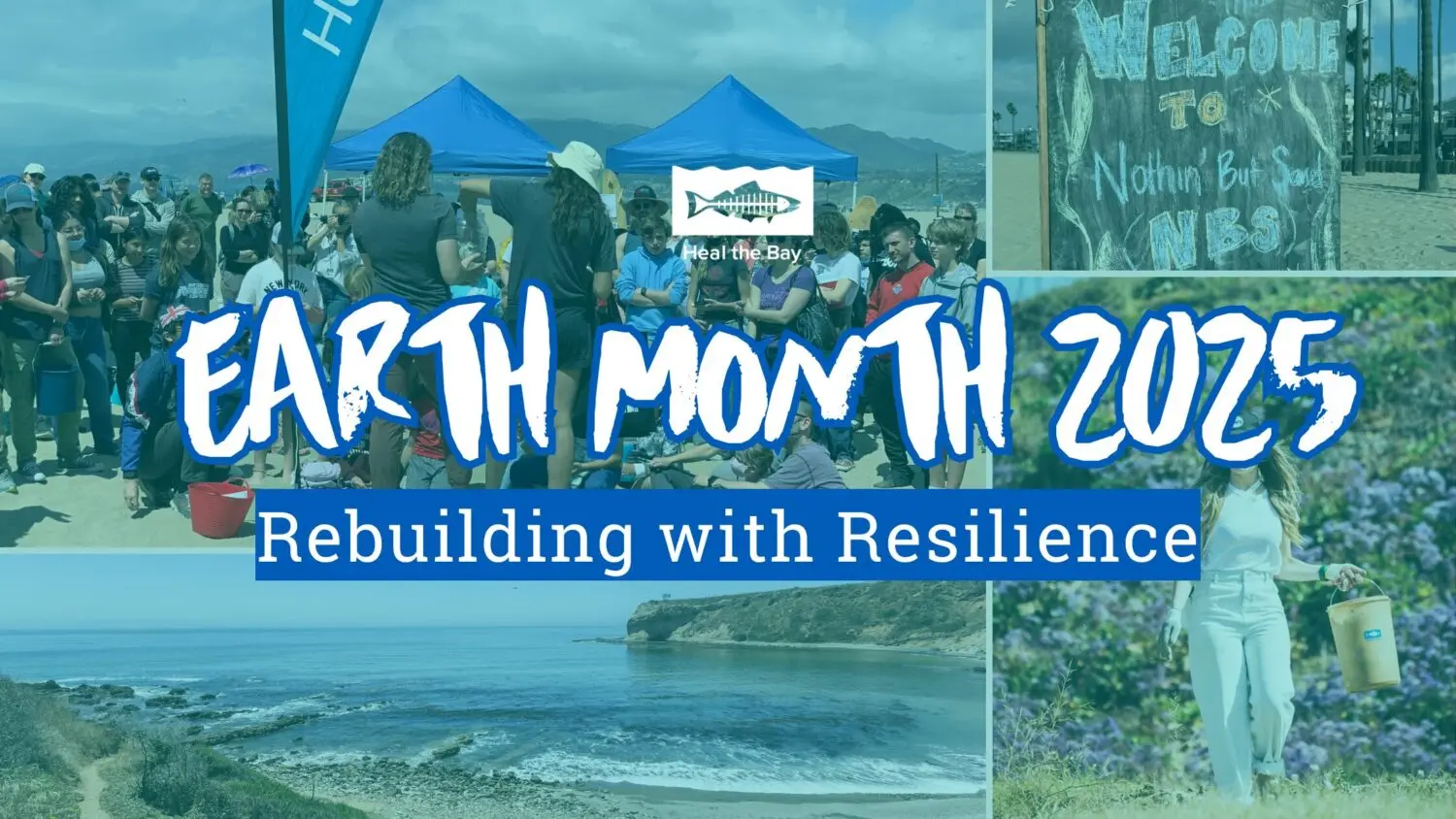
Fun, inspiring activations are happening all month for everyone – individuals, families, schools, and more! Grab your reusable water bottle, sunscreen, and friends for climate action fun near you!
Heal the Bay Earth Month 2025 Calendar of Special Events
SCROLL DOWN TO SEE THE FULL LIST OF EVENTS and get involved this Earth Month with events and activities from Heal the Bay and our partners! 👇👇👇
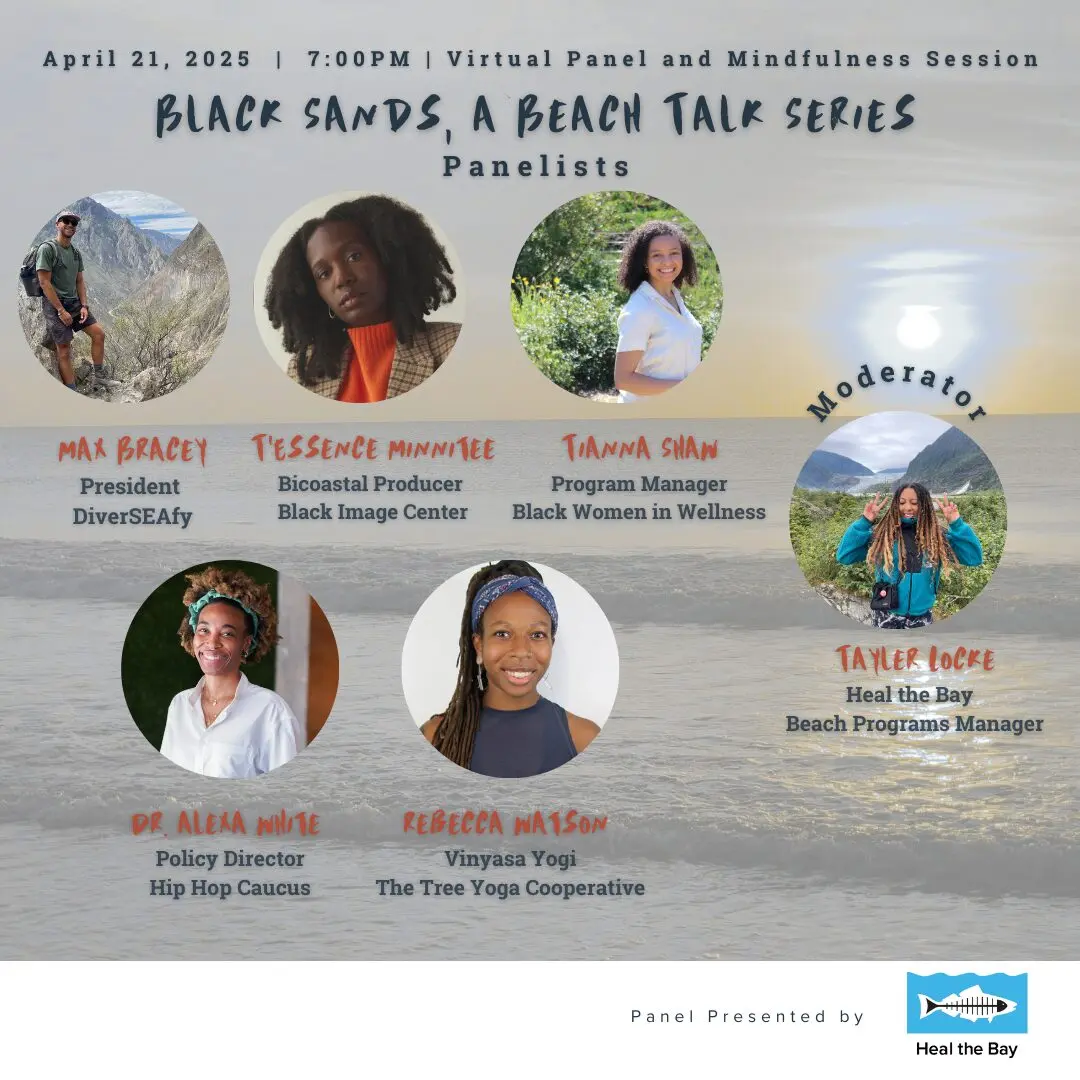
Black Sands, A Beach Talk Series- FREE
Monday, April 21, 7 PM – Virtual
Join us for Black Sands, a special virtual installment of Heal the Bay’s on-the-sand Beach Talk series
We welcome ALL who want to connect, learn, and share.
This roundtable will blend thoughtful dialogue with community-building, exploring topics like Black identity in outdoor and marine spaces, coastal resilience, climate justice, wellness, and environmental stewardship. Whether you’re a longtime advocate, a curious learner, or someone simply seeking space to exhale, Black Sands is for you.
Changing Tides: Fires, Blooms & A Warming Coast (Panel)
Wednesday, April 23, 5 PM – Virtual
Join Heal the Bay and Marine Mammal Care Center for a special virtual panel moderated by actress and advocate Bonnie Wright (Harry Potter Series), who will meet with Heal the Bay’s CEO Tracy Quinn and Marine Mammal Care Center’s Chief Operations & Education Officer, Dave Bader, for a conversation about climate change and the recent environmental events, from wildfire to toxic algae, that are testing the resiliency of our coastal ecosystems.RSVP to get access to the livestream link!
Heal the Bay BioBlitz: 2025 L.A. City Nature Challenge – FREE
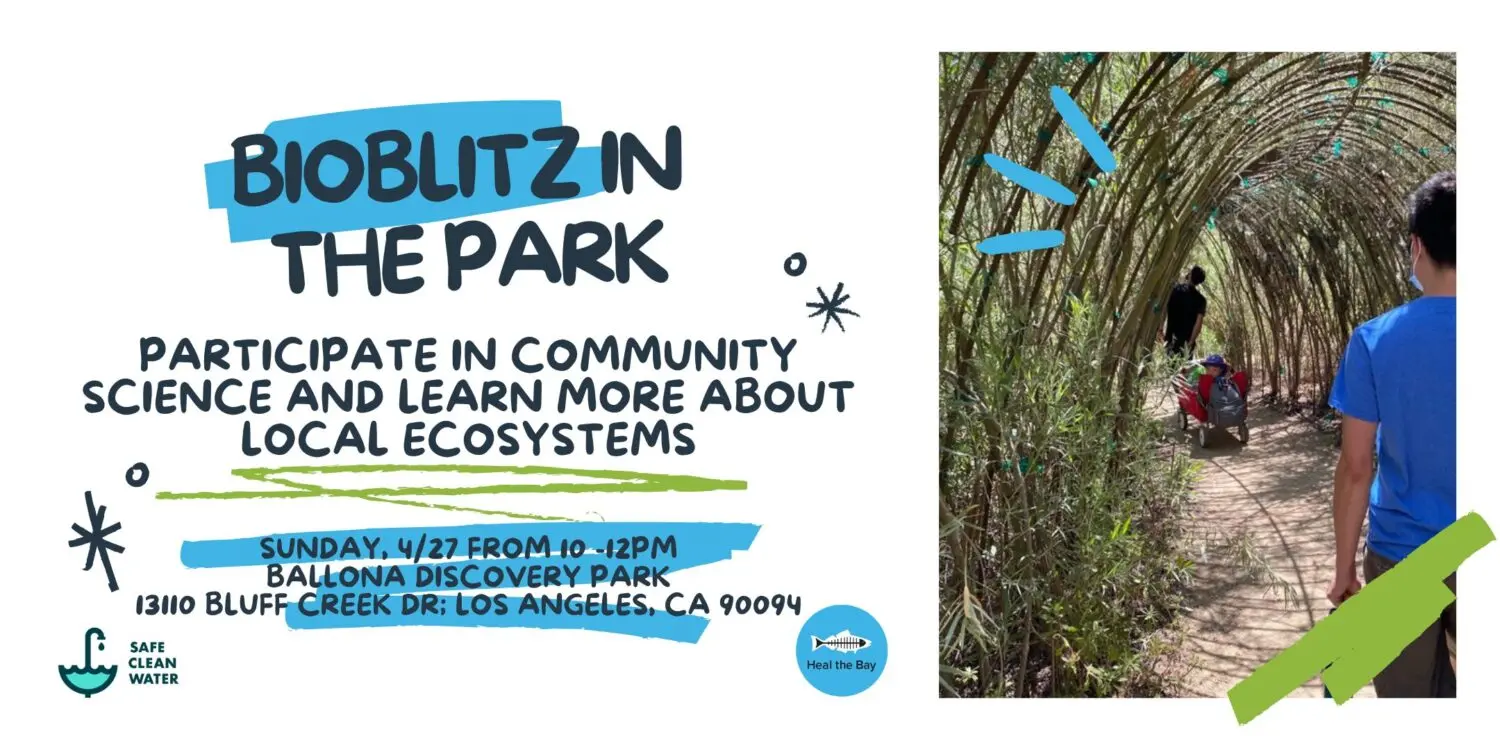
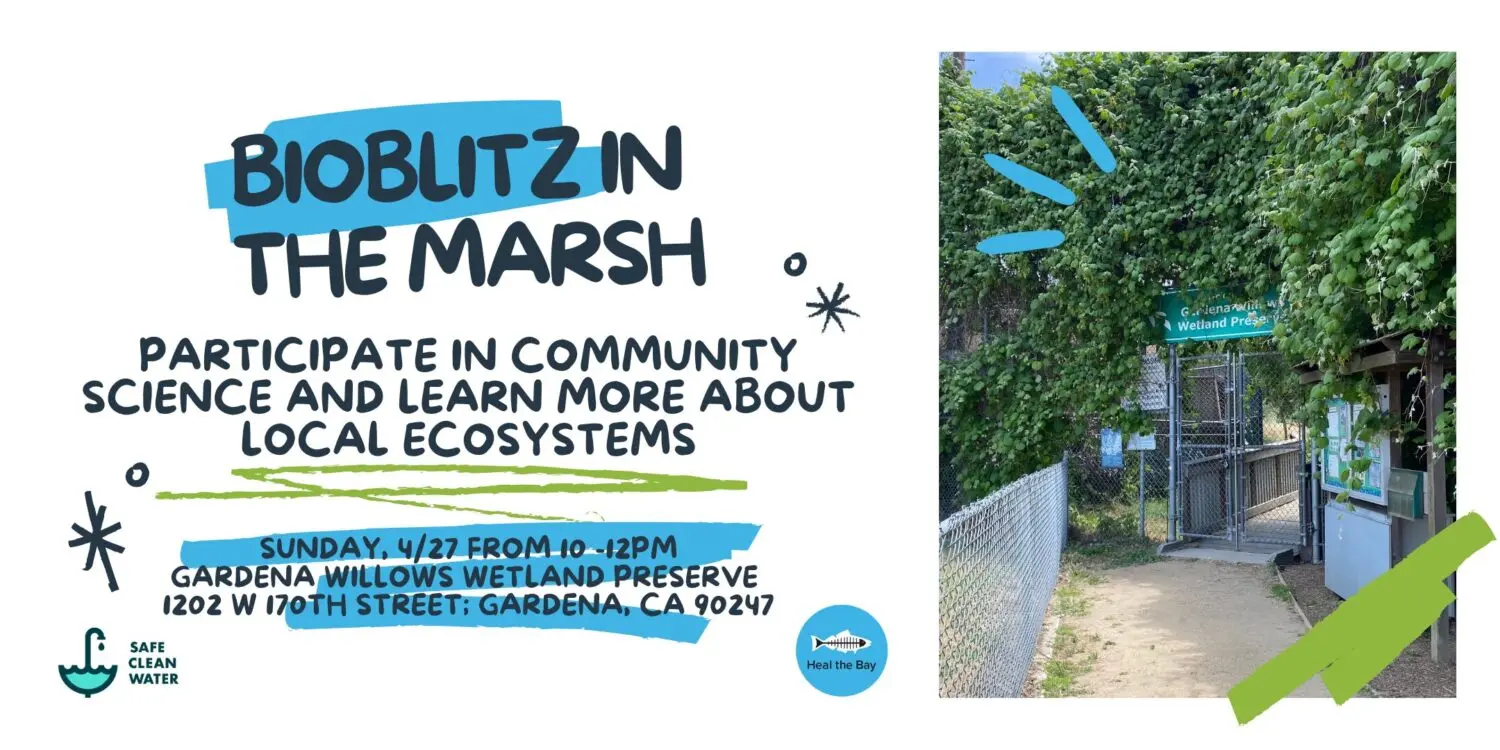
Sunday, April 27, 10 AM – 12 PM @ Ballona Discovery Park OR Gardena Willows Wetland Preserve
Join Heal the Bay’s Safe, Clean Water Program (SCWP) for the 2025 LA City Nature Challenge BioBlitz, a global event that started as a friendly competition between Los Angeles and San Francisco and has since grown into a worldwide movement!
A BioBlitz is a fun, hands-on community science event where we’ll work together to document local wildlife. By snapping photos of wild plants and animals, you’ll contribute valuable data to a global biodiversity database to help scientists better understand our urban environment. No experience needed! Just bring your curiosity and a smartphone.
We’re offering two BioBlitz locations this year, and both are happening simultaneously, so please choose only one.
WHERE: Gardena Willows Wetland Preserve (1202 W 170th Street; Gardena, CA 90247) OR Ballona Discovery Park (13110 Bluff Creek Dr; Los Angeles, CA 90094)
Saturday, May 3, 10 am – 2 pm @ Kuruvungna Village Springs and Cultural Center
Heal the Bay is joining the Gabrielino Tongva Springs Foundation in honoring and celebrating the past, present, and future of the Kuruvungna Village Springs and Cultural Center. This family-friendly gathering will feature live music, garden tours, art, vendors, food, and workshops.
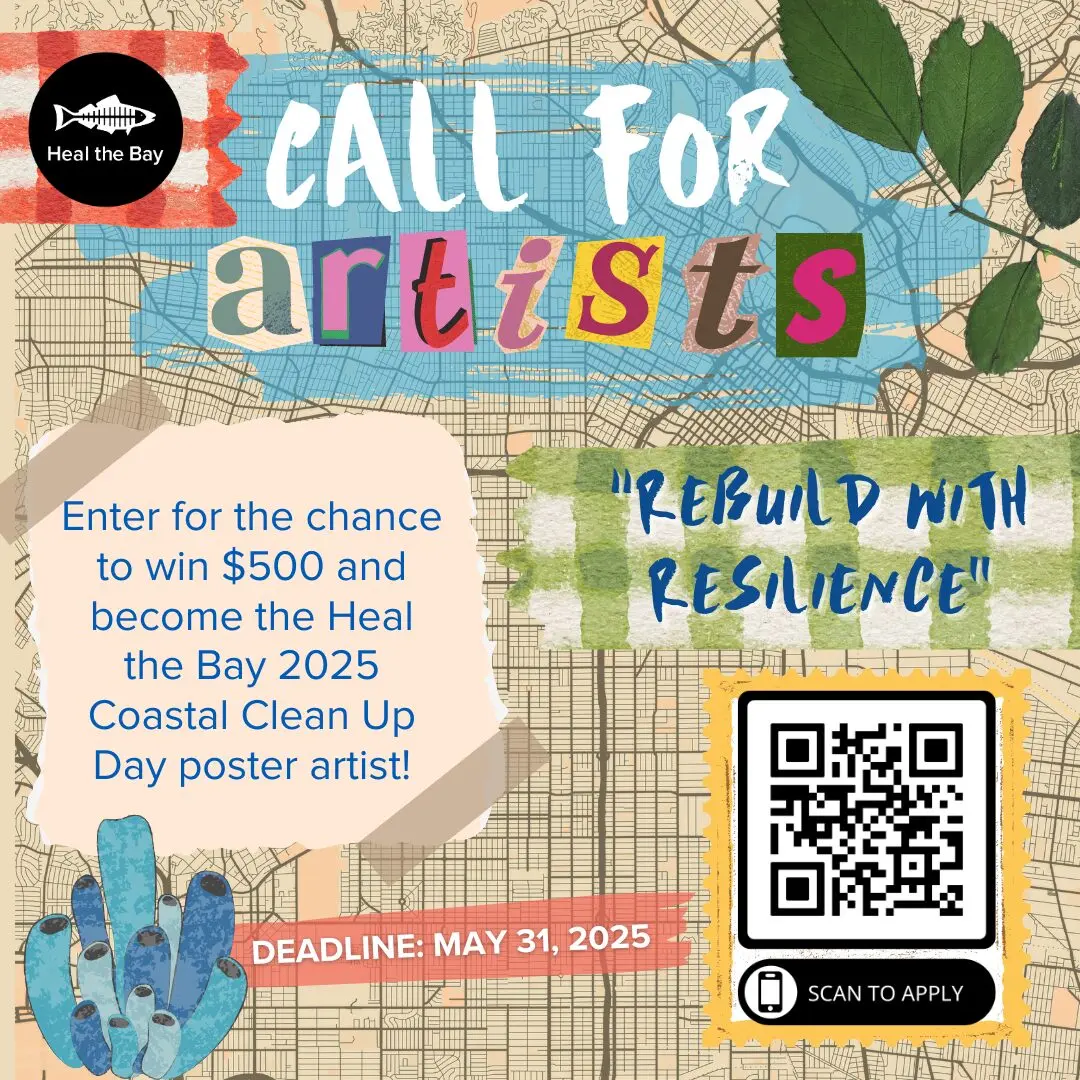
We’re Looking For Our 2025 Coastal Clean Up Day Poster Artist!
Calling all ocean-loving artists! Let your artwork advocate for our ocean this Coastal Cleanup Day!
Win $500 and see your artwork all over Los Angeles County on the official Heal the Bay Coastal Cleanup Day poster!
Submit a portfolio of your work and a concept for a poster that captures the essence of our theme: “Rebuild With Resilience.”
How do you envision the future of LA? What changes do you hope to see in your community? How can we build a climate-resilient future? Express your vision through original artwork inspired by this theme!
Submissions are accepted until May 31st, 2025. See full details and application here!
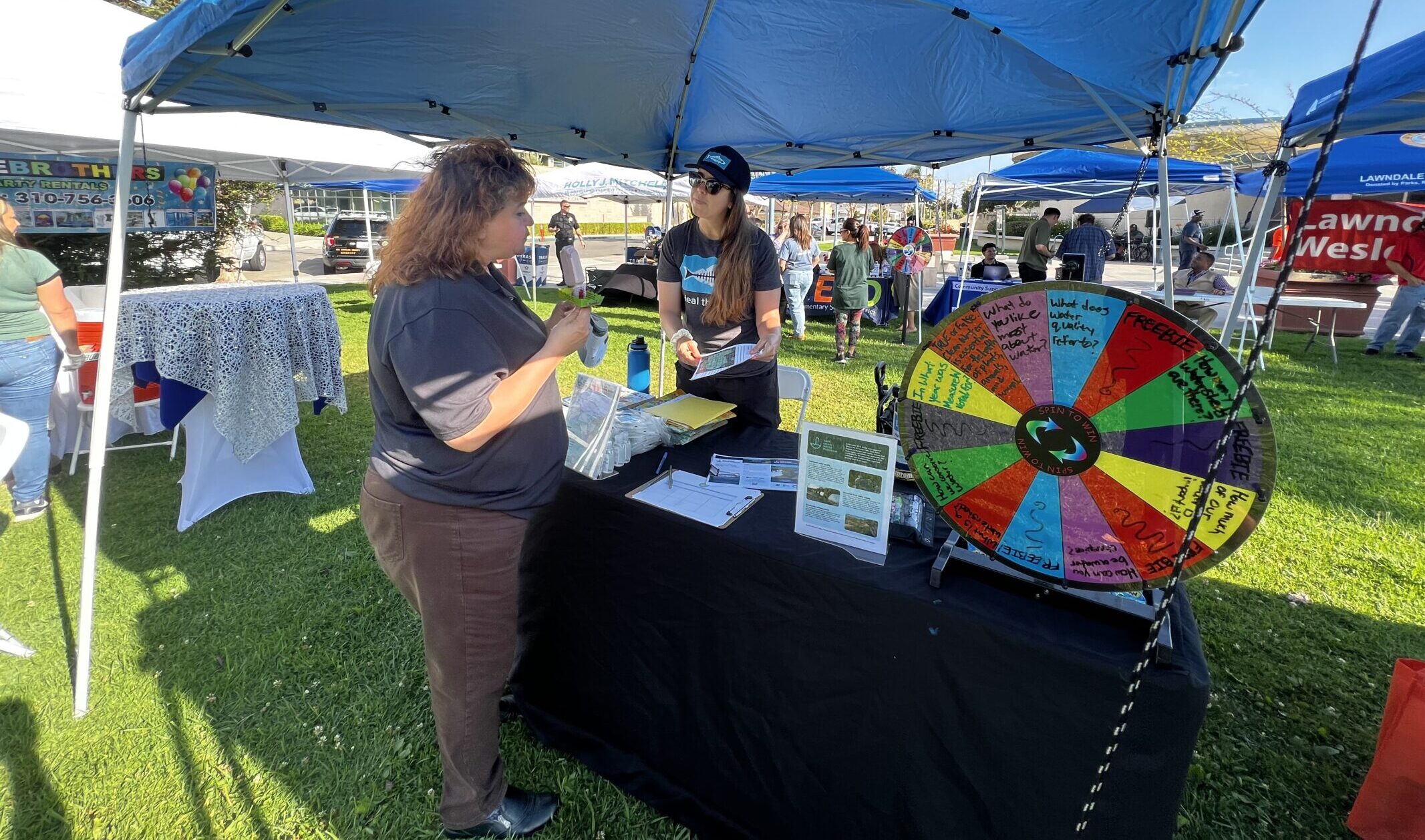
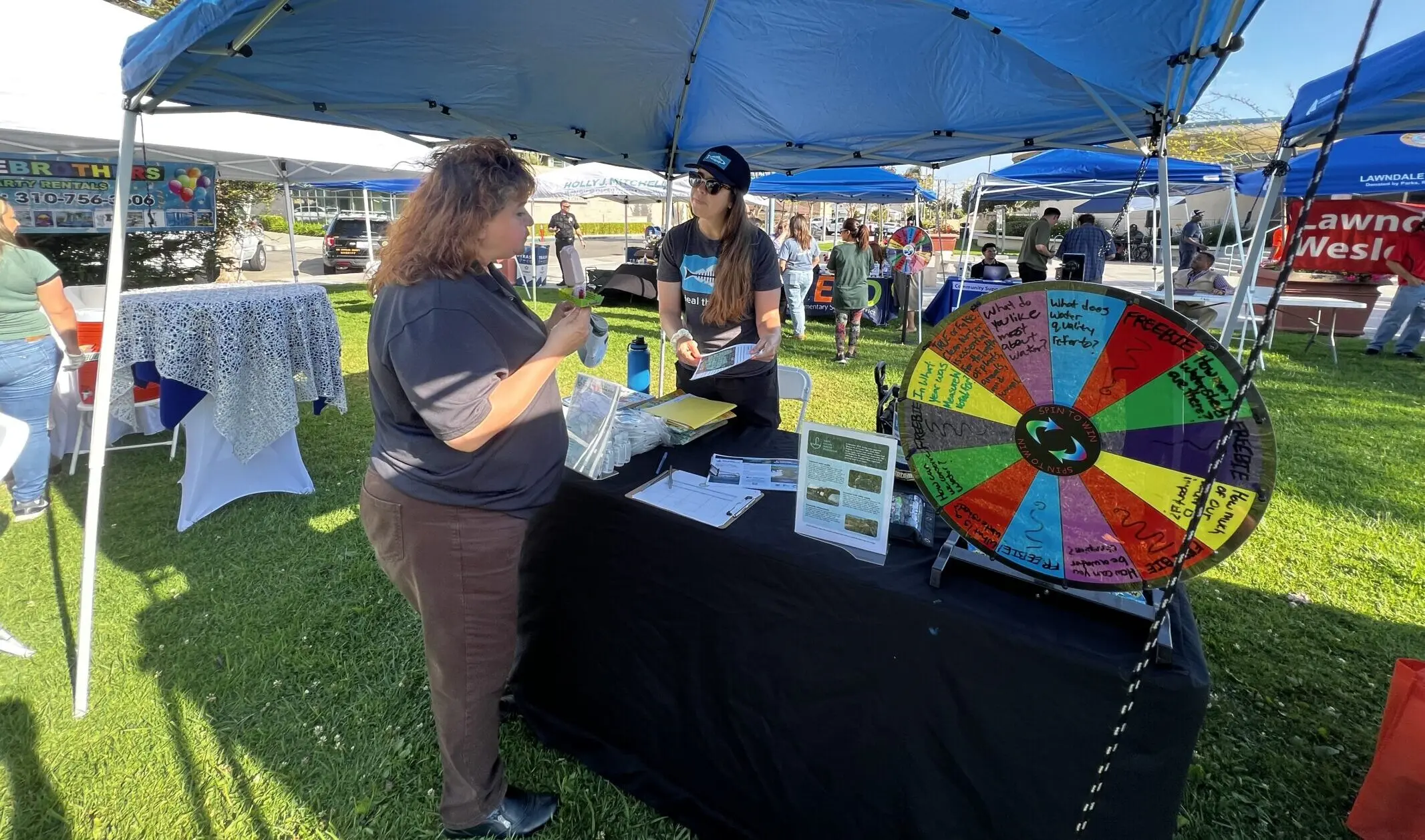
Check out our list of Earth Month events hosted by some of our favorite social, environmental, and partner organizations across Los Angeles. Stop by Heal the Bay’s Outreach table while you’re enjoying Earth Month fun around Los Angeles County this April.
Pepperdine’s University’s Annual Earth Day Celebration @ Pepperdine University, April 1, 11 am – 2 pm
The 2025 Arts & Literacy Festival at Virginia Avenue Park @ City of Santa Monica’s Virginia Avenue Park, Santa Monica Public Library, Santa Monica Malibu Unified School District-Child Development Services, and Venice Family Clinic, April 26, 10 am – 2 pm
Heal the Bay strongly disagrees with the selection of State land in close proximity to Topanga Creek and Lagoon as the US EPA’s Palisades Fire hazardous material staging area, where materials will be sorted and repackaged before they are sent to permitted waste collection facilities. The site chosen is an area of cultural and ecological significance, and we stand with the surfers, swimmers, and local communities concerned about the potential for harm to this precious ecosystem.
UPDATE: January 31, 2025 – Initial Takeaways from the EPA Hazardous Waste Site at Topanga Beach & FAQ (below)
For the record, Heal the Bay was NOT consulted on the site selection ahead of time.
Soon after we learned about the site selection, we asked to meet with US EPA officials to express our concerns and learn what measures were being taken to protect Topanga Creek and Lagoon. That meeting occurred on Thursday, January 30, 2025, at 4:30 p.m.
At our meeting with EPA, we learned that operations have already begun on the Topanga site, reducing the likelihood that we can get EPA & FEMA to select a different location (although we still pushed). Between the Palisades and Eaton fires, this is the largest operation the EPA emergency response team has had to clean up since they began this work in 2015. In addition, they have been tasked by the current Federal Administration to complete the work in 30 days, a time constraint that has left the region with few options.
We are fighting to ensure that the EPA implements sufficient measures to prevent contaminants from coming into contact with the bare soils or leaving the site and impacting critical waterways. In addition to what the EPA has proposed (see EPA’s FAQ), Heal the Bay asks for water testing in Topanga Creek and Lagoon. We have also asked to be permitted access to the site to observe operations and the implementation of measures meant to prevent harmful chemicals from leaving the site. We are waiting to hear back on both of these.
Although we strongly disagree with the site EPA and FEMA have chosen, speedy removal of hazardous wastes from the burn areas IS ESSENTIAL. Right now, the hazardous waste in the burn areas is uncontained and exposed to the elements, with almost no measures in place to prevent it from being blown by the wind or entering our ocean when it rains again. There are no good choices here, but in our opinion, hazardous materials left exposed at burned structures pose a greater threat to water quality and ecosystem health than they will at an EPA sorting site where multiple containment measures are in place. If the EPA will not or cannot move the hazardous waste staging area from the Topanga location, we demand that they take extra precautions to prevent stormwater from running onto the site, contaminated runoff from leaving the site, and contaminated dust from being blown from the site into waterways. Please join us in asking for water quality sampling to be added to the BMP protocol.
Here are the biggest takeaways from our meeting with the EPA:
What does the EPA look for in a staging site?
When looking for a hazardous material staging site, the EPA team needs at least five acres of flat land located near a roadway suitable for trucks to enter and exit.
The EPA could not start cleaning efforts until a space was selected and prepared.
Why was Topanga Lagoon chosen as the site location?
EPA did recon with Cal Fire, and the Topanga Lagoon site met the basic logistical requirements for space and access. The state approved EPA use of the Topanga location.
According to the EPA, other proposed sites were either rejected by City of LA and LA County officials or already used by other emergency response teams.
Heal the Bay has requested a list of other sites considered by the EPA.
Will additional locations be needed to remove all of the hazardous waste entirely?
For the Palisades Fire response, EPA anticipates the need for more staging areas, maybe an additional 25 acres.
The EPA is currently searching for other staging areas, and Heal the Bay has requested to be part of that decision-making process.
What has taken place on the site to date?
The property was burned, so EPA cleared it of burned debris, then built berms around it and added straw wattles to prevent water from entering or leaving the site.
Secondary containment and plastic lining have been implemented to prevent direct contact of hazardous materials with the soils on site.
The EPA took soil samples before the cleanup activity commenced and will sample again once the cleanup activity is complete. (NOTE: Heal the Bay has requested a list of contaminants tested to ensure the sampling plan is sufficient).
The cleanup team monitors the air for particulates, volatile organic compounds (VOCs), radiation, and wind indicators for weather tracking.
The cleanup team has started electric car battery recovery for the Palisades area, de-energizing them in the Topanga staging area to be recycled.
What safety precautions will EPA take to protect the environment?
Heal the Bay asked about additional BMPs (Best Management Practices) for the expected rain. EPA Public Information Officer Rusty Harris-Bishop has agreed to update us as more information becomes available.
Heal the Bay has also requested that the EPA conduct water quality monitoring in the nearby creek and Lagoon.
The EPA has explained that they have not had any issues with staging areas in past emergencies, including the Lahaina fires.
When will they start accepting hazardous waste?
As of January 30, they have already started collecting lithium-ion batteries (from electric cars).
Larger-scale work is scheduled to begin January 31, 2025.
When will they be done?
This is a temporary staging area, and although the Palisades Fire was an unprecedented event, the plan is for the site work to be completed by the end of February 2025 (30 days).
Where will the hazardous waste be sent?
Materials are taken to the staging area to sort and re-pack for final shipping to permitted hazardous waste facilities that are in good standing.
The facilities have not been determined yet.
Determining specific locations will depend on what the EPA team finds and how much material is collected. Still, our understanding is that the waste will likely be transported out of state.
Can EPA move the staging to another location?
Attempting to move locations would cause delays in removing the hazardous waste from within the burn zone where it is currently exposed to the elements, which is the biggest concern.
What is more dangerous to the environment: Creating the staging area near an ecologically sensitive area or slowing removal?
Slowing down removal is likely more dangerous for the environment because there are few measures to prevent the waste in the burn areas from entering waterways and the ocean.
Is the EPA planning to test the water quality?
No water quality testing is planned.
Does Heal the Bay have water quality testing recommendations?
Yes, our Water Quality Team recommends that the EPA test for the following:
Chronic and Acute Toxicity
Basic water quality parameters (e.g., turbidity, pH, dissolved Oxygen, and temperature)
Total Suspended Solids
Heavy Metals (e.g., lead, arsenic, mercury, chromium and cadmium)
Volatile organic compounds (e.g., Benzene)
Polycyclic aromatic hydrocarbons (PAHs)
Polychlorinated biphenyls (PCBs)
Per- and poly-fluoroalkyl substances (PFAS)
Oil and Grease
Total Organic Carbon
FIB (i.e., E. coli, total coliforms, and enterococcus)
Dioxins
Ammonium
Phosphates
Sulfates
Asbestos
Microplastics
Radionuclides
Has the EPA started a cleanup operation in response to the Eaton Fire?
They have started cleanup operations in Eaton.
Will Heal the Bay continue to monitor the situation at Topanga Lagoon?
Yes, and Heal the Bay will continue to push for the opportunity to conduct a site visit in the coming days to observe the BMPs in action.
The latest news about the Palisades fire and its impact on ocean-water quality and beach access in L.A. County.
During natural disasters, residents seek three things: community support, goodwill, and up-to-date information. To that end, Los Angeles County leaders invited Heal the Bay science and outreach staff to attend an emergency meeting Thursday morning at the Palisades Fire incident command center at Zuma Beach.
Department officials from L.A. County Fire and Beaches & Harbors asked Heal the Bay to help disseminate accurate updates to the public about how the catastrophic fires affect beach access and ocean water quality.
Here’s what we learned:
Stay away from burn zones and evacuated areas in the Palisades, Topanga, and Malibu areas.
Residents and those who love these areas are naturally curious about the status of homes, commercial structures, and favorite natural places. Command officials understand that people want to return to the areas as soon as possible. However, public safety dictates that fire and evacuation zones remain off-limits until emergency crews clear neighborhoods of downed power lines, roadway debris, lingering hot spots, and other hazards. Officials were unable to give a timetable for when residents may return or when PCH will reopen, but a brief tour by Heal the Bay staff indicates it will be weeks until residents can go back.
There is no public access to any L.A. County beaches in the fire or evacuation zones, roughly north of the Santa Monica Pier to County Line.
If you are a surfer looking to score empty waves, don’t even think about it. Multiple National Guard checkpoints are in place, ensuring that only emergency responders, utility workers, media, and essential workers are allowed on PCH. If you think you might be able to talk your way past checkpoints to tour impacted areas, you are mistaken. All beach parking lots from Will Rogers to Zuma are unavailable to the public, as they are being used as staging areas for emergency crews. All other beaches in L.A. County remain open to the public. But caution is urged, given compromised air quality along County shorelines.
Avoid water contact at any beaches from Malibu’s Surfrider Beach to Dockweiler State Beach near LAX.
The Los Angeles County Department of Public Health has issued an ocean advisory that warns residents to avoid any water contact at these beaches. The firestorms and efforts to beat them down have created massive amounts of runoff, which may contain toxic chemicals and dangerous debris. All that polluted water eventually sloughs off to the Bay. The advisory will remain in effect until three days after fire-fighting operations end.
As of Thursday morning, the Palisades Fire was only 22% contained. Heal the Bay has not determined yet if the County’s Public Health unit will be posting warning signs at impacted beaches. To view a map of impacted locations and get more information, click here. We advise the public to visit Heal the Bay’s Beach Report Card to get updated information on beaches, as well as the Department of Public Health to learn about the latest water-quality details.
Water quality testing of local beaches will continue at sites that are still accessible to sampling agencies.
Water quality samples for fecal indicator bacteria are collected and tested by three government agencies every week at 85 sites in Los Angeles County. Once the results have been processed (after 24 hours), the public is notified when a beach exceeds pollution standards by warnings, advisories, or closures of the affected beaches. These weekly samples form the basis of Heal the Bay’s weekly A-to-F Beach Report Card.
Due to the fires, access to some beaches has been restricted, and some water-quality sampling has been interrupted until further notice. However, local departments will continue their testing to the best of their ability, including many of the 41 beaches where the Department of Public Health has advised beach users to avoid water contact—assuming these sites remain accessible in the weeks to come.
Water quality testing needs to expand beyond monitoring fecal bacteria to include testing for heavy metals, PCBs, nitrates, and other harmful compounds.
Water quality degradation following a fire varies greatly depending on the intensity and duration of the fire and the characteristics of the affected ecosystem. One of the primary effects is the alteration of vegetation coverage, which reduces the natural barriers that slow water runoff after a storm event. This leads to increased soil erosion and sediment transportation into nearby water bodies.
Rainfall can exacerbate these effects by compacting the soil and increasing overland flow, amplifying erosion and pollutant transport. With many homes, businesses, cars, and other manufactured items burning so close to the coast, we are particularly concerned about sediment, trash, and debris washing into the ocean.
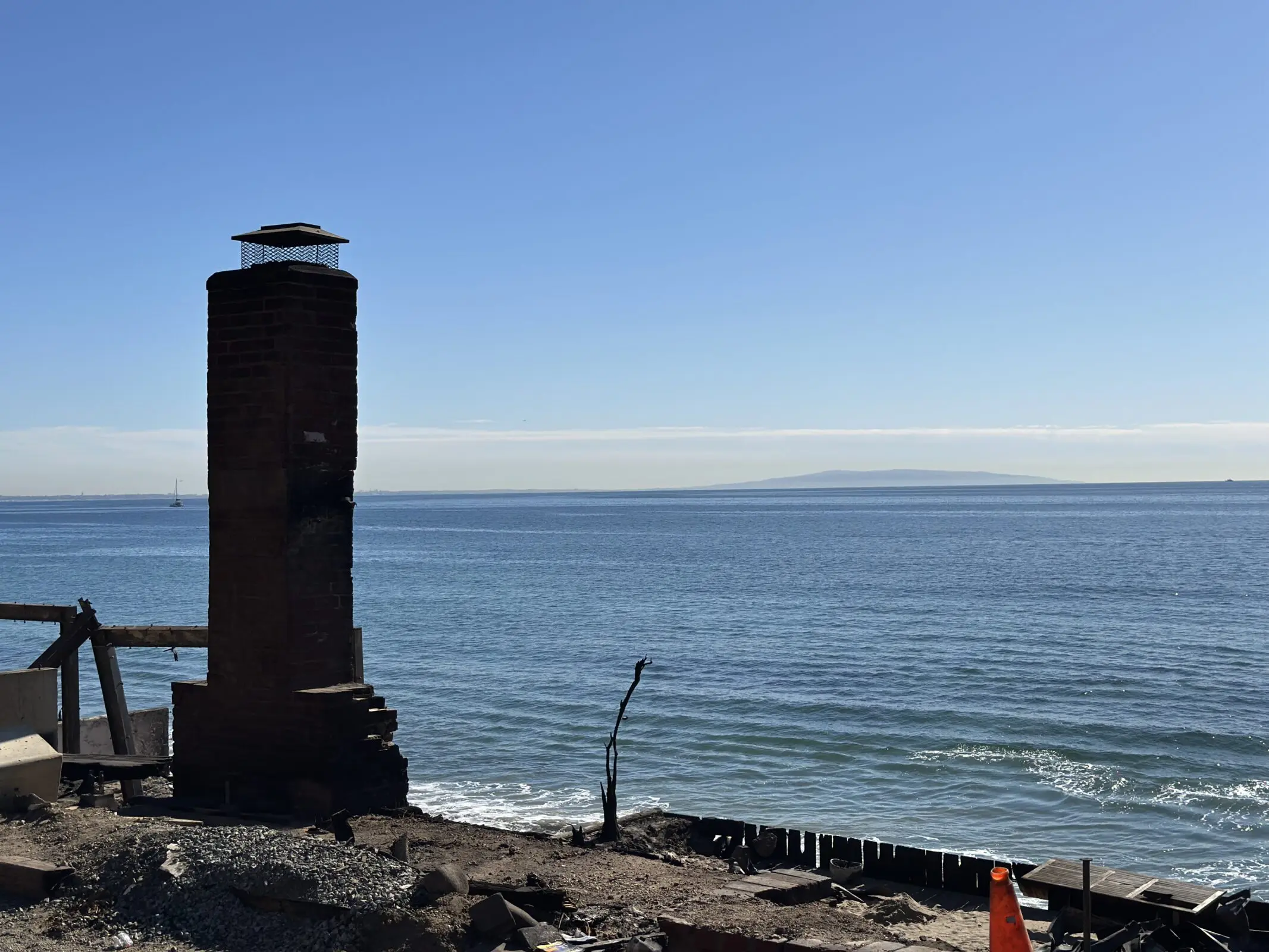
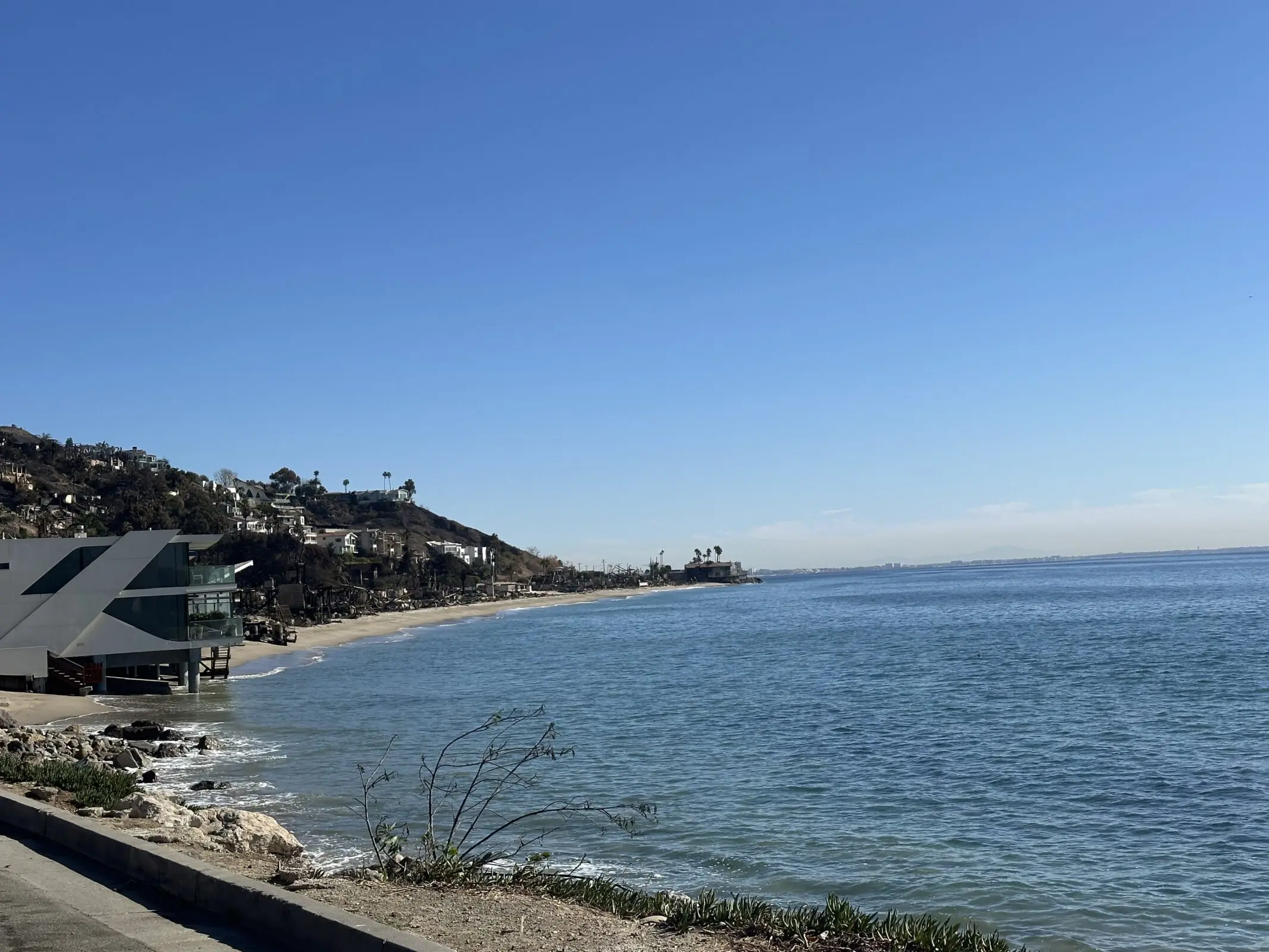
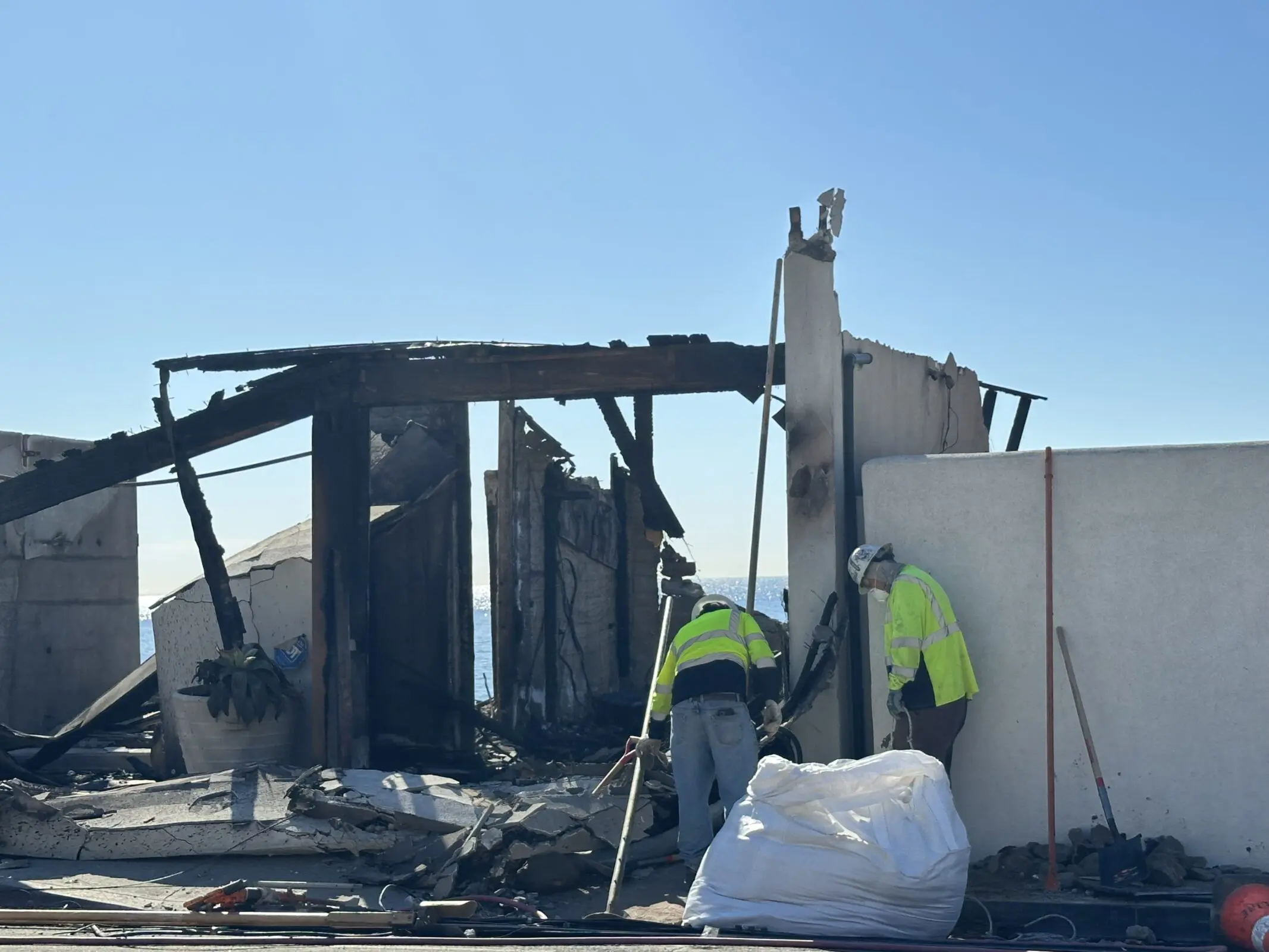
During our tour, Heal the Bay staff saw hundreds of burned-out structures on the ocean side of PCH, with high tide waves surging within feet of the twisted, charred wreckage. Sediment can contain high levels of nutrients like phosphorus and nitrogen that, in excess, are harmful to marine ecosystems and can create algal blooms. They may also contain chemicals, heavy metals, and other harmful substances that burned in the fires. Recent reports indicate that the presence of so much plastic in modern homes has significantly contributed to more toxic infernos.
Heal the Bay does not have the capacity to conduct any water quality testing aside from compiling bacterial data and informing the public when it is safe to enter the water.UPDATE 1/30/2025
Not only did we test for bacteria and turbidity (which we can process in-house), but we also collected samples to test for Heavy metals, Mercury, PAHs/PCBs, Benzene, and PFOS/PFOA (two types of PFAS). We collected samples before and after the rain event on January 26, 2025, which will provide a comparative analysis of initial pollutant levels and stormwater runoff effects.
The Palisade Fire has increased sedimentation and introduced harmful pollutants into our coastal waters, and Heal the Bay is dedicated to understanding the impacts, which is why we are testing for key pollutants that may be transported into Santa Monica Bay due to runoff from the Palisade Fire.
We strongly urge the County of L.A. and any other municipalities to test for the presence of additional contaminants, such as heavy metals, PCBs, nitrates, and other unhealthy compounds. These pollutants can be harmful to humans and aquatic species, and given the extensive firefighting that has occurred directly adjacent to the coastline, these pollutants will be present for months to come.
In theinterview below with USA Today, Annelisa Moe, Associate Director of Science, Policy, and Water Quality, discusses some of the long-term risks to coastal ecosystems and water quality.
We will continue to provide water quality information each week on the BRC website, so beach users and freshwater recreational users can make informed decisions.
Note: We will continue to consult with County officials on a daily basis to update this post. We will send alerts on our social media platforms when we receive new information about water quality, public health and beach access.
Reimagining the Ocean and Protecting the Planet with Heal the Bay’s Aquaculture Program
Pollution, climate change, and over-fishing have all played a role in the dramatic decline of marine life in our oceans, contributing to food scarcity and poverty in coastal communities across the globe that rely on fishing for food and their local economy.
And while organizations like Heal the Bay work to address the causes of the decline, we also have another tool in our toolbelt. Aquaculture is the controlled growing of aquatic organisms and can be used for sustainable food production, habitat restoration, and species conservation.
At Heal the Bay, we are taking a groundbreaking step in reimagining the modern aquarium. We are working to become the nation’s first fully sustainable aquarium by exclusively exhibiting animals that have been produced through aquaculture.
Heal the Bay is currently culturing swell sharks, moon jellies, giant spine stars, Pacific sand dollars, and brand new baby pipefish.
The AquaLab at Heal the Bay Aquarium give the public a chance to learn about our work.
By sourcing our exhibits through aquaculture, we reduce the environmental impact of traditional collection methods, support marine ecosystem restoration, and contribute to the conservation of endangered species—making our aquarium a model of sustainability in the field.
But we aren’t stopping there! We are also helping develop the so-called “blue economy” by mobilizing local students to steward this paradigm shift through our Aquaculture Training Program in partnership with Santa Monica College. Heal the Bay experts, in partnership with SMC, have developed a program to ensure the next generation of aquaculture professionals is equipped to responsibly, sustainably, and ethically grow aquatic species. Our aquarium serves as a hands-on training facility, providing students with real-world experience in sustainable aquaculture practices in our AQUA lab, and our Associate Director of Aquarium Operations, Laura Rink, serves as an instructor for the class.
The Students from Santa Monica College recieve hands-on education from Heal the Bay expert aquarists.
Our fertile lobster eggs are thriving as Heal the Bay attempts to be the first aquaculture program to successfully settle this species of Spiny Lobster.
And our moonshot for Heal the Bay’s aquaculture program is to raise and release local endangered species back into Santa Monica Bay to restore balance in our marine ecosystem. One species we are focused on is the Sunflower Sea Star which plays a critical role in the health of our giant kelp forests, like the one off the coast of Palos Verdes. Sunflower Sea Stars eat urchins which eat kelp. A severe decline in sea star populations has led to a proliferation of urchins which are devastating kelp forests across the west coast of the U.S. Currently, Heal the Bay’s aquaculture research also contributes to endangered species recovery through our role in the Sunflower Sea Star SAFE (Saving Animals From Extinction) initiative.
The sunflower sea star is critically endangered, but Heal the Bay Aquarium is licensed to care for one, allowing us to educate the public about this vital species and the importance of its conservation.
Looking ahead, Heal the Bay envisions expanding our impact by creating a dedicated aquaculture education and research facility. With increased funding, we aim to build a state-of-the-art space that supports both hands-on learning for students and innovative research in marine conservation and sustainability. This facility would help foster the next generation of aquaculture professionals while contributing to global efforts to restore marine ecosystems.
Help Heal the Bay reimagine the ocean and protect the planet when you support our work and DONATE!
Heal the Bay achieved significant accomplishments in 2024 in safeguarding our waters, preserving biodiversity, and raising awareness about the importance of environmental conservation. Through our collective efforts and with your unwavering support, we worked tirelessly to create cleaner, healthier, and more sustainable coastal waters and watersheds for Los Angeles and beyond from summit to sea. As we reflect on the achievements of this past year, we are thrilled to carry this momentum into the coming year, always aiming to make a lasting difference. Celebrate them with us!
2024 Highlights
Our expertise was sought after, and our work was celebrated.
In 2024, Heal the Bay was honored for decades of commitment to the environment.
Heal the Bay was selected as a 2024 California Nonprofit of the Year by Assemblymember Jacqui Irwin of District 42 in recognition of nearly four decades of accomplishments and “outstanding contributions to the communities and environment” we serve.
The 4th Annual Heal the Bay One Water symposium was convened at Lewis Macadams Riverfront Park, establishing Heal the Bay as a thought leader among civil engineers, water conservation experts, and local, county, and state legislators.
Heal the Bay continued its work on the LA28 Environmental Sustainability Committee for the 2028 Summer Olympics to ensure the games are the most sustainable yet and leave a legacy of environmental stewardship in the region.
Heal the Bay played a pivotal role in successfully advancing policies and legislation to improve water quality, affordability, and coastal ecosystems and ensure a more sustainable Los Angeles region and climate-resilient California.
In response to advocacy from Heal the Bay, the LA Regional Board recently approved more stringent regulation of surface water runoff from the highly contaminated Boeing Santa Susana Field Lab site. Boeing immediately filed a legal petition opposing the new regulations. Heal the Bay is engaging in this lawsuit as an interested party in support of the Regional Board.
Heal the Bay co-authored the Vision 2045 Report with NRDC and Los Angeles Waterkeeper and shared it with LA County decisionmakers tasked with overseeing the ambitious Safe, Clean, Water Program (SCWP). This collaborative “vision” laid out a roadmap of bolder goals, and recommendations to more quickly and definitively reach 2045 SCWP targets and is now being used as a resource by LA County for the SCWP Watershed Planning Efforts.
Big trouble for Big Plastic
Recognizing the urgent need to combat plastic pollution, Heal the Bay continues impactful environmental policy work and campaigns to amplify sustainable practices. For several years, staff has worked with LA City and County to help create legislation to break the harmful plastic cycle. We took significant steps toward a plastic-free future by advocating for reducing single-use plastics and promoting responsible waste management.
We sued Big Plastic! Heal the Bay took historic legal action and joined a coalition of leading environmental groups to file a lawsuit against ExxonMobil, the world’s largest producer of single-use plastic polymers. California’s Attorney General also filed a similar lawsuit today.
Heal the Bay advocacy supported major wins for state and local plastics regulation this year, including the passage of SB 1053, which removes ALL plastic film bags from checkout counters at convenience stores and grocery stores across the state by 2026 and increases the minimum recycled content requirements for paper bags to 50%.
In 2024, Heal the Bay made big waves for the environment by advocating for the unanimous approval of the Environmental Impact Report for the City of LA’s Comprehensive Plastics Reduction Program.This means that in the next 6 months, we could have powerful new legislation in the City of LA to really reduce plastics, and Heal the Bay will be right there alongside key decision-makers to ensure success.
It Takes a Very Large Village
This year Heal the Bay volunteers made massive waves of change.
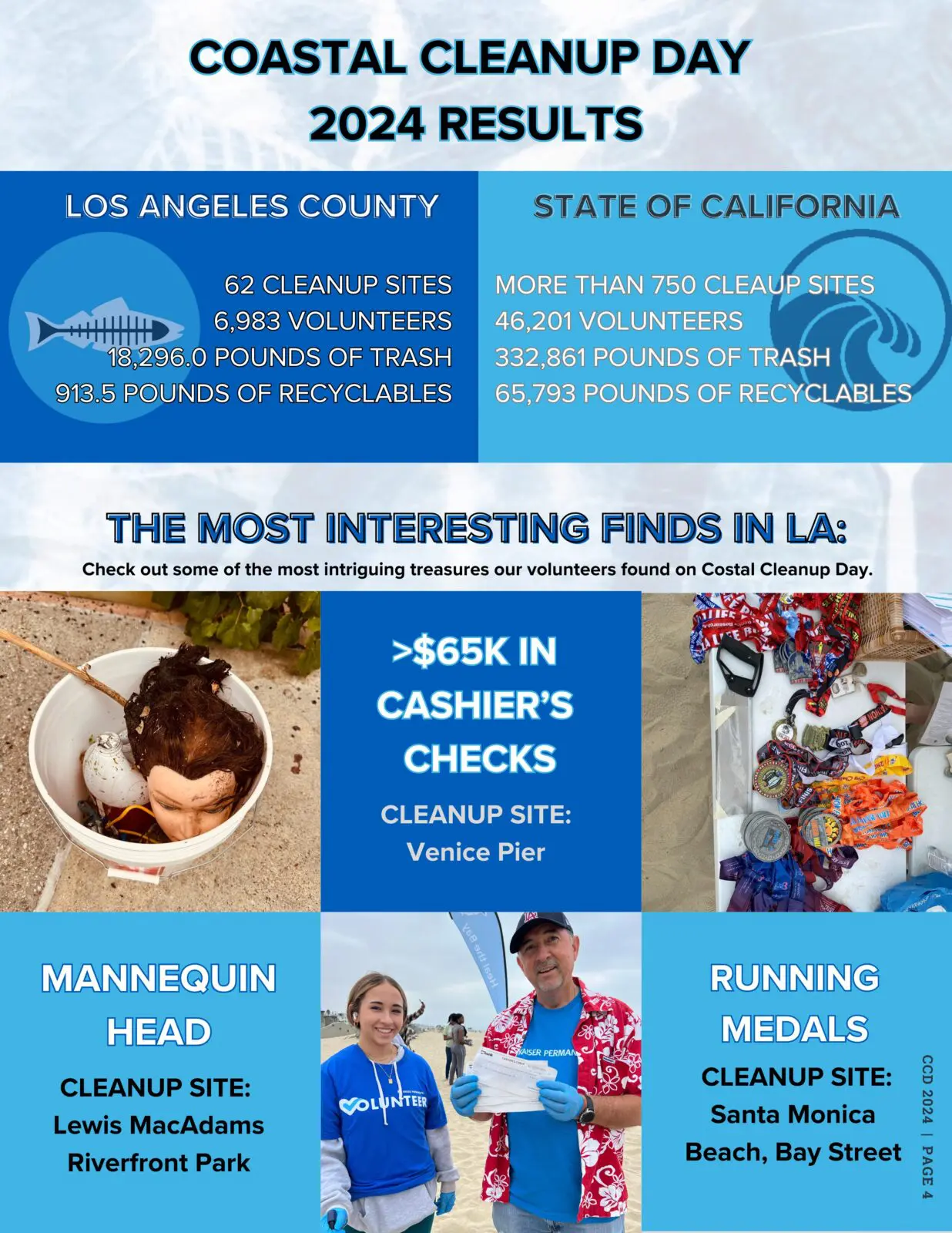
In 2024, more than 24,900 Heal the Bay volunteerscollected over 24,000 pounds of trash and contributed 71,048 hours to protecting our precious watershed and coastal waters!
In September, Heal the Bay mobilized 6,600 volunteers on Coastal Cleanup Day, removing 18,269 pounds of trash (including 429 pounds of recyclables) from greater Los Angeles coastlines and waterways.
This year Heal the Bay Aquarium welcomed 59 new volunteers, and a total of 128 volunteers completed and served 5,494 hours at the Aquarium.
Environmental Health IS Public Health
In 2024, Heal the Bay continued its relentless commitment to ocean water and freshwater quality from summit to sea.
Our annual Beach Report Card remains the gold standard for water quality reporting, providing access to the latest water quality information based on levels of fecal-indicator bacterial pollution in the ocean at over 700 beaches. For more than 30 years, our annual report has assigned “A-to-F” letter grades and ranked the “Best and Bummer” lists across beaches from Washington State to Tijuana, Mexico.
The annual River Report Card was also released, ranking freshwater quality and providing grades for 35 freshwater recreation areas in Los Angeles County tested during the summer of 2023. This summer 14 students from colleges across Southern California joined Heal the Bay the Stream Team internship program – our biggest cohort yet! These two programs are at the forefront of our efforts to keep LA’s waters safe and enjoyable for all.
Conservation and Marine Protection Are Key to Our Mission
Heal the Bay reaffirmed its commitment to biodiversity through both volunteer activations and the tireless efforts of our husbandry, operations, and education Aquarium teams.
Heal the Bay Aquarium plays a pivotal role in species conservation through research, breeding programs, and public awareness campaigns. In 2024, four Swell sharks, dozens of Pacific Sandollars, Giant Spine Sea Stars, Bay Pipefish, and hundreds of Moon jellies were born at the aquarium. Our animal care team released seven protected and rehabilitated marine animals, including keystone species like Swell sharks and Leopard sharks, into Santa Monica Bay. By releasing these animals back into the wild, Heal the Bay continues its mission to protect and support the biodiversity of wild fish populations.
As part of our commitment to successful conservation efforts, Heal the Bay Aquarium continued its work with the Association of Zoos and Aquariums (AZA) Wildlife Trafficking Alliance. As an official member of the US Fish & Wildlife Department’s Wildlife Confiscation Network pilot program, the aquarium is certified to care for the well-being of wildlife confiscated from illegal trade.
Heal the Bay’s Science and Policy Team successfully lead public meetings to educate Californian’s on the impacts of DDT on public health and biodiversity.
They were also featured as experts in the Los Angeles Times documentary “Out of Plain Sight.”.
As a watchdog for Marine Protected Areas, Heal the Bay’s MPA Team is actively contributing and analyzing critical data on California’s first decade-long review that began in 2023. One of the biggest conclusions of the review highlighted the fact that protecting these precious estuaries for the past decade has worked, allowing for flourishing biodiversity, larger populations, and bigger individual animals in these safeguarded areas.
Environmental Equity and Inclusion are pillars of Environmental Health
This year, Heal the Bay continued to advocate for communities that experience the worst systemic and often immediate impacts of environmental injustice and climate change.
After 10 years of effort by Heal the Bay Outreach, Inell Woods Park, a first-of-its-kind stormwater park, is complete in the Compton Creek watershed. This pocket park will provide green space to an underserved community. The ribbon cutting is estimated for early 2025, highlighting the connection between communities, green space, and health.
Environmental Education, Outreach and Sharing our Passion to Protect What We Love
Education remained a cornerstone of our mission. In 2024, Heal the Bay expanded our outreach program, teaching schools and communities to understand the importance of environmental conservation and the role each individual can play.
Educational efforts continued to inspire and inform diverse audiences through innovative approaches and interactive science-based programs. The Heal the Bay Aquarium Education Team sponsored 247 field trips and welcomed 11,668 enthusiastic students from 22 school districts in LA County, including 85 students from Title 1 schools.
This year, “Coastal Cleanup Education Day” at the Aquarium hosted more than 118 3rd-6th grade students from across Los Angeles County for a day of beach exploration, scientific excursions, education, and hands-on learning while having fun in the sun.
In 2024, Heal the Bay built a blue economy, providing professional training on sustainable aquaculture practices in partnership with Santa Monica College. This program not only empowers future environmentalists with hands-on job training, but it has also allowed Heal the Bay Aquarium to lead a program that has put them on track to achieve 90% sustainability through aquaculture and animal donation within the next five years.
Speakers Bureau and Beach Programs (through the Adopt a Beach Program) gave 195 talks this year to educate the public on all Heal the Bay’s amazing and impactful work.
Cheers to 2024
As we look back on 2024, Heal the Bay celebrates a year of accomplishments, resilience, and collaboration. These achievements underscore the collective efforts of our dedicated team, volunteers, and supporters who positively impact the health of our oceans and coastal ecosystems.
Here’s to a future with even more significant strides toward a sustainable and thriving planet!
Looking to the Future with 2025 in our sights
In 2025, Heal the Bay will celebrate its 40th Anniversary, marking four decades of dedicated environmental work. Since its founding, the organization has been a powerful advocate for clean water, coastal protection, and environmental justice across California. Through education, outreach, and policy efforts, Heal the Bay has significantly improved local ecosystems, making beaches, rivers, and communities safer and healthier. The organization remains committed to addressing climate change, promoting sustainability, and protecting the region’s natural beauty for future generations.
Thank you to all our supporters, both past and present.
Thank you for all our supporters both past and present.
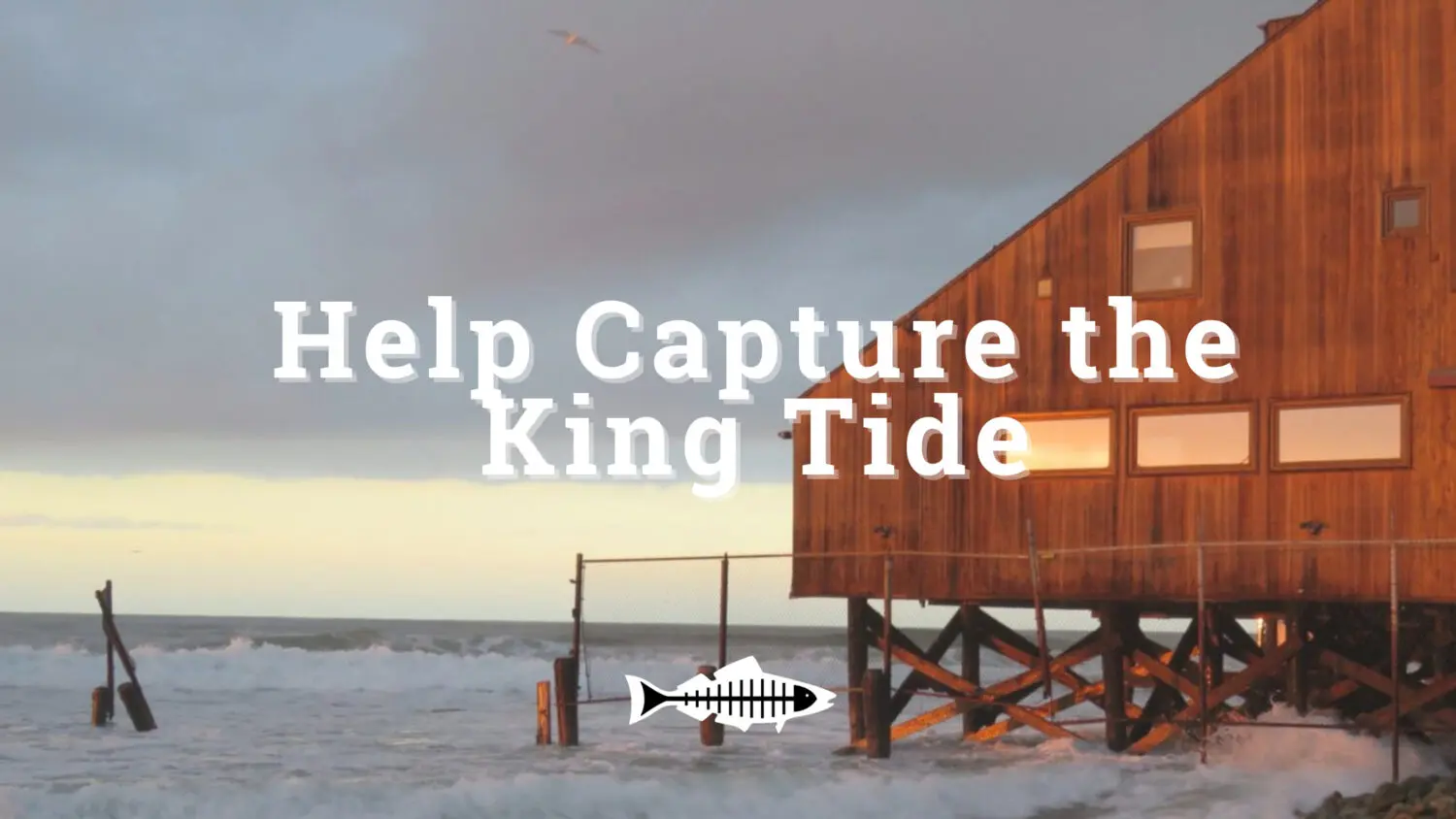
Join community scientists in California to observe and document the King Tides on December 13, 2024. This extreme high tide event provides a glimpse of what we face with climate-driven sea level rise. Your images will contribute to a better understanding of how to adapt to and combat the climate crisis.Get a glimpse of last winter’s King Tide.
UPDATED FEBRUARY 1, 2024
Capture the King Tide this December!
King Tides are a wave phenomenon that can only be witnessed a few times a year when the high tide is at its highest and the low tide is at its lowest. These extreme tides only come to shore when the moon is closest to the Earth and when the Earth is closest to the Sun. King Tides can teach California so much about the changing coastline, if their impact can be captured.
This February, Heal the Bay is calling on all local beach lovers to hit the sand and help us document these extreme tides. Taking pictures and recording this natural phenomenon can help climate scientists predict the future of California’s coastline in preparation of impending sea level rise, which is the first step toward adapting for and combating the climate crisis. Last year your observations were vital to prepare Los Angeles for a future affected by climate change and we need your help once again.
The second King Tides event of this season will occur on:
Instructions from the CA Coastal Commission:
1) Find your local high tide time for one of the King Tides dates.
2) Visit the shoreline on the coast, bay, or delta.
3) Be aware of your surroundings to ensure you are safe and are not disturbing any animals.
4) Make sure your phone’s location services are turned on for your camera and then take your photo. The best photos show the water level next to familiar landmarks such as cliffs, rocks, roads, buildings, bridge supports, sea walls, staircases, and piers.
5) Add your photo to the King Tides map either by uploading it via the website or by using the Survey123 app.
Sea Level Rise
Before we get into the details of this year’s King Tides event, let’s begin with the larger context of sea level rise. Humans are polluting Earth’s atmosphere with greenhouse gases (GHGs) like CO2, primarily through the burning of fossil fuels, driving average global temperatures up at an unprecedented rate.
Oceans have helped to buffer this steady pollution stream by absorbing 90% of our excess heat and 25% of our CO2 emissions. This, among myriad impacts, has increased sea temperatures, causing ocean water to expand. The combination of ocean water expansion and new water input from the melting of landlocked glaciers results in rapid sea level rise.
Santa Monica Beach Current
Santa Monica Beach Sea Level Rise 2ft
Santa Monica Beach Sea Level Rise 7 Ft
Ports Current Sea Level
Ports Sea Level Rise 7ft
Marina Del Rey Current Sea Level
Marina Del Rey Sea Level Rise 7ft
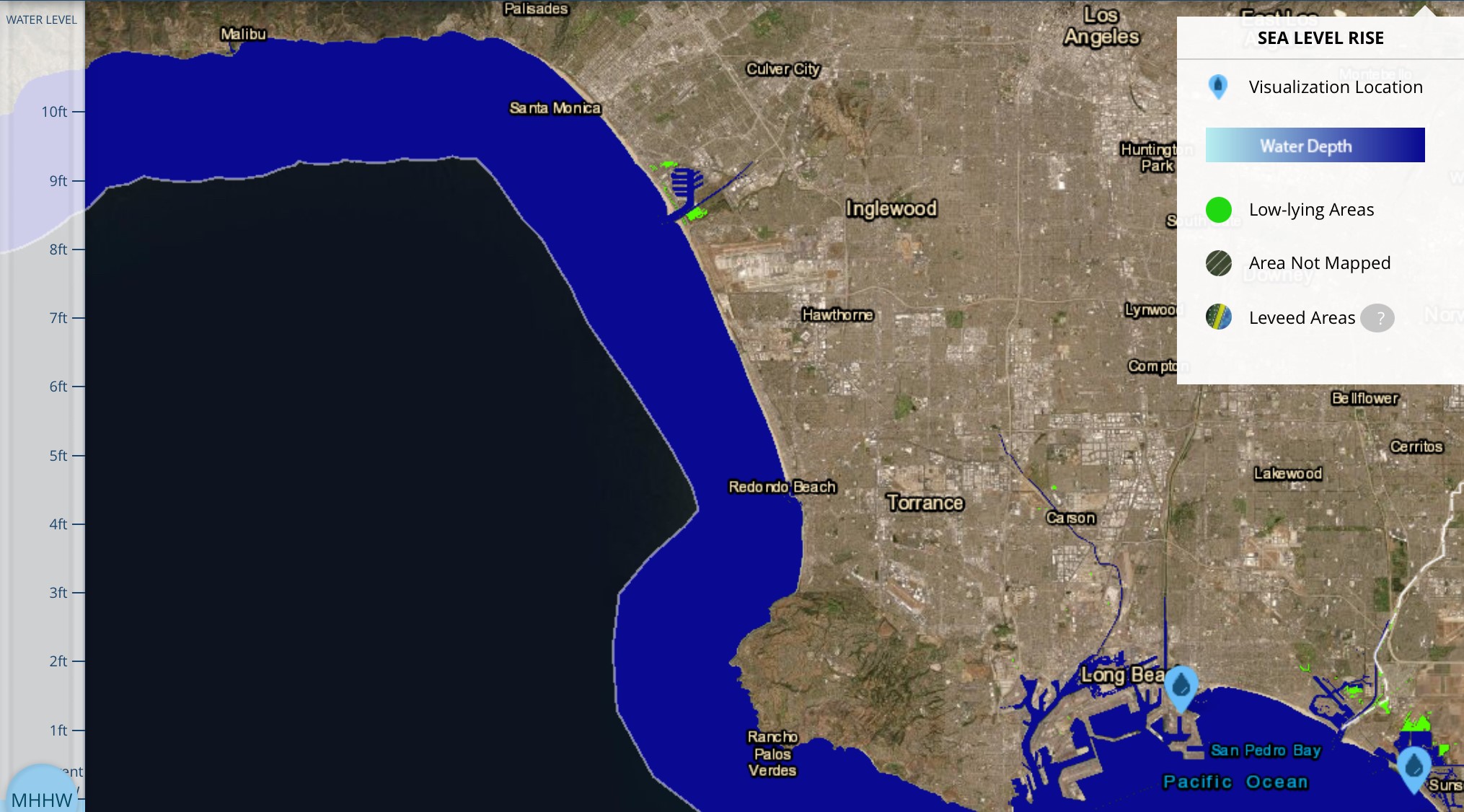
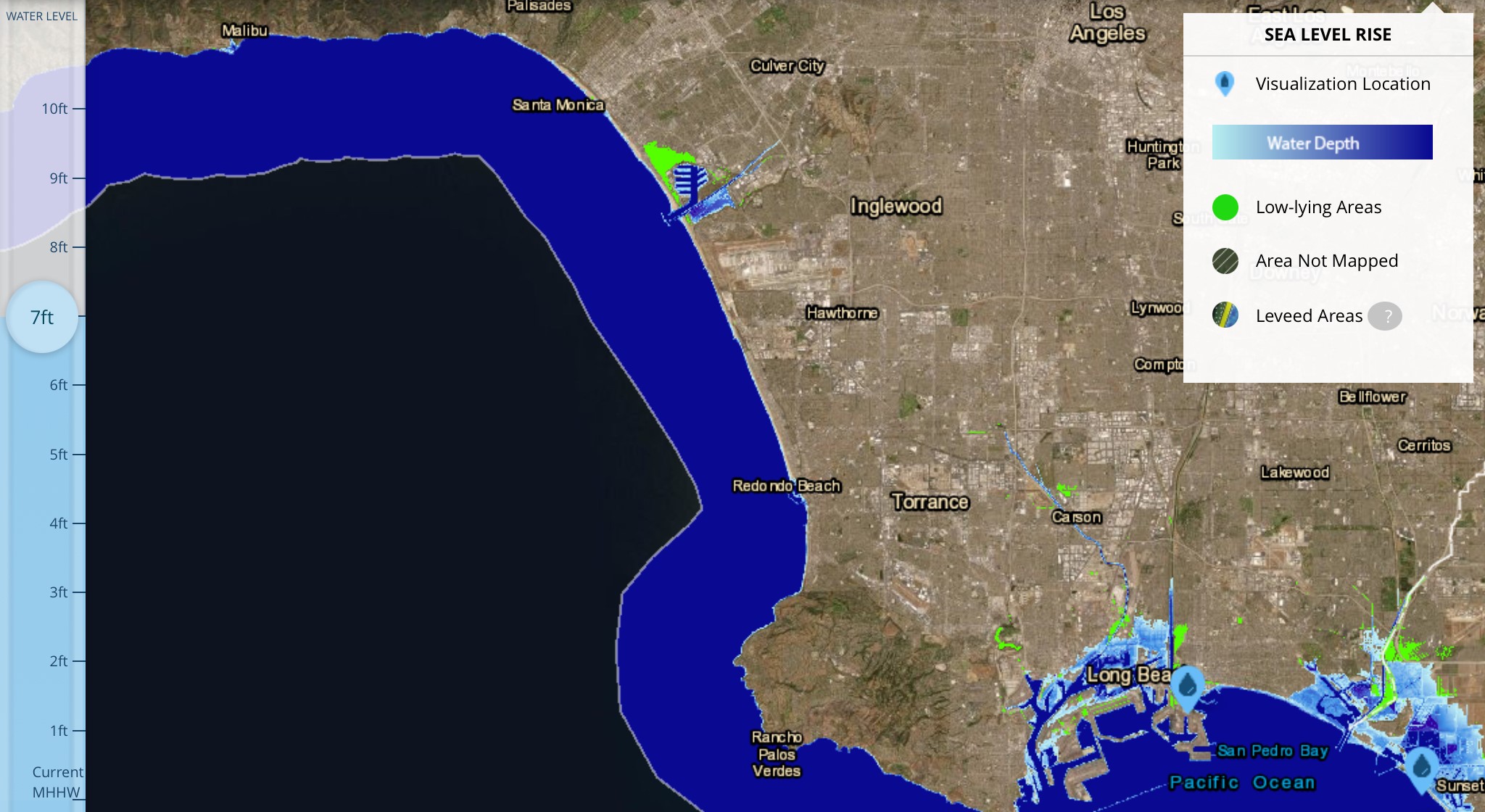
Take a look at images from the NOAA Sea Level Rise Viewer. Light blue shows areas expected to flood consistently as sea levels rise. Bright green shows low-lying areas vulnerable to flooding from groundwater upwelling as seawater intrusion increases.
According to the 2021 Intergovernmental Panel on Climate Change (IPCC) Report, sea level will rise 2 feet by 2100 even if efforts are made to lower GHG emissions, and possibly as much as 7 feet by 2100 if we continue with “business as usual” (i.e., burning fossil fuels at the current unsustainable rate). Rapid sea level rise threatens beach loss, coastal and intertidal habitat loss, seawater intrusion into our groundwater supply (which could contaminate our drinking water supply and cause inland flooding from groundwater upwelling), as well as impacts from flooding or cliff erosion on coastal infrastructures like roads, homes, businesses, power plants and sewage treatment plants—not to mention nearby toxic sites.
Here's a sea level rise problem we should all think more about: Toxic sites that could flood + expose nearby residents to dangerous chemicals.
Ocean tides on Earth are caused by the gravitational pull of the moon (and the sun, to a lesser extent) on our oceans. When the moon is closest to Earth along its elliptical orbit, and when the moon, earth, and sun are aligned, gravitational pull compounds, causing extreme high and low tides called Perigean-Spring Tides or King Tides. These extreme tides provide a glimpse of future sea level rise.
In fact, King Tides in Southern California this December and January are expected to be 2-3 feet higher than normal high tides (and lower than normal low tides), providing a clear snapshot of what the regular daily high tides will likely be by 2100.
Surfider Beach Third Point, Malibu (Photo by CA Coastal Commission)
Broad Beach, Malibu in 2016 (Photo by LA Waterkeeper)
(Top to bottom) Low, Medium, High Tides at Carbon Beach, January 8-10 2013
What is being done
Many coastal cities in California have developed Local Coastal Programs in coordination with the CA Coastal Commission to address sea level rise. The Coastal Commission is also developing new sea level rise guidance for critical infrastructure, recently released for public review. Unfortunately, if we continue with “business as usual,” the rate of sea level rise will occur much more quickly than we can adapt to it, which is why we need bold global action now to combat the climate crisis and limit sea level rise as much as possible.
What you can do
Motivated people like you can become community scientists by submitting King Tides photographs the weekend of December 23 and 24, 2022 to contribute to the digital storytelling of sea level rise. These photos are used to better understand the climate crisis, to educate people about the impacts, to catalog at-risk communities and infrastructure, and plan for mitigation and adaptation. Join the Coastal Commission in their CA King Tides Project!
Get involved in #KingTides events
Instructions from the CA Coastal Commission:
1) Find your local high tide time for one of the King Tides dates.
2) Visit the shoreline on the coast, bay, or delta.
3) Be aware of your surroundings to ensure you are safe and are not disturbing any animals.
4) Make sure your phone’s location services are turned on for your camera and then take your photo. The best photos show the water level next to familiar landmarks such as cliffs, rocks, roads, buildings, bridge supports, sea walls, staircases, and piers.
5) Add your photo to the King Tides map either by uploading it via the website or by using the Survey123 app.
In the Los Angeles area? Here are some areas we expect will have noticeable King Tides:
In Palos Verdes, we recommend: Pelican Cove, Terrenea Beach, White Point Beach, and Point Fermin. In Malibu, we suggest: Paradise Cove, Westward Beach, Broad Beach, El Pescador State Beach, and Leo Carrillo State Beach.
Written by Annelisa Moe. As a Coastal and Marine Scientist for Heal the Bay, Annelisa works to keep our oceans and marine ecosystems healthy and clean by advocating for strong legislation and enforcement both locally and statewide. She focuses on plastic pollution, marine protected areas, sustainable fisheries, and climate change related issues.
From the desk of the Heal the Bay Water Quality Team.
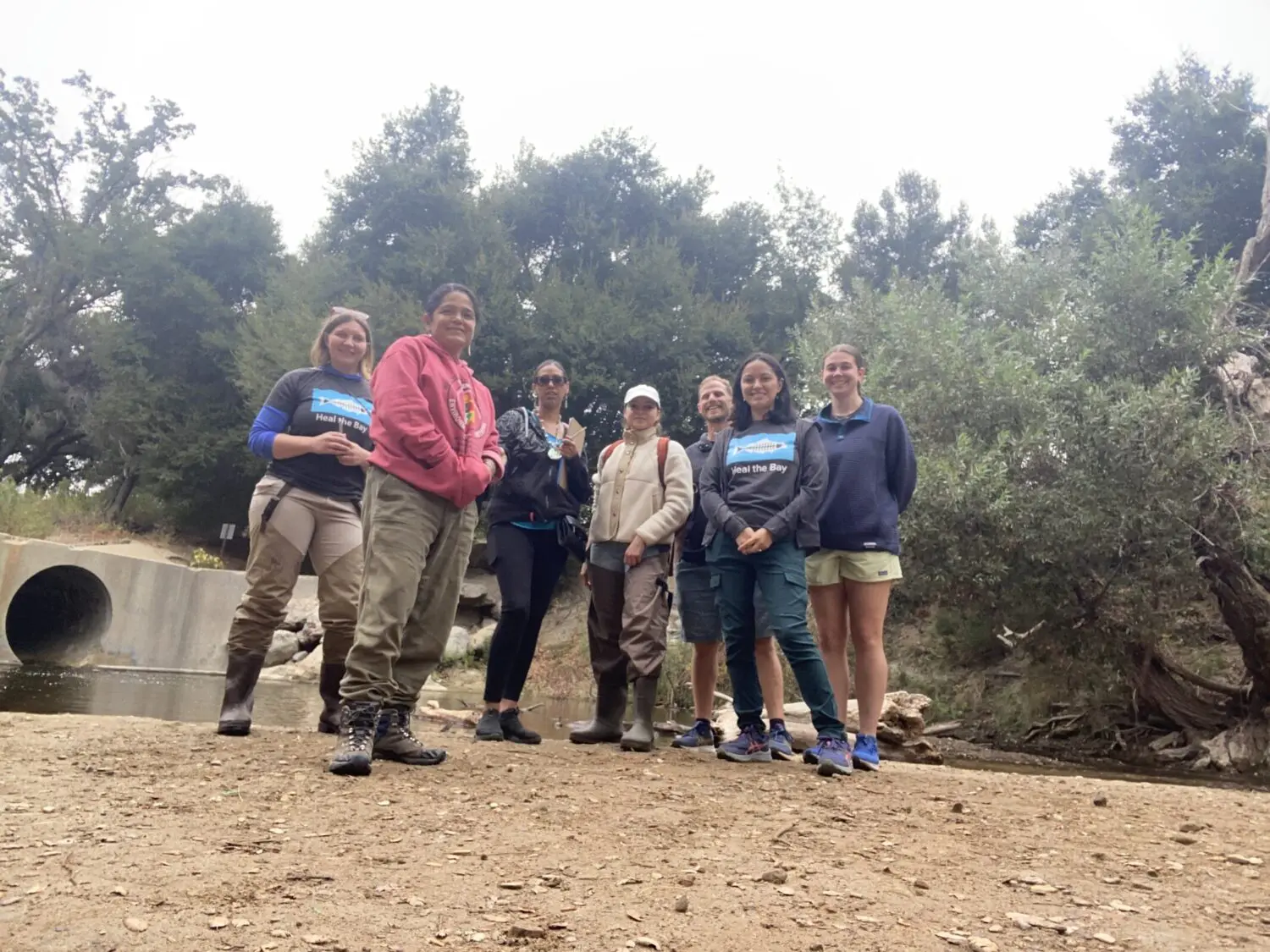
Heal the Bay recently hosted the Sacred Places Institute for Indigenous Peoples for a day of hands-on water quality testing and training to share our knowledge on the contaminants in LA’s freshwater, test for pollutants, and assess the ecosystem to protect public health. This partnership combined scientific methods with Indigenous traditions, creating a captivating day of cross-organizational knowledge sharing that promised to unveil new insights and foster a more profound respect for diverse perspectives.
Incorporating Indigenous perspectives is so important when it comes to environmental science. Indigenous communities and organizations often possess deep, localized knowledge of their environment, including an intricate understanding of water systems and changes over time. This legacy knowledge can significantly enhance the accuracy and completeness of water quality data and is an opportunity to learn more about the cultural and spiritual values of the area’s original inhabitants, and to help see water as more than just a resource.
Diving into the Current
Following an insightful morning filled with presentations and lively discussions, we convened at Malibu Creek State Park to measure the water’s turbidity, temperature, and other environmental factors. We donned our signature “Stream Team” boots and protective gear to wade “knee-deep” into the process of assessing the creek’s water quality. It was the perfect opportunity to put theory into practice and to demonstrate firsthand how water quality impacts our environment.
Heal the Bay staff shared insights into our Stream Team’s process to tests for fecal indicator bacteria, explaining how these pollutants signal ecosystem and public health risks and how this science informs both our Beach Report Card and River Report Card. Members of Sacred Places Institute shared the historical and cultural significance of water, reflecting on Indigenous water stewardship in the LA area, past and present, and highlighted the ongoing work to restore urban waterways.
At Las Virgenes Creek, before we started our fieldwork, Sacred Places Institute’s Land, Water, and Climate Justice Director Jessa Calderon (of the Tongva, Chumash, and Yoeme Nations) began with a prayer to honor nature. She sought permission to collect a water sample and waited for the land and water to indicate consent—an important step in ensuring that our work was in harmony with the environment. With no signs of refusal from the land, we proceeded to collect water samples. This approach underscores the importance of integrating Indigenous perspectives into water quality testing programs, where the land isn’t just a resource, but a partner in the process.
Reflecting on the training, Sacred Places Institute said: “Participating in the Heal the Bay water quality testing training validated the continued need for local and state stringent water policy regulations and enforcement as one way to keep waterways free from industrial development contamination and stormwater runoff. Moreover, it reinforced the need for water back to local Native Nations as the inherent guardians of local waterways and as an effort to reintroduce the traditional caretaking knowledge for water as a means to help bring it back to balance.”
Back to the Lab Again
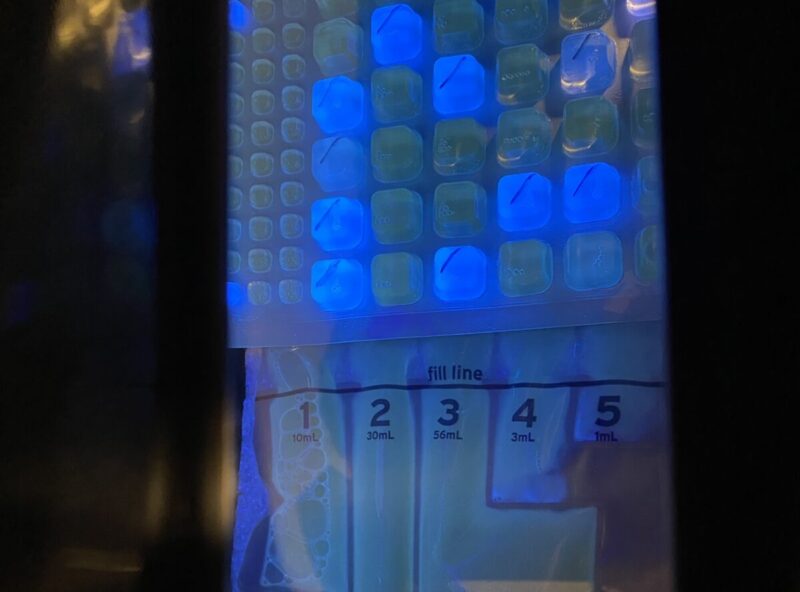
After collecting samples, we headed back to the Heal the Bay lab. Tests revealed low E. coli levels but elevated Enterococci and total coliforms, which are other types of bacteria found in the intestines of humans and animals. While E. coli levels were low and typically a primary concern for water contamination, the elevated levels of Enterococci and total coliforms suggest that there may still be a potential health risk for people who come into contact with the water. These bacteria are indicators of fecal contamination, which could pose a risk of illness, especially if someone swallows contaminated water or has open cuts.
The Why Behind the Work
We were honored to be able to share our knowledge and learn so much from our long time partners at Sacred Places Institute. By blending our scientific methods and Indigenous knowledge, we deepen our understanding and strengthen Heal the Bay’s commitment to safe, clean water for all. Support our mission to protect LA’s waterways.
October 29,2024 — There are exciting propositions that could lead to important environmental change on California’s general election ballot this year. We created this voter guide to help you make the most informed vote possible on the environmental issues facing California and Los Angeles. On November 5 (or earlier, if you’re voting by mail), cast your votes with confidence.
Heal the Bay is excited to share our insights and vision for how science and policy can protect the environments we cherish. We encourage voters to explore our resources and do their own research to make informed decisions. Your engagement is vital for safeguarding our coastal ecosystems.
Ready? Set! VOTE!
Proposition 4:California Climate Bond – the safe drinking water, wildfire prevention, drought preparedness, and clean air bond act
The issue: Approving Proposition 4 would authorize $10 billion to be spent on environmental and climate projects. The most significant portion, $3.8 billion, would be spent on water projects. Half of those funds would be earmarked to improve water quality. The remainder will be allocated to protecting the state from floods, droughts, and other activities, including restoring rivers and lakes. The rest of the money would be spent on:
Wildfire and extreme heat projects, $1.95 billion.
Natural lands, parks, and wildlife projects, $1.9 billion.
Coastal lands, bays, and ocean protection, $1.2 billion.
Clean energy projects, $850 million.
Agricultural projects, $300 million.
The stakes:California has yet to recover from the multiple atmospheric rivers that fell between December 31, 2022, and March 25, 2023. The heavy rain fall resulted in massive property damage and at least 22 fatalities across the state. Intensifying storms, L.A.’s aging infrastructure, and ongoing sea level rise are ingredients for a perfect storm that could wreak havoc on coastal properties and shorelines while seriously straining our local economy. Is L.A. ready? Prop 4 gives our region a chance to build resiliency and buffer our fragile water systems against weather whiplash.
Our recommendation:Cast your ballot for climate ready beaches and neighborhoods. Vote YES.
Proposition 5:Lower voter threshold for local infrastructure bonds
The issue: State law currently requires a super majority (2/3) for passage of local housing and infrastructure bond measures, which restricts the ability of local voters to approve those bonds for their communities. Prop 5 would lower the threshold from 66.67% to 55% for passage of local bonds related to infrastructure for water, parks, housing, transportation and more.
The stakes: Los Angeles’ water infrastructure has been historically underfunded, which is why 33% of our sewage infrastructure is past its expected lifespan. We need to upgrade sewage infrastructure now as well as invest in water recycling and stormwater capture to improve water quality, protect public health, and to secure a reliable climate-resilient water supply. Prop 5 would apply to all local housing and infrastructure bond measures, and will, for example, allow local communities to more easily invest in critical water infrastructure.
Our recommendation: Making it easier to fund critical water infrastructure projects will protect public health. VOTE YES.
The issue: LAUSD schools need infrastructure funding. About 80% of the buildings were built over 50 years ago and need upgrades for student and faculty safety and daily experience. LAUSD owns 6,400 acres of land in Los Angeles which presents an enormous opportunity to include multi-benefit stormwater capture in property upgrades.
The stakes: LAUSD forecasts $80 billion in unfunded fixes and necessary campus improvements. This ranges from faulty A/C units, lack of shade and green space, leaky roofs, plumbing, and much more. As we experience hotter days and weather extremes in the face of climate change, we must prepare for the future and invest in spaces where our kids spend so much time. This $9 billion bond is the first step to address some of these disparities and work towards technology improvements for students, accessibility, and energy efficiency/electrification. Specifically, $1.25 billion is earmarked for school greening projects, like planting trees, increasing shade, ripping up asphalt, and creating outdoor learning spaces. These upgrades not only improve our students’ physical and mental health but can also capture stormwater, reducing the pollution reaching our coastal waterways.
Measure US funding will:
Improve school safety
Upgrade classrooms to prepare students for college and careers
Replace leaky roofs, unreliable plumbing, electrical, and HVAC systems
Update learning technology and infrastructure – including energy efficiency and electrification
Improve schools for disability access and earthquake safety
Renovate older schools to reduce disparities
Upgrade old and deteriorating athletic facilities and play structures
Create outdoor learning spaces and upgrade school yards
Our recommendation: Support investing in a healthier school environment for our LAUSD students. Greener schools mean greener communities. VOTE YES.
According to the California Coastal Commission, more than 250,000 pounds of trash was removed on the 2024 California Coastal Cleanup Day. The event took place on September 21, 2024, and nearly 29,000 volunteers participated.
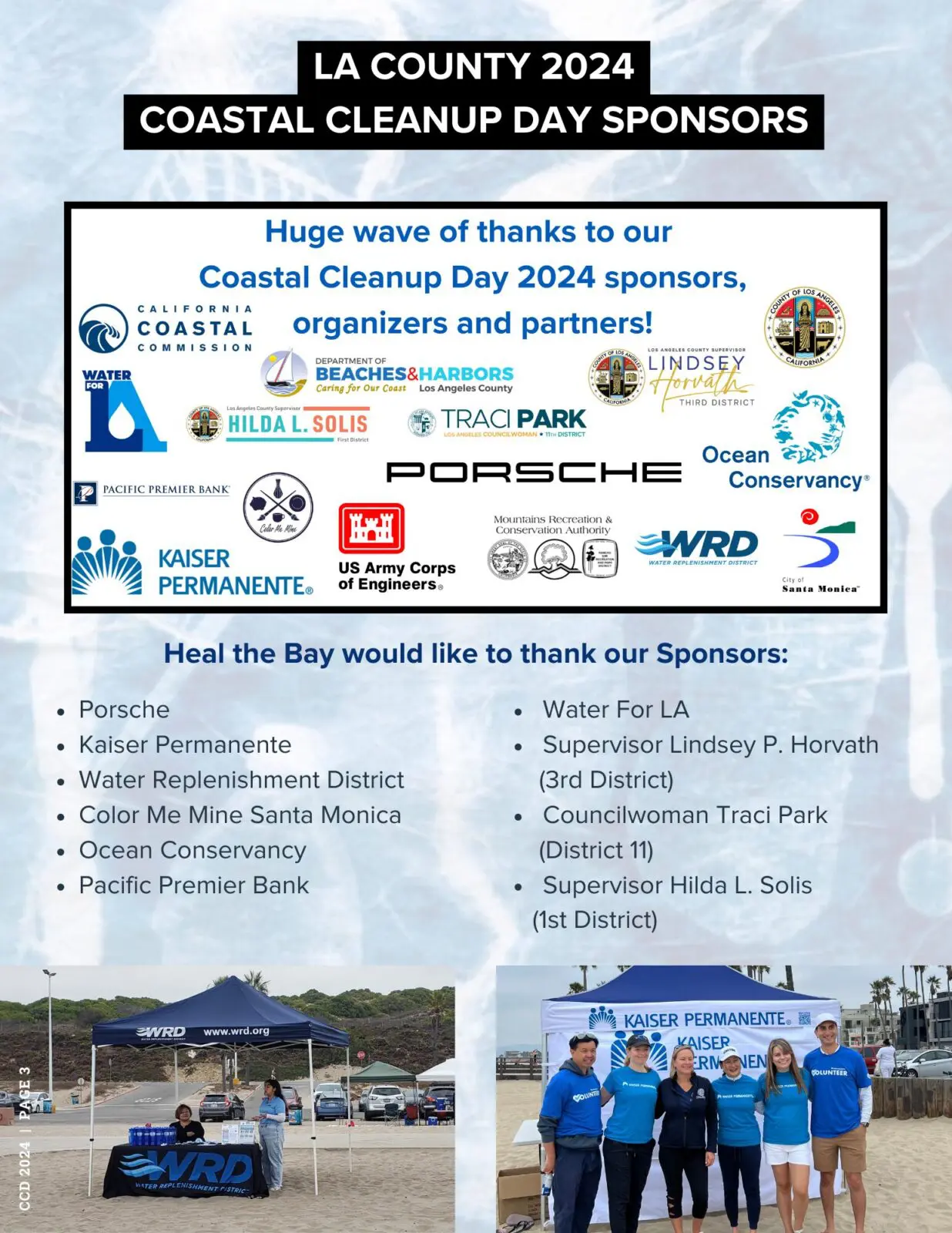
Thank you to all who joined Heal the Bay in Los Angeles County on Coastal Cleanup Day 2024, and a special thank you to our 2024 Coastal Cleanup Day Sponsors:
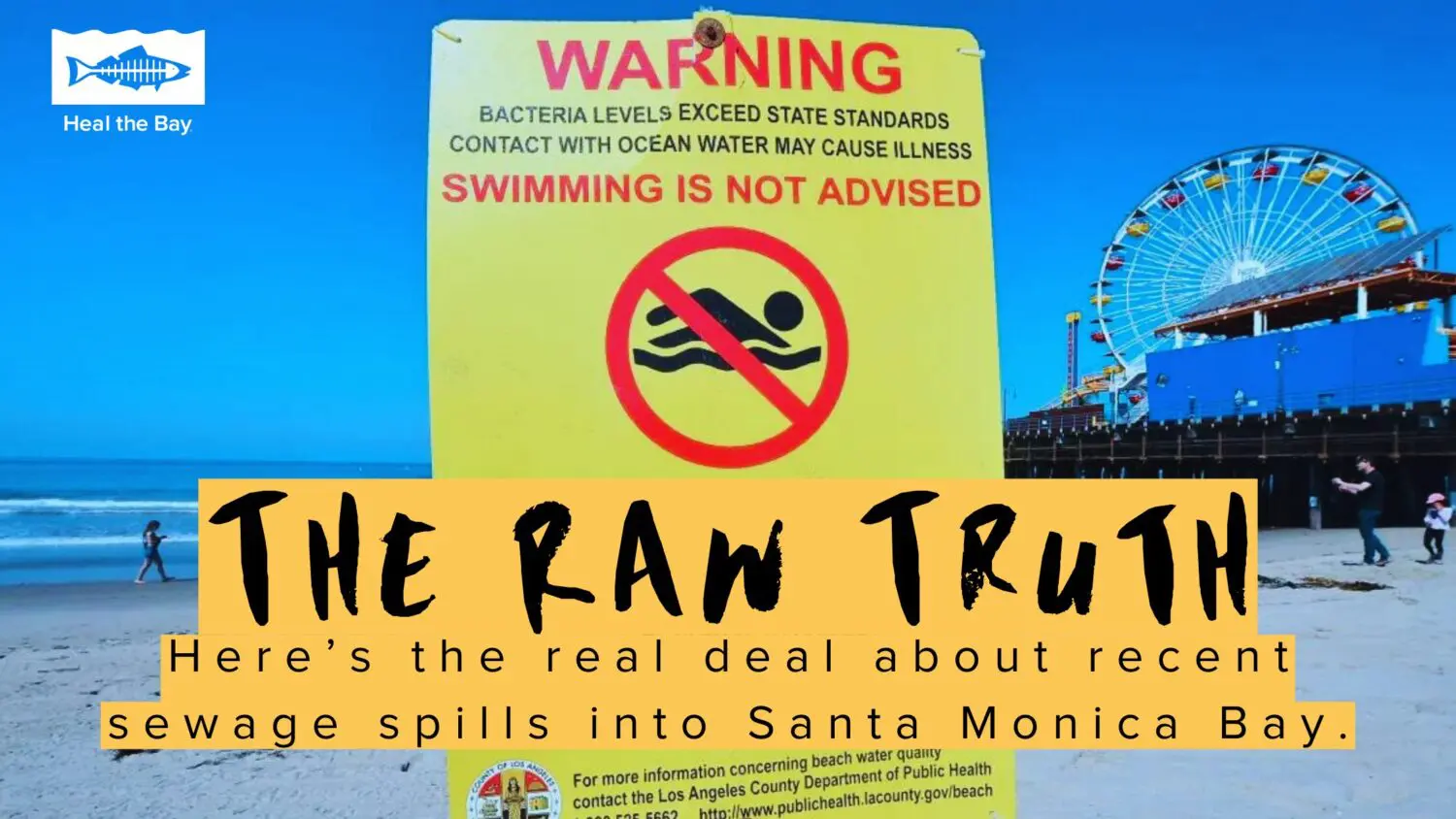
Over 30,000 gallons of raw sewage discharged unintentionally into Ballona Creek and then into the ocean on May 8-9. The spill forced full closures along Dockweiler Beach and Venice Beach, two of the most popular shoreline spots in greater L.A.
The culprit was root blockage in a main sewer line in West Hollywood. Over time, tree roots can infiltrate sewer pipes causing them to clog or break. A sewer main is a publicly owned pipeline, typically located under a street, that collects waste from numerous homes and businesses and transports it to a wastewater treatment facility. Based on the spill report from the State Office of Emergency Services, it appears that the sewage blocked up in West Hollywood, spilled onto the street, and entered a storm drain, which eventually made its way to Ballona Creek and out to the ocean.
How much icky stuff reached the sea?
According to the most report from California Integrated Water Quality System Project (CIWQS), it was revealed that a staggering 31,763 gallons of sewage were discharged from this residence, significantly surpassing the initial estimate of 14,400 gallons, which was the amount widely reported in the media.
What damage can these spills do to humans and the ecosystem?
Raw sewage is very dangerous to people and wildlife, as it contains bacteria, viruses, and can carry a variety of diseases. There is also debris in raw sewage, such as wipes, tampons and other personal health items. When released into waterways and the ocean, the waste and debris can harbor bacteria or be ingested by animals. Sewage is made up primarily of organic matter that is food for smaller organisms at the bottom of the food chain like algae. A large discharge of sewage can lead to algal blooms that can deplete oxygen in the water, possibly leading to fish kills and impacts to aquatic organisms and ecosystems. Discharges of sewage can also increase the cloudiness of water, smothering species or impacting the amount of light that can pass through the water for photosynthetic organisms.
Did some media overplay this story?
A recent Los Angeles Magazine article “Beach Residents are Sick of the Crap”, made a link between the recent sewage spill from Ballona Creek and reports of “dead fish and birds” and sick surfers in the area. Heal the Bay takes sewage spills and threats to public and environmental health very seriously. But we pride ourselves on being a science-based organization and we question whether this assertion is backed up with robust data. It is tempting to use anecdotal evidence to indicate causation, but to effect change we must rely on good data to back up our advocacy. Recently there have been increased reports of starving and sick pelicans, but these reports preceded the latest sewage spill. We don’t have enough evidence to conclude that the impacts on fish and birds are related to sewage spills. Researchers and advocates must continue to identify the reasons why pelicans are starving while also working to stop sewage spills and protect public health.
Heal the Bay got its start nearly 40 years ago by making sure raw sewage didn’t get released into local waters. Why do we still see these discharges happen?
Heal the Bay’s first fight was to stop partially treated sewage from being discharged into the Santa Monica Bay from the Hyperion Wastewater Treatment Plant. Hyperion now treats wastewater to a much higher degree and, when everything functions properly, we actually aren’t concerned about bacteria or viruses being discharged into the ocean. But climate change is already impacting our sewer systems; as we see more intense storms, some of that water is finding its way into sewer pipes, scouring the debris that gets stuck in our pipes, mostly wipes, which can overwhelm our treatment plants. Hyperion isn’t designed for these intense storm events, and in fact, hasn’t had a major overhaul since Heal the Bay pushed them to 40-years ago. We have other concerns about treatment plants too — like the discharge of treated water, which can be recycled and reused, and the discharge of nutrients into the ocean, which is exacerbating impacts of ocean acidification and warming. And we know that major spills from treatment plants can and do still happen, like we saw in 2021 at Hyperion.
Spills that happen outside of treatment plants from sewer pipelines are often due to aging infrastructure. Pipes don’t last forever and maintenance and replacement are required. According to a statement that Director and General Manager of LA Sanitation & Environment Barbara Romero gave to Los Angeles City Council, approximately one-third of the city’s pipelines have exceeded the 90-year mark. Typically, sewer pipes are designed with a lifespan ranging from 50 to 100 years. Given that the majority of Los Angeles’ sewer infrastructure predates 1950, it’s evident that a significant portion is approaching the end of its operational lifespan. As a region, we must invest in and prioritize infrastructure repair and replacement. That will likely mean higher utility rates. As we make repairs, we must also be forward-thinking of the current changing climate and what’s to come, planning for opportunities to maximize water recycling and readying for larger and more intense but less frequent rainfall.
Was this a one-off event or should we be worried about an increased amount of spills in the future?
Unfortunately, discharges happen periodically but they vary widely in volume and whether the sewage actually reaches a waterway – namely a river or the ocean.
Major sewage spills are fairly rare, but we have had some big ones in the last three years. In July 2021, Hyperion had a major failure and discharged 12.5 million gallons of sewage to the ocean from its outfall pipe that discharges one mile into the ocean. The proposed fine of $27 million by the Water Board is still being negotiated by the City of LA. In December 2021, 8.5 million gallons of sewage was discharged into the Dominguez Channel from an overflow in an LA County Sanitation Districts pipeline. LA County paid a fine of $6 million for this spill and 14 others, with much of the fine returning to fund a local stormwater park to benefit the community. The LA Magazine article incorrectly attributed this spill to the City of LA, when in fact it was the County of LA.
However, smaller sewage spills are not an uncommon occurrence regionally. Sewage spills are tracked by the state which is where Heal the Bay pulls data to look at trends over time. Over the last 10 years (2014-2023), there have been a total of 3,174 spill cases resulting in 30,521,025 gallons of sewage in LA County, with around half of that amount reaching surface waters.
The number of spills actually shows a decreasing trend over the last 10 years (see chart below), but there is not a clear trend when we look at volume spilled over time. Clearly, we see spikes in years when there were major spills. Obtaining data on spills is not easy or user-friendly and the data itself is not perfect. The graphs below actually don’t have the 2021 Hyperion spill in them due to that data being listed differently by agencies.
What’s the difference between sewers and storm drains?
We must remember not to confuse the sewer and storm drain systems, which are separate in Los Angeles. Waste from inside homes and businesses enters the sewer system and is treated before being discharged into the sea. Meanwhile, rain and daily urban runoff (sprinklers, hosing down sidewalks, washing a car in the street) enters our storm drain system. That daily runoff, which can amount to 10 million gallons in greater LA even on a dry day, is not cleaned and enters waterways and the ocean directly.
The LA Magazine article conflates the two, describing “pools of raw sewage [that] puddle in heavily traveled areas, like the beach in front of Santa Monica’s Shutters and Casa del Mar hotels.” These two hotels sit near the outfall of the Pico-Kenter storm drain, which drains major portions of Los Angeles and Santa Monica. During storms, Pico-Kenter funnels huge amounts of trash and toxins to the beach and ocean. The puddles described by LA Mag were very unlikely to be raw sewage and much more likely to be stormwater runoff, which is typically filled with unsightly trash and bacteria which can cause illness but is less of a health concern than raw sewage.
Who is responsible for maintaining the sewer system?
Lateral lines are privately owned and connect homes and businesses to the public system. Homeowners and business owners are responsible for maintaining and cleaning those lines, which are known to get clogged and impacted from tree roots. Regular maintenance is key to preventing problems and sewage leaks and spills from lateral lines. Blockages can also be prevented by all of us by not flushing anything down the toilet except toilet paper and waste. That means no wipes (even if they’re flushable), tampons, condoms, plastic, needles, or anything else. And for sinks, that means no fats, oils, and grease, which can clog pipes as well.
LA County Sanitation Districts’ service area covers 78 cities and the unincorporated areas within the County (824 square miles); the City of LA is responsible for more than 6,700 miles of sewers. Finally, the wastewater ends up at wastewater treatment or water reclamation plants.
The City of LA operates four plants: Donald C. Tillman Water Reclamation Plant, Los Angeles Glendale Water Reclamation Plant, Terminal Island Water Reclamation Plant, and Hyperion Water Reclamation Plant. The County of LA operates 11 wastewater treatment facilities, the largest being the A.K. Warren Water Resource Facility (formerly known as Joint Water Pollution Control Plant) in Carson.
Are the various agencies and municipalities doing all that they can to prevent these spills?
The City and County of LA recognize the need for maintenance, upgrades, and replacement of aging infrastructure. Staff is also focused on improving systems and processes for detecting, responding to, and notifying the public of spills.
Heal the Bay and our partner non-profit organizations meet regularly with leadership at LA County Sanitation Districts and we appreciate their transparency as well taking accountability for spills and reinvesting in local communities. The scale of the problem for LA City and LA County is huge in terms of identifying and prioritizing areas in need of repair across 17,000 miles of sewer pipes.
What is Heal the Bay doing to make sure these spills don’t happen in the future? How are you holding dischargers accountable?
Heal the Bay is dedicated to protecting public health and making sure that spills don’t happen in the future by:
Advocating for:
Increased transparency and commitments from LASAN and LACSD as well as the Department of Public Health on coordination, rapid testing, and rapid notification of the public when there is a sewage spill, especially major ones that could have an impact on public health.
Appropriate fines when there are spills and requiring those fines to be invested in local communities that were impacted and water quality improvement projects
Funding for City and County of LA to make necessary upgrades to infrastructure through local, state, and federal funding as well as through rate increases
Heal the Bay supports the recently proposed sewer rate increases by LA Bureau of Sanitation & Environment as it must address aging infrastructure and keep up with inflation, the agency’s needs, and our new climate reality.
Implementation of the recommendations in the report from the 2021 sewage spill at Hyperion
Educating residents on actions they can take to prevent sewage clogs and spills.
Informing the public when there is a spill as a trusted voice in the community through our social media, blogs, and the Beach Report Card and River Report Card.
How can residents support those efforts?
If you’re a homeowner or business owner, maintain your lateral sewer lines.